
Guides
How to choose materials for bespoke furniture
Choosing materials for bespoke furniture starts with the room itself, its architecture, light and existing surfaces, then works through durability, colour and texture before finishes are sampled and confirmed against the drawings.
How to choose materials
Material choice is often the part of a project people feel least confident about, mainly because there are genuinely a lot of options: timber species, paint colours, stone surrounds, glass fronts, metal detailing, and how lighting interacts with all of them. The way through this is not to pick a finish first, but to start with the room.
A room's existing architecture, its proportions, its light, the materials already present in floors, walls and fireplaces, sets real limits on what will sit comfortably within it. Working from those constraints narrows the field considerably before questions of personal taste even come into it.
This guide sets out the main factors worth thinking through, in roughly the order they tend to come up during design. It complements bespoke furniture materials and finishes, which sets out the full range of materials used across Chester Thomas furniture in more detail, and the two are worth reading alongside each other.
None of this needs to be resolved before a first conversation. Material decisions are properly worked through during design development and specification, described on specifying bespoke furniture, room by room, once the layout of the piece is established and real samples can be reviewed rather than photographs.
Start with the room, not the finish
The architecture of the room, its ceiling height, existing joinery, skirting and cornicing, and the amount of natural light it receives, all affect how a material reads once it is built at scale. A dark stained timber that looks striking in a north-facing room with high ceilings can feel heavy in a smaller, darker space, while a pale painted finish can wash out a room that already has plenty of light.
Existing materials in the room, stone flooring, a period fireplace, exposed brick, also set a reference point. New furniture does not need to match these exactly, but it needs to sit alongside them in a way that reads as considered rather than accidental.
Durability and how the room is used
How a room is used day to day should shape material choice as much as appearance. A boot room or kitchen needs surfaces that can take knocks, spills and repeated handling, which points toward more robust timber or painted finishes over more delicate materials. A study or living room used more gently allows for finishes chosen primarily on visual grounds.
Glass and mirrored fronts, for instance, bring light and a sense of openness to a display cabinet or media wall, described on glass display cabinets for glassware, books, wine and collections, but are a different practical proposition in a busy family room than in a formal study.
Colour, grain and painted finishes
Timber and paint offer genuinely different things. Oak and other timbers, covered on bespoke oak furniture, bring visible grain and natural variation that changes subtly across a run of cabinetry, while a painted finish, described on bespoke painted cabinetry, gives flat, consistent colour and a wider practical palette, from olive and sage greens through to navy, cream and graphite.
Staining, set out on bespoke stained oak furniture, sits between the two: it adjusts the tone of a timber, darker or warmer, while keeping the grain visible, which suits a darker overall scheme without losing the texture that makes timber worth choosing in the first place.
Stone, glass, mirrors and metal
Stone and marble surrounds, described on stone feature cabinetry across media walls, bars, kitchens and display, bring pattern and a cooler, denser contrast to timber or painted cabinetry, and work particularly well as a feature element around a fireplace or media wall rather than across an entire scheme. Glass and mirrored fronts, glass display cabinets for glassware, books, wine and collections, lighten the visual weight of a large run of cabinetry and let displayed items be seen rather than hidden.
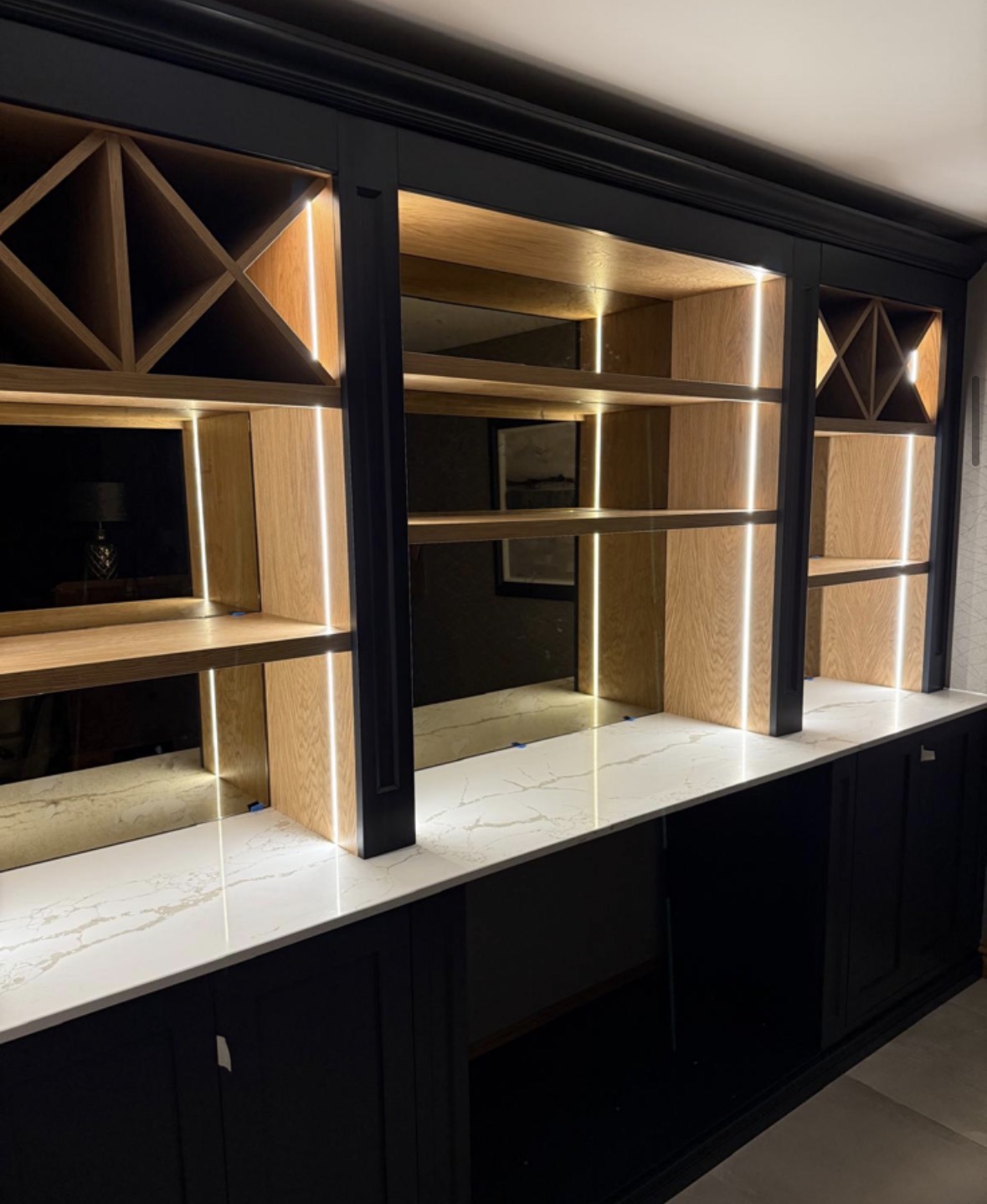
Metal detailing, in handles, frames or trim, adds a harder edge against timber or paint, and reads differently depending on the finish chosen. Integrated LED lighting interacts with all of these materials, drawing out grain in timber, highlighting the pattern in stone, and giving glass and mirror genuine depth rather than a flat reflection.
Coordinating with existing hardware and interiors
Materials do not need to match everything else in the house precisely, but they should be chosen with an awareness of what else is in the room: existing hardware finishes, worktops, flooring and wall colours. This coordination is one of the reasons material decisions are made against drawings and real samples rather than in isolation, so the finished piece reads as part of the room rather than something added on top of it.
What genuinely affects material choice
- Room architecture and light
- Ceiling height, aspect and existing joinery all affect how a material reads once built at scale, more than a swatch or photograph can show.
- How the room is used
- A working kitchen or boot room favours more robust finishes than a formal study or living room used more gently.
- Existing materials in the property
- Flooring, fireplaces and existing joinery set a reference point that new furniture should sit alongside rather than ignore.
- Lighting
- Integrated LED lighting interacts differently with timber, stone, glass and mirror, and is considered alongside the material itself during design.
- Existing hardware and interior colours
- Handles, worktops and wall colours already in the room narrow the range of finishes that will genuinely coordinate.
- Combining more than one material
- Most projects mix timber, paint, stone or glass rather than using a single material throughout, so how they meet at edges and transitions is worked out at design stage.
Choosing a direction
01
You want warmth and texture over flat colour
Natural or stained oak, covered on bespoke oak furniture and bespoke stained oak furniture, brings grain and variation that a painted surface does not attempt to replicate.
02
You want a wide, precise colour palette
Painted cabinetry, bespoke painted cabinetry, gives flat, consistent colour and coordinates more easily with a specific interior scheme.
03
You want a feature element with real pattern
Stone or marble, stone feature cabinetry across media walls, bars, kitchens and display, works best used deliberately, around a fireplace or media wall, rather than across an entire run of cabinetry.
04
You want to lighten a large run of cabinetry
Glass or mirrored fronts, glass display cabinets for glassware, books, wine and collections, reduce visual weight and let displayed items read through the piece rather than behind a solid door.
05
You are not sure yet
That is a normal starting point. Bringing photographs of the room to a consultation, described on what to expect from a bespoke furniture consultation, is enough to begin narrowing the options.
Related project
Book-matched marble against stained oak, with lighting used to separate the two: an example of material decisions made together rather than one at a time.
Bespoke media wall, Solihull →How we work
Material choices are confirmed against real samples during design development, part of the sequence described on the process page, rather than fixed from a photograph before drawings exist.
Questions we are asked
Approach
- Where should I start when choosing materials?
- Start with the room rather than the finish: its architecture, light and existing surfaces set real limits on what will sit comfortably within it. Narrowing the field this way, before considering personal taste, tends to produce a more coherent result than picking a finish in isolation.
- Should furniture materials match the rest of the room exactly?
- No. Materials should be chosen with an awareness of existing flooring, hardware and wall colours, but they do not need to match precisely. What matters is that the finished piece reads as considered alongside the rest of the room rather than either clashing or disappearing into it.
Timber
- What is the difference between natural oak and stained oak?
- Natural oak, described on bespoke oak furniture, keeps the timber's own tone and grain. Stained oak, bespoke stained oak furniture, adjusts that tone, darker or warmer, while the grain still shows through, which suits a darker overall interior scheme without losing texture. Both age differently over time, with natural oak deepening in colour under daylight, so it is worth considering the room's light before choosing between them.
Painted finishes
- When does a painted finish work better than timber?
- A painted finish, covered on bespoke painted cabinetry, gives flat, consistent colour and a wide practical palette, which tends to work better where a precise colour needs to coordinate with an existing scheme than a timber's natural variation would allow. It also suits rooms where a crisper, more architectural look is wanted, whereas timber tends to bring warmth and texture that a flat colour cannot replicate.
Stone
- Is stone or marble practical for furniture, not just worktops?
- Stone and marble surrounds, described on stone feature cabinetry across media walls, bars, kitchens and display, are generally used as a feature element, such as a fireplace or media wall surround, rather than across an entire run of cabinetry, where their pattern and weight are most effective used deliberately.
Glass
- Do glass fronts show dust and fingerprints more than solid doors?
- Glass and mirrored fronts, glass display cabinets for glassware, books, wine and collections, do show marks more readily than a solid painted or timber door, which is worth weighing against how the room is used day to day. They are often chosen for display or feature sections rather than for every door in a run of cabinetry.
Lighting
- How does lighting factor into material choice?
- Integrated LED lighting interacts differently with each material: it draws out grain in timber, highlights pattern in stone, and gives glass or mirror genuine depth rather than a flat reflection. Lighting and material are considered together during design rather than lighting being added afterward.
Combining materials
- Can I mix several materials in one piece of furniture?
- Most projects combine more than one material, such as timber alongside painted cabinetry, or stone alongside glass, rather than using a single material throughout. How these meet at edges and transitions is worked out during design rather than left to be resolved during manufacture.
Durability
- Does the durability of a material matter more in some rooms than others?
- Yes. A working kitchen or boot room benefits from more robust materials that can take knocks and spills, while a study or living room used more gently allows finishes to be chosen primarily on visual grounds. This is worth raising early so the recommendation reflects how the room is actually used.
Process
- Do I need to decide on materials before a consultation?
- No. A general sense of direction is useful, but material decisions are properly worked through during design development, once the layout is established and real samples can be reviewed. See what to expect from a bespoke furniture consultation for what is genuinely useful to bring beforehand, though nothing specific is expected before that stage.
Cost
- What does it cost to specify premium materials like stone or glass?
- Cost depends on the scale of the piece, the extent of the material used and how it is detailed, so there is no general figure that applies across projects. The most useful next step is to share details of the room through the contact page so a response can be given against the specifics involved.
Where to go next
Materials and finishes
The full range of materials used across Chester Thomas furniture.
Bespoke oak furniture
Natural oak grain and variation across cabinetry and shelving.
Painted cabinetry
Flat, consistent colour across a wide practical palette.
Stained oak furniture
Adjusted timber tone while keeping grain visible.
Stone feature cabinetry
Stone and marble used as a deliberate feature element.
Glass display cabinets
Glass and mirrored fronts that lighten a run of cabinetry.
Related guides
How the design process works
What happens between a first conversation and a finished piece, and why each stage exists.
What to expect from a consultation
What actually happens at a first consultation, and what is worth having ready beforehand.
Painted vs timber cabinetry
Flat colour against visible grain: how painted and timber cabinetry each bring a different character to a room.
To talk a decision through, call Chester Thomas on +44 7418 627358, email info@chesterthomas.com or discuss materials and finishes.
Planning Something Bespoke?
Tell us about your space, what you're looking to create and where the project is located.