
Materials & finishes
Glass display cabinets for glassware, books, wine and collections
Glazed display cabinetry lets a collection be seen rather than simply stored, and its design depends on what sits behind the glass as much as the glass itself.
Glass display cabinets
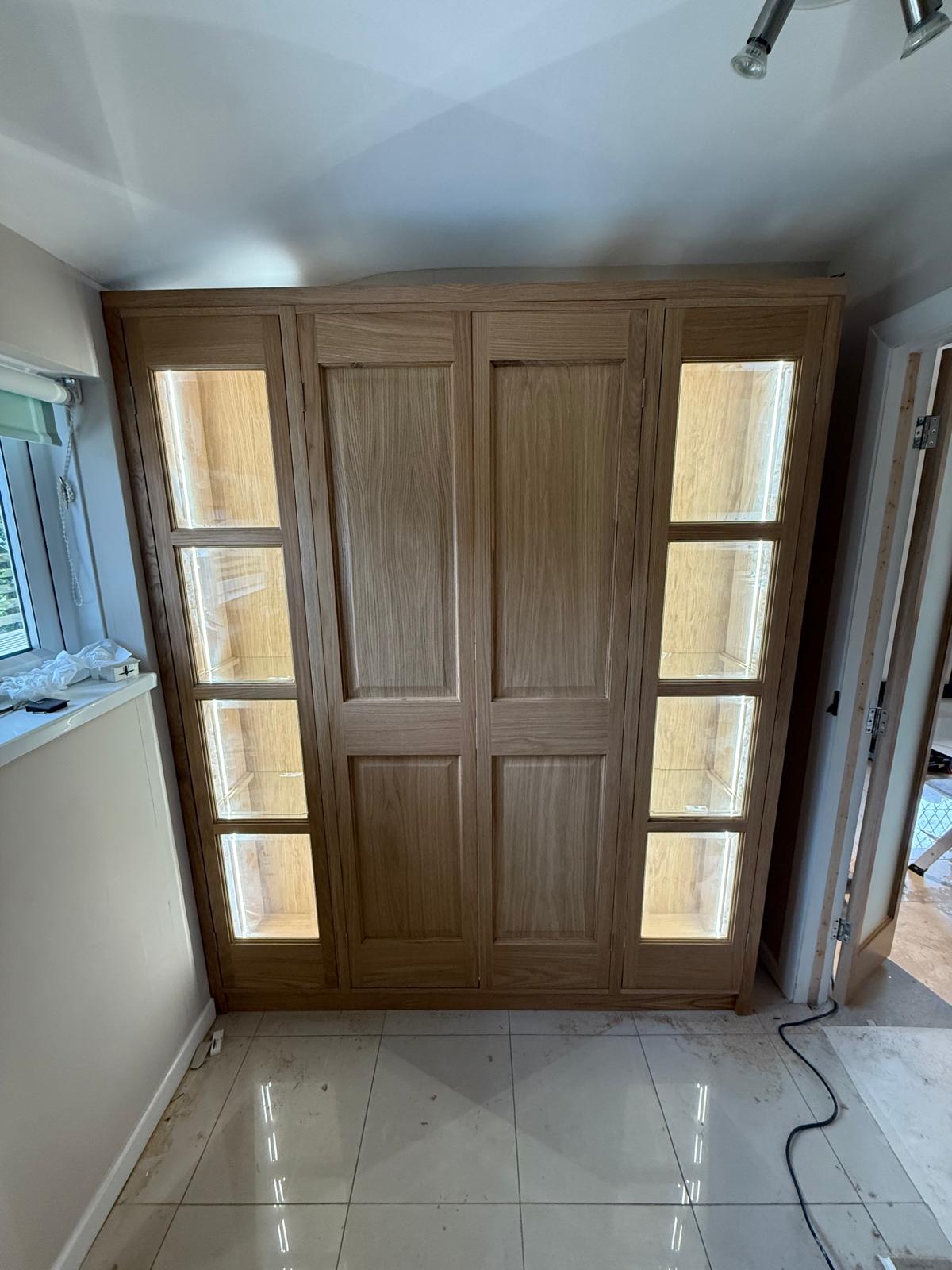
A glazed cabinet has a job that closed storage does not: it has to present what is inside it well, not just contain it. We have designed and built glazed and LED-lit display cabinetry in oak and in ivory wardrobe runs, alongside display shelving within media walls and home bars, each suited to what it was designed to hold.
Chester Thomas designs, draws, manufactures and installs the cabinetry itself, including its glazed doors or open shelving and any lighting recesses built into the carcass. Where a project has specific glass requirements beyond what we have shown in our own work, these are discussed and specified individually rather than assumed.
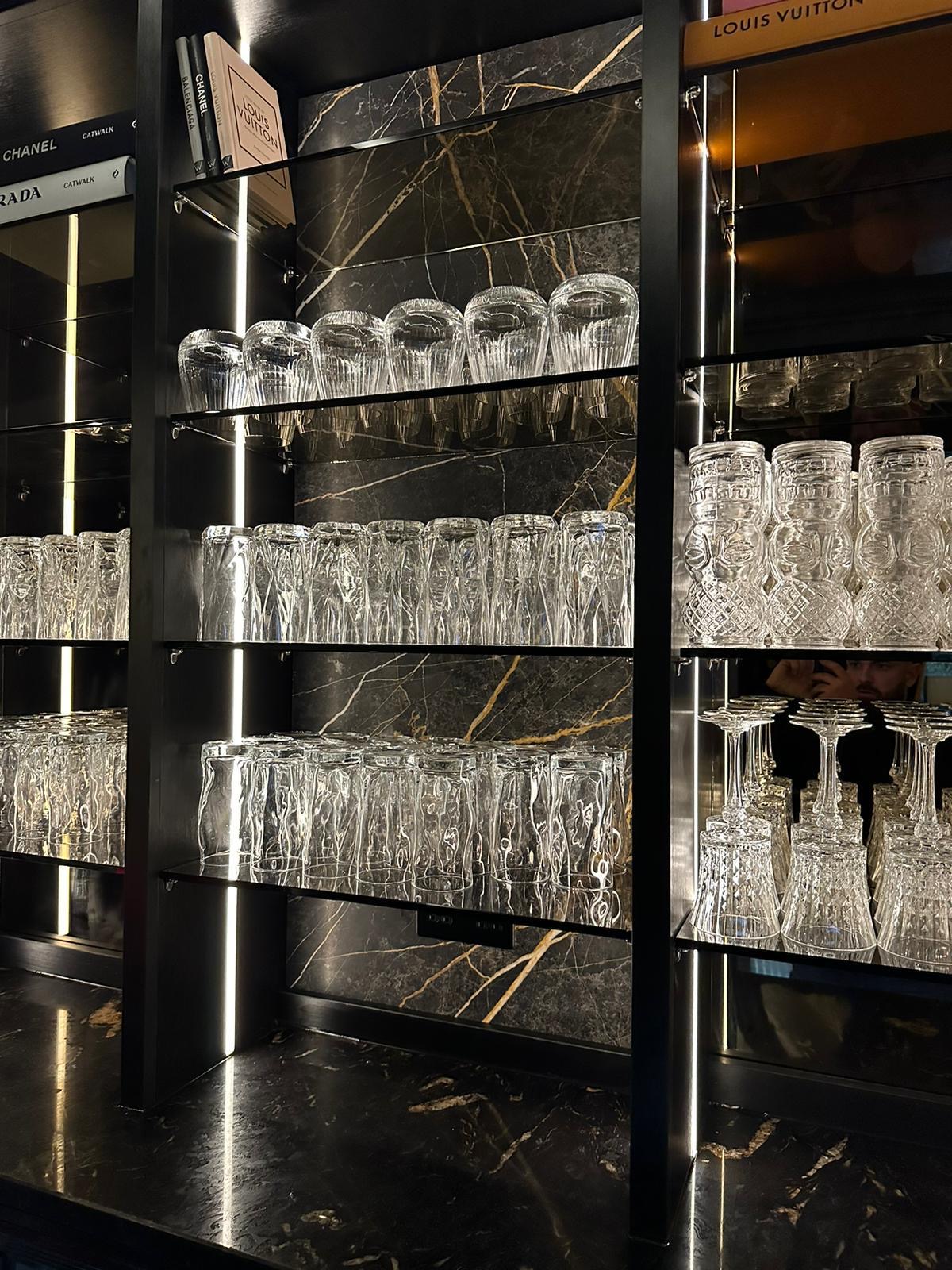
What sits behind the glass shapes much of the design. Glassware and drinkware benefit from even, unobtrusive lighting and clean, uncluttered shelving. Books read better against a warmer, less clinical background. Wine storage has its own requirements around orientation and handling. A collection of objects may need adjustable shelving to suit pieces of different heights. None of these are served well by a single generic display cabinet design applied without reference to its contents.
This page sets out how we approach glazed display cabinetry across these different uses: where it works well, the design decisions that shape a strong result, and how lighting, background finish and open versus closed display are chosen to suit what is being shown.
Where glass display cabinetry works well
01
Home bars and drinks storage
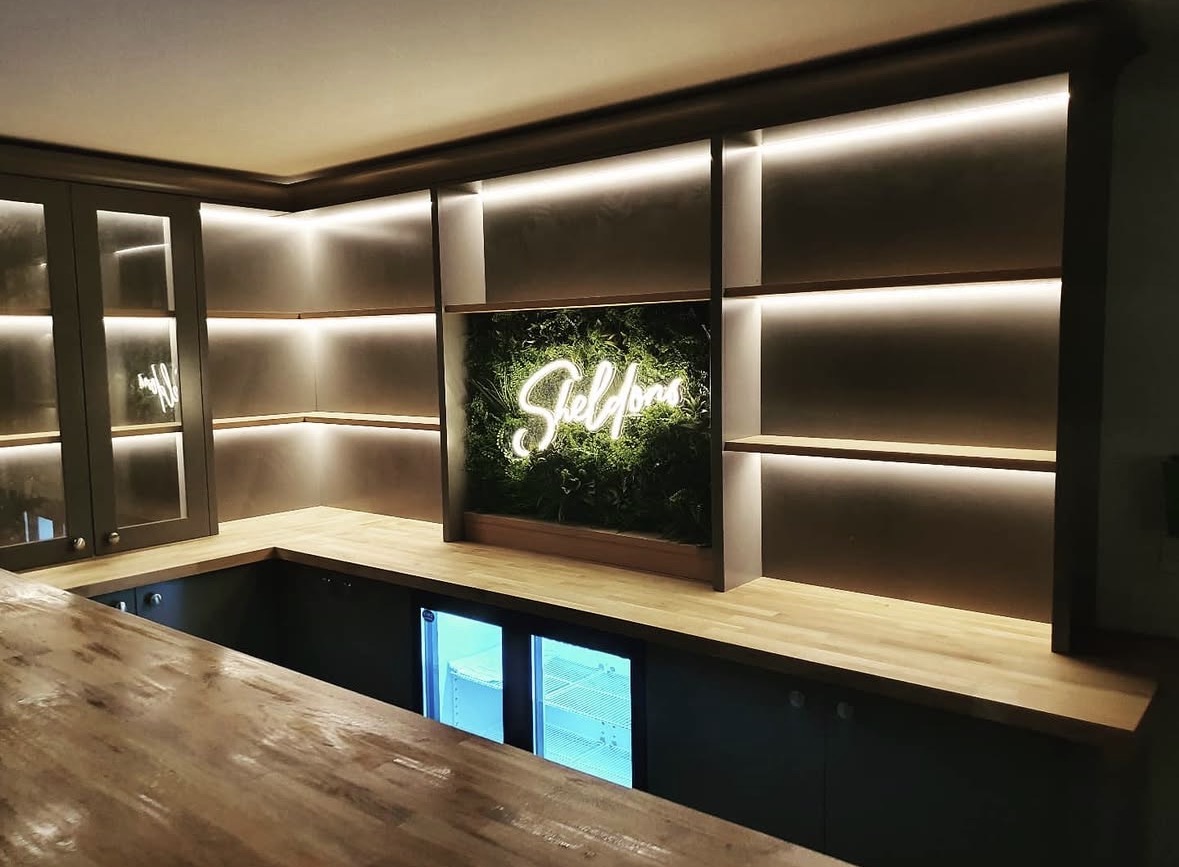
Glazed cabinetry lets glassware and bottles be seen and reached easily, turning a bar into a visual feature rather than simply a storage cupboard.
02
Wine collections
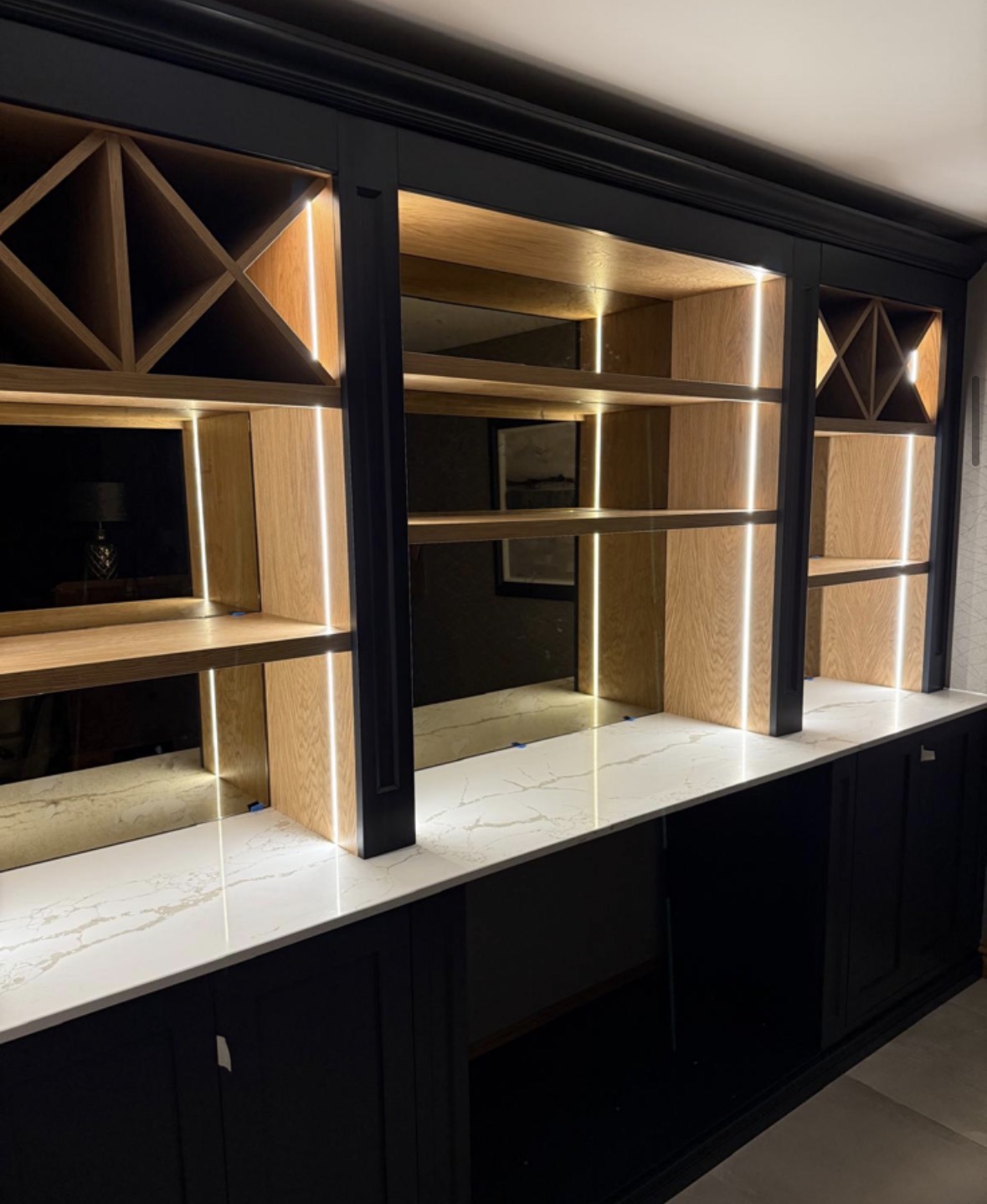
Glazed wine storage, whether within a home bar or a dedicated wine room, shows a collection while keeping it enclosed and protected.
03
Home libraries and book collections
Glazed or open shelving suits books well, giving a considered, ordered display without the clutter of fully open shelving in a heavily used room.
04
Media walls and living room display
Glazed and LED-lit shelving either side of a media wall gives a place to display objects, books or glassware alongside the television and any stone feature.
05
Wardrobes and dressing rooms
Glazed display within an ivory or oak wardrobe run suits collections of shoes, accessories or objects that the household wants to see rather than keep hidden behind solid doors.
06
Collections of any kind
Glassware, ceramics, awards, models or other collected objects all benefit from a cabinet designed with their specific scale, weight and arrangement in mind.
Lighting behind the glass
LED lighting fitted within glazed and display cabinetry, as used in our oak and ivory wardrobe display runs, makes a meaningful difference to how contents are seen, particularly in a room without strong natural light or in the evening. Lighting position, whether along the top of each shelf or recessed into the cabinet's sides, is chosen with reference to what is being displayed, since glassware and reflective objects respond differently to light than books or matt-finished pieces.
As with all lighting built into our cabinetry, we design and fit the recesses and wiring routes at manufacture, with the electrical connection itself carried out by a qualified electrician.
Open versus closed display
Glazed doors keep dust off displayed items and give a household some control over what is on show, while fully open shelving gives easier day-to-day access at the cost of more regular cleaning. Which suits a project depends on how often the contents are handled, whether the room needs a controlled, considered look, and how much maintenance the household wants to take on.
A single piece of furniture can combine both: closed glazed sections for more delicate or valuable items, alongside open shelving for glassware or books in more regular use.
Background and setting
What sits behind the displayed objects, whether a mirrored back panel, a painted interior or a plain timber lining, changes how the contents read. A mirrored back panel, used behind some of our media wall display shelving, adds depth and reflects light back through the objects on display, while a plain painted interior gives a calmer, more neutral backdrop for books or collected pieces.
This choice is made with reference to the specific contents intended for the cabinet, discussed as part of the design brief rather than defaulted to a single standard finish.
Shelving and adjustability
Fixed shelving gives a cleaner, more considered appearance, while adjustable shelving allows the cabinet to accommodate objects of varying heights as a collection changes over time. Wine storage in particular has its own shelving and orientation requirements, which are planned into the design where a wine collection forms part of the brief.
Shelf spacing for books, glassware or a mixed collection is agreed during design, based on the actual pieces the household intends to display, rather than a generic assumption about what will be stored.
Frame material and glazed door construction
Glazed doors are built within a frame, whether oak, painted timber or, on some wardrobe runs, a brass-framed bronze-toned glass door. The frame material and its finish are chosen to match the surrounding cabinetry, so a glazed section reads as part of the same piece of furniture rather than a separate insert.
Where a project calls for a particular glass type, tint or specification beyond what is shown in our existing photography, this is confirmed individually with the client as part of the specification stage, since we describe only what has genuinely been used on previous projects.
From our work
What glazed display cabinetry is typically paired with
- LED shelf and cabinet lighting
- Lighting fitted within the cabinet brings out glassware, book spines and collected objects far more effectively than relying on ambient room light alone.
- Mirrored back panels
- A mirrored panel behind display shelving, as used on some media wall cabinetry, adds depth and doubles the visual presence of objects on display.
- Oak or ivory cabinetry runs
- Glazed sections sit naturally within a wider run of oak or ivory fitted furniture, whether a wardrobe, media wall or bar.
- Brass-framed bronze glass doors
- A warmer, tinted glass in a brass frame gives display cabinetry a different character to clear glass in a painted or oak frame, suited to a more atmospheric setting.
- Open shelving for everyday items
- Combining glazed sections with open shelving allows a household to display frequently used glassware or books alongside more protected pieces.
Design, manufacture, installation
Glazed display cabinetry is designed, drawn, manufactured in our Derbyshire workshop and installed following the sequence described on the process page, with any electrical lighting connection carried out by a qualified electrician.
Questions we are asked
Examples
- What can glazed display cabinetry be used to show?
- We have designed glazed and LED-lit display cabinetry for glassware and drinks in home bars, books in home libraries, wine collections and general display within oak and ivory wardrobe runs. The specific design in each case responds to what is actually being displayed, rather than a single standard cabinet.
Lighting
- Is lighting always included in a display cabinet?
- Not always, but it is common, since lighting fitted within the cabinet significantly improves how contents are seen, particularly glassware and reflective objects. Lighting recesses and wiring routes are built in at manufacture, with the electrical connection carried out by a qualified electrician.
Design
- Should display cabinetry be open or glazed?
- This depends on how often the contents are handled and how much cleaning the household wants to take on. Glazed doors reduce dust and give a more controlled look, while open shelving is easier to access day to day; many pieces combine both within the same run of cabinetry.
- Can display cabinetry have a mirrored back?
- A mirrored back panel is one option we have used behind media wall display shelving, adding depth and reflecting light through the objects displayed. A painted or timber-lined interior is an alternative where a calmer backdrop suits the contents better.
Materials
- What frame options are available for glazed doors?
- Glazed doors are built within a frame to match the surrounding cabinetry, which might be oak, painted timber, or a brass frame with bronze-toned glass on some wardrobe runs. The frame and glass choice is confirmed individually with reference to the room and the client's brief.
Design
- Can wine be displayed as well as stored?
- Glazed wine storage lets a collection be seen while keeping it enclosed, whether within a home bar or as part of a dedicated wine room. Shelving orientation for wine is planned into the design where this forms part of the brief.
- Is glazed cabinetry suitable for books?
- Glazed cabinetry suits books well, though they tend to need a slightly different treatment than glassware, with shelf spacing and background finish chosen to suit their scale and colour rather than the brighter, more even lighting that glassware benefits from. This is discussed as part of the design brief for a home library or study.
- Can shelving be adjusted after installation?
- This depends on whether shelving was designed as fixed or adjustable. Fixed shelving, built into the cabinet carcass at manufacture, gives a cleaner appearance and stronger support for heavier items such as stone, glassware or books, but cannot be repositioned once installed. Adjustable shelving, set on discreet pins or runners, is specified at design stage where the household expects a collection to change over time, and is worth raising early in the brief if flexibility matters more than the slightly cleaner look of a fixed arrangement.
Maintenance
- Does glazed cabinetry need more maintenance than closed storage?
- Glass generally needs more regular cleaning than a solid door, since fingerprints and dust are more visible, though it protects contents from dust build-up better than fully open shelving. Which suits a household depends on how much maintenance they are happy to take on.
Design
- Can display cabinetry be part of a wardrobe or dressing room?
- We have built glazed and LED-lit display sections into ivory and oak wardrobe runs, typically for shoes, accessories or objects the household wants to see rather than store behind solid doors. This is planned alongside the rest of the wardrobe's storage during design.
Materials
- What glass specification is used in your cabinetry?
- We describe display cabinetry by what has genuinely been used on previous projects, such as clear glazing in oak and ivory frames and bronze-toned glass in brass frames on wardrobe doors. Where a project needs a specific glass type or specification, this is confirmed individually with the client rather than assumed.
Design
- How does display cabinetry fit into a media wall?
- Glazed or open, LED-lit shelving is often built either side of a media wall's central feature, whether stone, timber or another finish, giving a place to display objects, books or glassware alongside the television. This is planned as part of the wider media wall design covered on media walls.
Cost
- What does glazed display cabinetry cost?
- Cost depends on the scale of the cabinetry, the frame and glass specification, and whether lighting is included, so there are no general figures we can quote without seeing the project. The best next step is to get in touch through the contact page with a brief and any room details.
Relevant bespoke services
Home bars
Glazed cabinetry designed for glassware, bottles and drinks display.
Wine rooms and cellars
Glazed storage designed for a wine collection.
Walk-in wardrobes and dressing rooms
Glazed display sections built into oak and ivory wardrobe runs.
Media walls
Display shelving designed alongside a media wall's central feature.
Bespoke cabinetry
General display and storage furniture designed around a collection.
Related materials and styles
Mirrored cabinetry
Mirrored doors, antique mirror bar backs and lit mirrored shelving, designed to add depth and reflected light.
Integrated lighting
LED shelf, display and wardrobe lighting designed into cabinetry from the outset, with connection carried out by a qualified electrician.
Bespoke oak furniture
Oak furniture with visible grain and natural variation, designed to sit alongside stone, metal, glass and painted finishes.
Neutral fitted furniture
Warm neutrals and soft greys, designed to sit quietly within a room rather than compete with it.
To discuss materials and finishes, call Chester Thomas on +44 7418 627358, email info@chesterthomas.com or start your project.
Planning Something Bespoke?
Tell us about your space, what you're looking to create and where the project is located.