
Materials & finishes
Integrated lighting for bespoke furniture
Lighting built into shelving, cabinetry and wardrobes changes how a piece is used after dark, and it needs to be planned as part of the furniture design from the outset rather than added as an afterthought.
Integrated lighting
Integrated lighting refers to LEDs built into the structure of a piece of furniture, rather than a lamp or fitting placed separately in the room. This includes strips concealed beneath a shelf edge, lighting run behind or above a panel to wash a wall, and fittings built into the base or top of a cabinet to illuminate its contents. Done well, the light source itself disappears, and what is left is a glowing shelf edge, a lit display or a softly illuminated interior.
We plan lighting as part of furniture design, not as an add-on once the cabinetry is finished. This matters because the position of a shelf, the depth of a rebate to conceal a strip, and the routing needed to run cable through a carcass all have to be resolved in the drawings before manufacture begins. A shelf designed without a lighting channel cannot easily have one added later, so if lighting is a possibility for a project, it needs to be part of the conversation from the earliest design stage, described on the chester thomas bespoke furniture design service.
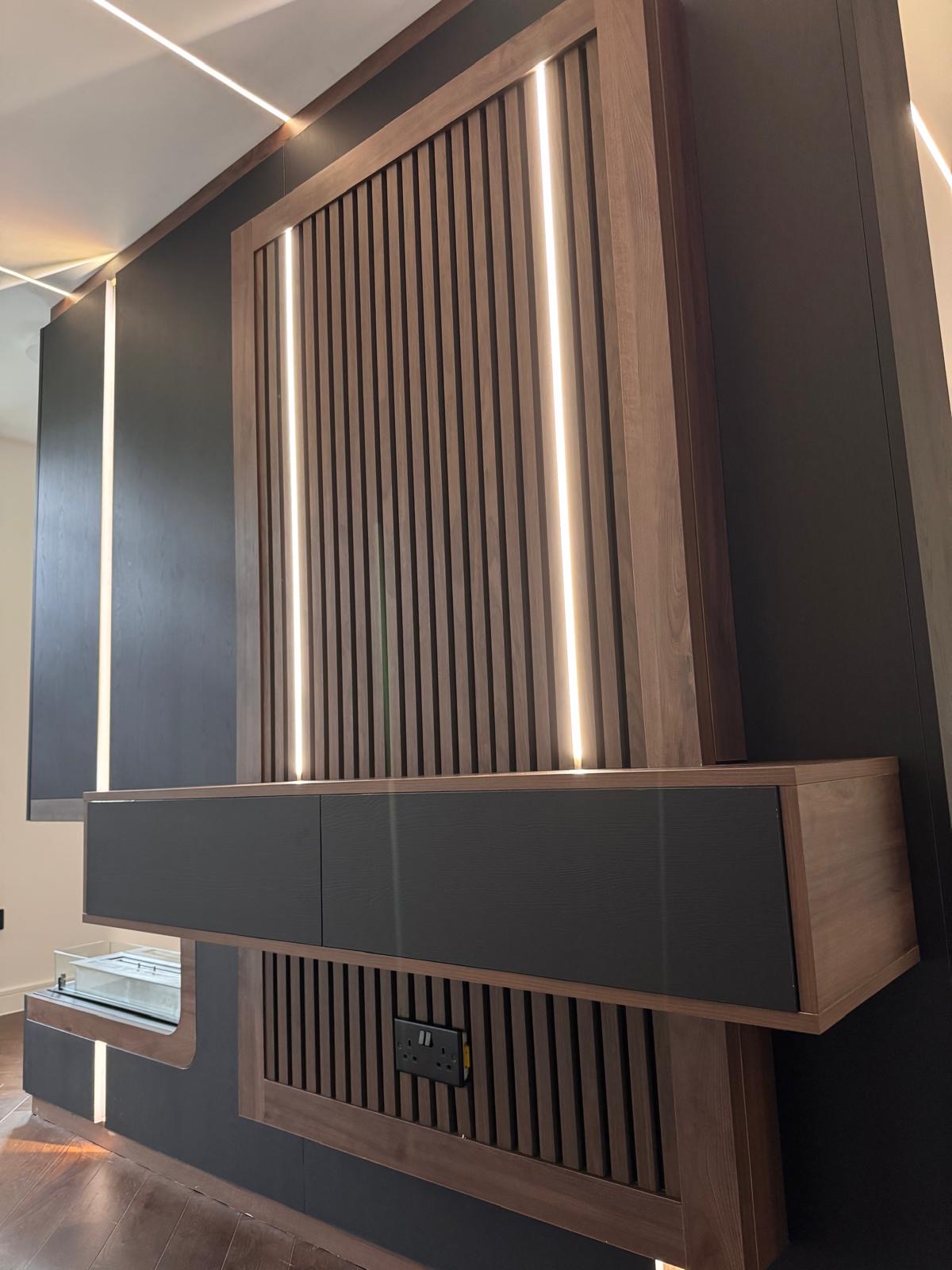
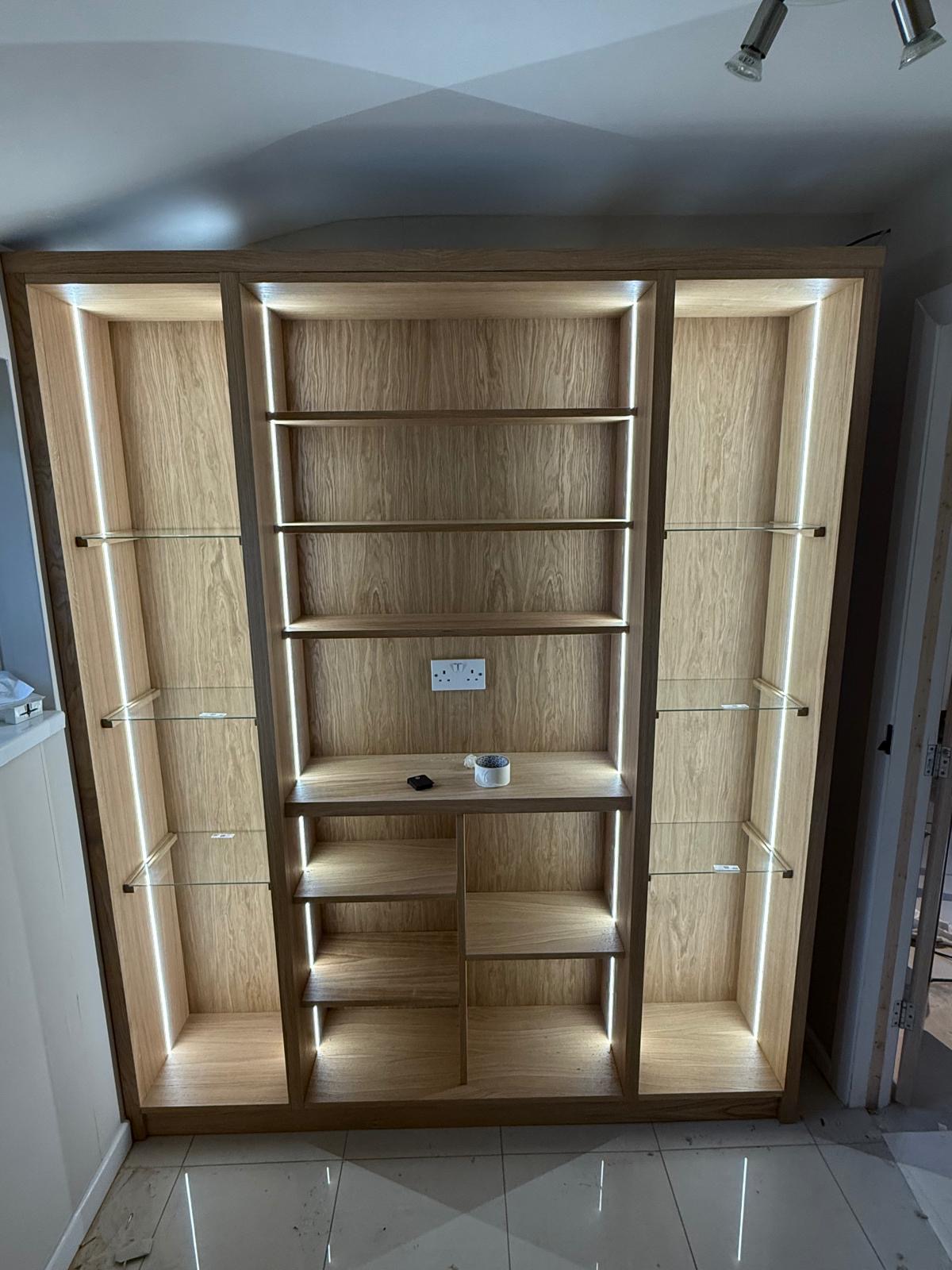
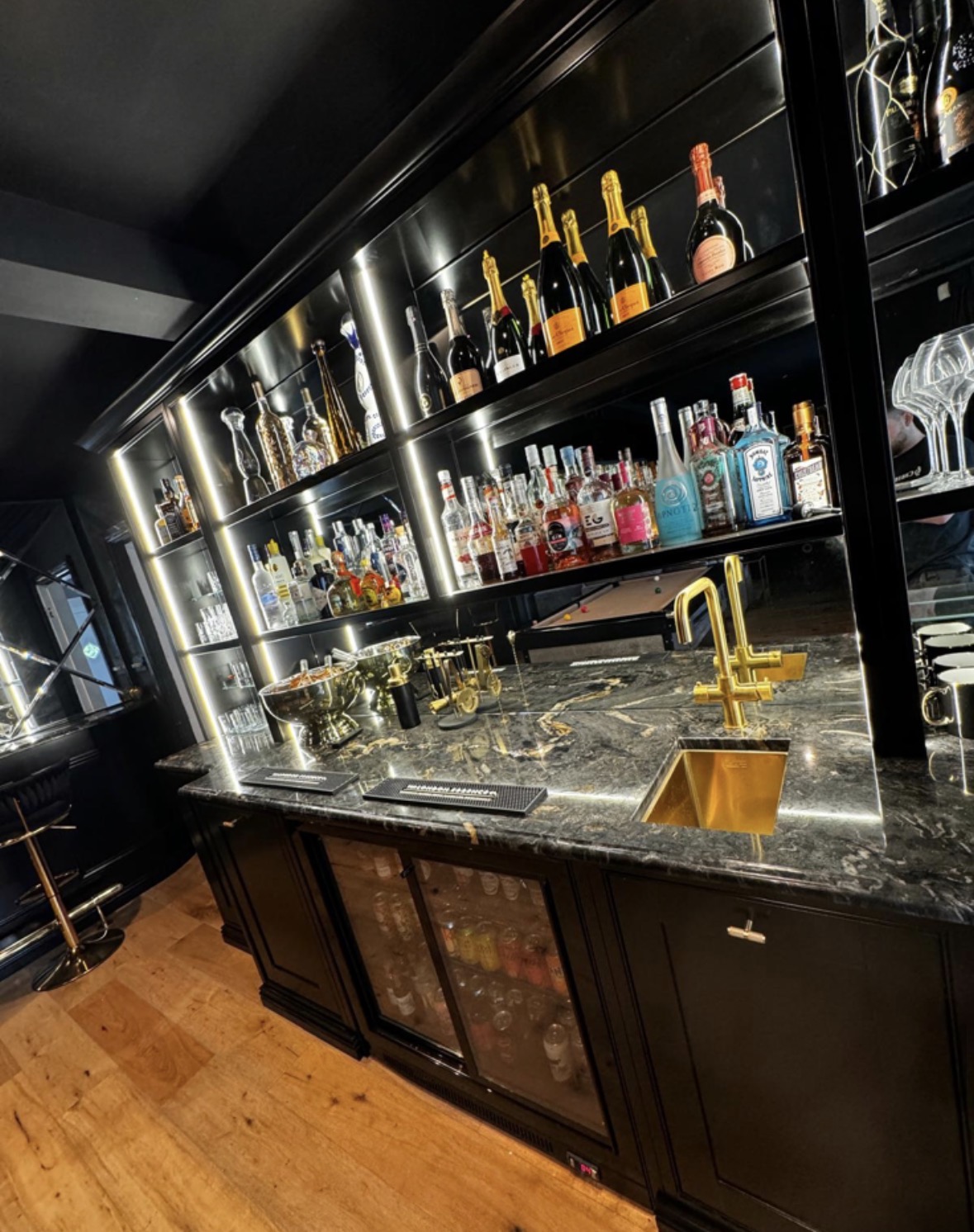
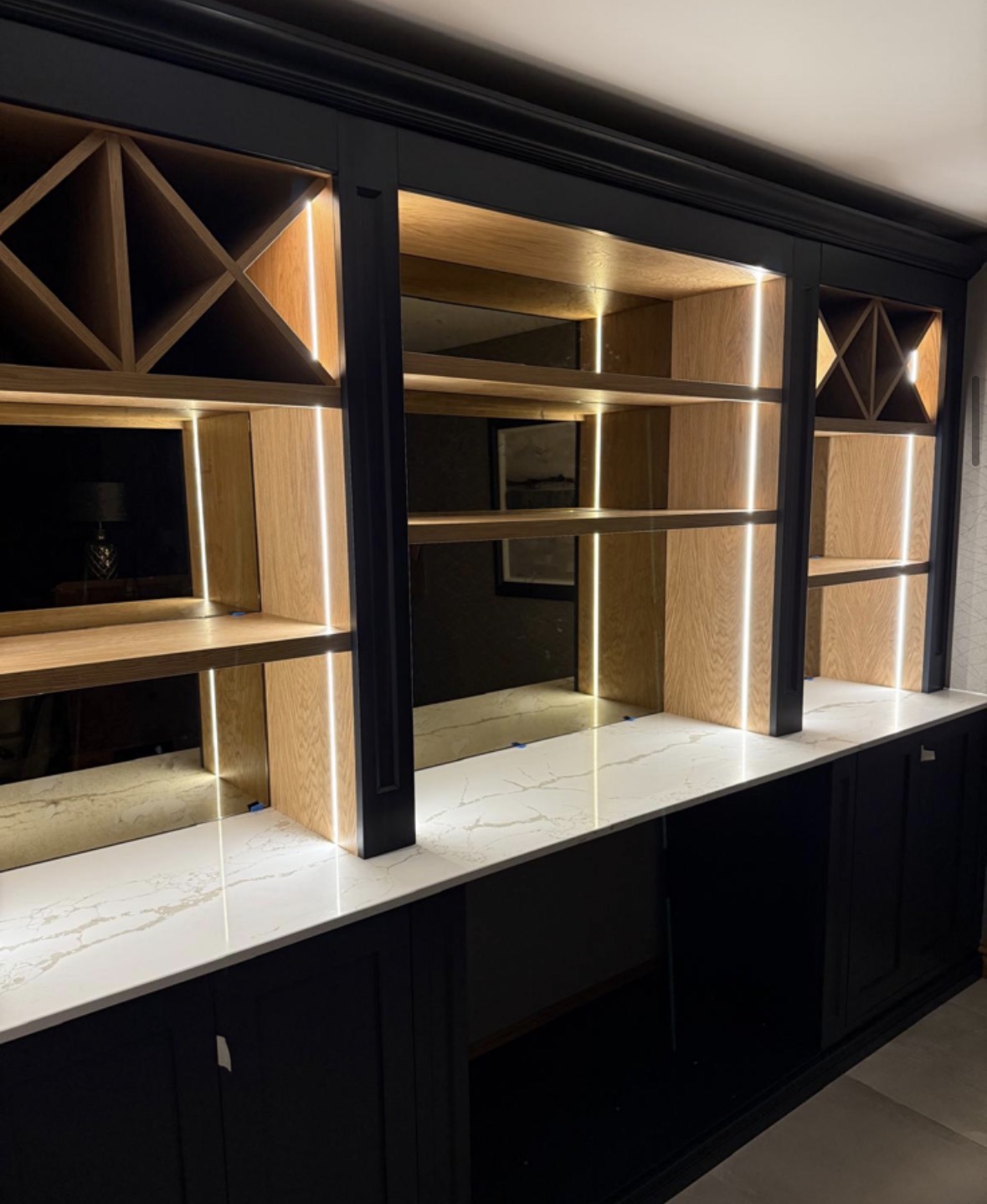
Our own work shows the range this can take: concealed LED strips above slatted walnut panelling, LED-lit bottle and glassware shelving, lit glazed display cabinets, illuminated wardrobe interiors, LED strips within wine racking, and lighting set beneath every shelf of a bookcase or media unit. Our completed bespoke media wall project in Solihull shows this at scale: a 5.58m run of stained oak framework and shelving, with an inset fireplace and a book-matched marble television surround, lit beneath every shelf so the piece reads as a considered composition after dark as well as during the day.
It is worth stating plainly how this work is divided. Chester Thomas designs, specifies and builds the cabinetry with the routing, rebates and fixings needed to house LED strips and fittings, and installs the furniture itself. The final electrical connection, including wiring back to a switch or transformer and any control system, is carried out by an appropriately qualified electrician, and we do not provide electrical advice or carry out that connection ourselves. Switching and control are discussed with the client's electrician as part of the wider project, so the furniture and the electrical installation are coordinated rather than treated as entirely separate pieces of work.
Where integrated lighting works well
01
Display and open shelving
LED-lit shelving brings out books, objects and glassware after dark, and is one of the most common applications of integrated lighting across our cabinetry work.
02
Wardrobe interiors
Illuminated wardrobe interiors make it easier to see clothing and accessories clearly, and are particularly valued in walk-in wardrobes and dressing rooms without strong natural light.
03
Home bars and wine storage
LED-lit bottle and glassware shelving, and LED strips built into wine racking, give a home bar or wine room a considered, gallery-like quality after dark.
04
Media walls and bookcases
Lighting set beneath every shelf of a media unit or bookcase, as in the Solihull project, gives the whole piece a lifted, evening presence rather than reading as a dark mass once the room lights are dimmed.
05
Glazed display cabinets
Lit glazed cabinets bring out contents behind glass in a way ambient room lighting alone cannot, particularly for collections, ceramics or glassware.
06
Home offices
Concealed lighting above or beneath shelving and storage in a home office adds a softer, more considered layer of light to a space often otherwise reliant on a single desk lamp or overhead fitting.
Planning lighting early
Because lighting affects the structure of a shelf or panel, it has to be decided during design rather than after cabinetry has been drawn or built. We ask early in any project whether lighting is being considered, so the necessary rebates, cable routes and clearances can be built into the drawings from the outset.
This also affects the sequence of trades on site, since first fix wiring often needs to happen before cabinetry is installed, which is why coordination with the client's electrician matters from an early stage rather than at the point of installation.
Working with the client's electrician
Chester Thomas designs and builds the furniture to accommodate lighting, and installs it, but the electrical connection, wiring and any switching or control system are the responsibility of an appropriately qualified electrician engaged separately by the client. We coordinate on positioning, cable routes and access points, but we do not carry out electrical work ourselves and give no electrical advice beyond what is needed to design the cabinetry correctly.
Warm versus cool light
The colour temperature of an LED strip changes the character of a piece considerably. A warmer tone tends to suit timber cabinetry and living spaces, while a cooler tone can read more crisply against painted or graphite finishes. This is a decision made alongside the client's electrician, since it relates to the specification of the fittings themselves rather than the furniture design alone.
Concealment and shadow gaps
The aim of most integrated lighting is for the fitting itself to stay hidden, with only the light it casts visible. This depends on a carefully sized rebate or shadow gap along the shelf or panel edge, resolved in drawings before manufacture, so the strip sits flush and out of sight once the piece is finished.
Scale and restraint
Lighting under every shelf of a large piece, as in the Solihull media wall, suits a project built around that level of drama. Smaller or more restrained applications, such as lighting a single display shelf or a wardrobe interior, can be just as effective and are chosen according to how the piece will actually be used, rather than lighting being applied uniformly by default.
From our work
What integrated lighting pairs well with
- Slatted and walnut panelling
- Concealed LED strips above slatted walnut panelling give the timber a soft wash of light that emphasises its texture, seen in our own panelling work.
- Book-matched marble
- The Solihull media wall pairs LED lighting beneath every shelf with a book-matched marble television surround, letting the light play across the stone's pattern.
- Glazed display cabinets
- Lit glazed cabinets bring lighting and glass together to bring out collections and glassware after dark.
- Wine racking and bar shelving
- LED strips within wine racking and LED-lit bottle shelving suit home bars and wine rooms where a gallery-like presentation is wanted.
Related project
A 5.58 metre media wall built around a book-matched marble television surround, with stained oak framework and shelving, an inset fireplace and LED lighting beneath every shelf.
Bespoke media wall, Solihull →Design, manufacture, installation
Lighting positions, rebates and cable routes are agreed during design and recorded in drawings before manufacture, following the sequence set out on the process page, with final electrical connection carried out separately by the client's qualified electrician.
Questions we are asked
Working with your electrician
- Does Chester Thomas carry out the electrical wiring for lighting?
- No. We design and build the cabinetry to house LED strips and fittings, including the necessary rebates and cable routes, and we install the furniture itself. The final electrical connection, including wiring to a switch or transformer, is carried out by an appropriately qualified electrician engaged by the client, and we do not provide electrical advice beyond what is needed to design the furniture correctly.
Planning lighting
- When should lighting be discussed in a project?
- As early as possible, ideally during the initial design stage described on the chester thomas bespoke furniture design service. Lighting affects the depth of shelves, the rebates needed to conceal a strip and the routing for cable through the carcass, all of which are far harder to add once cabinetry has been drawn or built.
Our work
- What is the Solihull media wall project?
- It is our published case study of a 5.58m media wall featuring a book-matched marble television surround, a stained oak framework and shelving, an inset fireplace, and LED lighting fitted beneath every shelf. It shows how lighting, stone and joinery can be combined at scale, and is described in full at our completed bespoke media wall project in Solihull.
Planning lighting
- Can lighting be added to shelving after it is installed?
- It is far more difficult and usually impractical, since concealing a strip properly relies on a rebate or shadow gap built into the shelf during manufacture. Where lighting is a possibility, even one under consideration rather than confirmed, we recommend raising it during design so the option remains open.
Where it works
- Do you fit lighting inside wardrobes?
- Illuminated wardrobe interiors are one of the more common applications of integrated lighting we design, particularly in walk-in wardrobes and dressing rooms without strong natural light. The cabinetry is built to house the fittings, with connection carried out by the client's electrician.
- Can lighting be fitted in wine storage?
- We have built LED strips into wine racking and LED-lit bottle and glassware shelving as part of home bar and wine room projects, giving the storage a considered, gallery-like presentation after dark. The racking and shelving are designed with the lighting in mind from the outset, and the electrical connection is arranged separately with the client's electrician.
Design & specification
- What colour of light is best?
- This depends on the material and mood of the piece. Warmer light tends to suit timber cabinetry and living spaces, while cooler light can read more crisply against painted or graphite finishes. We discuss colour temperature alongside the client's electrician as part of specifying the fittings themselves.
Working with your electrician
- Who chooses the actual LED fittings and transformer?
- This is agreed between the client and their electrician, since it involves electrical specification rather than furniture design. We advise on positioning, concealment and the cabinetry's requirements, such as rebate depth and cable access, but the fittings and control system themselves are specified and connected as part of the electrical works.
- Can lighting be dimmed or controlled by a switch or app?
- This is possible depending on the control system specified, and is a decision made with the client's electrician rather than as part of the furniture design. We can accommodate the cabling and access needed for a given control system if this is confirmed early enough in the design process.
Design & specification
- Does lighting under every shelf suit every project?
- No, this level of lighting suits a piece built around that kind of presence, as with the Solihull media wall. Many projects use lighting more selectively, such as a single lit display shelf or an illuminated wardrobe interior, and the right level of lighting depends on how the piece will actually be used.
Planning lighting
- Does lighting affect the design of a shelf?
- Yes. A shelf intended to carry lighting is typically deeper or has a rebated edge to conceal the strip and its cable, which is why lighting needs to be agreed before shelves are drawn rather than after. This is one of the main reasons we ask about lighting at the earliest stage of a project.
Where it works
- Is lighting suitable for a home office?
- Concealed lighting above or beneath shelving and storage adds a softer layer of light to a home office, complementing task lighting at a desk rather than replacing it. This is discussed as part of the wider fitted design described on home offices & studies, alongside the storage and desk arrangement the room needs.
Working with your electrician
- Do you give advice on electrical safety?
- No, we do not provide electrical advice. Our role is to design and build cabinetry that accommodates lighting correctly, including concealment and cable routing, and to install the furniture itself. Electrical safety, wiring and connection are the responsibility of the qualified electrician engaged for that part of the project.
Planning lighting
- Can integrated lighting be added to an existing piece of furniture?
- We design and build new cabinetry with lighting incorporated from the outset, rather than adding lighting to furniture made by another company, since concealment depends on how the piece was originally built. A new project gives us the ability to design the necessary rebates and routing properly.
Cost
- What does integrated lighting cost?
- Cost depends on the extent of lighting within a project, the cabinetry it is built into, and the separate cost of electrical connection arranged with your electrician, so we cannot give a general figure here. The best next step is to send project details through the contact page so a response can be given against the specifics involved.
Relevant bespoke services
Media walls
Media cabinetry frequently designed with lighting beneath every shelf.
Built-in bookcases
Bookcases where lit shelving brings out books and objects after dark.
Wine rooms & cellars
Wine storage where LED strips are built into racking and shelving.
Home bars
Bars where lit bottle and glassware shelving is a common feature.
Walk-in wardrobes
Dressing rooms where illuminated wardrobe interiors are frequently specified.
Display cabinets
Glazed cabinets where lighting brings out collections and glassware.
Related materials and styles
Marble media walls
Book-matched marble media walls, with television and fireplace surrounds set into stained oak joinery and lighting.
Glass display cabinets
Glazed and LED-lit display cabinetry designed around what is being shown, from glassware and books to wine and collections.
Bespoke walnut furniture
Richer, darker grain used within wardrobe interiors, alcove shelving, wine walls and slatted panelling.
Mirrored cabinetry
Mirrored doors, antique mirror bar backs and lit mirrored shelving, designed to add depth and reflected light.
To discuss materials and finishes, call Chester Thomas on +44 7418 627358, email info@chesterthomas.com or start your project.
Planning Something Bespoke?
Tell us about your space, what you're looking to create and where the project is located.