
Bespoke Cabinetry
Bespoke Display Cabinets
A display cabinet only earns its place if it's built around what's actually going in it — the size of the objects, the light they need, and the room they sit in.
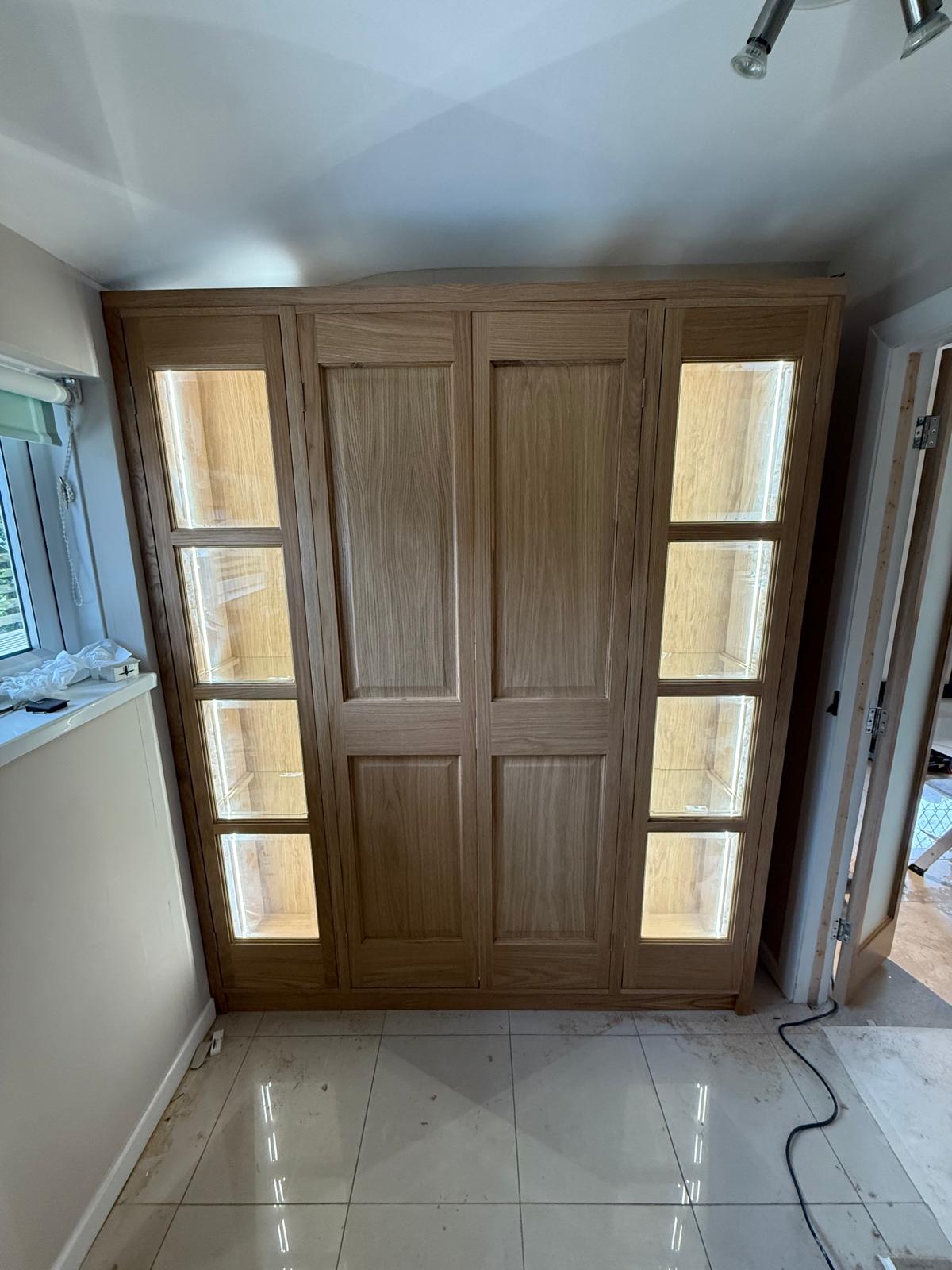
Display Cabinets, designed around the room
Display cabinets bought ready-made are designed around nothing in particular, which is why the shelf spacing rarely suits what people actually want to show — a run of glassware, a book collection, ceramics of varying heights. We start by asking what's going inside, then design the shelving and lighting around it.
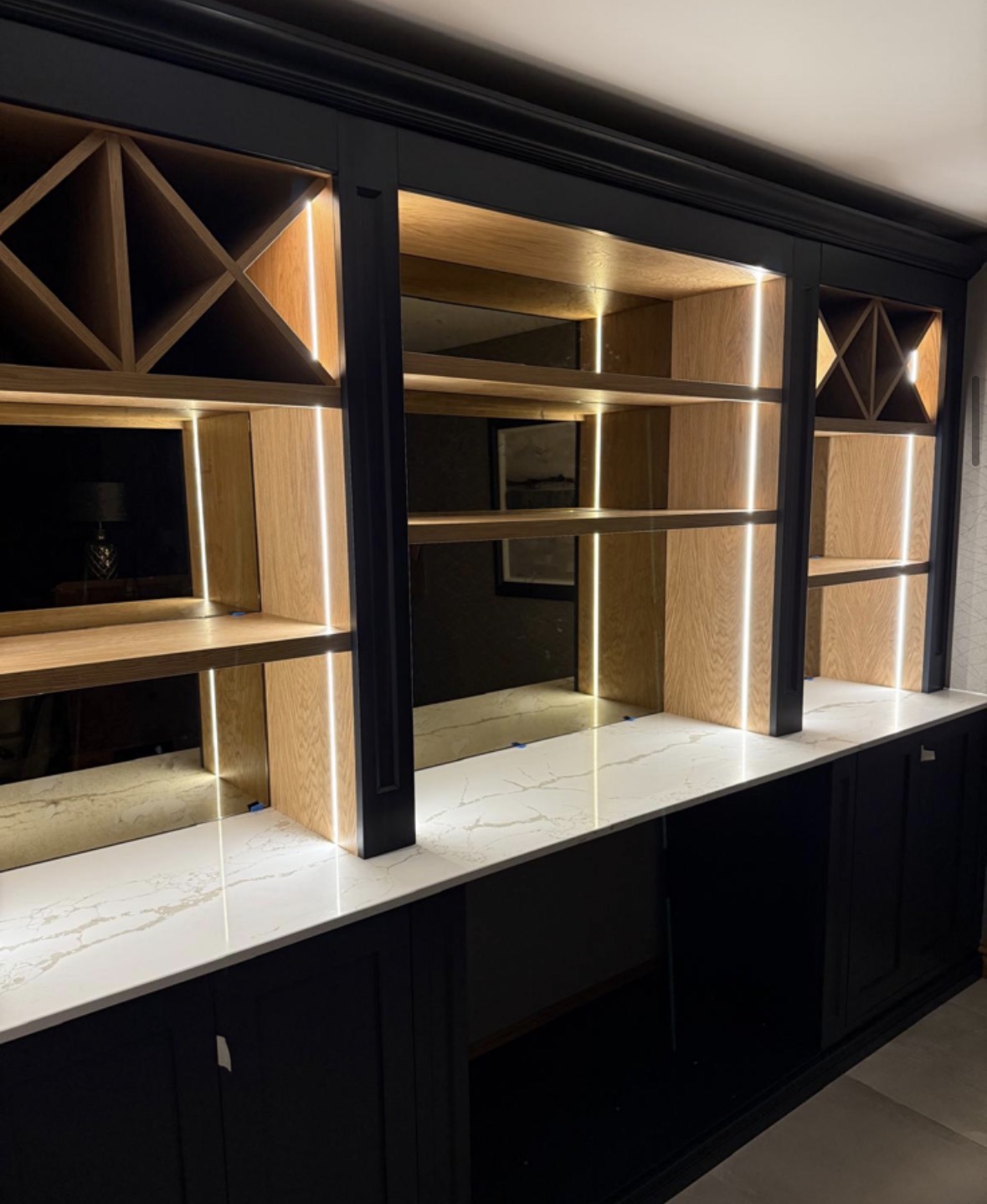
Glazing is a central decision: framed or frameless doors, clear or bronze-tinted glass, hinged or sliding, all affect how the cabinet reads in the room and how the contents are lit. LED lighting is normally built into the shelf edges or cabinet top, positioned to avoid glare on the glass itself.
Cabinets can stand as a single piece in an alcove, form part of a wider run of living room or hallway cabinetry, or sit built into a wardrobe or dressing room wall where display and storage share the same run. The carcass, doors and internal shelving are all built to the same standard whether the cabinet is a single unit or one section of a larger scheme.
As with all our fitted furniture, the finished piece is scribed to the wall, skirting and floor on installation, so a single free-standing-looking cabinet in an alcove sits as precisely as a full run of cabinetry.
What can be included
01
Shelf spacing built around your collection
Glass or timber shelves positioned to suit the actual height and depth of the objects being displayed.
02
Framed or frameless glazing
Glass doors detailed with a visible frame or a minimal frameless edge, depending on the look wanted.
03
Bronze, smoked or clear glass
Glass tint chosen to suit the room and how much the contents are meant to stand out.
04
Integrated LED lighting
Shelf-edge or top-mounted lighting positioned to illuminate contents evenly without reflecting off the glass.
05
Hinged or sliding doors
Door type chosen based on available space in front of the cabinet and how often it's opened.
06
Lockable doors
Locks can be specified where a collection needs securing, particularly relevant for glassware, china or valuable objects.
07
Adjustable glass shelving
Shelf heights that can be reconfigured as a collection changes over time.
08
Built-in or free-standing appearance
Cabinets can be designed to look like fitted furniture or to read as a piece that could have been bought separately.
09
Coordinated finish with surrounding cabinetry
Frame and door finishes matched to adjoining wardrobes, dressing room or living room joinery where the cabinet forms part of a larger run.
From our work
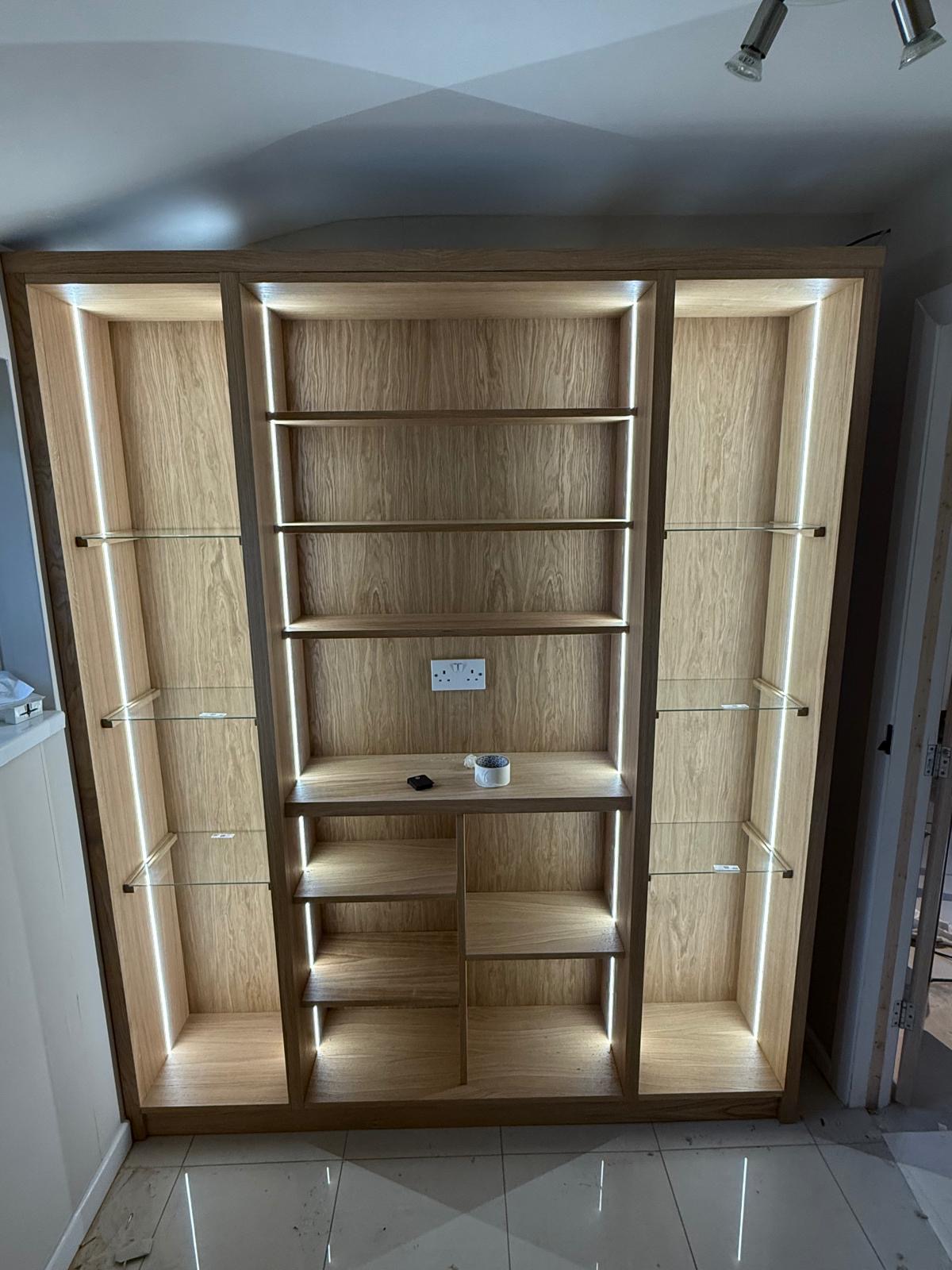
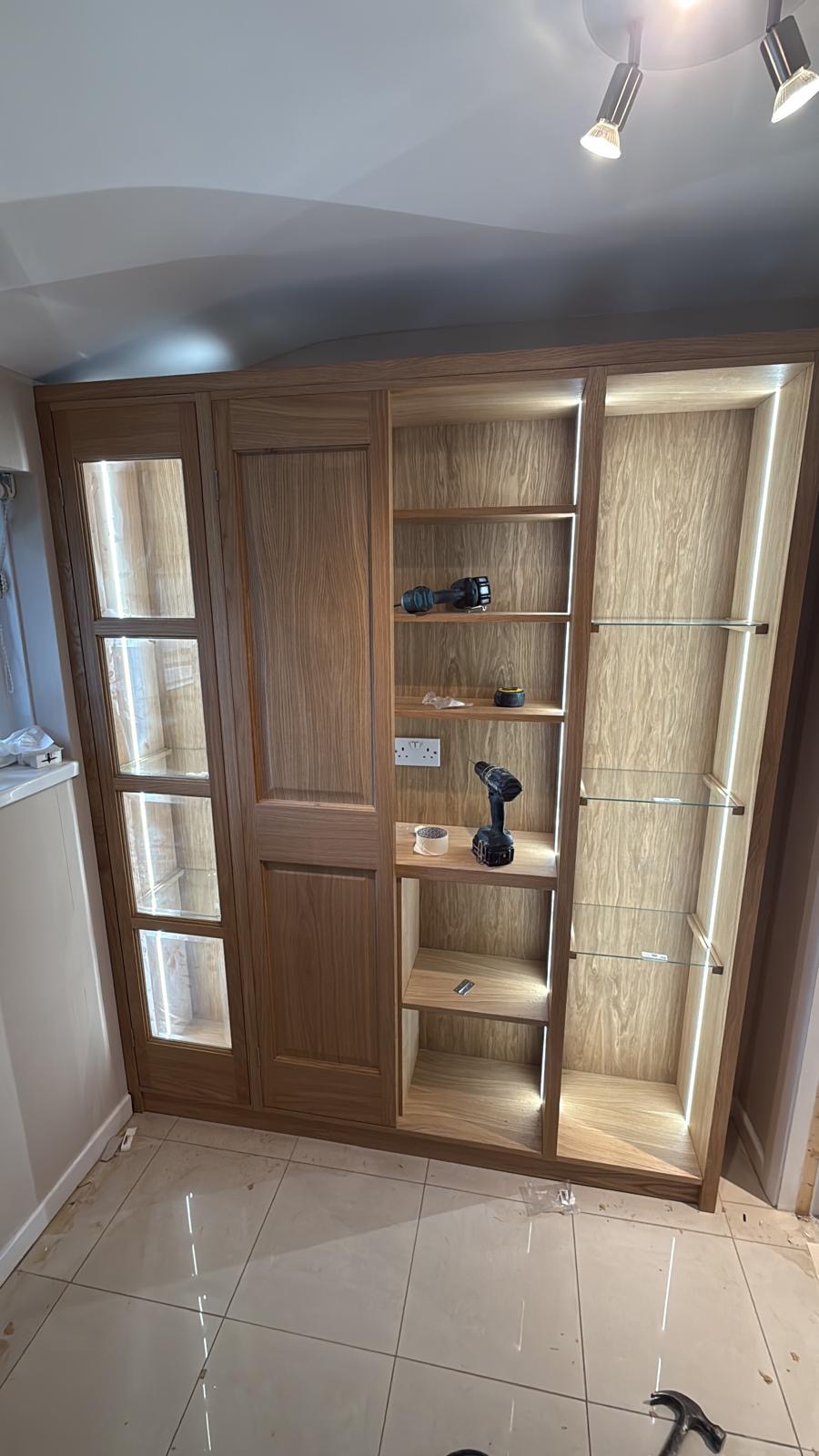
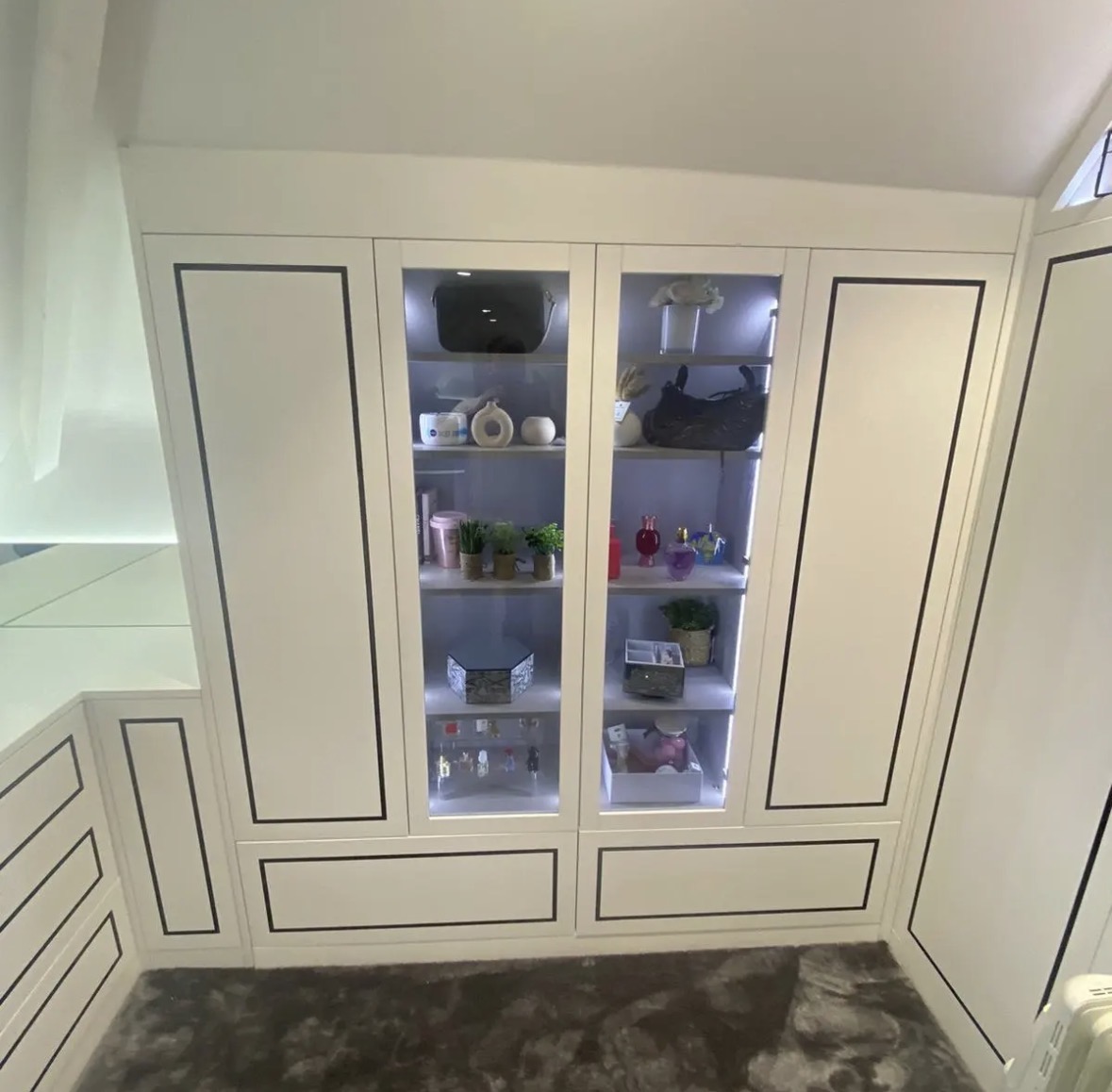
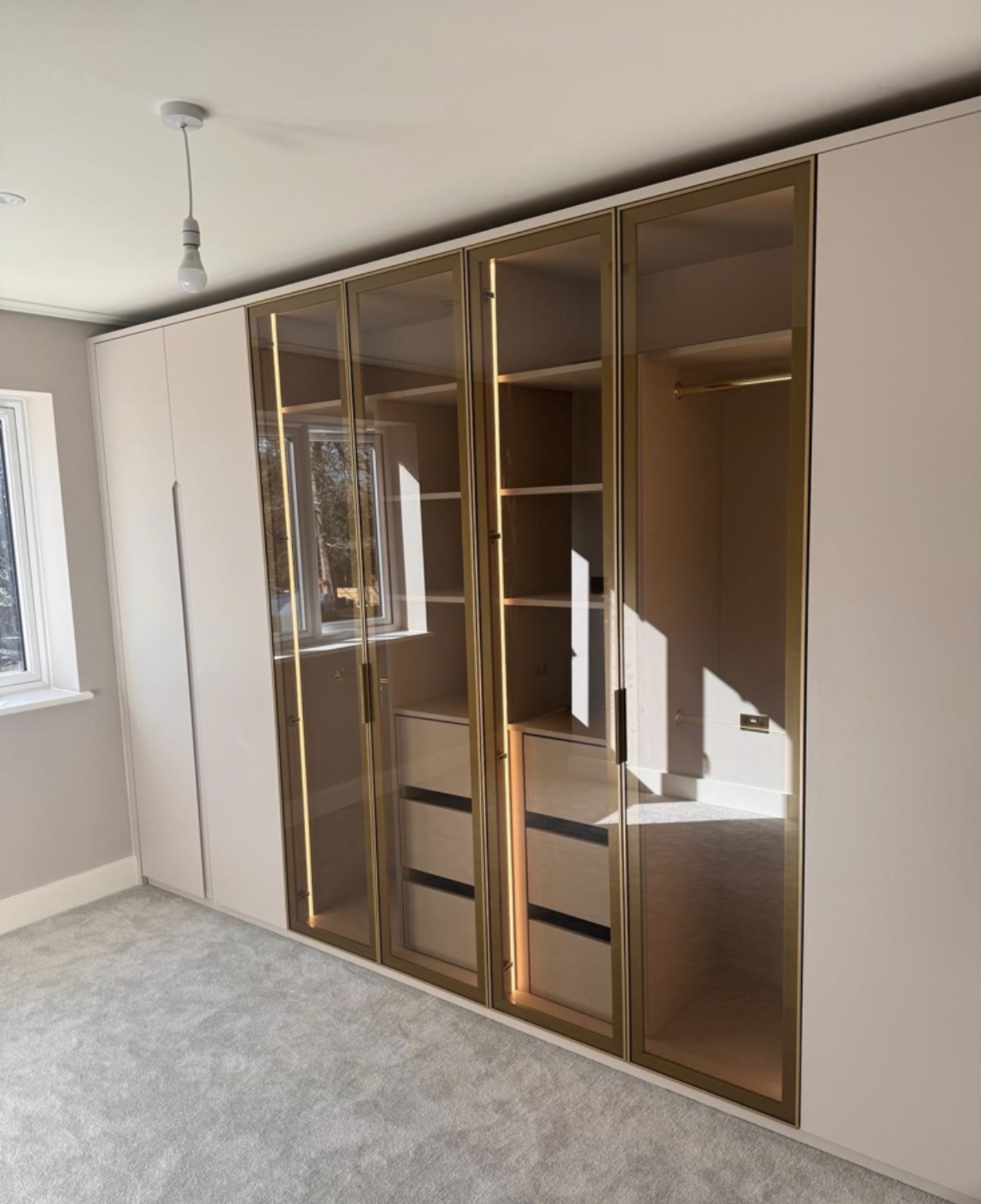
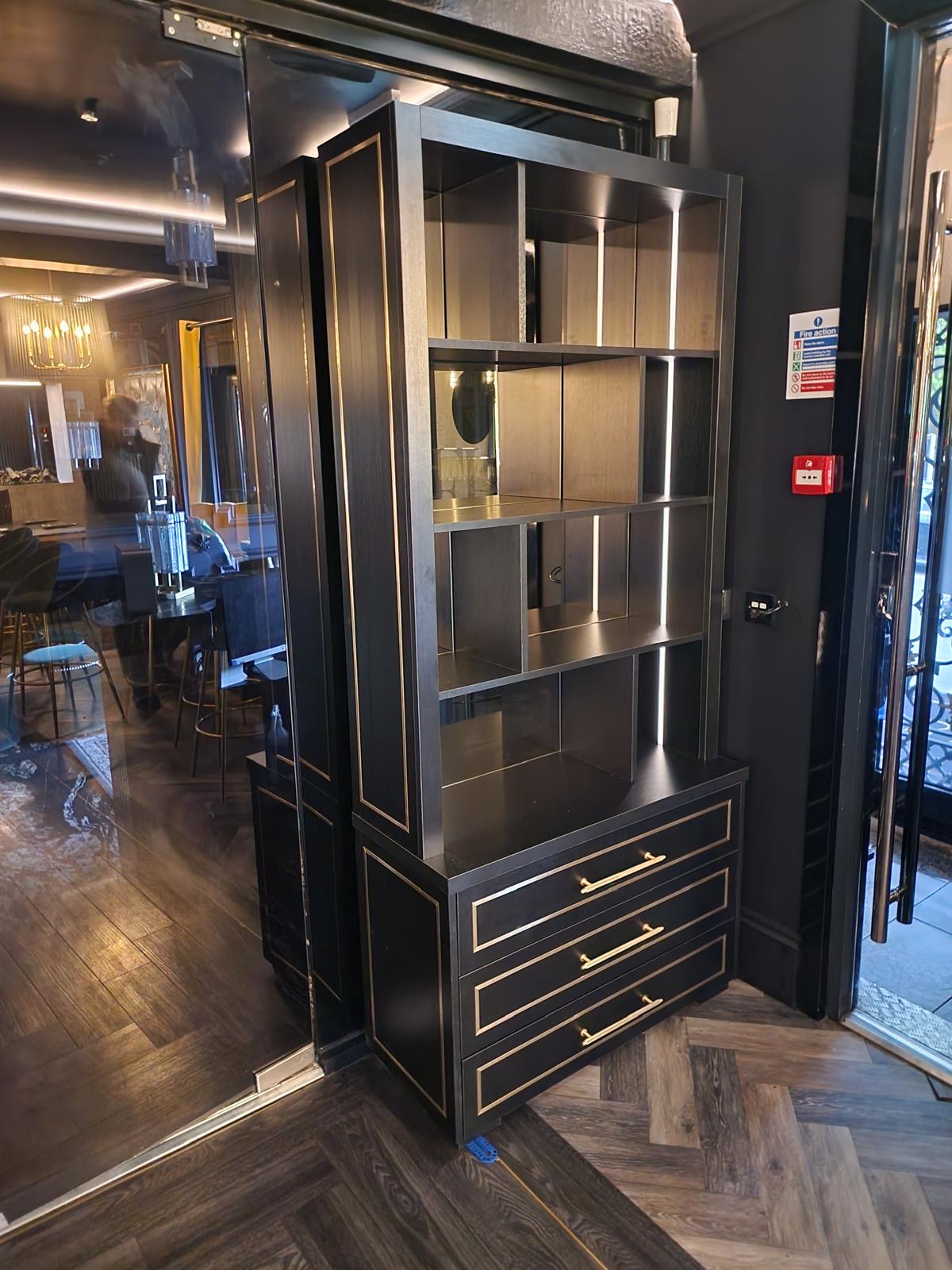
Every commission begins with a conversation about the room, how it is used and what needs to be stored or shown.
Built for the architecture you already have
- Available wall or alcove width
- The cabinet's footprint is set by the space available, whether that's a full alcove or a narrower gap between other furniture.
- Natural and artificial light in the room
- Cabinet lighting is planned alongside the room's existing light sources to avoid glare or a washed-out display.
- Ceiling height
- Taller ceilings allow a full-height cabinet with more shelves; lower rooms often suit a part-height piece with a shelf or surface above.
- Existing skirting and flooring
- The base of the cabinet is scribed to the skirting and floor level so it doesn't sit proud or leave a visible gap.
- Door swing and room circulation
- Hinged doors need clear space to open; sliding doors are considered where the cabinet sits close to a walkway or other furniture.
Materials & finishes
Specifications are developed with you during the design stage and sampled before anything is built. Not every option suits every commission, and we will say so where a material is the wrong choice for the room or the use.
Oak veneer and solid oak
A common frame choice for a warmer display cabinet; grain and tone confirmed once other joinery in the room is known.
Hand-painted timber
Suits a lighter or more traditional display cabinet; colour matched or contrasted as agreed.
Bronze and smoked glass
Used where a softer, less exposed display is preferred over clear glazing.
Clear glazing
Chosen where maximum visibility of the contents is the priority.
Glass shelving
Thickness and edge finish specified to suit the weight of what's being displayed.
Integrated LED lighting
Positioned and specified during design to suit the cabinet's height and shelf layout.
Brass and blackened steel handles or locks
Ironmongery finish selected to coordinate with the rest of the piece; specification agreed during design.
Soft-close hinges
Fitted as standard to hinged glazed doors unless a different specification is agreed.
Designed and built bespoke
We ask what the cabinet needs to hold before drawing anything, since shelf spacing and lighting depend entirely on the objects going inside, then produce detailed drawings for approval. Manufacture takes place in our Derbyshire workshop, with glazing, lighting and internal shelving fitted before the cabinet is installed and scribed on site — a piece designed for your collection rather than a standard showcase adapted to fit.
Read our full process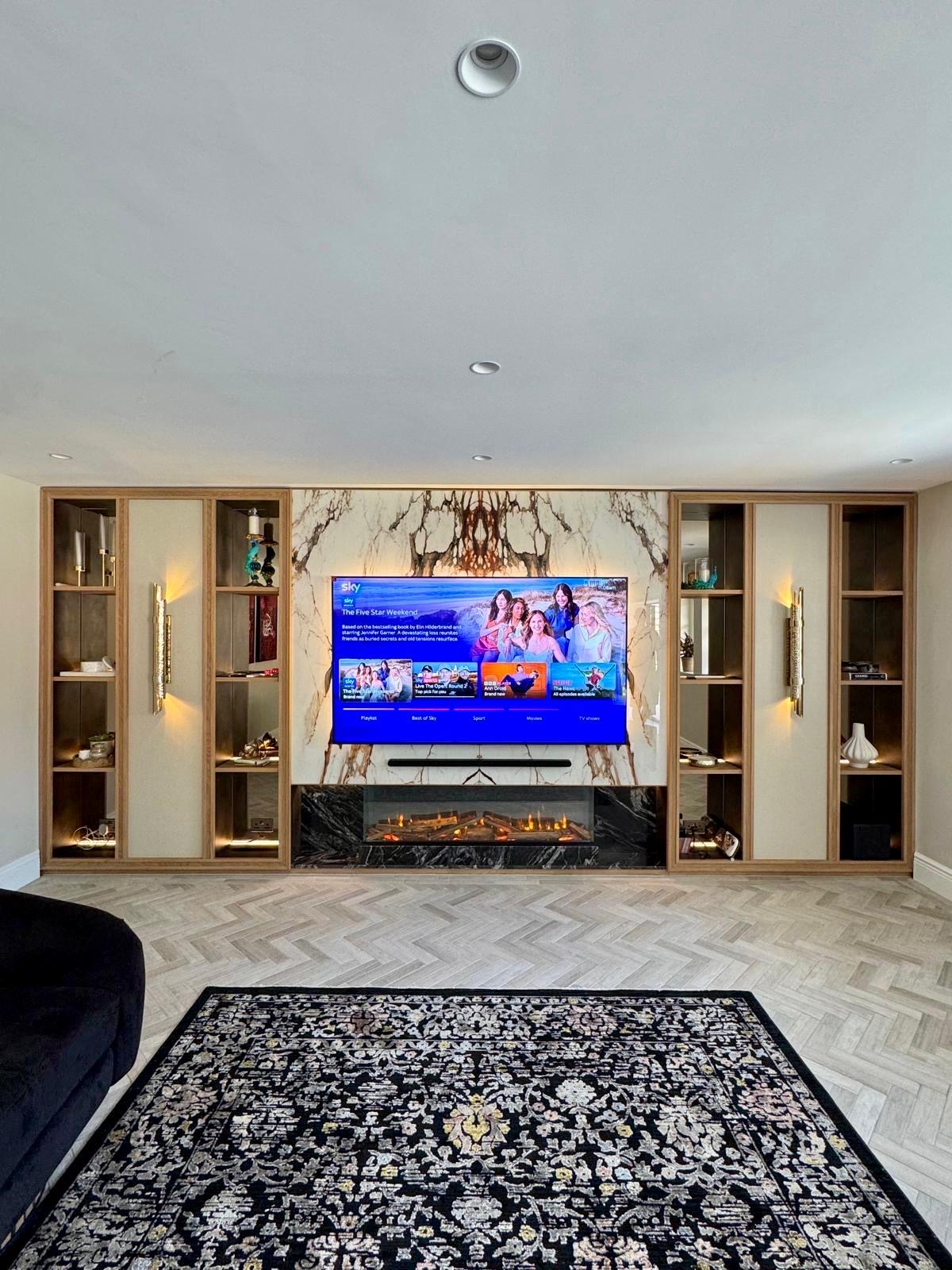
Display Cabinets — your questions answered
- Can a display cabinet be built into a wardrobe or dressing room?
- Yes, glazed display sections are commonly built into wardrobe and dressing room runs alongside hanging and drawer storage, sharing the same finish.
- How do you decide on shelf spacing?
- We ask what will be displayed and measure typical item heights, then set shelf positions around that rather than using a standard spacing.In practice this is agreed during the design conversation, well before manufacture begins.
- Will LED lighting damage delicate items over time?
- LED lighting produces very little heat, which makes it suitable for most collections; specific concerns about particular materials can be discussed at design stage. We keep the transformer and driver accessible for future maintenance, and colour temperature is agreed at design stage so it matches any existing lighting nearby.
- Can the cabinet be locked?
- Yes, locks can be specified on the doors where security for the contents is wanted. This is worth mentioning early if the cabinet will hold anything of value, since the lock type can affect door thickness and hinge choice.
- What's the difference between framed and frameless glazing?
- Framed doors have a visible timber or metal edge around the glass; frameless doors use a minimal edge detail for a cleaner look, usually at a different cost and lead time.
- Can shelves be repositioned later if my collection changes?
- Adjustable glass shelving can be specified so shelf heights can be changed later without altering the cabinet itself. Adjustable shelf pins are a straightforward, low-cost specification, so it is usually worth including even if the current plan is for fixed positions.
- Do you provide the glass or do we need to source it separately?
- Glazing is included as part of the cabinet build and specified to suit the design, so there's no separate sourcing needed. Glass thickness and edge finish are specified to suit the size of the pane and how the door or shelf will be used.
- Can a display cabinet stand on its own or does it need to be fitted into a run?
- It can do either — a single free-standing-looking cabinet in an alcove, or one section within a wider run of cabinetry. The choice affects how the piece is supported internally, so it is decided at design stage rather than left open until installation.
- How is the cabinet lit without visible wiring?
- Cable routes run through the carcass to a concealed transformer, so no wiring is visible around the shelves or doors. We keep the transformer and driver accessible for future maintenance, and colour temperature is agreed at design stage so it matches any existing lighting nearby.
- What glass tint would you recommend?
- This depends on the room and the contents; clear glass shows everything, while bronze or smoked glass gives a softer, more atmospheric display. Glass thickness and edge finish are specified to suit the size of the pane and how the door or shelf will be used.
- Can you match the cabinet to existing furniture in the room?
- We can take reference from existing pieces to match finish and detailing, though the cabinet itself is built to its own specification and space.
- Is ventilation needed inside a glazed display cabinet?
- Not usually, since display cabinets don't house heat-generating equipment; ventilation is more relevant to media or bar cabinetry. We ask what equipment will sit inside the compartment during the design conversation, since the make and heat output determine whether a vented panel or a simple air gap is sufficient.
- Can the doors slide instead of hinge?
- Sliding doors are an option where space in front of the cabinet is limited; we advise on which suits the room during design.We talk this through with you at the design stage, so the detail is settled before anything is cut.
- How do you protect glass shelves from the weight of heavier items?
- Shelf thickness and support brackets are specified according to what's being displayed, discussed with you during design. Glass thickness and edge finish are specified to suit the size of the pane and how the door or shelf will be used.
- Which areas do you build display cabinets for?
- Display cabinets are made at our workshop near Swadlincote and delivered and fitted across Derbyshire, Staffordshire, Leicestershire, Nottinghamshire and the West Midlands.
Related bespoke services
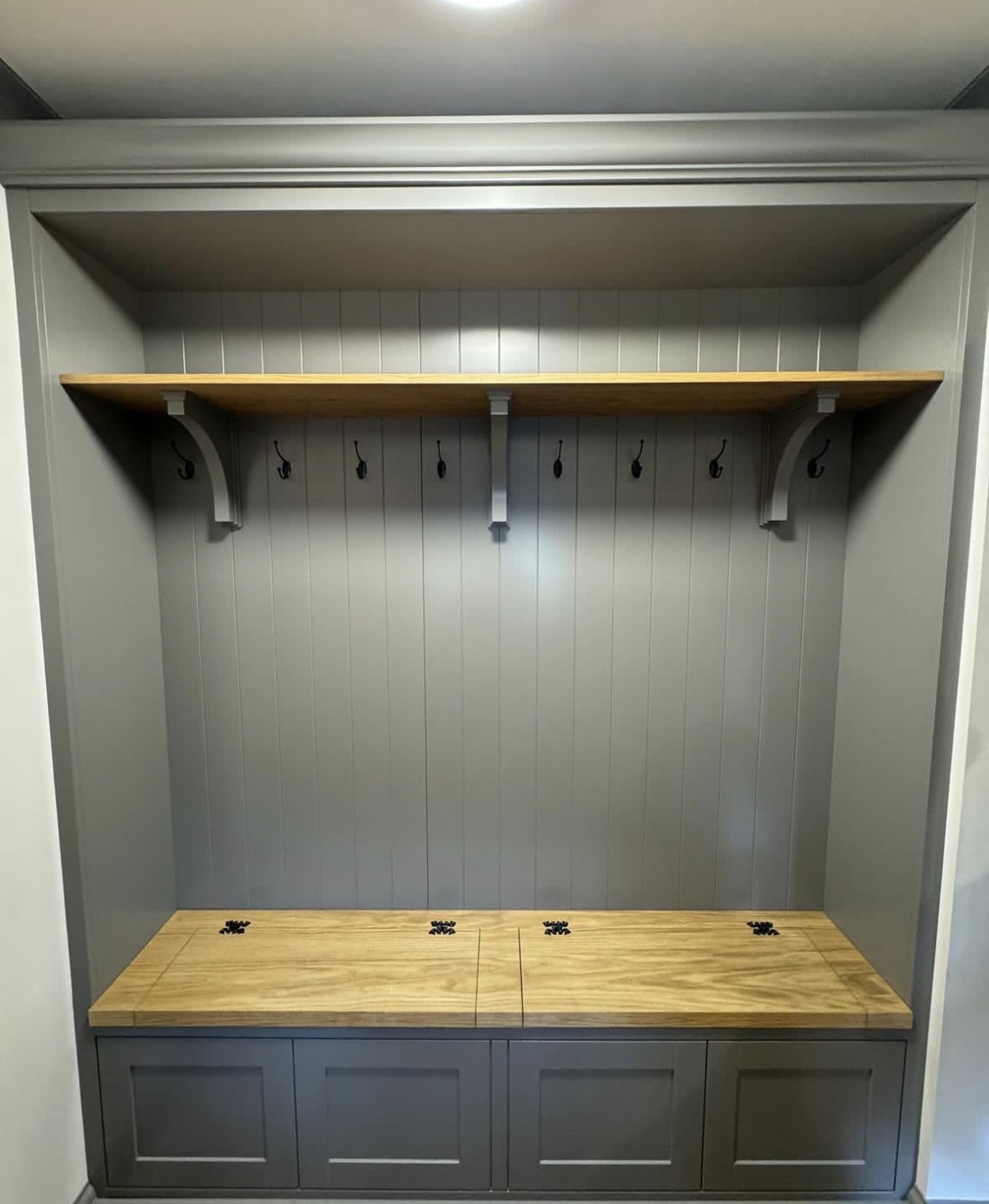
Bespoke Cabinetry
Alcoves, boot rooms, utilities, panelling and everything that does not fit a category.
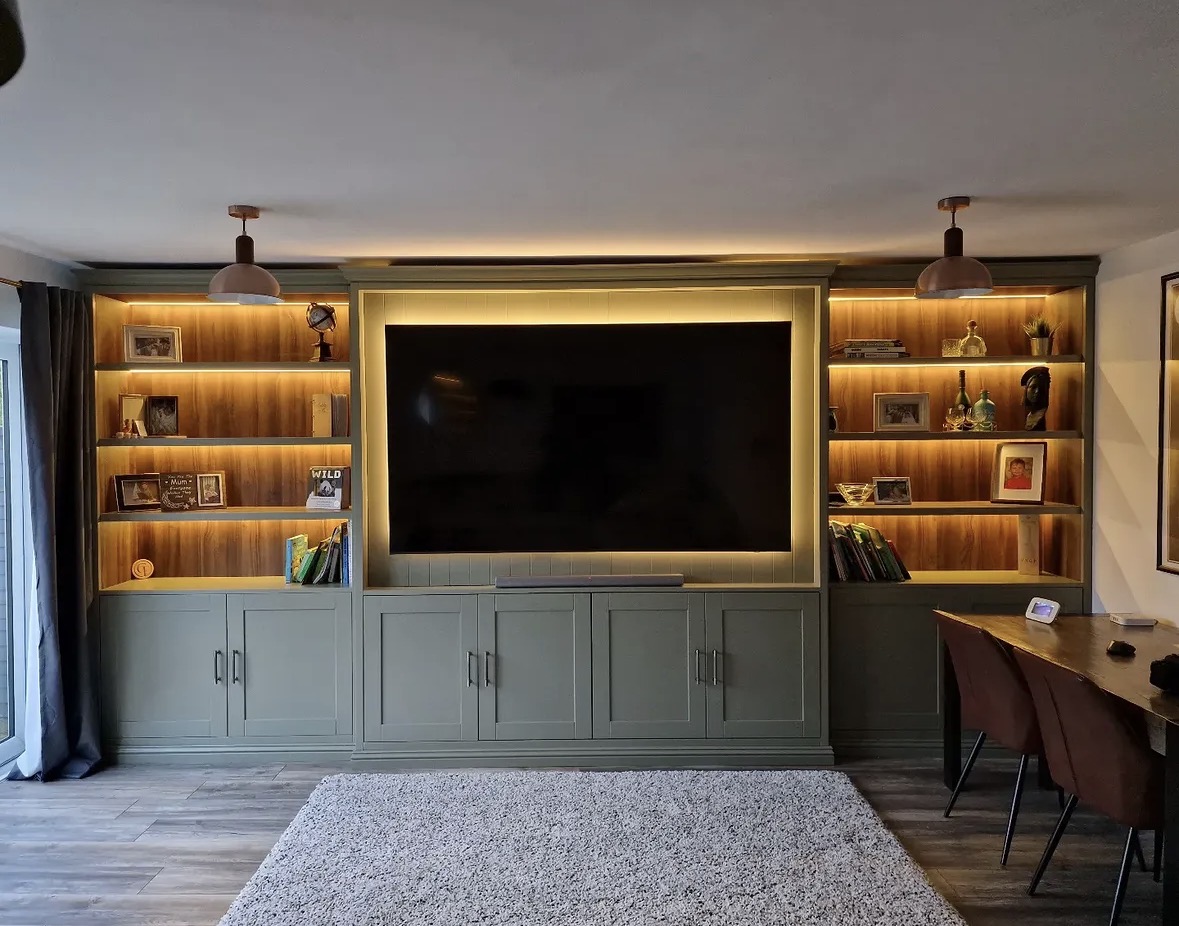
Bookshelves
Shelving built to the height of your books and the shape of your wall, not a fixed run of standard-width units.
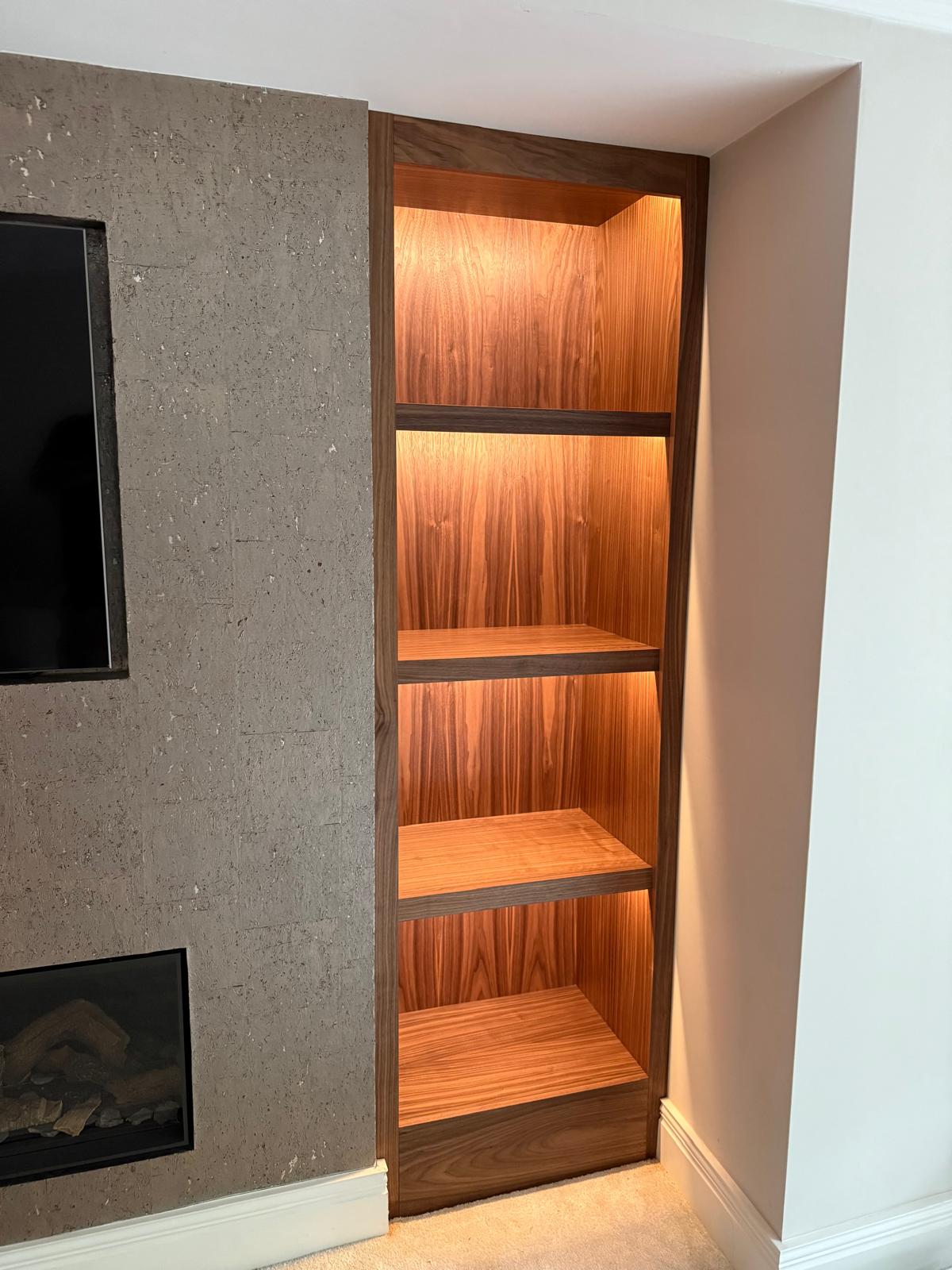
Alcove Units
Shelving and cabinetry that fill the alcoves beside a chimney breast without gaps or awkward packing pieces.
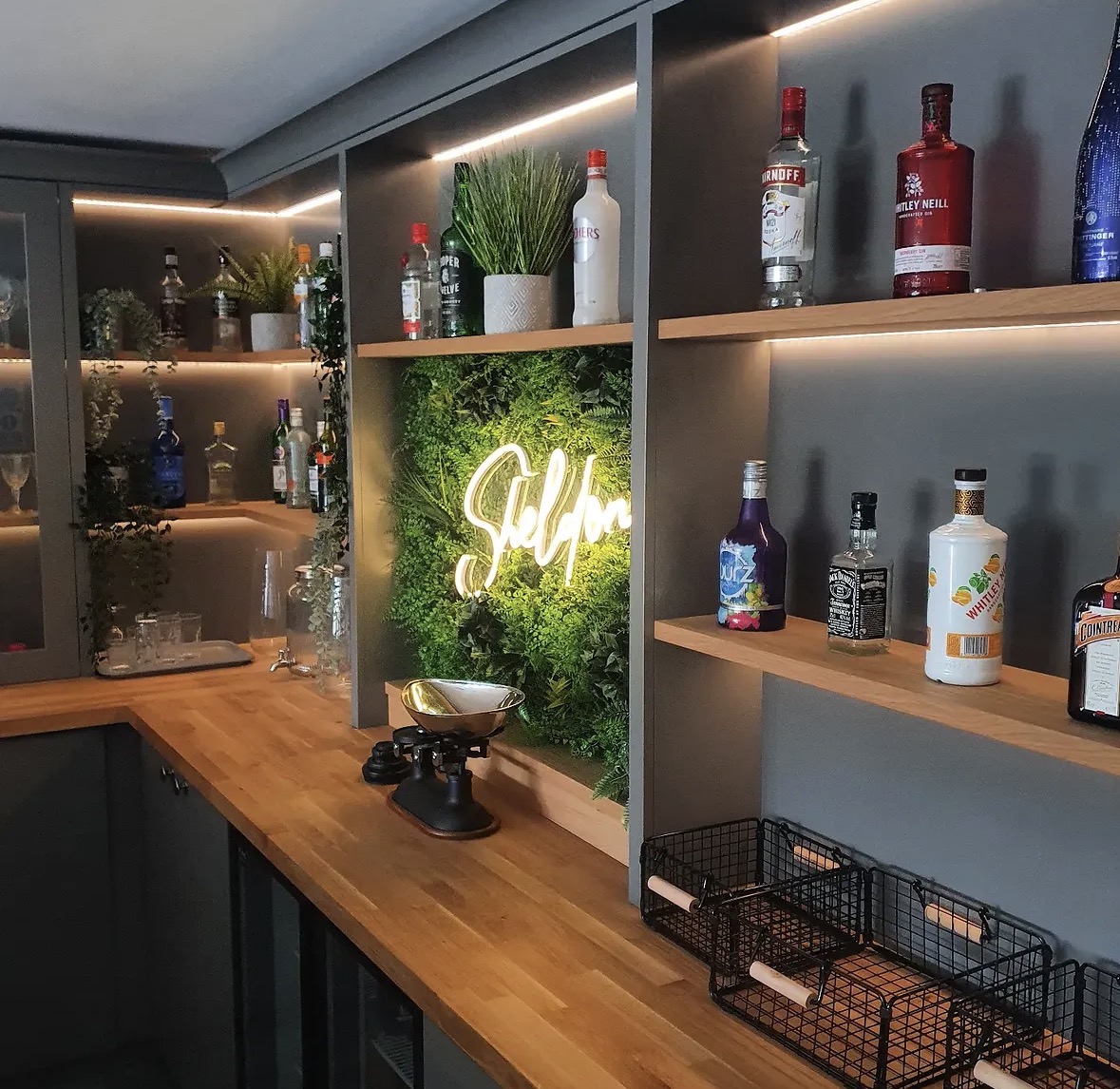
Home Bars
Bottle display, glassware, refrigeration and lighting in one properly detailed piece.
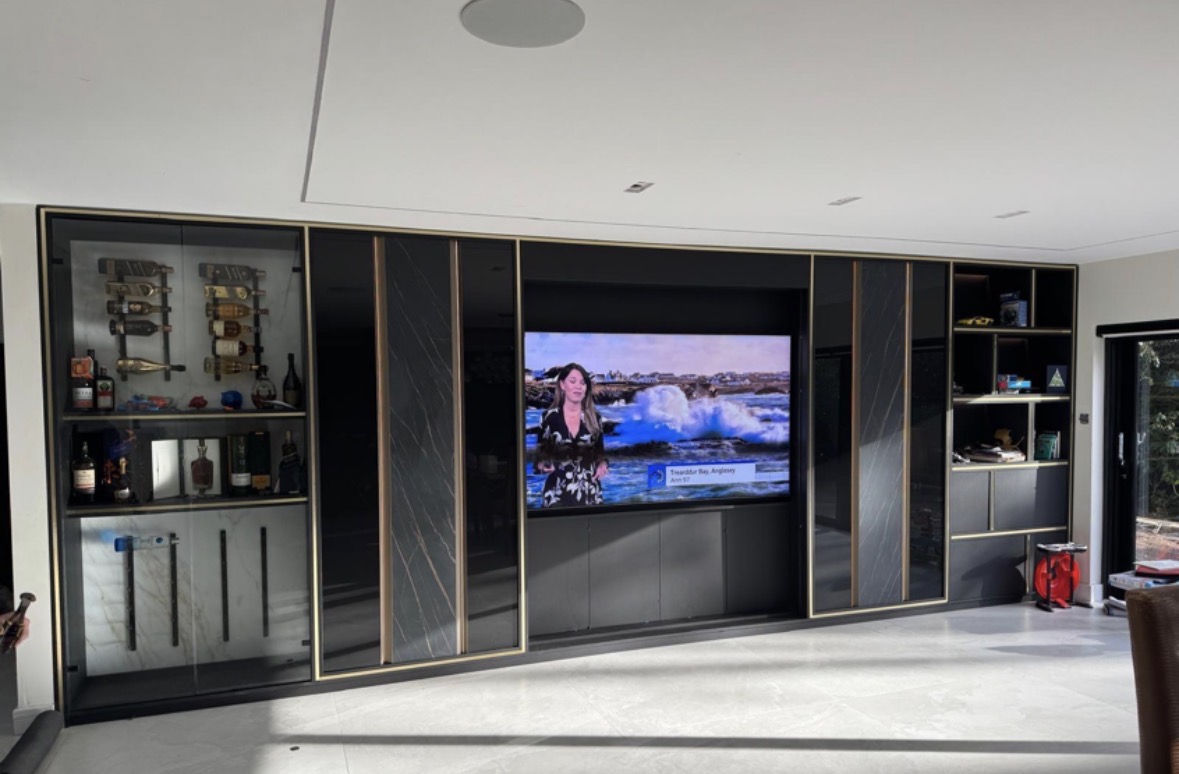
Dining Room Cabinetry
China, glassware and drinks storage built into the dining room rather than left to freestanding furniture.
Areas we work in
Everything is designed and built at our Derbyshire workshop and installed by our own team across the Midlands, including Solihull, Sutton Coldfield, Four Oaks, Lichfield, Birmingham, Burton upon Trent, Ashby-de-la-Zouch, Swadlincote, Derbyshire, Leicestershire.
Areas we coverSpeak to us about your project on +44 7418 627358 or send us the details.
Planning Something Bespoke?
Tell us about your space, what you're looking to create and where the project is located.