
Bespoke Cabinetry
Bespoke Dining Room Cabinetry
Dining rooms carry a particular mix of belongings — china that is used twice a year, glasses in constant rotation, linen, and the bottles that appear once the table is laid. Fitted cabinetry gives each of those a proper place.
Dining Room Cabinetry, designed around the room
A dining room rarely gets the storage thought it deserves. Kitchens are planned around cooking; dining rooms are often left with whatever furniture happens to fit the wall. We treat the room as its own brief, working out what actually needs to be stored, displayed or hidden before a single cabinet is drawn.
China and glassware want different treatment. Everyday glasses sit well in open or glazed shelving where they are easy to reach and pleasant to look at; the good dinner service, brought out less often, is happier behind closed doors where dust and light cannot get at it. We size shelves to the pieces you own rather than a generic spacing, so nothing is stacked awkwardly or wasting height.
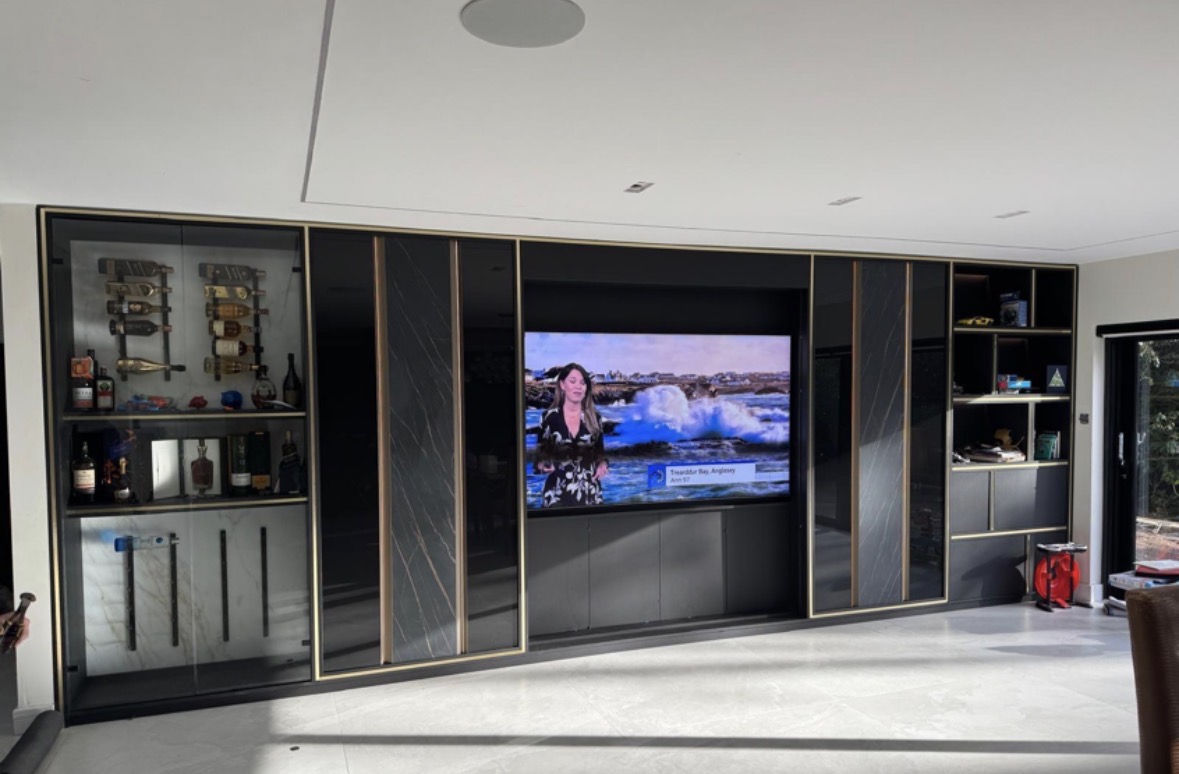
Serving surfaces matter as much as storage. A run of cabinetry at the right height, with a stone or timber top, gives you somewhere to plate up, rest a tray or lay out cutlery without commandeering the dining table itself. Where drinks are part of the room, we can build in a small preparation area, bottle storage and glass-fronted display lit from within, so the cabinetry does some of the work of a bar without needing the space for one.
Some dining rooms suit fitted furniture built into an alcove or run of wall; others are better served by a freestanding piece that can move with you. Both are made properly in our workshop — the difference is whether the cabinetry is scribed permanently to the room or built to stand independently of it. We will tell you honestly which suits your room and how you live in it.
What can be included
01
China and glassware storage
Shelving and drawers sized to the dinner service, glasses and serveware you actually own, not a standard cabinet interior.
02
Glazed display cabinetry
Glass-fronted or open-shelf sections for the pieces worth seeing, with interior lighting where it earns its place.
03
Closed storage
Solid-fronted cupboards for linen, trays and the items you would rather not have on display.
04
Serving surface
A stone, timber or painted worktop at a practical height for plating and serving, positioned close to the table.
05
Drinks storage
Bottle racking, glass storage and an optional small preparation area built into the same run of cabinetry.
06
Alcove and chimney breast fitting
Cabinetry scribed to the alcoves either side of a chimney breast, or set within a full wall of shelving.
07
Cable and lighting provision
Power for lighting, wine coolers or small appliances positioned before manufacture, not added afterwards.
08
Handle and hardware detailing
Brass, bronze or blackened steel handles and hinges chosen to suit the room rather than picked from a catalogue.
09
Finish matching
Paint, veneer and stain matched to existing skirtings, doors or furniture already in the room.
From our work
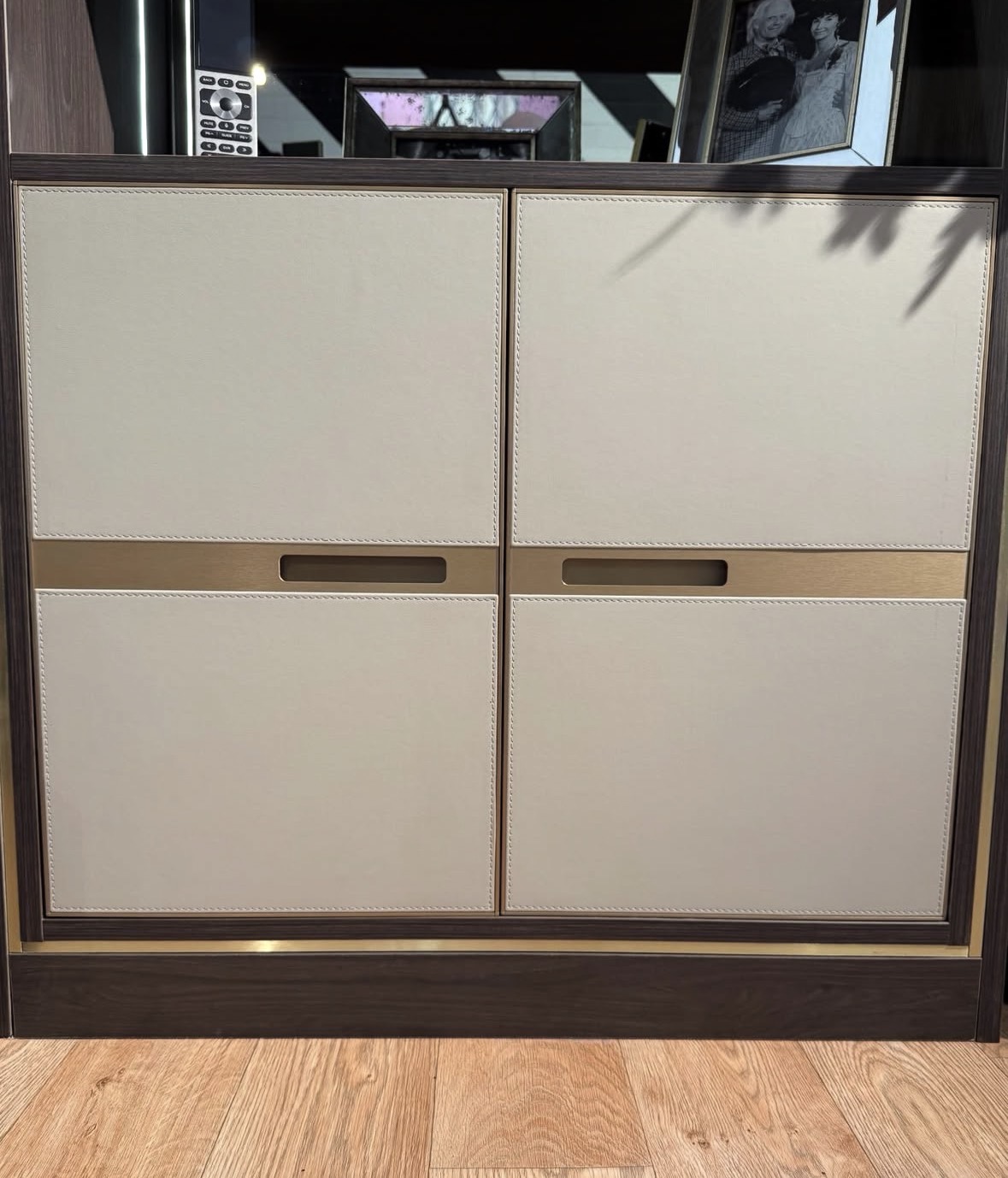
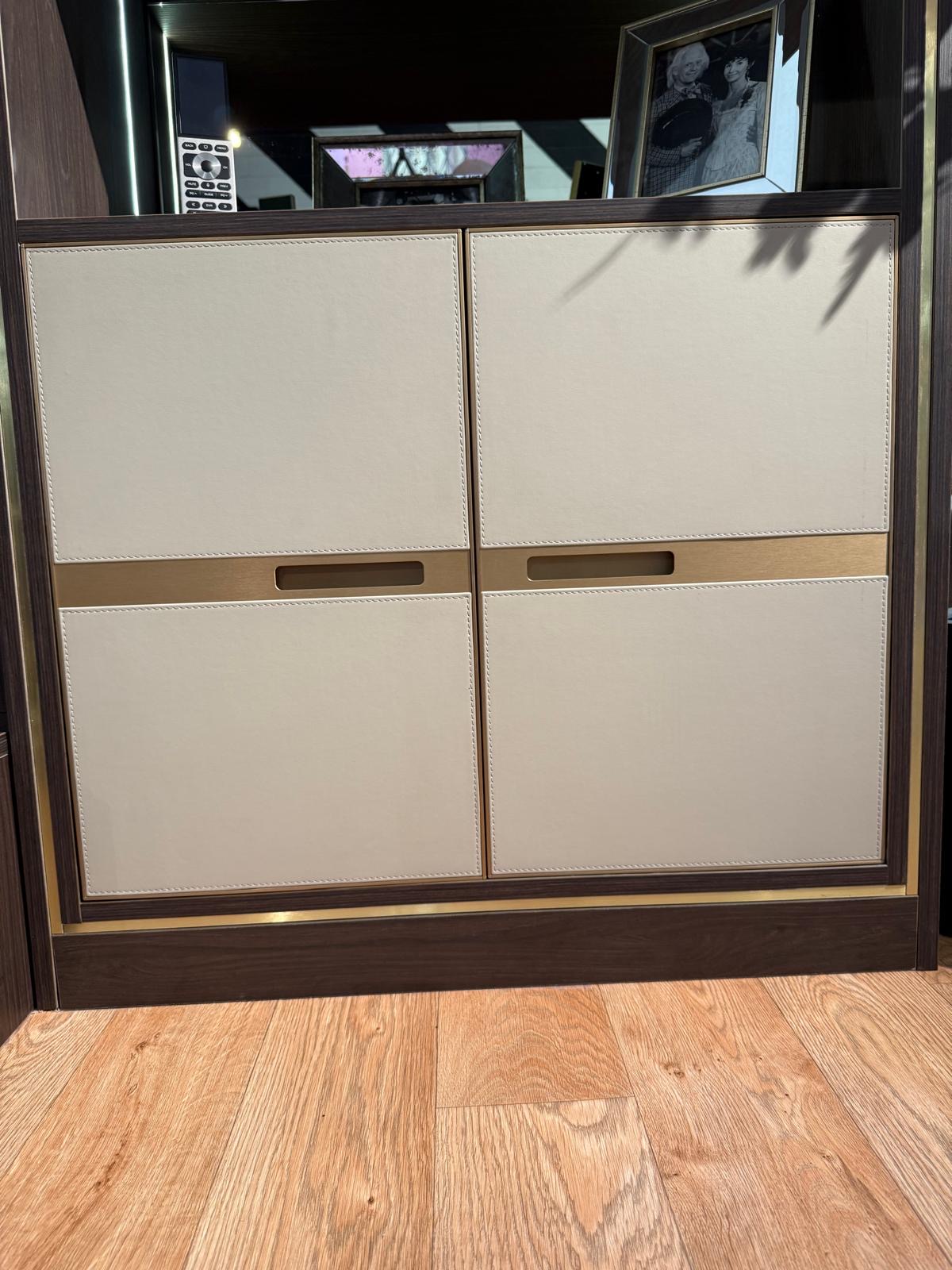
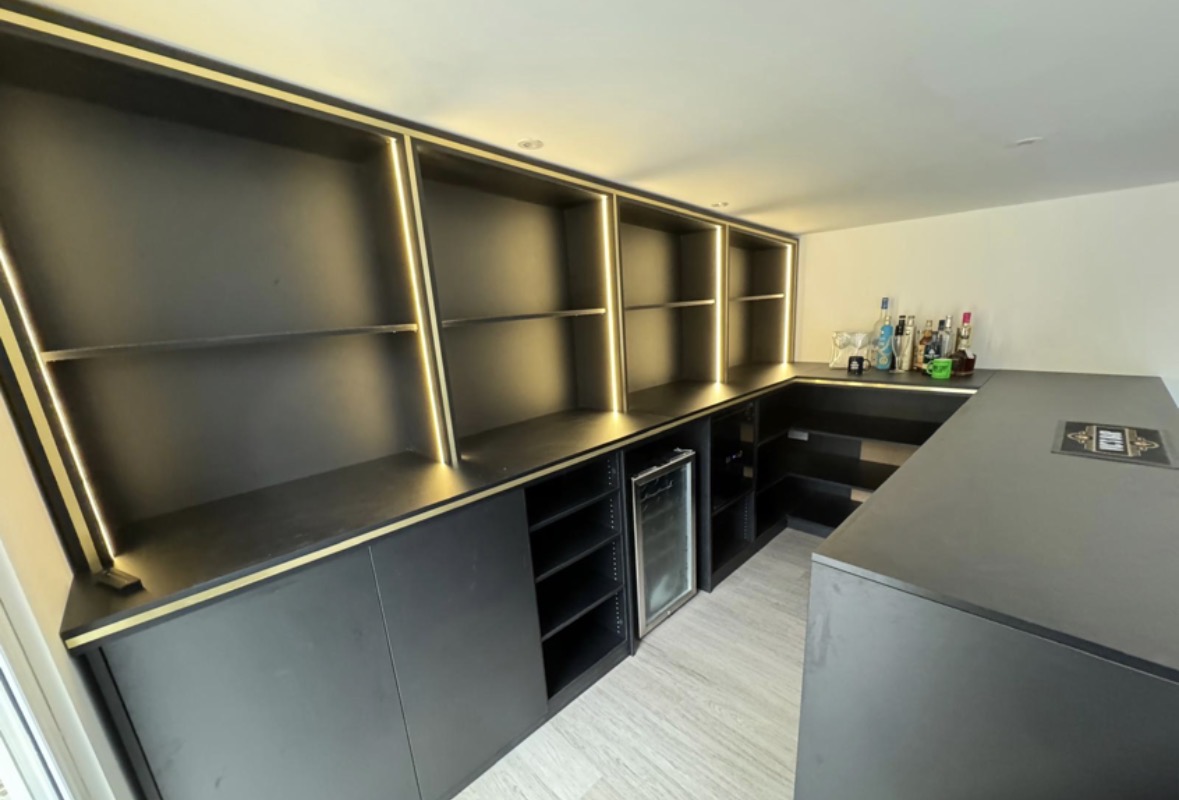
Every commission begins with a conversation about the room, how it is used and what needs to be stored or shown.
Built for the architecture you already have
- Wall widths
- Runs are set out to the exact width available, so a cabinet neither crowds a doorway nor leaves an awkward gap at the end of a wall.
- Chimney breasts and alcoves
- Cabinetry either side of a chimney breast is built as a matched pair, scribed individually to two alcoves that are rarely identical.
- Skirtings and cornices
- Base and top details are scribed to existing skirting boards and cornice profiles so the cabinetry reads as part of the room.
- Radiators and sockets
- Radiators, thermostats and sockets are surveyed early so cabinet depths and door swings work around them rather than against them.
- Circulation around the table
- Cabinet depth and door or drawer clearance are checked against dining chairs pulled out, so nobody is trapped between the table and the sideboard.
Materials & finishes
Specifications are developed with you during the design stage and sampled before anything is built. Not every option suits every commission, and we will say so where a material is the wrong choice for the room or the use.
Oak and walnut veneers
For frames, doors and interiors, matched for grain across a run of cabinetry.
Hand-painted timber
Sprayed and hand-finished doors and frames in a colour matched to the room.
Cream stitched leather
Upholstered door panels for a softer, tactile front on display cabinetry.
Bronze and clear glazing
Glazed doors for display sections, with bronze glass giving a more muted view of the contents.
Stone and solid timber tops
Serving surfaces in a material that will take daily use without marking.
Brushed brass and blackened steel
Handles, hinges and trim detailing chosen to suit the rest of the room.
Integrated LED lighting
Warm, dimmable lighting inside glazed sections and along open shelving.
Designed and built bespoke
We survey the dining room in person, noting wall widths, alcove depths, skirting profiles and the position of the table before drawing anything. Cabinetry is built in our Derbyshire workshop and fitted by the same team, with final scribing carried out on site so the finish sits tight to the walls, floor and ceiling.
Read our full process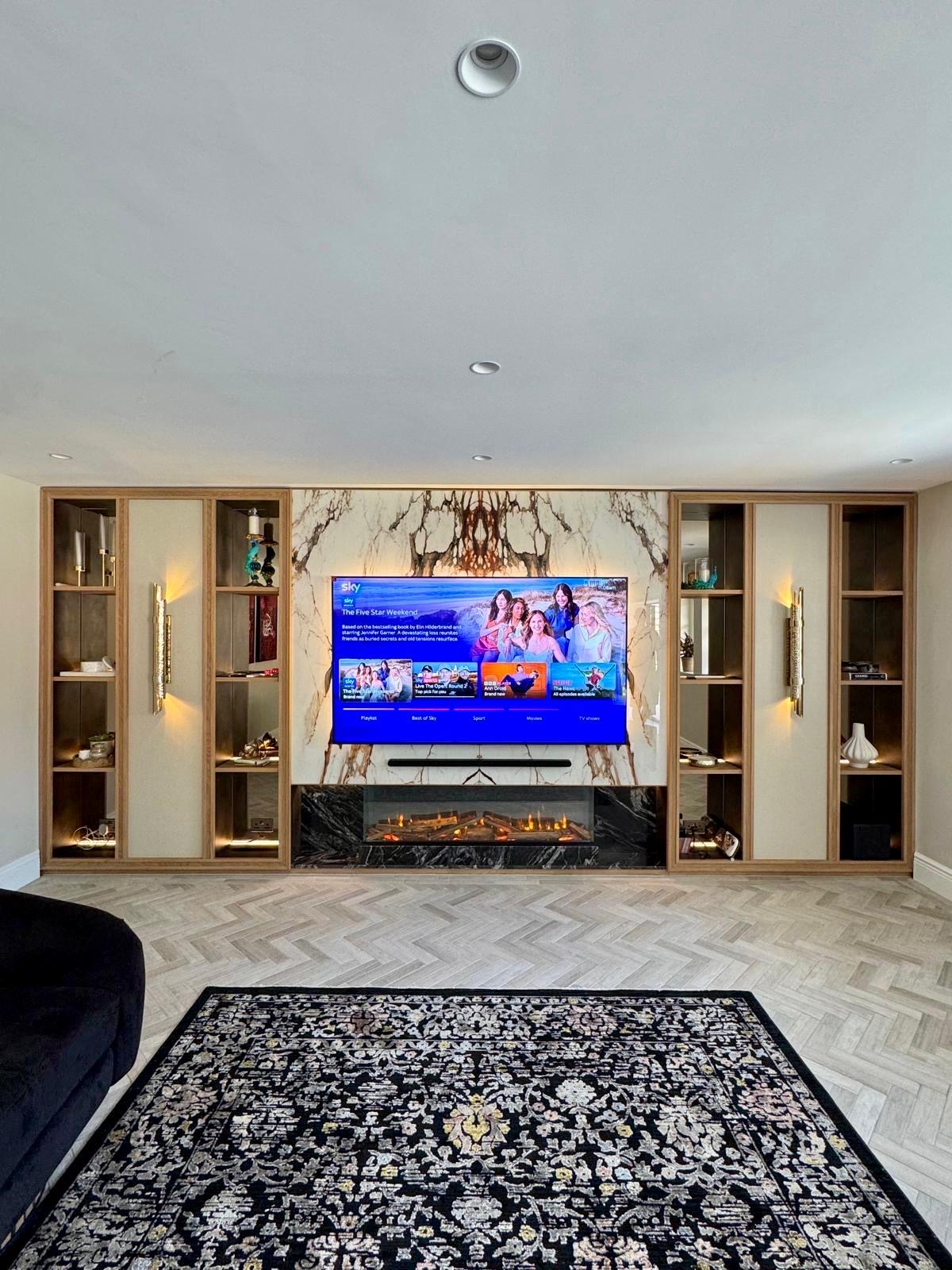
Dining Room Cabinetry — your questions answered
- Should dining room storage be fitted or freestanding?
- It depends on the room. Fitted cabinetry makes full use of an alcove or awkward wall and looks built-in from day one; a freestanding sideboard can be moved or taken with you if you relocate. We will look at your room and belongings and give you a straight recommendation rather than steering you toward one option.
- Can you build cabinetry to match our existing dining table?
- Yes. We can work from a sample, photograph or the table itself to match timber tone and grain as closely as possible, though an exact match to a factory-finished piece is not always achievable — we will explain what is realistic before you commit.
- How do you plan storage for glassware and china?
- We ask what you own and how often you use it. Everyday glasses go somewhere easy to reach; occasional china is better behind closed doors. Shelf spacing is set to the actual pieces rather than a standard gap, so tall stemware and stacked plates both fit properly.
- Can lighting be built into the cabinets?
- Yes, warm LED lighting can be fitted inside glazed sections or along open shelving, usually on a dimmer so it can sit low for everyday use or brighter when the room is being shown off.
- Will the finish match our existing joinery?
- We can take a sample of existing paint, veneer or stain and match new cabinetry to it as closely as possible, so the new furniture reads as part of the room rather than an obvious addition.
- Can drinks storage be included in dining room cabinetry?
- Yes. Bottle racking, glass storage and a small preparation surface can be built into a run of dining cabinetry, so the room does double duty without needing a separate bar area.
- How do you handle a chimney breast with two alcoves?
- Each alcove is surveyed separately, since they are rarely identical in width or depth. Cabinets are built as a matched pair but scribed individually, so both sit tight to the walls even where the room is slightly out of square.
- What happens to radiators and sockets in the cabinet run?
- These are noted at survey stage and designed around from the outset — either by setting the cabinet depth back, forming a vented panel, or repositioning sockets before installation, whichever suits the room best.
- How long does dining room cabinetry take?
- Design typically takes a few weeks, followed by manufacture in our workshop and a fitting period on site. We give a written programme once the design is agreed, so you know what to expect.
- Can you work alongside our decorator or interior designer?
- Yes, we regularly coordinate with decorators and designers, sharing drawings and finish samples so the cabinetry is agreed before manufacture begins.
- Do you fit cabinetry into a bay window or non-standard wall?
- Yes, bay windows, sloped walls and other non-standard shapes are surveyed and drawn individually, with cabinetry scribed to the actual geometry of the room rather than a straight assumption.
- What areas do you cover for dining room cabinetry?
- We design, build and install from our workshop in Coton in the Elms, Swadlincote, covering Derbyshire, Staffordshire, Leicestershire, Nottinghamshire and the West Midlands.
- Can existing dining cabinetry be extended or added to?
- Sometimes, if the original was built to a design that allows it. Where that is not practical, we can build a new piece designed to sit comfortably alongside what you already have.
Related bespoke services
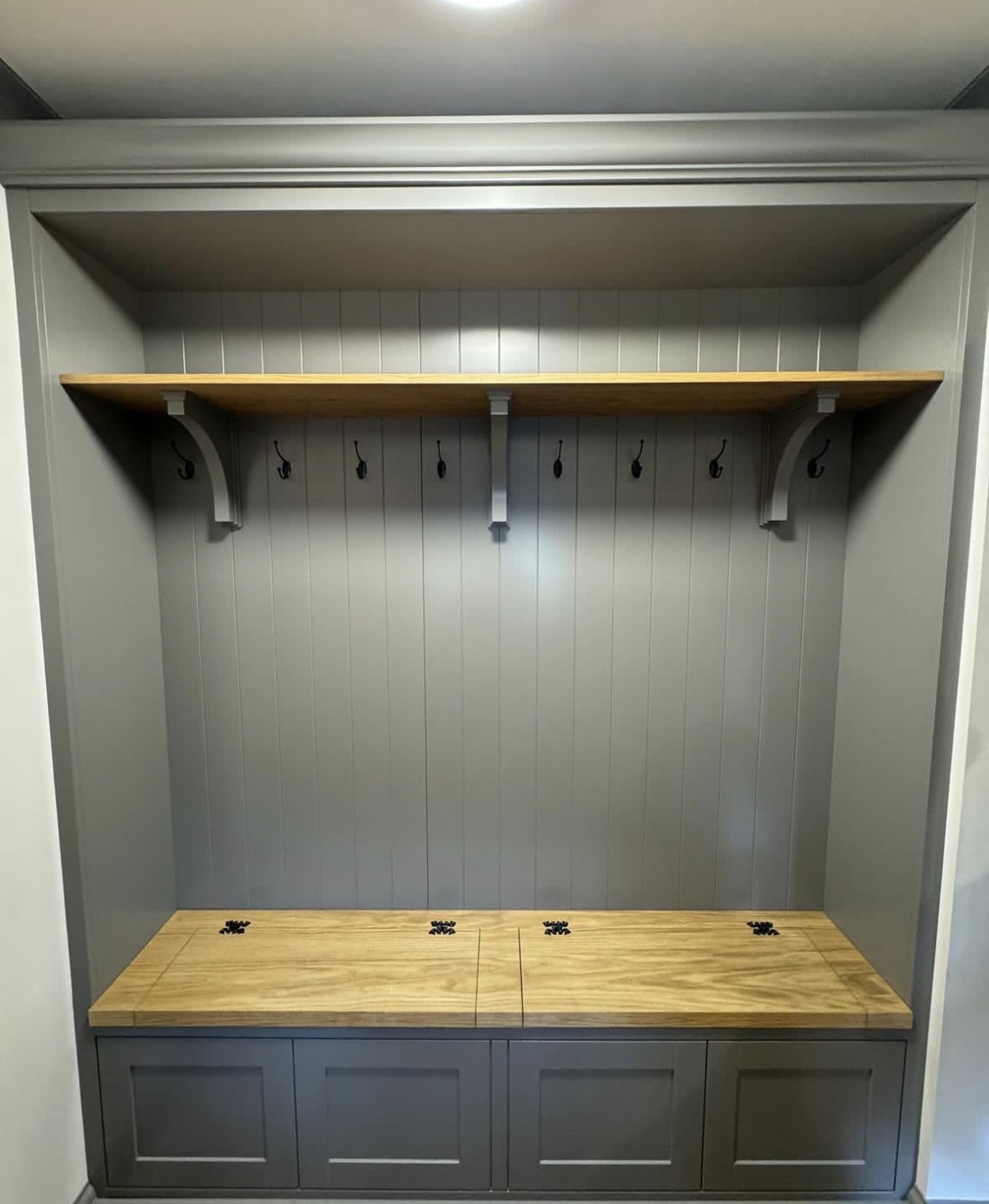
Bespoke Cabinetry
Alcoves, boot rooms, utilities, panelling and everything that does not fit a category.
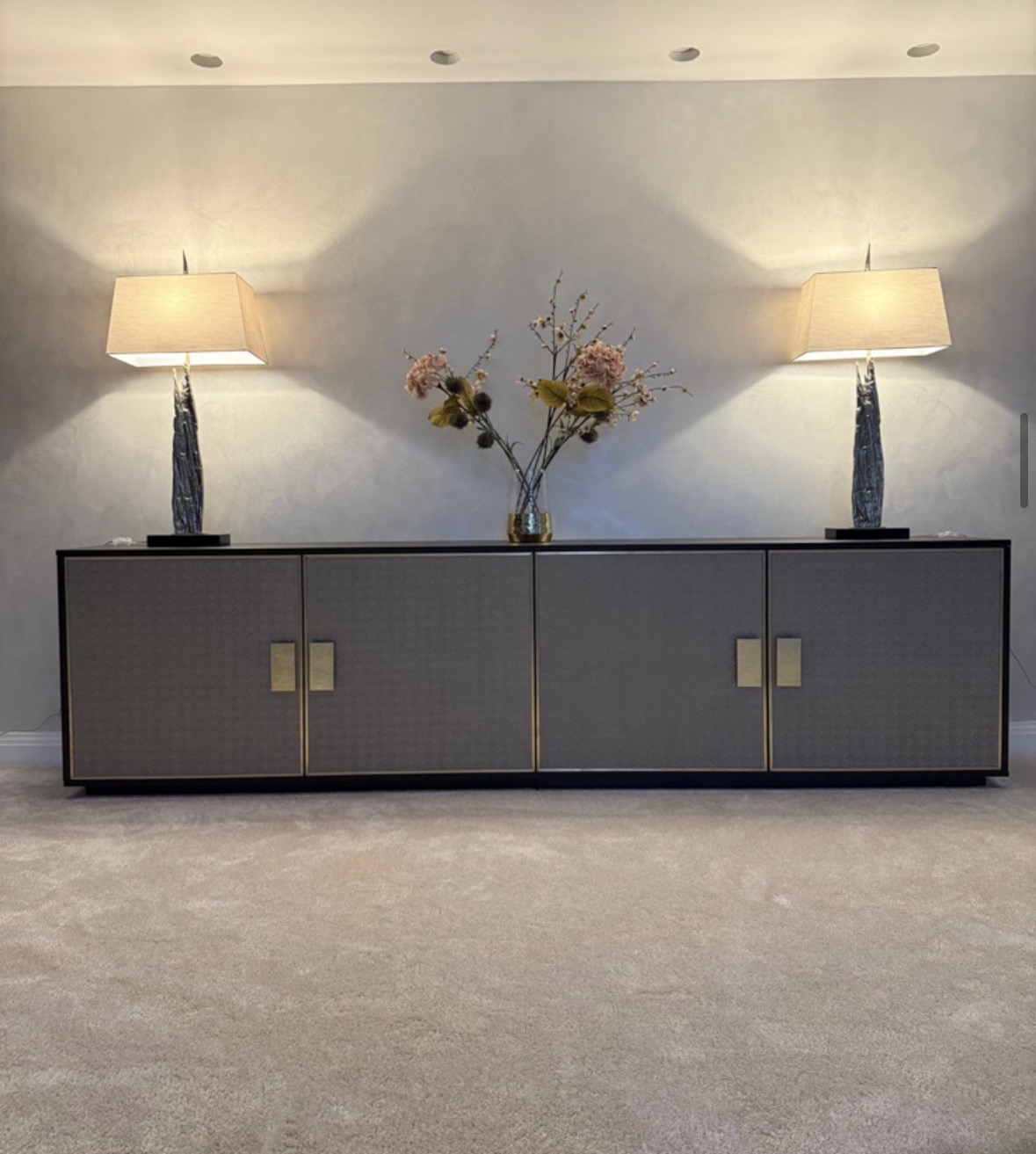
Sideboards
A freestanding or fitted sideboard built to the wall it will stand against, not a standard showroom width.
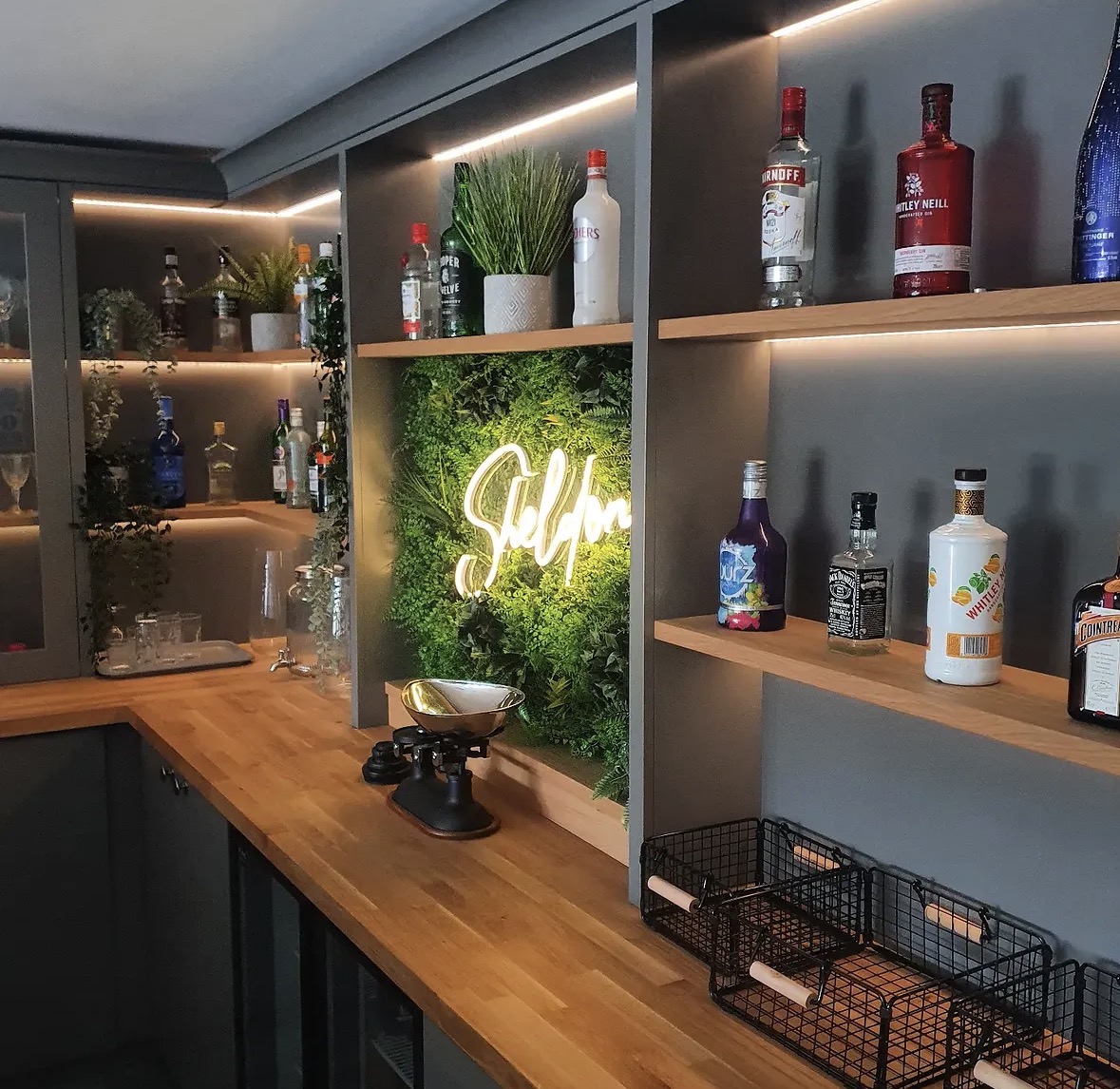
Home Bars
Bottle display, glassware, refrigeration and lighting in one properly detailed piece.
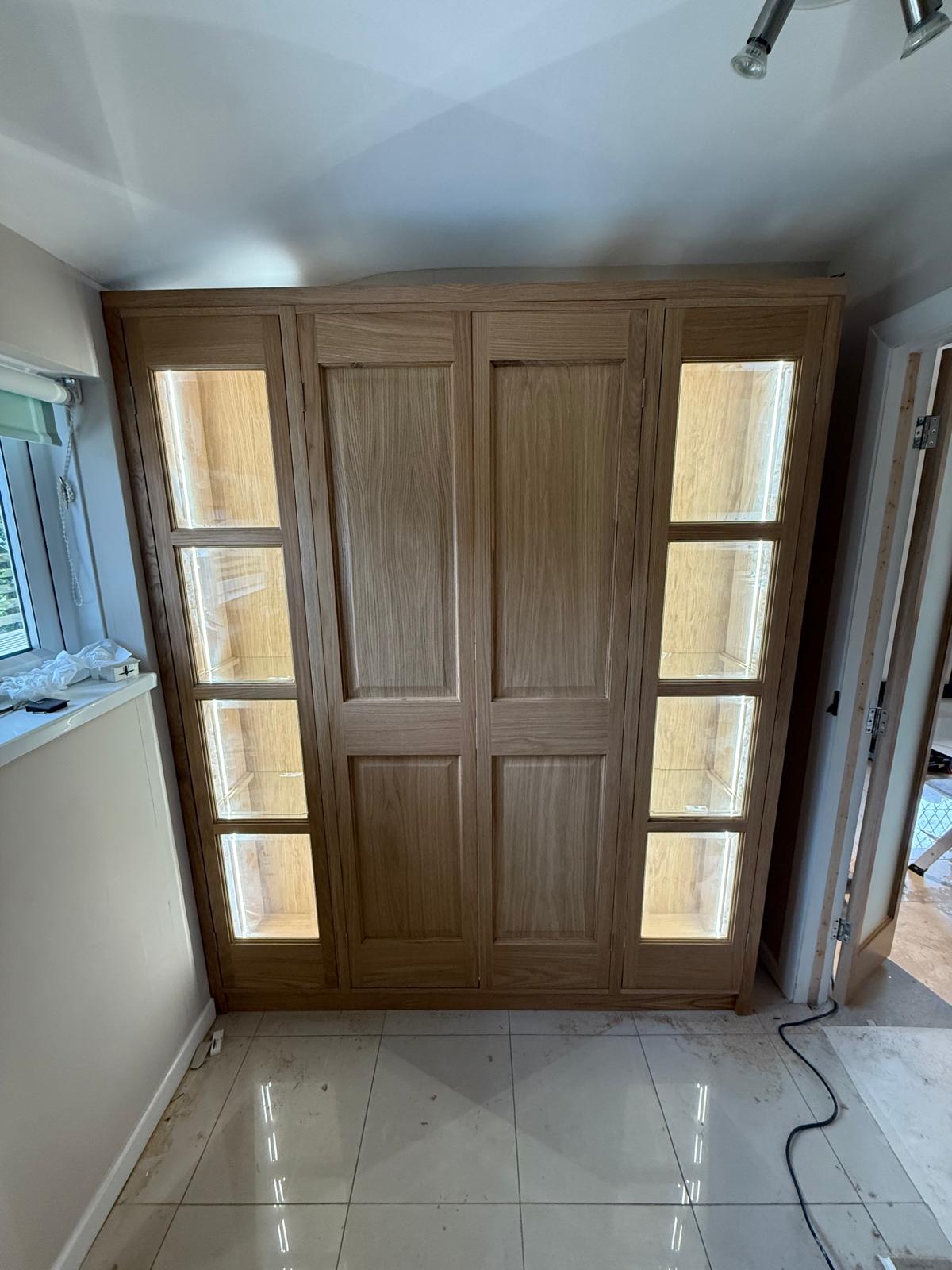
Display Cabinets
Glazed cabinetry sized and lit for what you actually want to display, not a generic showcase unit.
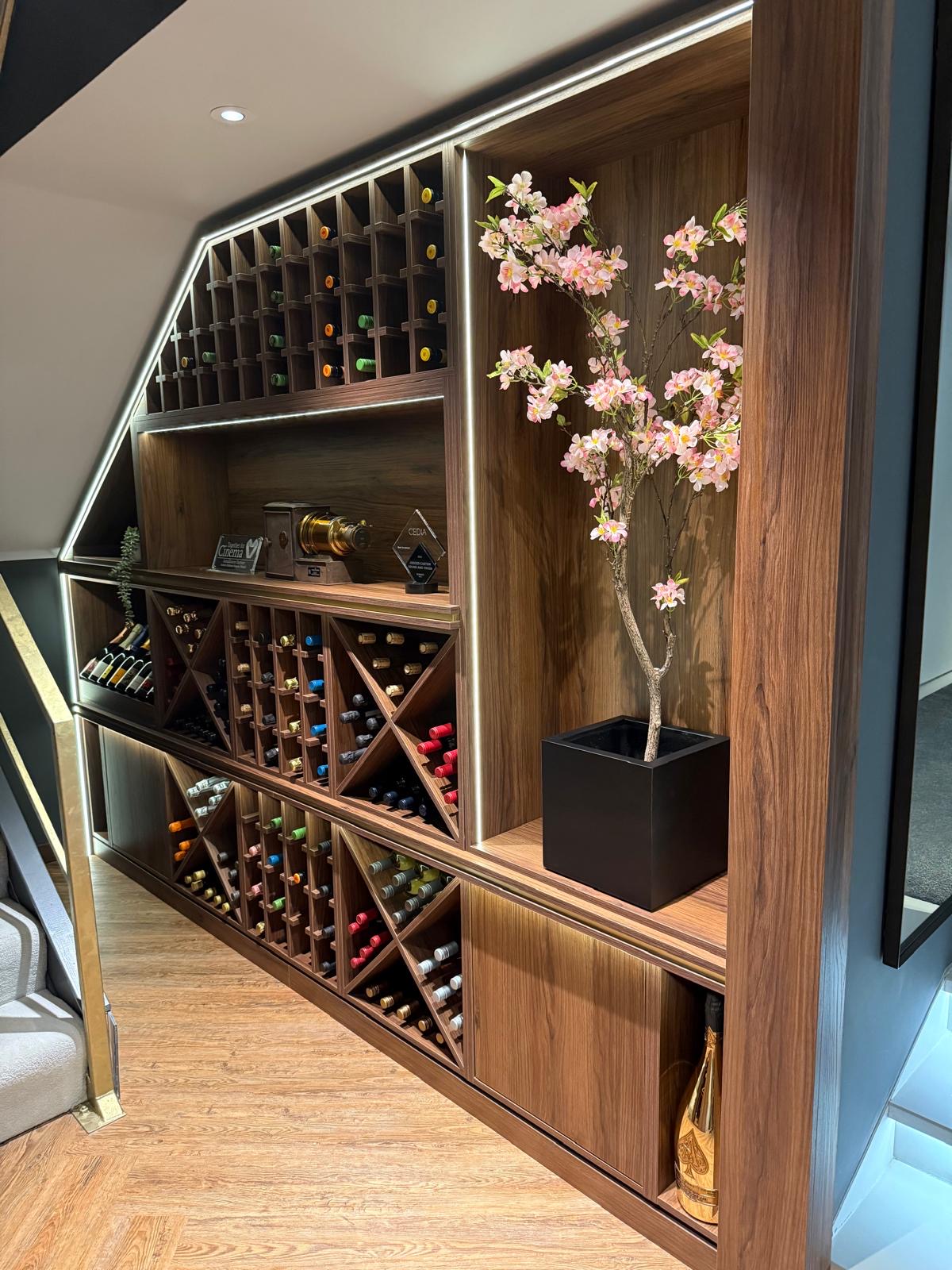
Wine Rooms & Cellars
Racking, glazing and climate coordination for a collection that is stored properly.
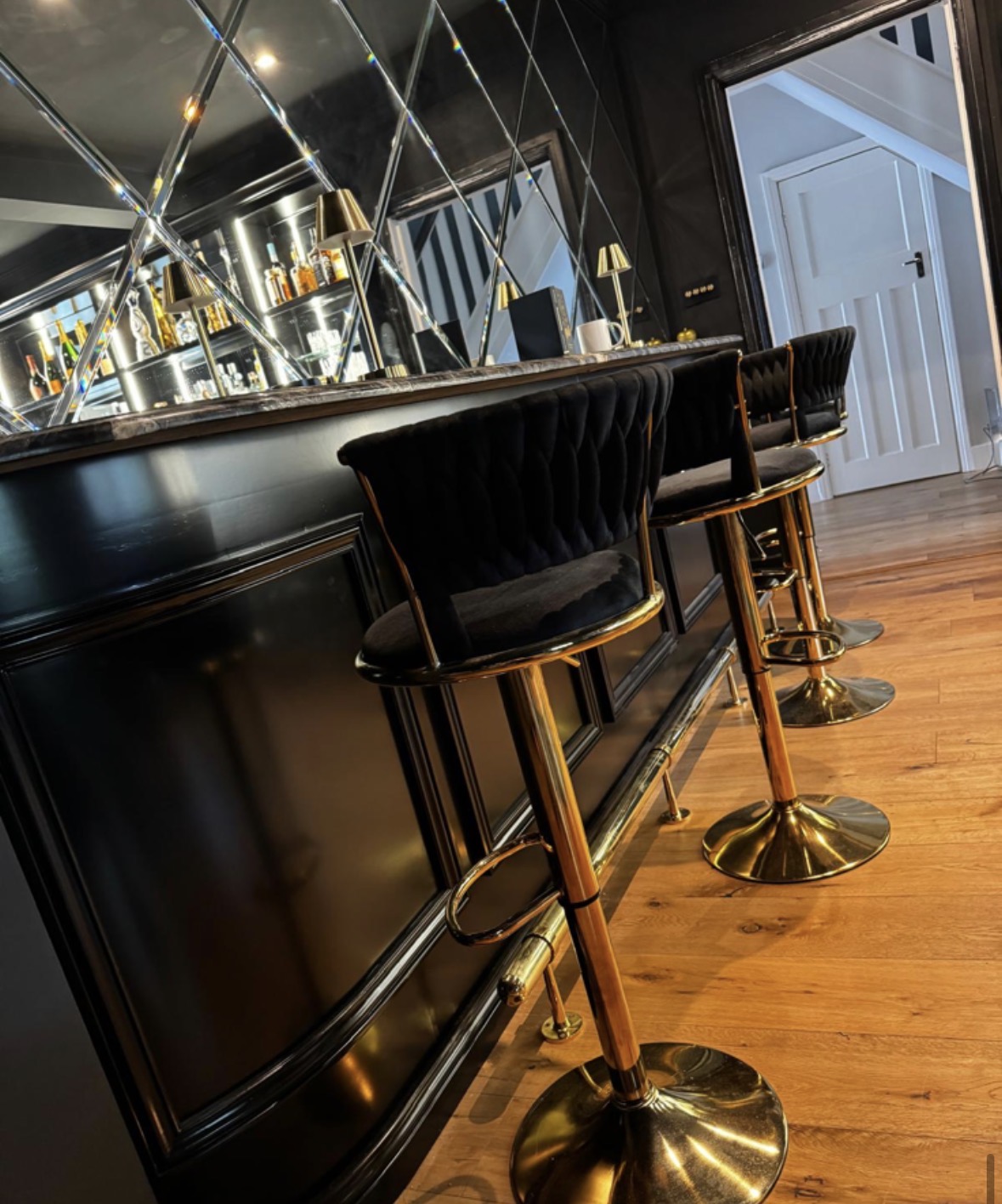
Cocktail Cabinets
A closed cabinet that opens to reveal a working bar, sized to sit within a single wall or alcove.
Banquette Seating
Fixed dining seating built into a dining room, snug or bay window, with storage beneath the cushion.
Areas we work in
Everything is designed and built at our Derbyshire workshop and installed by our own team across the Midlands, including Solihull, Sutton Coldfield, Four Oaks, Lichfield, Birmingham, Burton upon Trent, Ashby-de-la-Zouch, Swadlincote, Derbyshire, Leicestershire.
Areas we coverSpeak to us about your project on +44 7418 627358 or send us the details.
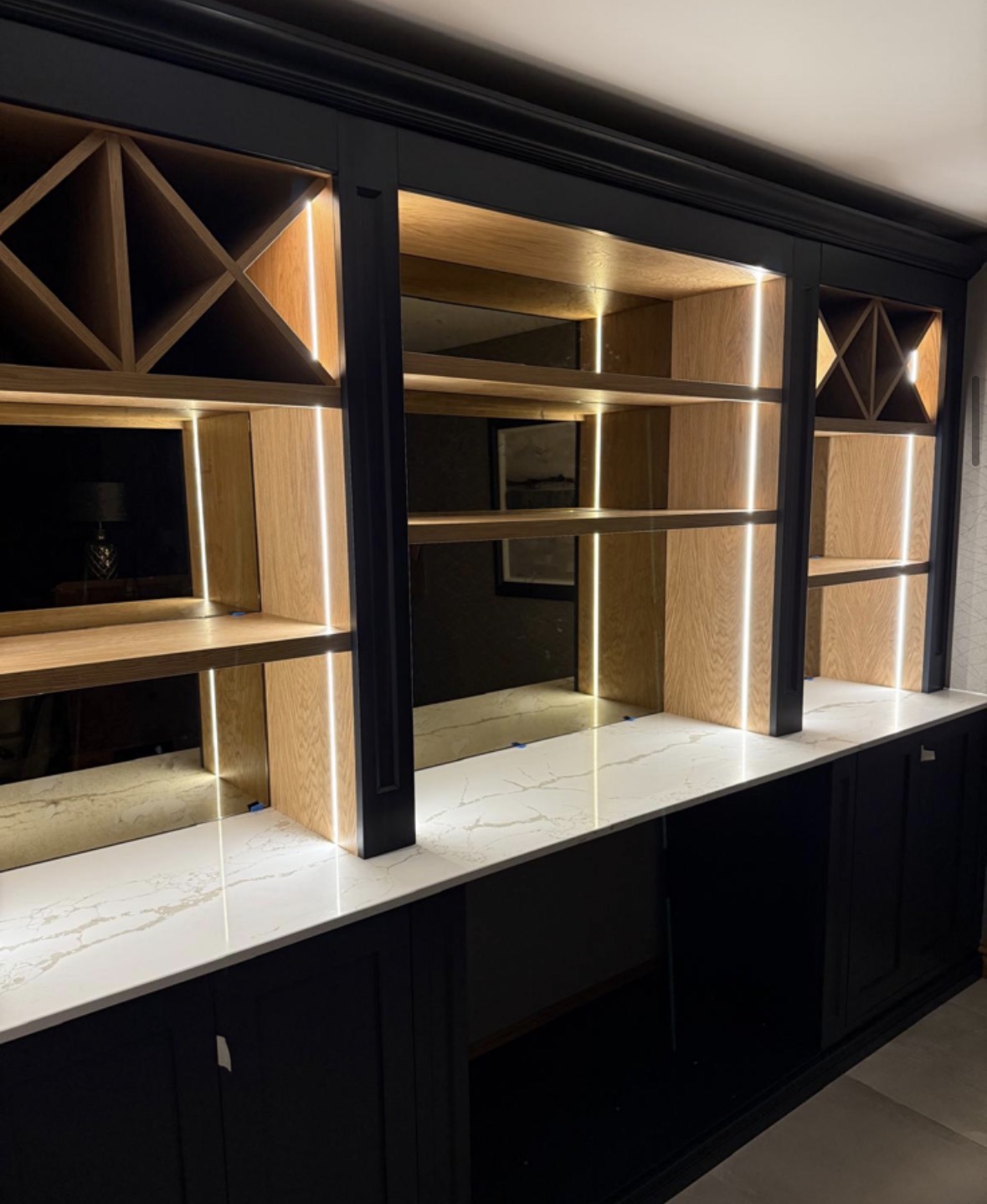
Planning Something Bespoke?
Tell us about your space, what you're looking to create and where the project is located.