
Materials & finishes
Bespoke painted cabinetry
Painted cabinetry is one of the most versatile finishes available to a bespoke project, moving from traditional shaker detailing to flat, contemporary panels depending on the room and the brief.
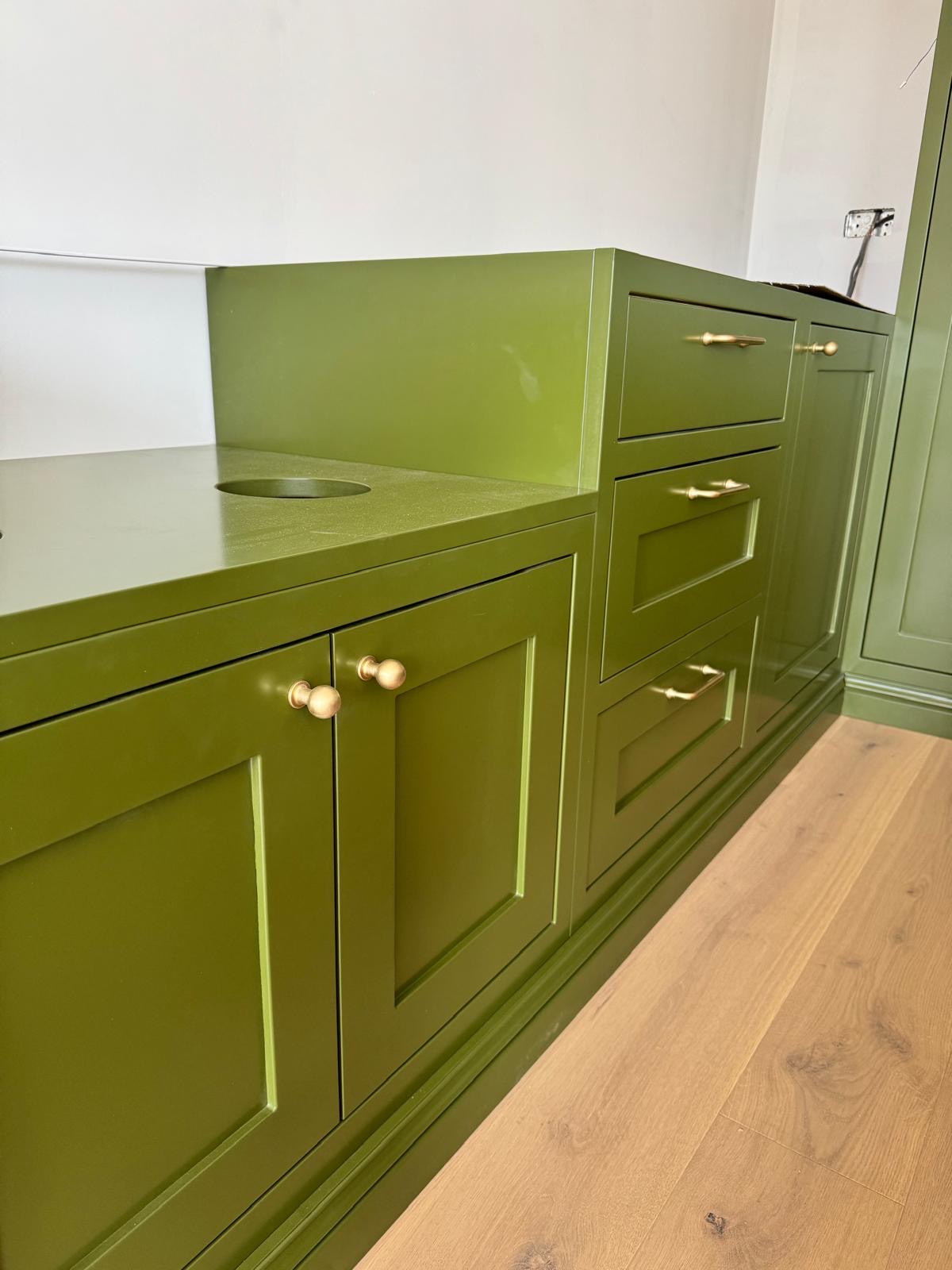
Painted cabinetry
A painted finish gives a piece of furniture a character that timber alone cannot, because colour becomes part of the design decision rather than a fixed property of the material. Depending on the project, designs may incorporate a shaker frame with a recessed or raised centre panel, or a flatter, more contemporary door with minimal detailing, and the same colour will read quite differently across the two.
This is why painted cabinetry sits at the centre of a large proportion of Chester Thomas projects. Kitchens, wardrobes, media walls, libraries and home offices are all designed and made using the same underlying process, and the choice of door style and colour is treated as a design decision made early, alongside layout and storage, rather than an afterthought applied once the carcass work is settled.
Door style has as much bearing on the finished look as colour itself. A shaker door with a painted finish, as described on shaker kitchens, tends toward a more traditional or transitional character, while a flat panel door reads as considerably more contemporary even in the same colour. Some rooms benefit from mixing the two, using a shaker profile on base cabinetry and a flatter panel on taller runs, so the piece responds to the proportions of the room rather than a single fixed template.
Colour choice itself is broad but not unlimited. Olive greens, sage tones, navy, cream, ivory and black have all featured across Chester Thomas kitchens, wardrobes and fitted furniture, and finishes can be developed to coordinate with the wider interior scheme rather than being chosen in isolation. This page sets out how painted cabinetry is approached across the rooms it appears in most, and colour-matched bespoke furniture covers the process of agreeing a specific colour reference in more detail.
Where painted cabinetry works well
01
Kitchens
A painted kitchen, whether shaker or flat panel, remains one of the most requested finishes we design, often paired with brass hardware and detailed further on painted kitchens.
02
Contrasting islands
An island painted in a contrasting colour to the surrounding run, such as a navy island against pale grey tall cabinetry, gives a kitchen a clear focal point without altering the layout itself.
03
Fitted wardrobes
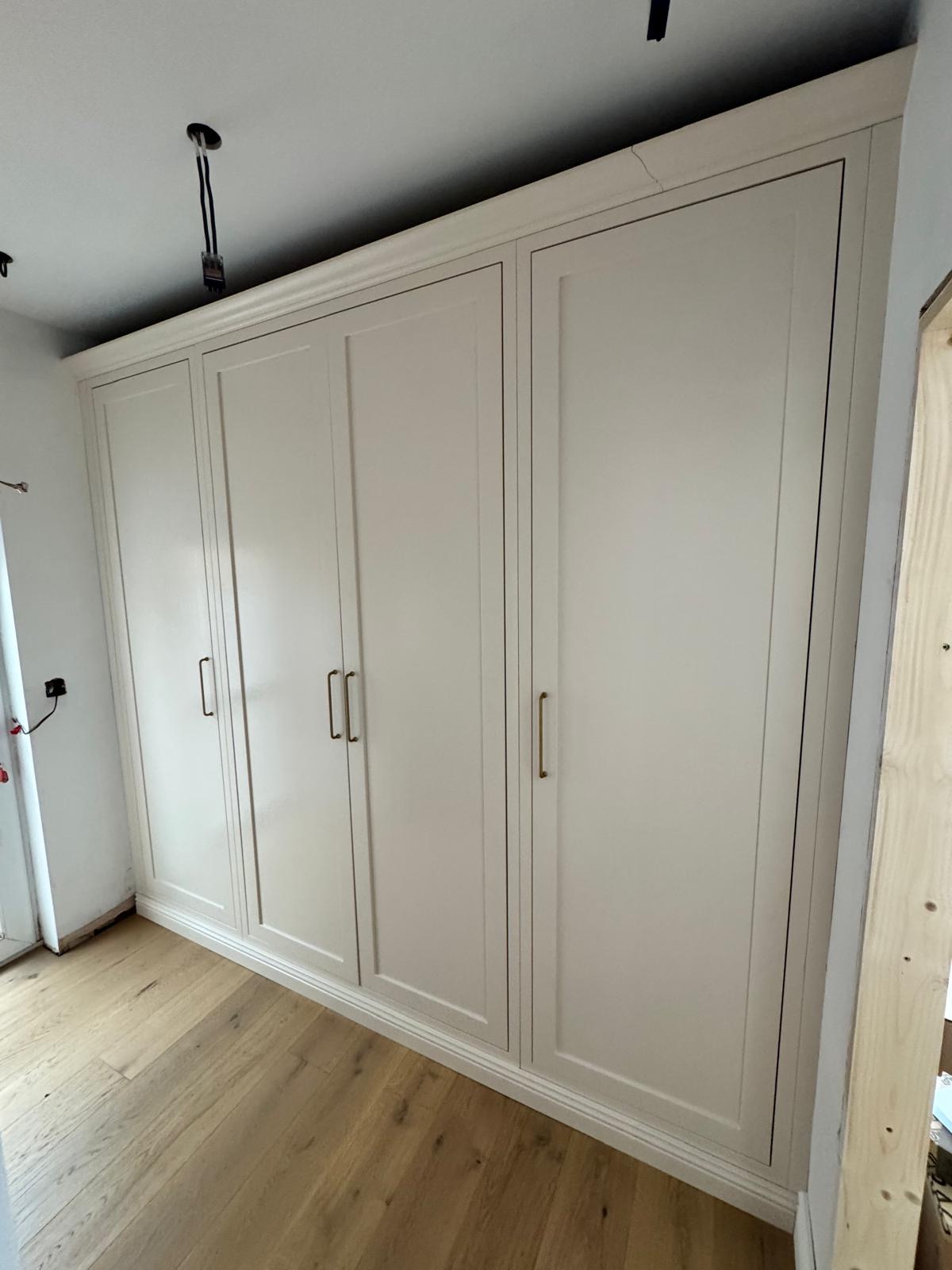
Painted wardrobe fronts, from cream shaker to matt black with brass inlay, bring a dressing room or bedroom into line with the rest of a scheme far more easily than a fixed timber tone.
04
Home libraries
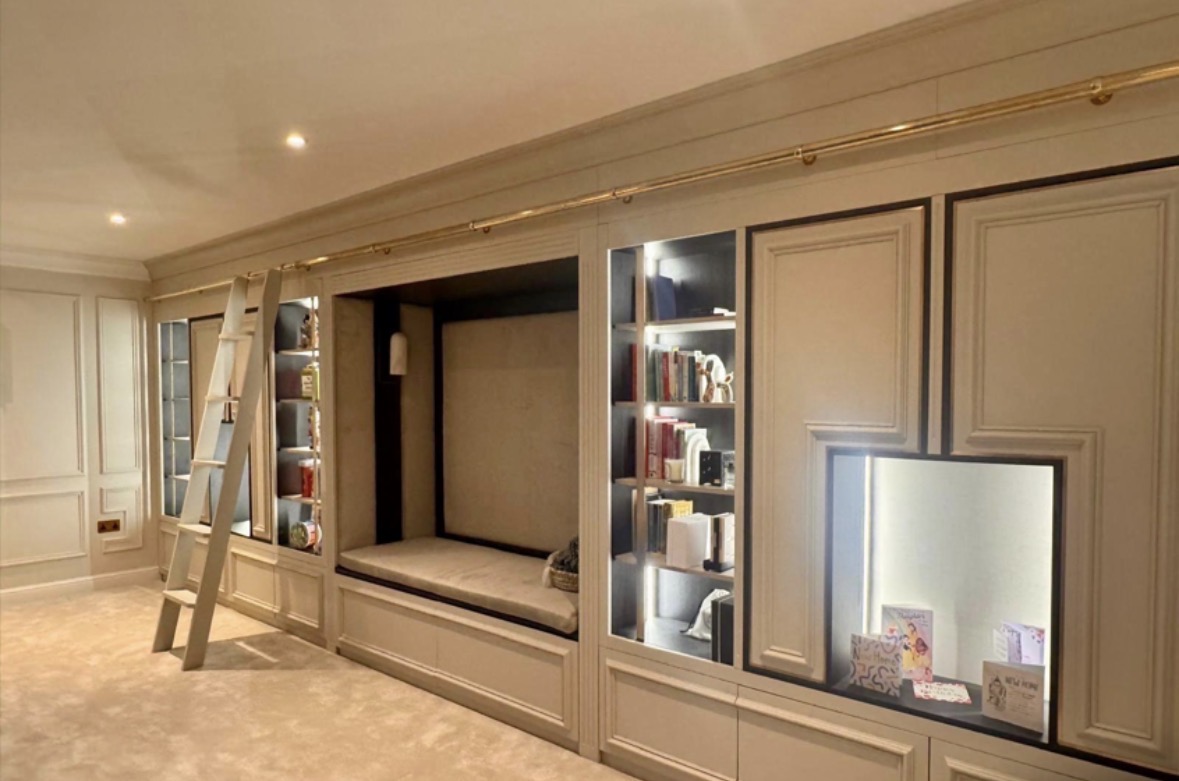
Hand-painted panelled library walls give bookcases and display shelving a settled, architectural presence, treating the whole wall as a single painted composition rather than a piece of furniture placed against it.
05
Alcove furniture
Painted alcove units read as an extension of the room's walls and skirting rather than an inserted piece, particularly where the colour has been matched closely to the surrounding woodwork.
06
Home offices
A painted desk and storage run brings order to a working space without the visual weight of a run of timber cabinetry, especially useful in smaller or lighter rooms.
Traditional versus contemporary
The same colour applied to a shaker frame and a flat panel door will produce two noticeably different results, and this is usually the first decision to settle before colour itself is discussed. A shaker profile, with its recessed or raised panel and visible frame, sits comfortably in period properties and traditional schemes, while a flat door with minimal detailing suits a more contemporary interior.
Neither is inherently superior, and many projects use both across different rooms of the same house, matching the door style to the character of each space rather than applying a single decision throughout.
Matching the wider room scheme
Painted cabinetry rarely stands alone within a room, and its colour is almost always considered alongside walls, flooring, worktops and hardware. Finishes can be developed to coordinate with the wider interior scheme, though this depends on the paint reference being matched and the surface it is being applied to, and a perfect match to every manufacturer's colour cannot be guaranteed in every case.
Where a scheme already has a settled palette, that palette becomes the starting point for the cabinetry colour discussion, and colour-matched bespoke furniture covers how that reference is agreed in more detail.
Contrast and focal points
Painted islands offer an opportunity to introduce contrast without changing the layout of a kitchen. A navy island against pale grey wall cabinetry, for example, gives the room a clear centre while keeping the surrounding cabinetry restrained, and the same principle applies to bars, media walls and freestanding storage elsewhere in a house.
Hardware and detailing
Hardware plays a significant part in how a painted finish reads. Brass hardware against an olive green or sage door gives a warmer, more traditional result, while a handleless or graphite finish suits a more restrained, contemporary run. Hardware is specified alongside colour and door style rather than chosen afterward, since the three decisions affect one another directly.
Where painted cabinetry is used across a house
Because the same finish and process can be applied to kitchens, wardrobes, libraries, offices and alcove furniture, a painted colour is sometimes carried across several rooms to give a house a consistent thread of colour and detailing, while door style and hardware are varied to suit each room's individual character.
From our work
What painted cabinetry is typically paired with
- Brass hardware
- Warmer painted tones such as olive green and sage are frequently paired with brass hardware, giving kitchens and wardrobes a more traditional character.
- Stone worktops
- Painted kitchen cabinetry is commonly specified alongside stone worktops, with the specialist fabrication of the stone itself carried out by an appropriate trade.
- Timber accents
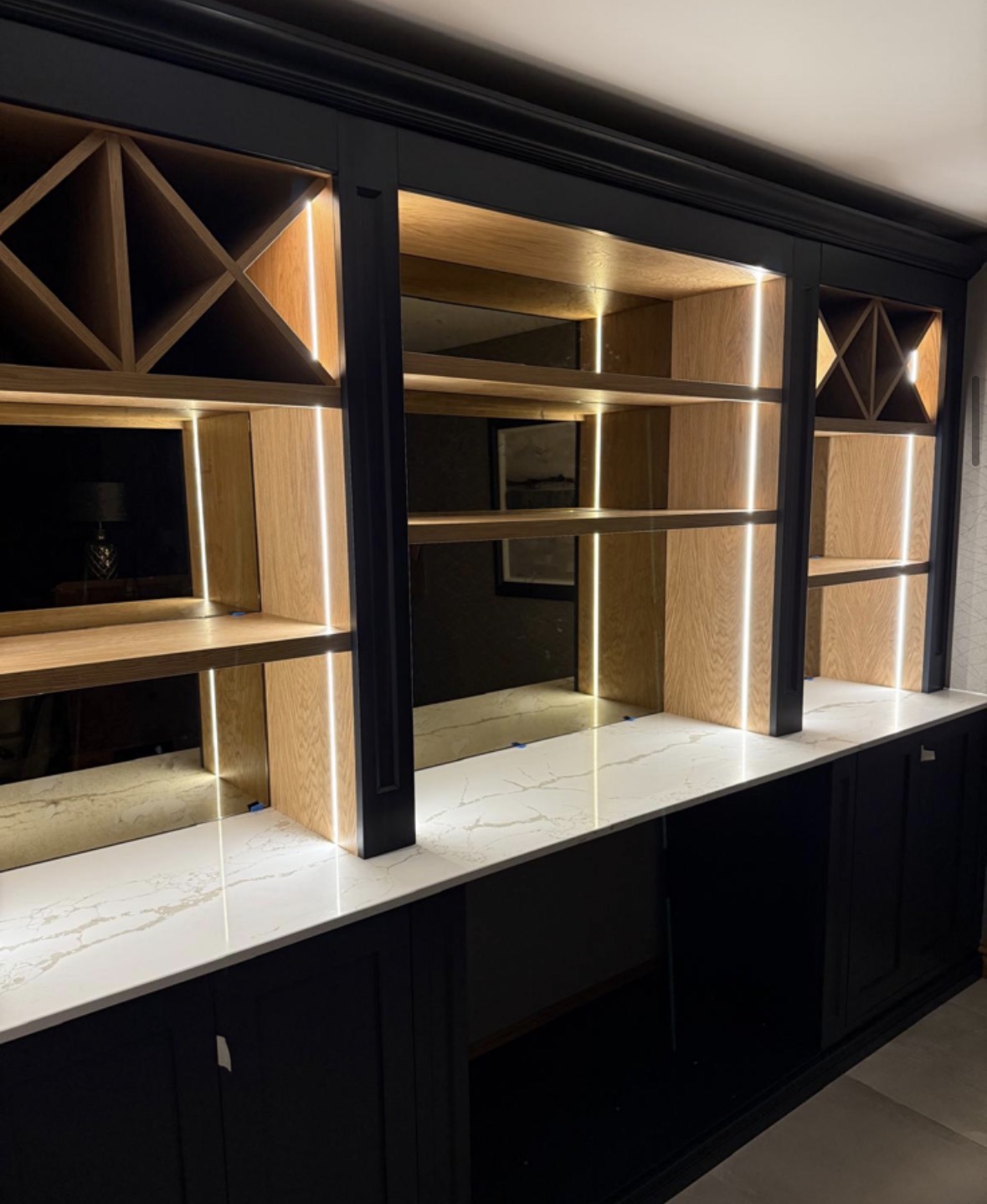
- A run of otherwise painted cabinetry is sometimes given a timber shelf, worktop or interior lining, softening the finish and adding warmth to an otherwise flat colour.
- Wall panelling
- Painted panelled walls, as seen in some library projects, extend the cabinetry colour across the whole room, treating furniture and architecture as one composition.
- Contrasting cabinetry
- A painted island or run in a contrasting tone is often paired with pale grey or off-white tall cabinetry, keeping the room calm while the focal piece carries the colour.
Design, manufacture, installation
Painted cabinetry is designed, specified and manufactured through the same sequence of design, manufacture and installation described in full on the process page, so colour and door style are agreed before anything reaches the workshop.
Questions we are asked
Design
- What door styles are available for painted cabinetry?
- The two most common approaches are a shaker frame, with a recessed or raised centre panel, and a flatter contemporary door with minimal detailing. Depending on the project, designs may incorporate either, or a mix of the two across different rooms, and the choice is discussed early alongside layout, since it has as much bearing on the finished character as colour itself.
Colour & finish
- Can any colour be painted onto cabinetry?
- Finishes can be developed to coordinate with the wider interior scheme, working from a paint reference or colour already in use elsewhere in the house. We do not claim every manufacturer's colour can be matched perfectly, since the result depends on the reference itself and the surface being finished, but a close, considered match is the aim of every colour discussion.
Design
- Is painted cabinetry suitable for a traditional house?
- It suits both traditional and contemporary properties, largely depending on the door style chosen. A shaker profile with a painted finish sits comfortably in a period property, while the same colour on a flat panel door gives a more contemporary result, so the property's character is factored into the door style decision rather than the colour alone.
- Can a kitchen island be painted a different colour to the rest of the cabinetry?
- Yes. A contrasting island, such as a navy island against pale grey tall cabinetry, is a well-established approach and gives a kitchen a clear focal point without altering its layout. The two colours are considered together during design, so the contrast reads as intentional rather than mismatched.
Rooms
- Does painted cabinetry work in wardrobes and dressing rooms?
- It does, and cream shaker fitted wardrobes and matt black wardrobes with brass inlay both feature among the finishes we have produced. As with kitchens, the door style and hardware are chosen alongside colour, and more detail on wardrobe design generally is set out on fitted wardrobes.
Colour & finish
- How does painted cabinetry differ from a timber finish?
- A painted finish makes colour an independent design decision rather than a property fixed by the timber species itself, which allows a much wider palette and easier coordination with a room's existing scheme. Timber finishes, by contrast, are led by the grain and tone of the wood, and both approaches are covered separately, with timber options set out on bespoke cabinetry.
Rooms
- Can painted cabinetry be used for a home library?
- Hand-painted panelled library walls are one of the settings where the finish works particularly well, treating bookcases, display shelving and the surrounding wall as a single painted composition rather than a piece of furniture placed against it. A painted finish also gives the option of a contrasting colour behind glazed sections or open shelving, so bound books and objects read clearly against the backdrop. More on library design generally is available on home libraries.
Colour & finish
- What hardware suits painted cabinetry?
- Hardware is chosen alongside colour and door style rather than afterward. Brass hardware tends to suit warmer tones such as olive green and sage, giving a more traditional result, while a handleless or graphite finish suits cooler, more contemporary colours. The right combination depends on the character the room is aiming for.
Rooms
- Can painted cabinetry be used for a home office?
- It can, and a painted desk and storage run often brings a lighter, calmer feel to a working space than a full run of timber cabinetry. Layout and storage needs are established first, with colour and door style agreed alongside them, as described on home offices & studies.
Manufacture
- Is painted cabinetry durable for everyday use?
- Painted cabinetry is manufactured in our Derbyshire workshop to be used every day, in kitchens as much as any other room. Specific performance depends on the exact finish and how a room is used, and this is discussed as part of specification once a project's requirements are understood in detail.
Design
- How do I decide between shaker and flat panel doors?
- The decision is usually guided by the character of the property and the wider scheme rather than colour alone, and it is discussed early in design because it affects proportion, sightlines and how the cabinetry sits within the room. Seeing both styles alongside the room's existing detailing usually makes the choice clearer than considering them in isolation.
- Can the same colour be used across several rooms in a house?
- It can, and carrying one painted colour across a kitchen, wardrobe and library, for example, gives a house a consistent thread running through it, while door style and hardware are varied to suit each room. This is discussed as part of a wider project brief rather than assumed automatically.
Colour & finish
- Does Chester Thomas match paint to a specific brand's colour chart?
- We work from paint references and colours already in use within a scheme, and finishes can be developed to coordinate with them, but we do not claim to reproduce every manufacturer's colour exactly in every instance. The closeness of the match depends on the reference itself and the surface being painted, and this is discussed openly during the colour conversation.
Cost
- What does painted cabinetry cost compared with a timber finish?
- Cost depends on the door style, the size and complexity of the piece, hardware, and the room it is designed for, so we do not quote general figures for painted work against timber. The best way to get a meaningful answer is to send project details through the contact page, so a response can be given against what is actually being asked for.
Manufacture
- Where is painted cabinetry made?
- All painted cabinetry is designed, manufactured and installed by Chester Thomas from our Derbyshire workshop, following the design and specification stages described on the process page. The same team that develops the drawings and colour direction carries the piece through to installation on site.
Relevant bespoke services
Painted kitchens
Painted kitchen cabinetry, islands and hardware in full detail.
Shaker kitchens
Shaker door detailing carried in a painted finish.
Fitted wardrobes
Painted wardrobe fronts alongside the wider design of storage and layout.
Bespoke cabinetry
General cabinetry design, including timber and painted finishes.
Home libraries
Painted panelled library walls and fitted bookcases.
Home offices
Painted desk and storage design for working spaces.
Related materials and styles
Colour-matched furniture
Coordinating painted cabinetry with the paint references, walls and woodwork already established in a room.
Panelled cabinetry
Shaker, flat and decorative panel doors, and wall panelling integrated with fitted cabinetry, made in our Derbyshire workshop.
Dark cabinetry
Deep painted tones and dark stained timber, used with lighting and contrast considered from the outset.
Traditional fitted furniture
A traditional design language of panelled doors, Shaker influences, cornices and painted timber, suited to almost any home.
To discuss materials and finishes, call Chester Thomas on +44 7418 627358, email info@chesterthomas.com or start your project.
Planning Something Bespoke?
Tell us about your space, what you're looking to create and where the project is located.