
Materials & finishes
Bespoke dark cabinetry
Dark cabinetry, whether a deep painted tone or a dark stained timber, gives a room weight and definition, and works best when lighting and contrast are considered from the beginning rather than added afterward.
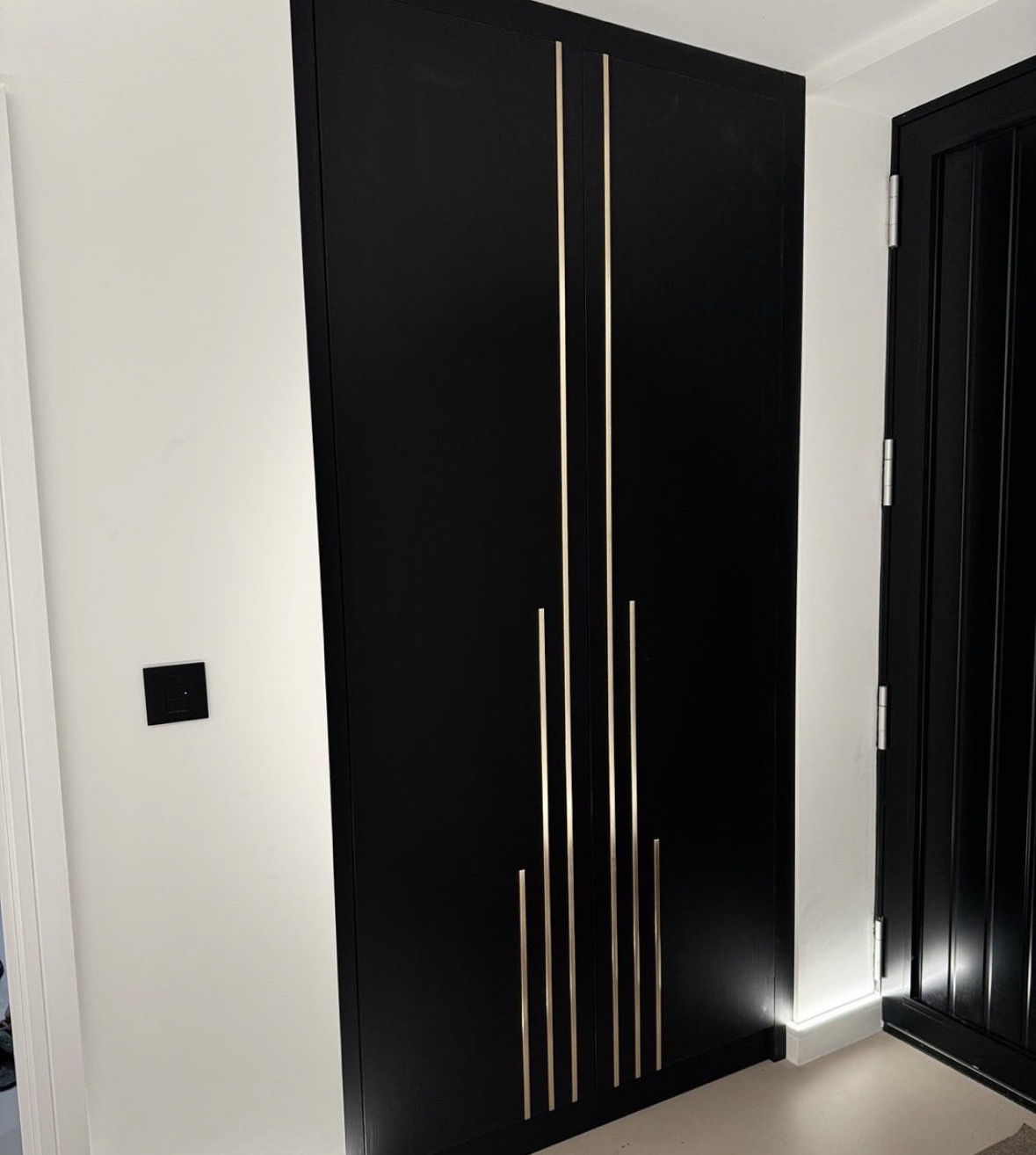
Dark cabinetry
Dark cabinetry covers two related but distinct approaches: a deep painted colour, such as black or a very dark green or navy, and a stained timber finish that darkens the natural grain while keeping it visible. Both produce a similarly weighted result, but the character of each is different, and the choice between them is usually one of the earliest decisions in a design.
Rooms suited to dark cabinetry tend to share certain qualities: reasonable natural or artificial light, a degree of contrast already present in the scheme, and a use that benefits from a settled, quieter atmosphere rather than a bright, reflective one. Home bars, media rooms, offices and libraries are frequent settings, though dark cabinetry also appears in kitchens, usually as an island or a run of tall storage rather than an entire scheme.
This is not a trend-led finish. Dark cabinetry has a long history in both furniture and architecture, and its appeal tends to be steady rather than seasonal, which is one reason it suits rooms intended to be lived with for a long time, such as a library or a permanent home office, rather than spaces expected to be refreshed frequently.
Lighting is the single biggest factor in whether dark cabinetry succeeds in a room. A dark finish absorbs light rather than reflecting it, so the same colour can feel considered and rich in a well-lit room and simply heavy in a poorly lit one. This is why lighting is discussed alongside colour during design, rather than treated as a separate, later decision.
Scale matters almost as much as lighting. A dark finish applied to a single island, a run of tall storage or one wall of shelving reads as a deliberate accent, while the same colour across every surface in a small room can quickly feel oppressive rather than considered. Deciding how much of a room to commit to a dark scheme, and which elements to keep pale by contrast, is usually settled before the specific shade is chosen.
Where dark cabinetry works well
01
Home bars
Black painted bars are a natural fit for dark cabinetry, particularly where the surrounding lighting is designed to be atmospheric rather than uniformly bright.
02
Media rooms
Dark cabinetry in a media room reduces reflections on screens and gives the space a more cinematic, settled character, and is covered further on media walls.
03
Home offices
Graphite handleless tall storage and dark timber desks give a working space a sense of order and focus, particularly where the room already has good natural light.
04
Home libraries
Dark timber and deep painted tones both suit library shelving, giving books and objects a strong, contrasting backdrop, as discussed further on home libraries.
05
Kitchen islands and tall storage
A single dark element, such as an island or a run of tall cabinetry, introduces contrast to a kitchen without darkening the whole room.
06
Boot rooms and utility spaces
Grey and dark painted boot rooms handle daily wear well visually, since marks and scuffs are far less noticeable against a deep tone than a pale one.
Painted black or dark stained timber
A deep painted finish gives a flat, uniform colour with no visible grain, which suits a more architectural or contemporary room. A dark stained timber, by contrast, keeps the natural grain visible beneath the colour, giving a warmer and more textured result that suits traditional or transitional interiors. Both are genuine options within Chester Thomas cabinetry, and the choice depends on the character the room is aiming for.
Lighting
Dark cabinetry needs to be planned alongside lighting rather than after it, since a dark finish behaves very differently under natural daylight, warm artificial light and cool downlighting. A room with limited natural light can still work well with dark cabinetry provided the artificial lighting scheme is considered as part of the same design conversation.
Feature lighting, such as a strip beneath open shelving or within a bar, is particularly effective against a dark background, since the contrast between the light source and the surrounding colour is much stronger than it would be against a pale finish.
Contrast with stone and metal
Dark cabinetry pairs naturally with lighter stone, pale metal hardware, and mirrored or glass elements, all of which introduce reflection and lift into a scheme that could otherwise feel heavy. This contrast is usually more important to the success of a dark scheme than the precise shade of the cabinetry itself.
Scale and proportion
Dark cabinetry tends to read as visually heavier than a pale or timber finish of the same size, so proportion is considered carefully during design, particularly in smaller rooms or those with lower ceilings, where a dark scheme can be used selectively rather than throughout.
Longevity of the finish
Because dark cabinetry is not a trend-led choice, it tends to be selected for rooms intended to be lived with for a long period, such as a permanent library, office or bar, rather than spaces expected to be redecorated frequently. This is worth considering during the brief stage, alongside how the room is expected to be used over time.
Maintenance and daily use
A dark finish shows dust and light marks slightly more readily than a pale one under close inspection, though it is considerably more forgiving of general scuffs, scratches and daily wear, which is one reason it suits boot rooms and heavily used storage as well as quieter rooms such as libraries. Which of these matters more depends on how a room is actually used day to day, and this is discussed as part of the brief.
From our work
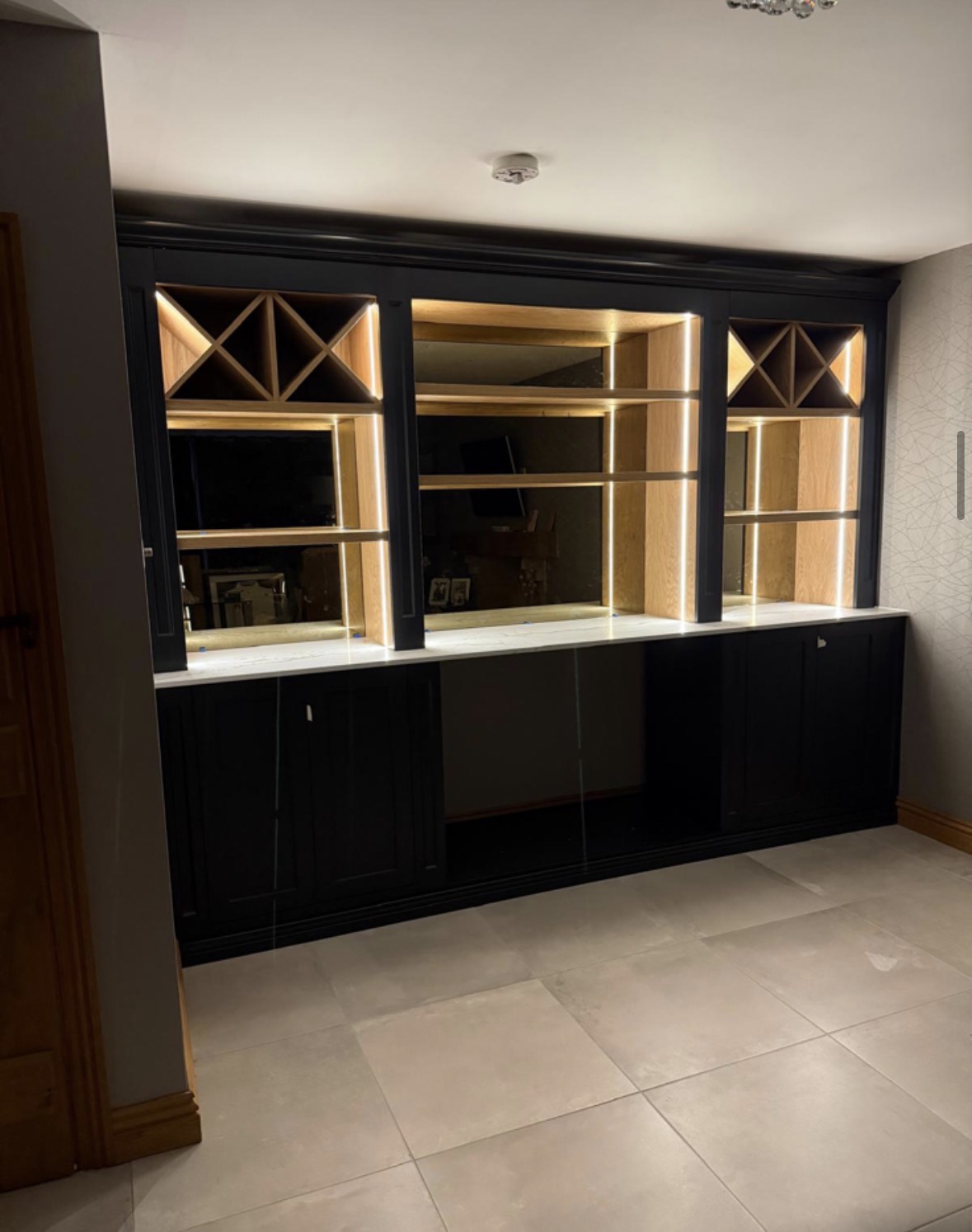
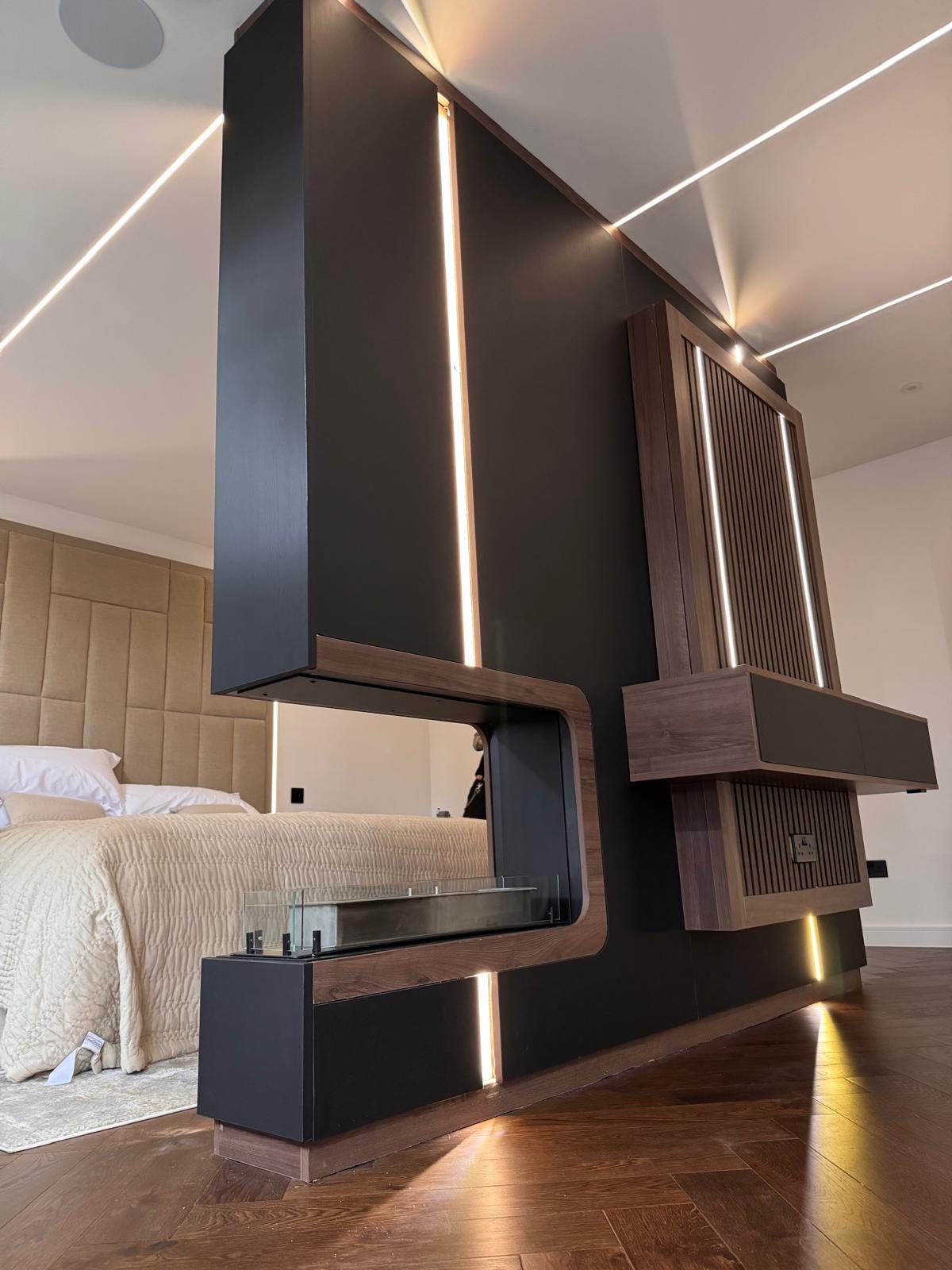
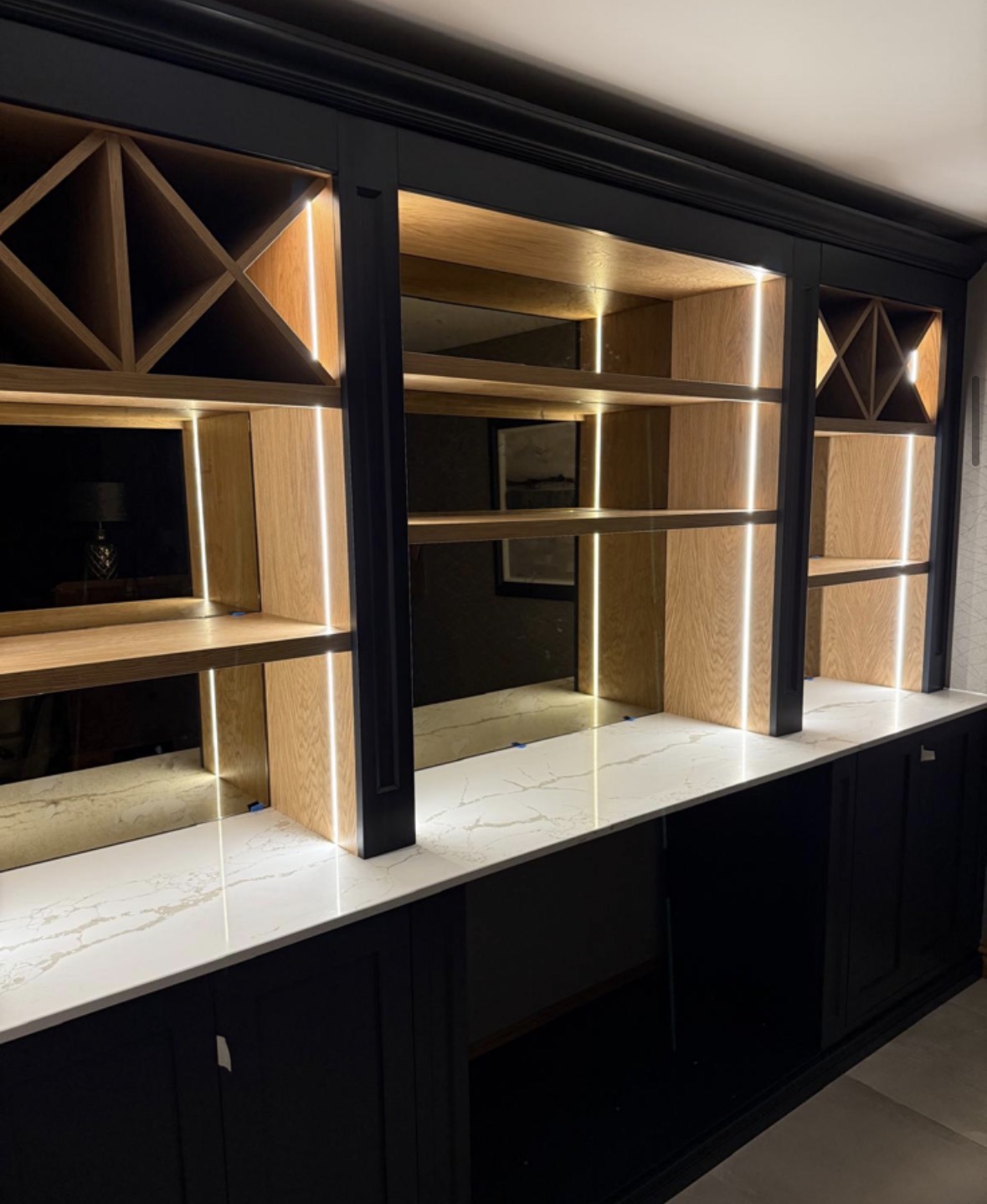
What dark cabinetry is typically paired with
- Pale stone surfaces
- Dark cabinetry paired with a pale stone worktop or surface gives a strong, considered contrast, with stone fabrication carried out by the appropriate specialist trade.
- Brass or nickel hardware
- Metal hardware against a dark painted or stained finish stands out clearly, adding definition to door and drawer fronts.
- Feature lighting
- Integrated lighting beneath shelving or within a bar counter is particularly effective against dark cabinetry, since the contrast is more pronounced than against a pale finish.
- Mirrored and glass elements
- Mirrored panels or glazed display sections lift a dark scheme by introducing reflection and a sense of depth.
- Pale walls
- Dark cabinetry against a pale or neutral wall keeps a room feeling balanced rather than overwhelmingly dark, particularly in smaller spaces.
Design, manufacture, installation
Dark cabinetry is designed with lighting and contrast considered from the outset, as part of the design and specification stages described on the process page, before manufacture in the Derbyshire workshop begins.
Questions we are asked
Colour & finish
- What is the difference between painted black cabinetry and dark stained timber?
- A painted finish gives a flat, uniform colour with no visible grain, suiting a more architectural look, while a dark stain keeps the timber's natural grain visible beneath the colour, giving a warmer and more textured result. Both are used across Chester Thomas projects and the choice depends on the character wanted for the room.
Design
- Does dark cabinetry make a room feel smaller?
- It can, particularly in a small or poorly lit room used throughout, which is why dark cabinetry is often applied selectively, such as to an island or a single feature wall, rather than an entire scheme. Lighting and proportion are both discussed during design to avoid this effect where it isn't wanted.
Rooms
- Is dark cabinetry only suitable for certain rooms?
- It works well in a wide range of rooms, including bars, media rooms, offices, libraries and kitchens, provided lighting and contrast are considered. It tends to suit rooms with reasonably good light, or rooms where a more atmospheric, lower-light character is actually desired, such as a home bar.
Design
- Will dark cabinetry go out of fashion?
- Dark cabinetry has a long history in furniture and architecture and its appeal has proven steady rather than seasonal, which is one reason it suits permanent spaces such as libraries and offices. We treat it as an evergreen option rather than a passing trend.
- How important is lighting for a dark scheme?
- Lighting is one of the most important factors in whether dark cabinetry succeeds, since a dark finish absorbs rather than reflects light. The same colour can feel rich and considered in a well-lit room and simply heavy in a poorly lit one, so lighting is discussed alongside colour during design rather than afterward.
Rooms
- Can a kitchen have some dark cabinetry without the whole room being dark?
- This is a common approach, with a single dark island or run of tall storage introducing contrast against paler surrounding cabinetry rather than the whole kitchen being finished in a dark colour. It keeps the room feeling balanced and well lit while still giving it a strong focal point, and it is usually an easier decision for anyone unsure whether a fully dark scheme would suit their kitchen long term.
Colour & finish
- Does dark cabinetry show marks more than pale cabinetry?
- Dark finishes tend to show dust and fingerprints slightly more visibly than pale ones in close light, though they hide general scuffs and daily wear, such as in a boot room, considerably better than pale finishes do. Which matters more depends on how the room is used.
- What hardware works well with dark cabinetry?
- Brass and nickel hardware both stand out clearly against a dark finish, giving door and drawer fronts definition. A handleless approach in a matching dark tone gives a flatter, more minimal result, and the choice depends on how much contrast is wanted.
Rooms
- Can dark cabinetry be used for a home bar?
- A black painted bar is a natural fit for dark cabinetry, particularly where the surrounding lighting is designed to be atmospheric rather than uniformly bright, and where feature lighting beneath a counter or within display shelving is intended to stand out against the surrounding colour. More on bar design generally is set out on home bars.
- Is dark cabinetry suitable for a home library?
- It suits libraries particularly well, since dark timber or a deep painted tone gives books and objects a strong, contrasting backdrop rather than competing with them for attention. Libraries also tend to be used at a settled pace, so the quieter, more atmospheric character a dark scheme brings works with the room rather than against it. Library-specific design considerations are covered further on home libraries and built-in bookcases.
Design
- Can dark cabinetry be combined with stone surfaces?
- A pale stone surface against dark cabinetry is one of the more common and effective contrasts we design around, since the lightness and veining of the stone lift a scheme that could otherwise feel heavy. The stone itself is fabricated by an appropriate specialist trade, coordinated as part of the wider project rather than treated as a separate procurement.
- How do I know if dark cabinetry will suit my room?
- This depends on the room's natural and artificial light, its size, and how it is used, all of which are assessed during a site visit and design conversation. A room with reasonable light and a settled use, such as an office or library, is usually a strong candidate.
Cost
- What does dark cabinetry cost compared with a pale finish?
- Cost is driven by the size and complexity of the piece, the door style and the finish itself, rather than dark colours carrying a fixed premium over pale ones. The clearest way to get a meaningful figure is to share the project through the contact page, so a response can reflect the specifics involved.
Manufacture
- Is dark cabinetry made in the same way as any other Chester Thomas piece?
- Dark cabinetry goes through the same design, manufacture and installation process as every other piece we produce, described in full on the process page, with lighting and contrast considered as part of the design stage rather than left until manufacture. The only real difference from a paler finish is the additional attention given to how the colour will read under the room's specific lighting before it is confirmed.
Relevant bespoke services
Home bars
Black painted bar cabinetry and atmospheric lighting.
Media walls
Dark cabinetry designed to reduce reflection around screens.
Home offices
Graphite and dark timber storage for working spaces.
Home libraries
Dark timber and painted shelving as a backdrop for books.
Built-in bookcases
Fitted bookcases finished in dark stained timber or paint.
Bespoke cabinetry
General cabinetry design across timber and painted finishes.
Related materials and styles
Stained oak furniture
Oak with its tone adjusted through staining, keeping the grain visible while suiting darker or warmer interior schemes.
Painted cabinetry
Hand-painted cabinetry in shaker and flat-panel styles, designed to sit correctly within the room it furnishes.
Integrated lighting
LED shelf, display and wardrobe lighting designed into cabinetry from the outset, with connection carried out by a qualified electrician.
Contemporary bespoke furniture
A contemporary design language of clean lines, integrated hardware and dark cabinetry, for any home rather than any one type of property.
To discuss materials and finishes, call Chester Thomas on +44 7418 627358, email info@chesterthomas.com or start your project.
Planning Something Bespoke?
Tell us about your space, what you're looking to create and where the project is located.