
Materials & finishes
Traditional fitted furniture
Traditional fitted furniture is built around panelled doors, Shaker influences, applied cornices and painted or timber finishes, a design language that sits comfortably in a wide range of houses.
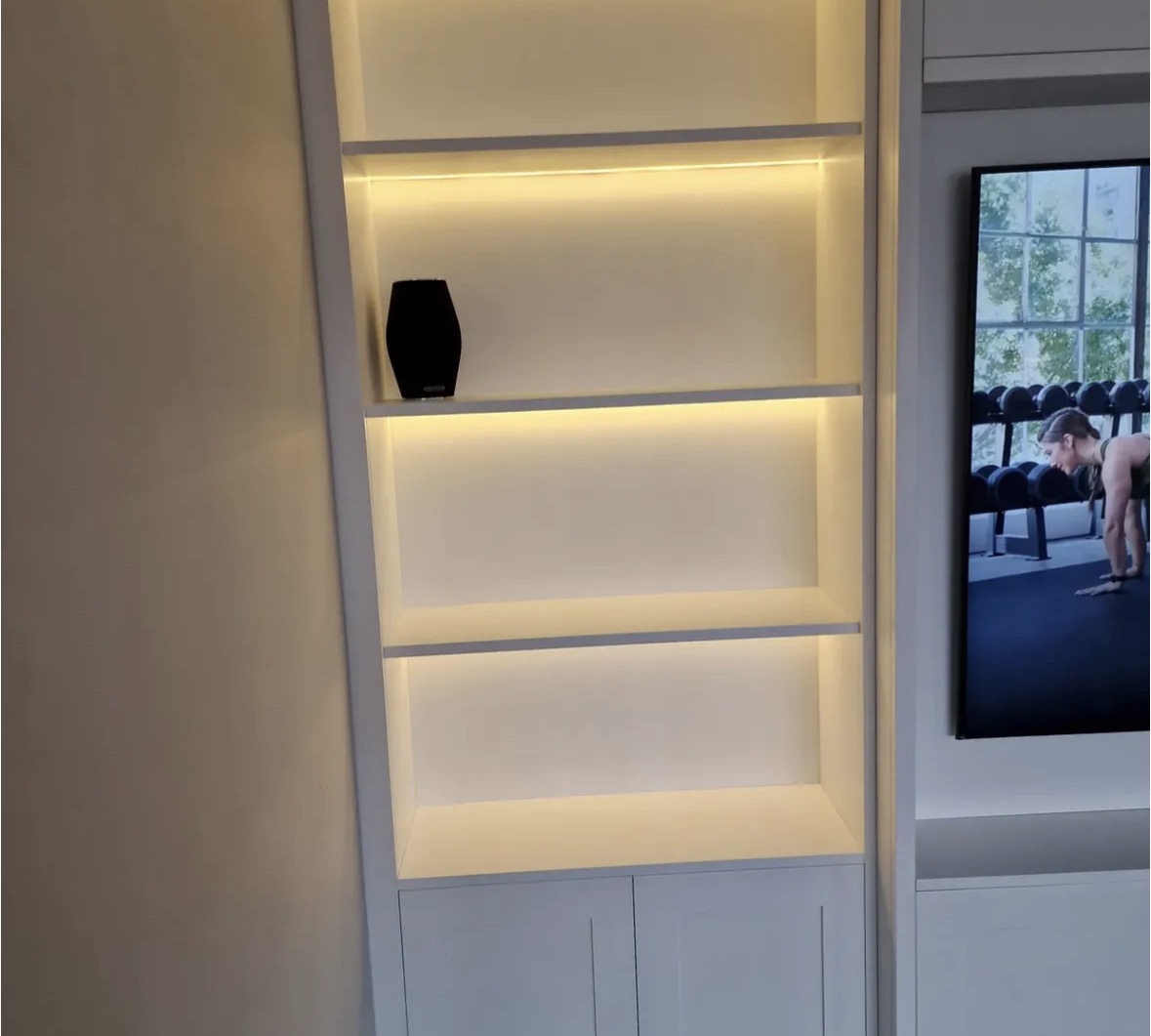
Traditional fitted furniture
Traditional furniture design describes a family of details rather than a single fixed look: panelled doors, Shaker-style frames, applied cornices and skirtings, painted finishes and solid timber. These details can be drawn plainer or more decorative depending on the room, but together they give fitted furniture a settled, considered character that has stayed popular for good reason.
At Chester Thomas, this is most visible in hand-painted Shaker kitchens, cream painted wardrobes, panelled library walls and boot rooms, and cabinetry designed to sit around fireplaces and alcoves. The joinery detail, such as a raised or recessed panel, a shaped cornice, or a chosen skirting profile, is drawn to suit the specific room rather than applied as a standard template.
This is a distinct conversation from designing for a period property as a building. Our bespoke fitted furniture for period homes page covers the practical demands that come with older houses, such as uneven walls, existing cornicing and protected features. This page is about the traditional design language itself, which can be used in a period house or in a newer one where a more classic character is wanted.
The style is often chosen because it wears well over time: painted finishes can be refreshed, panelled doors have a long history of durable use, and the proportions involved tend to suit a wide range of room sizes without looking out of place. Timber species also matters here: a painted door is usually built in a stable, close-grained timber such as poplar or tulipwood, which takes paint evenly and moves less than a knottier softwood, so the finish stays flat and free of visible grain telegraphing through over time.
Traditional furniture is not a claim to historical accuracy. We design and make new fitted furniture in this style, drawing on genuine joinery detail such as panel construction and Shaker influences, rather than reproducing a specific historic piece or period exactly as it once was.
Where a traditional approach works well
01
Shaker kitchens
A hand-painted Shaker kitchen, with its simple recessed panel and honest joinery, remains one of the most requested traditional designs, suiting both period and newer houses alike.
02
Painted wardrobes and dressing rooms
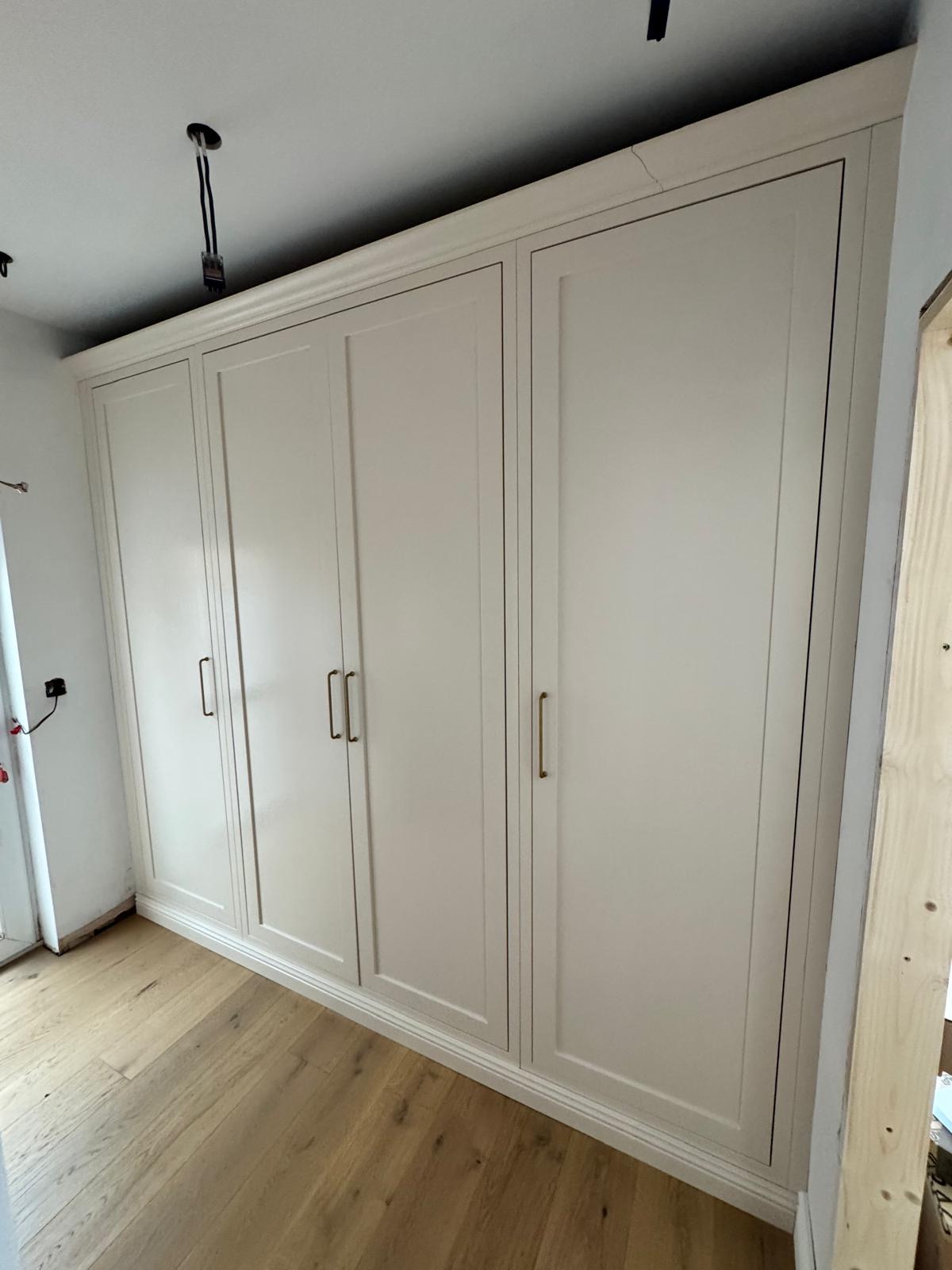
Cream and off-white painted wardrobes, often with panelled doors, give a bedroom a settled, considered feel and can be designed floor to ceiling to make full use of the space.
03
Libraries and panelled walls
Panelled library walls and built-in bookcases benefit from applied mouldings, cornices and skirtings that tie the furniture into the room's existing proportions.
04
Boot rooms and utility spaces
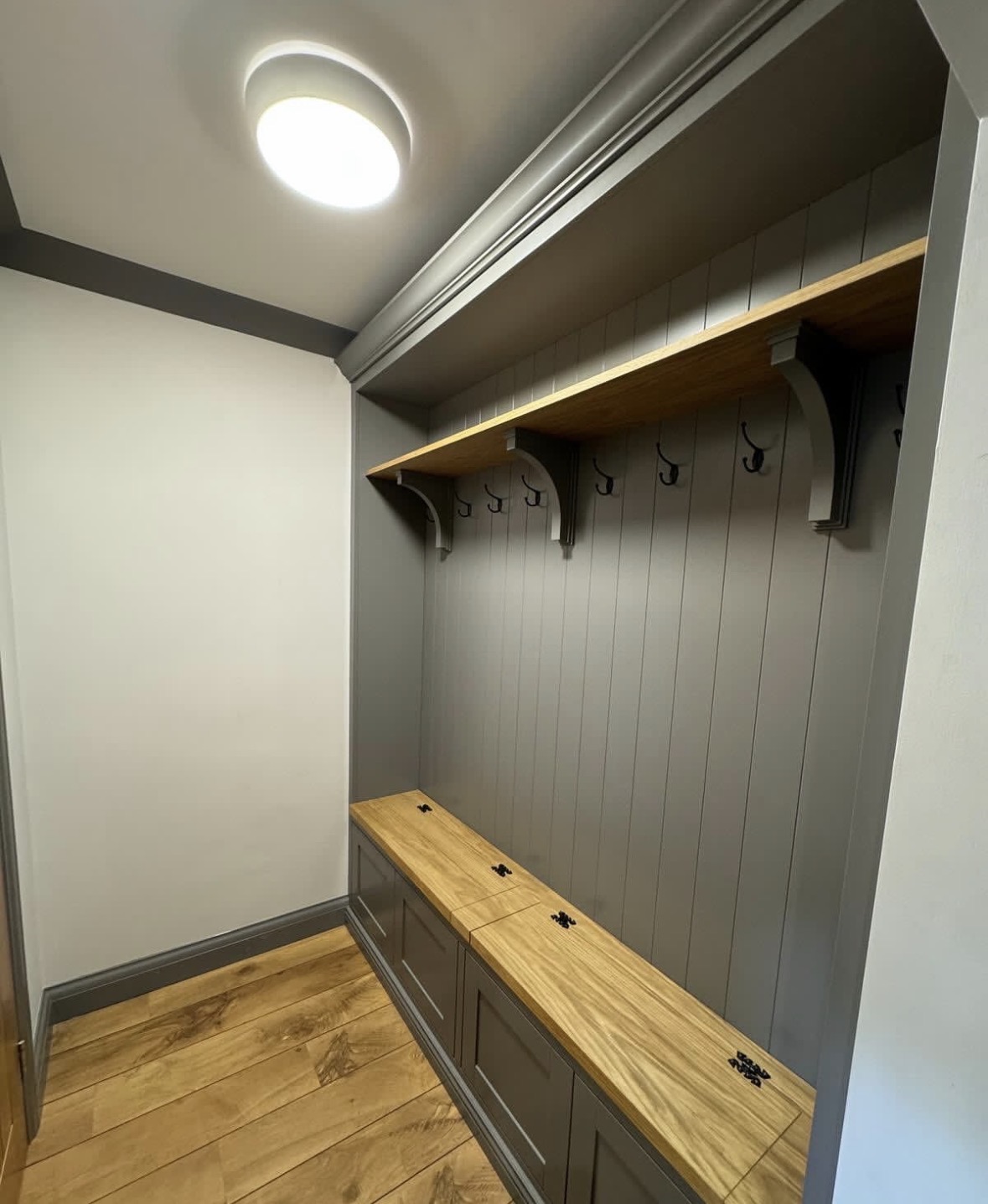
A traditional boot room, with painted panelling and generous storage, suits both working farmhouses and more formal country houses looking for practical, well-mannered storage.
05
Alcoves either side of a chimney breast
Alcove cabinetry is a natural home for traditional panelling and applied cornice work, since the alcove itself already suggests a settled, symmetrical design.
06
Period reception rooms
Reception rooms with existing cornicing and skirting are well suited to fitted furniture designed to match or complement that detailing, rather than a plainer contemporary alternative.
Panel construction and proportion
A traditional panelled door is built from a frame with a raised, recessed or flat centre panel, and getting the proportion of stile, rail and panel right matters more to the overall character of the piece than any single material choice.
We set out panel sizes and proportions at design stage so they read consistently across a whole kitchen or wardrobe run, rather than varying awkwardly from cabinet to cabinet.
Shaker influences
Shaker design favours a simple recessed panel with minimal moulding, and it has become a popular middle ground between a plain contemporary door and a more heavily detailed period style.
Our shaker kitchens page covers this style in more detail, including how it is applied specifically to kitchen cabinetry.
Cornices, skirtings and applied moulding
Cornices and skirtings help fitted furniture read as part of the room's architecture rather than as a piece dropped into it, particularly where the existing room already has period detailing to match.
In a room without existing cornicing, we discuss with the client whether to introduce it as part of the furniture design or keep the piece plainer, since either can work depending on the wider scheme.
Painted finishes
Hand-painted finishes are central to most traditional work, and the quality of a painted finish comes from surface preparation and the number of coats applied as much as from the colour chosen.
Cream, off-white and soft neutral colourways are among the most requested for traditional kitchens and wardrobes, though darker painted colours are also used where the client wants more depth.
Fitting into an existing room
Traditional fitted furniture, by its nature, needs to sit closely against existing walls, skirtings and cornices, which is why an accurate site survey and careful design are as important here as with any other style of furniture.
Out-of-square walls and uneven floors are common in older houses, and scribing pieces are used to close the gap between furniture and room neatly, rather than leaving a visible run of packing or filler along the join.
We also record existing radiators, pipework and skirting heights during survey, so the finished cabinetry works around them rather than requiring alterations to the room once the furniture arrives on site.
From our work
Materials that suit traditional work
- Hand-painted cabinetry
- A painted finish is the most common choice for Shaker kitchens, wardrobes and panelled walls, giving a consistent, settled colour across the whole piece.
- Solid oak and stained oak
- Timber worktops, shelving and internal fittings pair naturally with painted cabinetry, adding warmth to a kitchen or library without competing with the panelling.
- Cast or reeded glass
- Glazed cabinet doors, particularly in a library or display cabinet, sit comfortably within a traditional design and let contents be seen without leaving them fully exposed.
- Traditional ironmongery
- Cup handles, knobs and traditional hinges complement panelled doors and are chosen alongside the paint colour and timber so the whole piece reads consistently.
- Reeded or fielded panel detailing
- Adding a fielded or reeded centre panel to a Shaker frame gives a slightly more decorative reading without moving away from traditional proportions, useful where a client wants more detail than a plain recessed panel but nothing overtly ornate.
Design, manufacture, installation
Traditional fitted furniture is designed, drawn, manufactured in the Derbyshire workshop and installed by the same team, following the sequence described on the process page.
Questions we are asked
Design
- Is traditional fitted furniture only suitable for period houses?
- No. While it suits period houses particularly well, a traditional design language of panelled doors, Shaker influences and painted finishes can be used in a newer property too, where a more classic character is wanted than a purely contemporary scheme would give.
- How is this different from furniture for period homes?
- Bespoke fitted furniture for period homes, covered on bespoke fitted furniture for period homes, addresses the practical demands of older buildings, such as uneven walls, existing cornicing and protected features. This page is about the traditional design language itself, which can be applied whether or not the house is period.
- What is a Shaker door?
- A Shaker door has a simple recessed panel set within a plain frame, with minimal moulding compared with more heavily detailed period styles. It is one of the most requested traditional designs for kitchens and wardrobes, covered in more detail on shaker kitchens.
- Do you reproduce historic furniture exactly?
- No. We design and make new fitted furniture drawing on traditional joinery detail, such as panel construction, Shaker influences and applied mouldings, rather than reproducing a specific historic piece or period design precisely as it originally existed. The aim is a settled, traditional character built with genuine joinery, not a claim that the piece is older than it is.
- Can traditional cabinetry include applied cornices and skirtings?
- Cornices, skirtings and other applied mouldings are often designed into traditional fitted furniture so it reads as part of the room's architecture, particularly where the existing room already has similar detailing to match. Where a room has no existing detailing of this kind, we discuss with the client whether to introduce it as part of the new furniture or keep the design plainer.
Materials & finishes
- What colours are typical for a painted traditional kitchen?
- Cream, off-white and soft neutral tones are the most requested colourways for Shaker kitchens and wardrobes, though we also paint in darker or more saturated colours where a client wants more depth or contrast in the room. The final colour is usually confirmed against a sample seen in the actual room, since natural light changes how a shade reads considerably.
- How is a painted finish achieved?
- A hand-painted finish depends on careful surface preparation and the application of several coats, built up in the workshop before the piece leaves for installation. The quality of the finish comes from this process as much as from the colour chosen.
Design
- Can you build a library or bookcase into an alcove?
- Alcoves are one of the most natural settings for traditional panelling and applied cornice work, and our built-in bookcases and home libraries pages cover this in more detail, including how storage and display shelving are planned together around the fireplace or chimney breast at the centre of the room.
- Are traditional wardrobes fitted floor to ceiling?
- They can be, and floor-to-ceiling traditional wardrobes make efficient use of a room's height while keeping the panelled, painted character consistent throughout the run. Our fitted wardrobes page covers the wider range of wardrobe layouts we design, from a single alcove unit to a full dressing room.
Materials & finishes
- Do you use timber alongside painted cabinetry?
- Solid oak and stained oak worktops, shelving and internal fittings are commonly paired with painted cabinetry in traditional kitchens and libraries, adding warmth without competing with the panelling itself. The timber tone is usually chosen alongside the paint colour so the two sit comfortably together in the finished room.
Design
- Can a boot room be designed in this style?
- A traditional boot room with painted panelling and generous, well-organised storage is a common request, suiting both working farmhouses and more formal country houses looking for practical storage that still looks considered rather than purely utilitarian, with the same panel and cornice detailing carried through from the rest of the house.
Manufacture & installation
- Will traditional furniture match existing skirtings and cornices?
- We measure and record existing skirtings, cornices and other detailing during our site survey, so new fitted furniture can be designed to match or deliberately complement them, rather than sitting awkwardly against features already in the room. This is confirmed in the drawings reviewed with you before manufacture begins.
Materials & finishes
- What ironmongery suits traditional cabinetry?
- Cup handles, knobs and traditional hinge styles are the most common choices, selected alongside the paint colour and timber so the whole piece, from door to hardware, reads consistently rather than as a set of separate decisions made in isolation from one another.
- Can glazed doors be included in a traditional design?
- Cast or reeded glass panels are often used in library and display cabinetry within a traditional scheme, allowing contents to be partly seen while keeping the overall panelled character of the piece intact, rather than opting for plain, fully transparent glazing throughout.
Cost
- What does traditional fitted furniture cost?
- Cost depends on the scope of the project, the rooms involved, the materials and finishes specified, and the installation required, so we cannot give a general figure here. The best next step is to send details through the contact page, so we can respond against the specifics of your project.
Working together
- How do I start a traditional furniture project?
- We begin with a conversation about the room and the character you want, followed by a site survey recording existing detailing, and initial layouts developed from that brief. The full sequence from brief to drawings to manufacture is described in more detail on the chester thomas bespoke furniture design service.
Relevant bespoke services
Shaker kitchens
Hand-painted Shaker kitchen cabinetry designed and made to order.
Built-in bookcases
Panelled bookcases and alcove cabinetry built to traditional detailing.
Home libraries
Panelled library walls combining storage, display and reading space.
Fitted wardrobes
Painted, panelled wardrobes designed floor to ceiling.
Bespoke kitchens
The full range of kitchen styles we design and make, including traditional layouts.
Furniture for period homes
The practical demands of older properties, distinct from the design language covered here.
Our process
How a traditional project moves from design through to installation.
Related materials and styles
Painted cabinetry
Hand-painted cabinetry in shaker and flat-panel styles, designed to sit correctly within the room it furnishes.
Panelled cabinetry
Shaker, flat and decorative panel doors, and wall panelling integrated with fitted cabinetry, made in our Derbyshire workshop.
Bespoke oak furniture
Oak furniture with visible grain and natural variation, designed to sit alongside stone, metal, glass and painted finishes.
Neutral fitted furniture
Warm neutrals and soft greys, designed to sit quietly within a room rather than compete with it.
To discuss materials and finishes, call Chester Thomas on +44 7418 627358, email info@chesterthomas.com or start your project.
Planning Something Bespoke?
Tell us about your space, what you're looking to create and where the project is located.