
Materials & finishes
Panelled cabinetry for bespoke furniture
Panelled doors and matching wall panelling give fitted furniture a sense of structure and craft, and can run from a simple Shaker frame to fully hand-painted library walls.
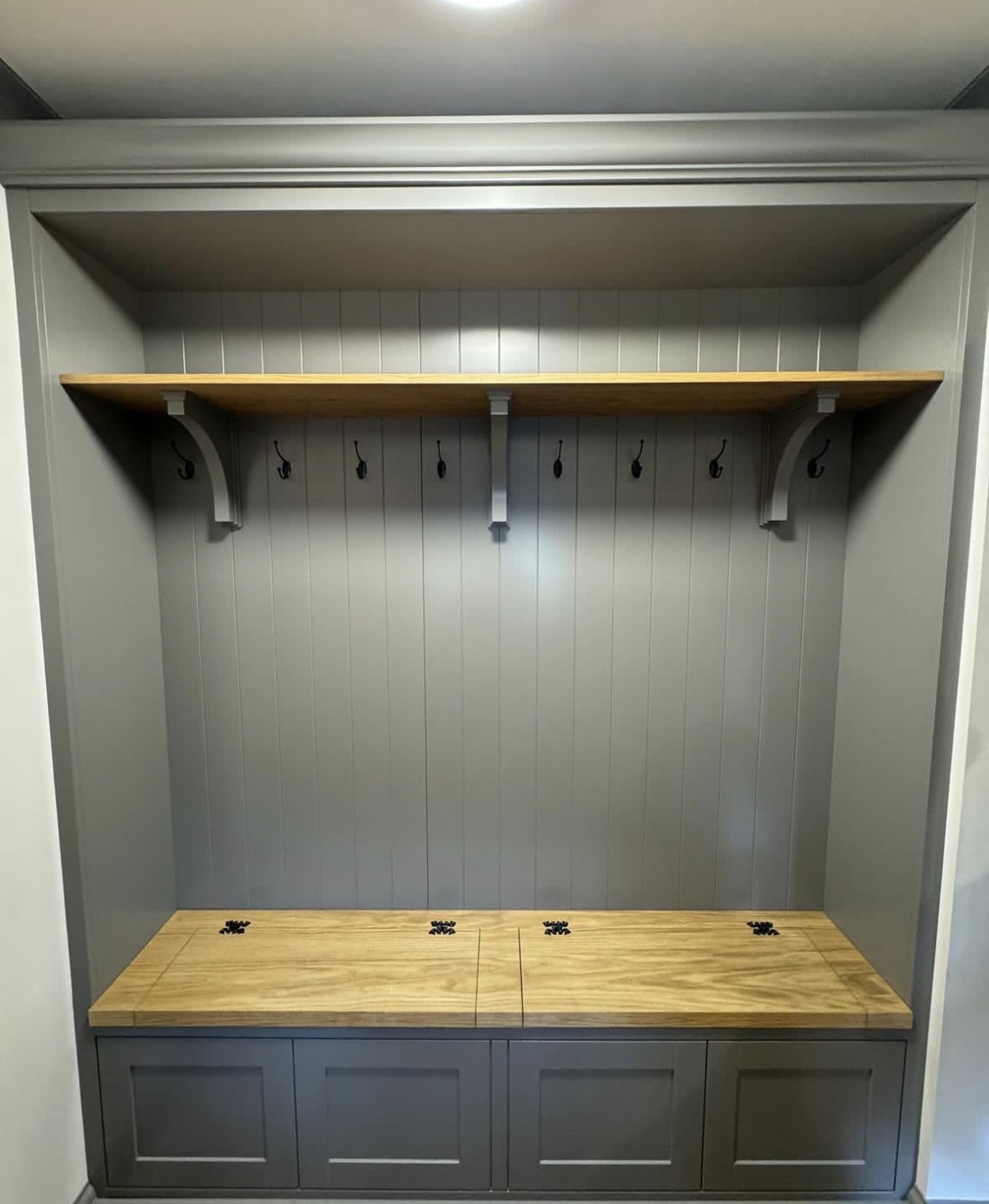
Panelled cabinetry
A panelled door is built from a frame with a distinct centre panel, rather than a single flat sheet of material. That construction gives the door depth and shadow line before any finish or hardware is added, and it is one of the most versatile ways of detailing fitted furniture, since the proportion, profile and number of panels can be varied to suit almost any room.
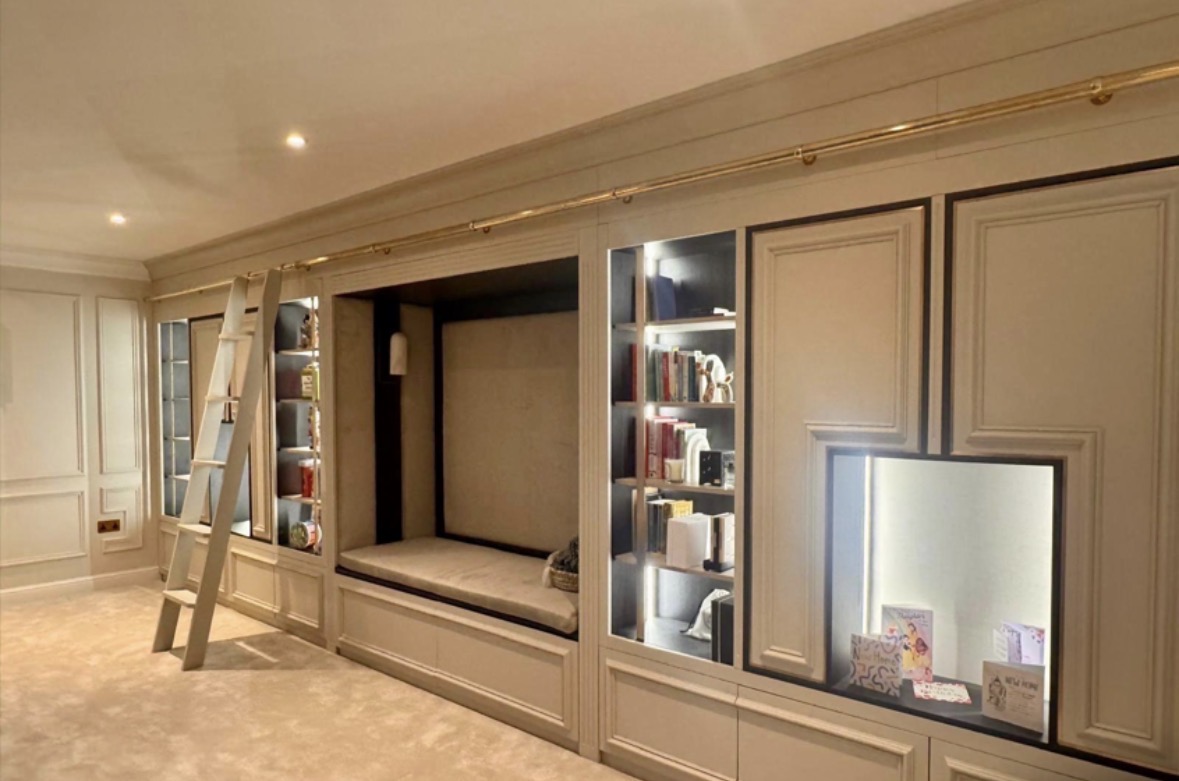
We have made this in several forms: Shaker-style doors with a simple flat panel and square-edged frame, more decorative panels with additional moulding, and full hand-painted panelled library walls where cabinetry and wall panelling are designed as a single continuous scheme rather than two separate elements meeting at a joint. Each version reads differently, from the restraint of a plain Shaker front to the formality of a fully panelled room, and the right choice depends on the character the room is aiming for.
Panelling is not confined to doors. Wall panelling can be designed to run either side of a media unit or bookcase, or to line an entire wall behind fitted cabinetry, so the furniture and the room read as one considered scheme rather than a piece of joinery set against an untreated wall. This is one of the more effective ways of making fitted furniture feel integral to a period or traditionally detailed room, since the panelling picks up the language of the architecture around it.
Panelled drawer fronts, most often in a Shaker profile, are frequently paired with panelled doors above or beside them, giving a consistent language across a whole run of cabinetry. Where a client wants a calmer, more contemporary result, a flatter panel with a subtler shadow line can be specified instead, keeping the structure of a panelled door without the more traditional detailing a deep frame and moulding would bring.
Panelled fronts remain straightforward to live with day to day. The recess around a panel is cleaned in the same way as the rest of a painted or timber door, and the added depth of the construction does not affect how doors and drawers operate once fitted. Because the frame and panel are set out and confirmed in drawings before manufacture, a panelled scheme can be extended into an adjoining room at a later date with the original proportions carried through consistently.
Where panelled cabinetry works well
01
Shaker kitchens
A square-edged frame around a flat centre panel gives a kitchen a restrained, structured look that suits both contemporary and traditional rooms, covered in detail on shaker kitchens.
02
Wardrobe and dressing room doors
Panelled wardrobe doors give a bedroom a furniture-like quality rather than a run of flat storage, particularly where the room already has period detailing to respond to, as described on bespoke wardrobe doors.
03
Media and living-room cabinetry
A panelled media unit sits comfortably in a room with existing skirting, architrave or cornicing, since the panel lines echo that detailing rather than sitting apart from it.
04
Library and study walls
Full hand-painted panelled library walls integrate bookcases, cabinetry and wall panelling into a single scheme, giving a room a formal, considered character from floor to ceiling.
05
Boot rooms and utility spaces
Tongue-and-groove panelling, a simpler cousin of the framed panel, gives boot rooms and utility spaces a practical, textured finish that suits hardwearing daily use.
06
Home offices
Panelled cabinetry and matching wall panelling in a home office give the room a settled, purposeful feel, discussed further on home offices & studies.
Panel proportion and frame width
The width of the frame around a panel, and the proportion of the panel itself, set the overall character of a door far more than the general description 'panelled' suggests. A narrow frame with a large panel reads calmly and suits a contemporary room, while a wider, more moulded frame gives a more traditional result.
These proportions are set out in drawings during design and checked against the scale of the room, so a panel style chosen from a small sample reads correctly once built at full size.
Shaker versus decorative panels
A Shaker panel is flat and square-edged, giving a clean, versatile result that works in most rooms. A decorative panel adds moulding or a raised centre, giving a more formal, traditional character. Neither is a default; the choice is made against the room and the rest of the specification.
Integrating panelling with wall panelling
Where cabinetry sits against a panelled wall, the panel lines, heights and mouldings are set out together so the two read as one scheme rather than a piece of furniture placed in front of separately detailed panelling. This is more involved than specifying a panelled door alone, since it depends on an accurate survey of the wall it will meet.
Painted or timber panels
Panelled doors can be finished in paint, discussed on bespoke cabinetry, or left in a natural or stained timber, described on bespoke oak furniture and bespoke stained oak furniture. A painted panel gives a more even, formal result, while timber lets grain show through the frame and panel.
Hardware and detailing
Panelled doors are usually specified with a visible handle, knob or recessed handle rail rather than a fully handleless front, since the panel detail and a degree of hardware tend to sit well together. Where a handleless result is wanted with panelled cabinetry elsewhere in the room, the two approaches are planned together so the overall scheme still reads coherently.
From our work
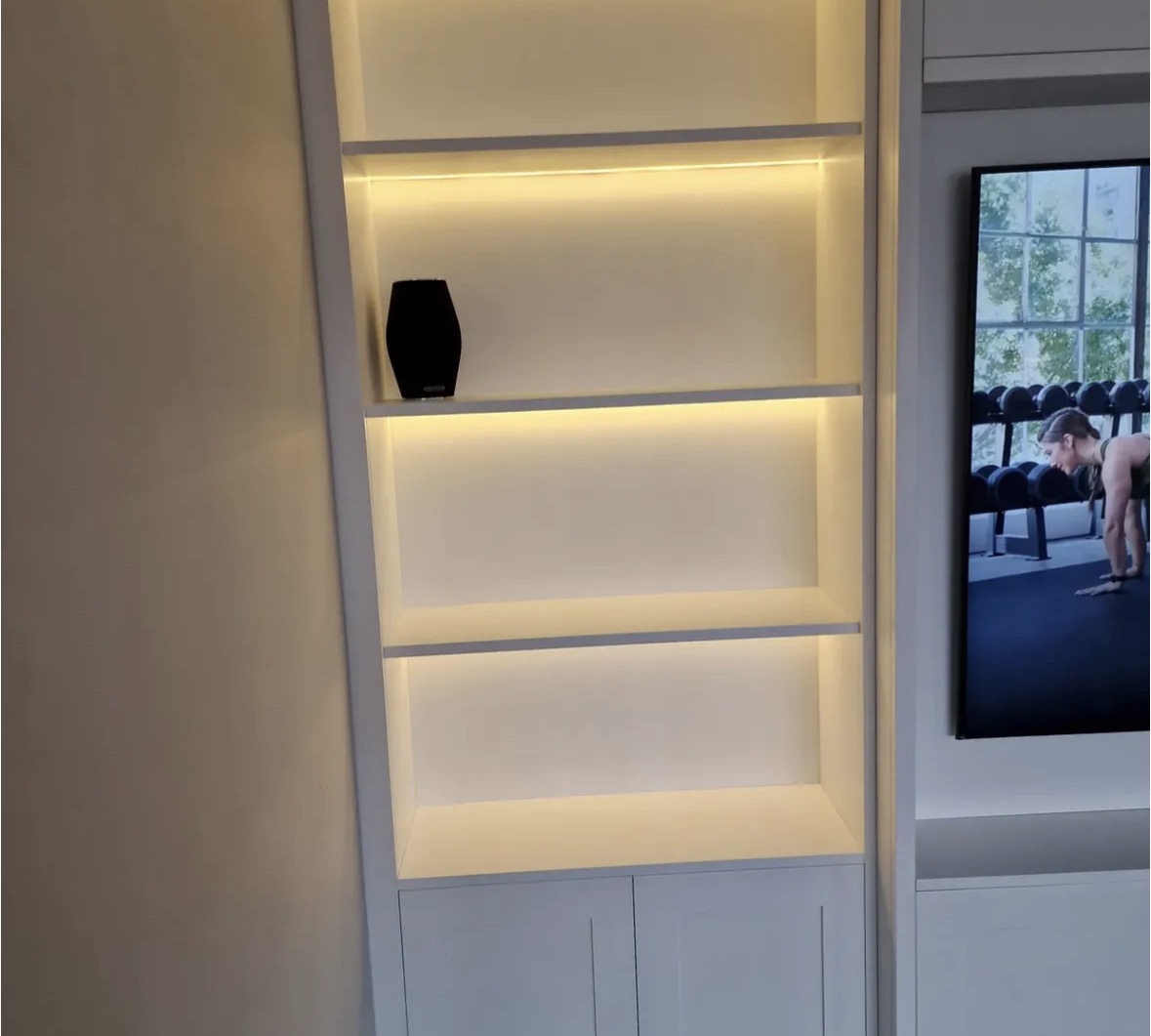
What panelled cabinetry pairs well with
- Shaker drawer fronts
- Panelled doors are frequently paired with matching Shaker drawer fronts, giving a consistent language across a run of cabinetry.
- Hand-painted finishes
- A painted panelled door, as used in the library walls that inform this page, gives a formal, coordinated result across cabinetry and wall panelling alike.
- Period architectural detail
- Panelling picks up the language of existing skirting, architrave and cornicing, and reads best in rooms where that architecture is already present.
- Traditional brass hardware
- Knobs and cup handles in a warm metal finish suit the more traditional character panelled doors typically carry.
Design, manufacture, installation
Panel proportion, frame width and any matching wall panelling are set out in drawings during design and confirmed before manufacture, following the sequence described on the process page.
Questions we are asked
About panelling
- What is panelled cabinetry?
- Panelled cabinetry uses doors built from a frame with a distinct centre panel, rather than a single flat sheet, giving the door depth and a defined shadow line. It ranges from a simple Shaker frame to more decorative, moulded panels, and can be paired with matching wall panelling for a fully integrated scheme.
- What is the difference between Shaker and decorative panels?
- A Shaker panel is flat, with a square-edged frame and no additional moulding, giving a clean, versatile result. A decorative panel adds moulding or a raised centre, giving a more formal, traditional appearance. Both are genuine options within our panelled cabinetry work, chosen according to the character the room is aiming for.
Design & specification
- Can panelling be extended onto the walls?
- Wall panelling can be designed to run alongside or around fitted cabinetry, as in the hand-painted panelled library walls we have produced, so the furniture and the room are treated as one continuous scheme. This is set out in drawings during design once the wall itself has been surveyed, taking account of existing skirting, architrave and any cornicing it needs to meet.
- Is panelled cabinetry only traditional in style?
- No. A restrained Shaker panel with a narrow frame reads calmly in a contemporary room, while a wider, more moulded panel suits a traditional setting. The style is set by proportion and detailing rather than by the presence of a panel itself, so panelled cabinetry can suit either direction.
Where it works
- Does panelled cabinetry suit a kitchen?
- Panelled doors are a common choice for kitchens, most often in a Shaker profile, and are covered in more detail on shaker kitchens. Panelled drawer fronts are frequently specified alongside matching doors for a consistent look across a run of units, and the approach suits both a traditional kitchen and a calmer, contemporary scheme depending on frame width and moulding.
Materials & finish
- Can panelled doors be painted?
- Panelled doors can be finished in paint as well as natural or stained timber. A painted panel gives an even, formal result and is a common choice for library walls and traditional kitchens, while timber panels let grain show through the frame and centre panel, discussed further on bespoke oak furniture.
About panelling
- What is tongue-and-groove panelling?
- Tongue-and-groove is a simpler, ridged form of panelling made from interlocking timber boards rather than a framed panel, and is well suited to hardwearing spaces such as boot rooms. It gives a practical, textured finish rather than the more formal look a framed panel provides.
Design & specification
- Does panelled cabinetry work with handleless drawers elsewhere?
- It can, though the two approaches are planned together rather than mixed without thought, since a fully framed panelled door and a flat handleless front carry a different visual language. Where both are wanted in the same room, we design the transition between them so the overall scheme still reads coherently.
- How is panel proportion decided?
- Panel and frame proportions are set out in drawings during design and tested against the actual dimensions of the door or wall panel involved, since the same panel style can look very different depending on scale. We review this with the client before it is confirmed for manufacture.
Where it works
- Can panelling be used in a home office?
- Panelled cabinetry and matching wall panelling give a home office a settled, purposeful character, particularly where storage, shelving and a desk are being designed as a single fitted scheme. The panel proportions can be kept restrained for a calmer working environment or given more moulding where the room already carries period detailing, and this is discussed further on home offices & studies.
Care & maintenance
- How is panelled cabinetry cleaned?
- A panelled door is cleaned in the same way as any painted or timber cabinetry, with a soft cloth and a mild, non-abrasive cleaning product suited to the specific finish. Recesses around the panel edge may need slightly more attention than a flat front, particularly on painted finishes.
Cost
- Is panelled cabinetry more expensive than flat doors?
- Panelled doors generally involve more construction work than a single flat sheet, which is reflected in overall cost. The specifics depend on the number of doors, the panel and frame style chosen and whether matching wall panelling is included, so this is confirmed against an actual project brief.
- What does panelled cabinetry cost?
- Cost depends on the number and size of doors, the panel style, the finish chosen and whether wall panelling is included in the scheme, so we cannot give a general figure here. Sending project details through the contact page allows us to respond against the specifics involved.
Programme
- How long does panelled cabinetry take to design and make?
- This depends on the scope of the project, from a single run of kitchen doors to a full panelled library wall, and on how many rooms are involved. We follow the same sequence of design, drawings, manufacture and installation for any scale of project, described on the process page, rather than quoting a fixed timeframe here.
Design & specification
- Can existing panelling be matched?
- We can take an existing panel profile or wall panelling as a reference during survey and design new cabinetry to sit alongside it, though we manufacture new pieces rather than repairing or extending panelling made by another joiner. This is discussed as part of the initial site survey.
Relevant bespoke services
Shaker kitchens
Shaker-panelled kitchen cabinetry designed and made in Derbyshire.
Wardrobe doors
Panelled wardrobe door styles for fitted bedroom furniture.
Bespoke cabinetry
General panelled cabinetry across kitchens, living rooms and studies.
Built-in bookcases
Bookcases integrated with panelled library walls.
Home offices
Panelled cabinetry and wall panelling for fitted home offices.
Fitted wardrobes
Fitted wardrobes finished with panelled doors.
Related materials and styles
Fluted cabinetry
A vertical, reeded texture used on drawer fronts, feature panels and furniture fronts to add depth without pattern.
Painted cabinetry
Hand-painted cabinetry in shaker and flat-panel styles, designed to sit correctly within the room it furnishes.
Traditional fitted furniture
A traditional design language of panelled doors, Shaker influences, cornices and painted timber, suited to almost any home.
To discuss materials and finishes, call Chester Thomas on +44 7418 627358, email info@chesterthomas.com or start your project.
Planning Something Bespoke?
Tell us about your space, what you're looking to create and where the project is located.