
Bespoke Kitchens
Bespoke Painted Kitchens
Paint gives a kitchen almost unlimited colour freedom, but the quality of the result rests on the substrate underneath and the care taken in the spray finish itself.
Painted Kitchens, designed around the room
Painted cabinetry is chosen more often for colour than for anything else — the ability to match a specific shade, tie a kitchen to an existing colour scheme elsewhere in the house, or set a deliberately different colour on an island to make it the visual anchor of the room. Because the paint is applied to the door and frame rather than being a fixed property of a timber's natural grain, almost any colour a client wants can be developed and matched.
The substrate underneath the paint matters more than most people expect. A door built from a stable, well-prepared material will hold its paint finish and edges cleanly over years of use; a poorly chosen or badly prepared substrate can show movement, edge chipping or an uneven sheen regardless of how good the paint itself is. We choose and prepare substrates specifically for painted work, and talk through the options during design rather than assuming one material suits every door style.
Finish quality is largely about the spraying process itself — an even number of coats, correctly sanded between applications, and a controlled environment free of dust. This is not a detail that can be judged from a swatch; it is worth seeing a sample door in the flesh, under the kind of light your kitchen will actually have, before committing to a full run of cabinetry.
Door style has a real effect on how a painted finish reads. A Shaker frame with a recessed panel shows light and shadow differently to a flat slab door, and a heavily profiled door will highlight paint pooling in the detail if it is not sprayed carefully. We discuss door style and paint finish together, since one affects how successful the other looks.
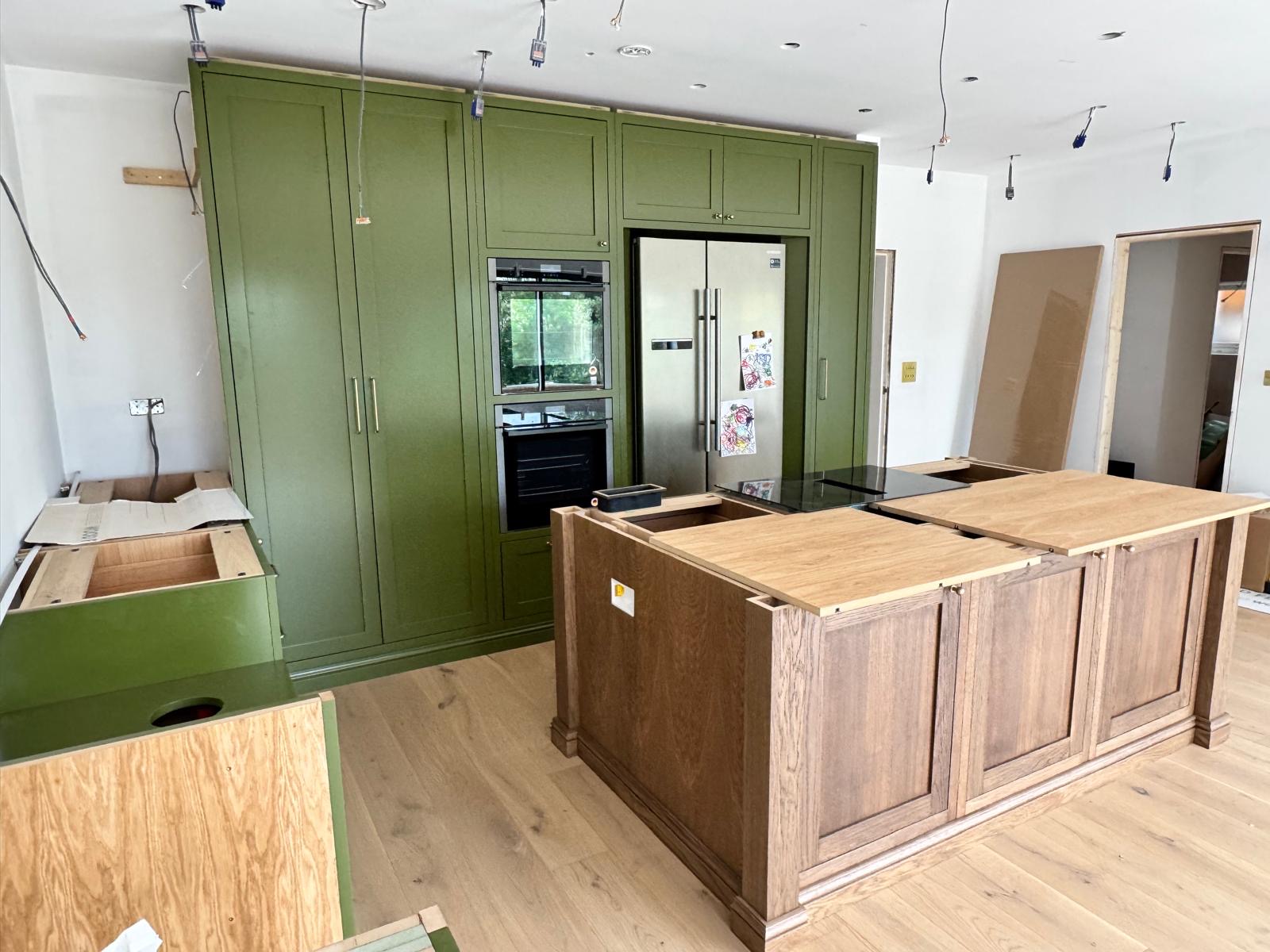
Colour matching to existing architectural details — skirting, window frames, a front door, or paintwork in an adjoining room — is a common reason clients choose a painted kitchen over a natural timber one, and we can develop a bespoke colour to sit alongside those existing surfaces rather than picking from a standard chart alone. A contrasting island is equally common, giving the room a focal point while the perimeter cabinetry stays quieter.
Touch-ups are a realistic part of owning a painted kitchen over time, since a family kitchen sees daily wear, and we talk through how a small chip or scuff can be addressed later, alongside realistic expectations for how a painted finish behaves rather than making claims about how it will perform indefinitely. Sample development, including small test doors in your chosen colour, is part of the process precisely so there are no surprises once the full kitchen is sprayed.
What can be included
01
Bespoke colour matching
Colours developed and matched to your specification, including existing paintwork or architectural details elsewhere in the house.
02
Substrate selection
Door and frame substrates chosen and prepared specifically for a painted finish, discussed during the design stage.
03
Sample door development
Test doors sprayed in your chosen colour so you can see the actual finish before full manufacture proceeds.
04
Door style and paint interaction
Framed, recessed-panel and flat door styles considered together with the paint finish, since each shows light differently.
05
Contrasting island cabinetry
A different colour or sheen applied to an island to make it the focal point of the room while perimeter cabinetry stays quieter.
06
Sheen and finish options
Matt, satin and other sheen levels developed to suit the room's light and the practical demands of daily use.
07
Touch-up guidance
Practical advice on how small chips or marks can be addressed once the kitchen is in daily use.
08
Coordination with worktops and hardware
Paint colour developed alongside worktop material and hardware finish so the whole room reads as one considered scheme.
From our work
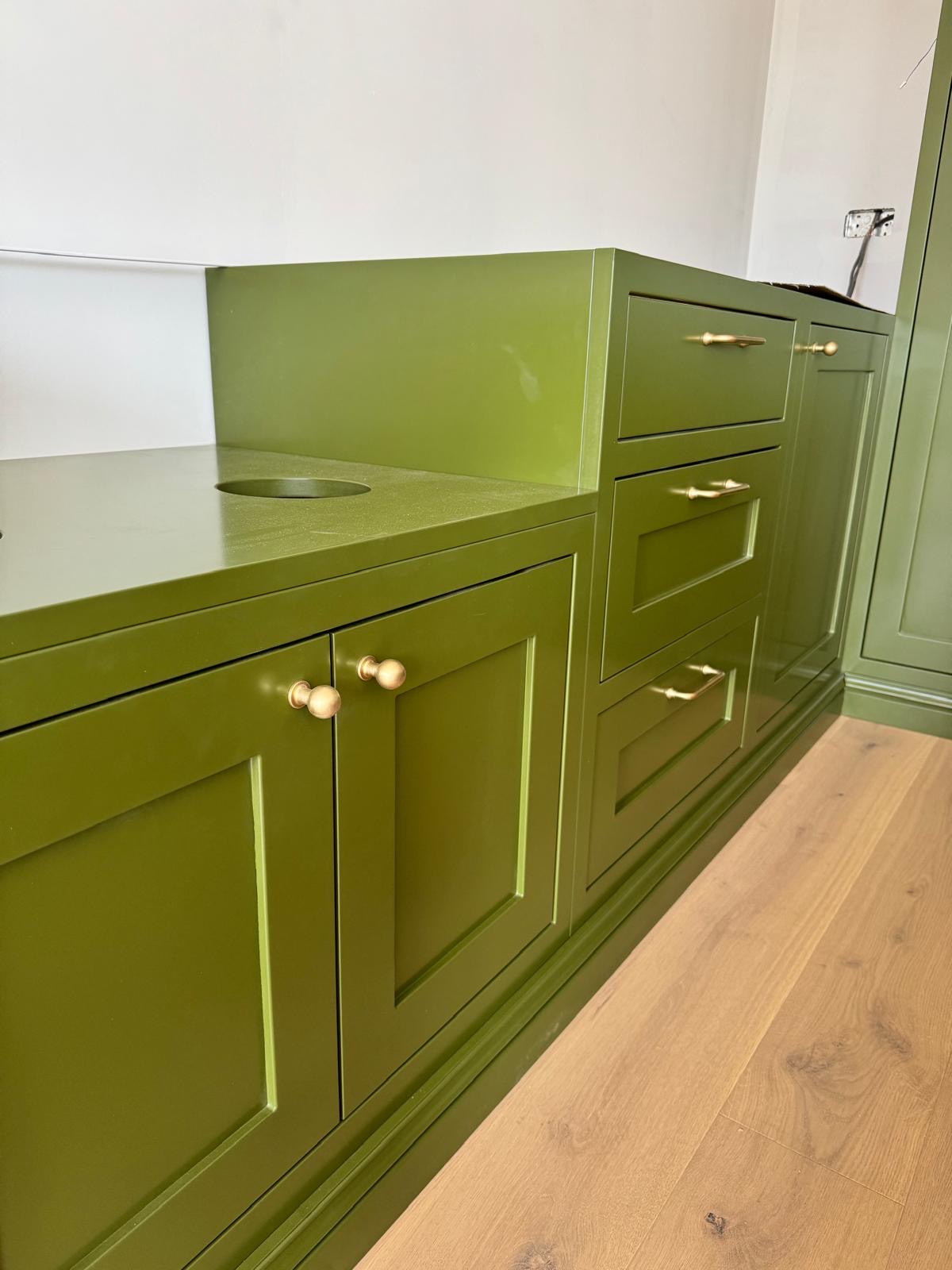
Every commission begins with a conversation about the room, how it is used and what needs to be stored or shown.
Built for the architecture you already have
- Wall widths and door proportions
- Door and drawer widths are set to the room, since painted finishes show a poorly proportioned door as clearly as any other.
- Existing architectural colours
- Skirting, cornice, window frames or other existing paintwork are noted early where a colour match or deliberate contrast is wanted.
- Ceiling heights
- Full-height cabinetry is set to the actual ceiling line so painted panels read consistently from floor to ceiling.
- Natural and artificial light
- How a room is lit, by window position and fitted lighting, affects how a given colour actually reads, so this is checked before colours are finalised.
- Existing flooring
- Flooring colour and material are considered alongside the paint specification, since the two are seen together in most sightlines.
- Skirting and cornice profiles
- Existing profiles are matched or worked around so scribed panels and end pieces sit tight against them.
Materials & finishes
Specifications are developed with you during the design stage and sampled before anything is built. Not every option suits every commission, and we will say so where a material is the wrong choice for the room or the use.
MDF substrates
A common choice for painted doors, with grade and preparation specified for the finish you want.
Solid timber substrates
Used where a painted door needs the character or strength of solid timber beneath the finish, specified during design.
Water- and oil-based paint systems
Paint system developed depending on the colour, sheen and durability requirements discussed with you.
Matt and satin sheens
Sheen level chosen to suit the room's lighting and how much daily wear the cabinetry will see.
Brass, bronze and painted hardware
Handle and hinge finishes coordinated with the chosen paint colour during design.
Stone and timber worktops
Worktop material and colour considered alongside the paint specification so the two sit well together.
Designed and built bespoke
Colour and finish are developed through sample doors before full manufacture, with the completed cabinetry built in our Derbyshire workshop and installed by the same team, following the stages set out on the process page.
Read our full processPainted Kitchens — your questions answered
Design
- Can any colour be matched for a painted kitchen?
- A very wide range of colours can be developed and matched, including bespoke shades taken from existing paintwork or a specific reference. We recommend seeing a sample door sprayed in your chosen colour before full manufacture proceeds.
- Should an island be a different colour to the rest of the kitchen?
- It often works well, giving the room a clear focal point while the perimeter cabinetry stays quieter, though it is a matter of taste rather than a rule. We can develop both options as samples during design.
- How does door style affect a painted finish?
- A framed door with a recessed panel shows light and shadow differently to a flat slab door, and more detailed profiles can show paint build-up in corners if not sprayed carefully. We consider door style and finish together during design.
Materials
- What substrate is used for painted doors?
- MDF and solid timber are both used, chosen and prepared to suit the specific door style and finish. Substrate is specified during design rather than fixed as standard across every project.
- Is a matt or satin finish better for a kitchen?
- Both are used successfully; the decision depends on the room's lighting and how much daily wear the cabinetry will see. We can show samples of each so you can judge the difference in your own kitchen.
- Can you match paintwork from elsewhere in the house?
- Yes, existing colours can be sampled and matched closely, though very old or faded paintwork may need a fresh reference point to match accurately. We talk this through during the design stage.
Installation
- How long does painted cabinetry take to manufacture?
- Timescales depend on the number of doors, the colour development process and the overall scope of the kitchen. A programme covering sampling, manufacture and installation is agreed once the design is confirmed.
- Is touch-up paint provided after installation?
- We can advise on how small marks or chips are best addressed and where matching paint can be sourced, so you know what to do if daily use leaves a mark on the cabinetry.
- Do you spray doors on site or in the workshop?
- Doors are sprayed and finished in our Derbyshire workshop under controlled conditions, then installed as completed units, since spraying on site would not achieve the same consistent finish.
Practical questions
- How does a painted kitchen hold up to daily family use?
- A well-prepared substrate and properly applied paint system are chosen with daily use in mind, though like any painted surface it can show marks over time with heavy use. We discuss realistic expectations during design rather than making specific durability claims.
- Can a painted kitchen be repainted later if I want to change the colour?
- In many cases doors can be resprayed rather than replaced, provided the substrate and existing finish are in suitable condition. We would need to assess the cabinetry directly to confirm what is achievable.
- Does paint colour affect how a small kitchen feels?
- Lighter colours tend to make a compact kitchen feel more open, while darker colours can add depth and warmth to a larger room. We discuss colour against your specific room size and light during design.
Cost & quotations
- What does a bespoke painted kitchen cost?
- Cost depends on the dimensions of the kitchen, the substrate and paint system used, hardware, lighting, configuration and site conditions. A proper quotation follows a design conversation, so please get in touch through the contact page.
- Does a bespoke colour cost more than a standard one?
- A genuinely bespoke colour match can involve additional development time compared with a standard shade, though the overall cost is driven more by the size and complexity of the kitchen. We can discuss this once we understand your brief.
- Do you charge separately for sample doors?
- Sample development is part of agreeing a specification you are confident in before manufacture, and we will confirm exactly how this is handled as part of your quotation.
Chester Thomas
- What areas do you cover for bespoke painted kitchens?
- We design, build and install from our workshop in Derbyshire, covering Lichfield, Derby and the surrounding Midlands. Contact us through the contact page to discuss your kitchen and location.
- Can a painted kitchen be combined with natural timber elements?
- Yes, a painted perimeter with a natural timber island, or painted doors alongside timber open shelving, are both common combinations. Our bespoke-timber-kitchens page covers the natural timber side of this in more depth.
Related bespoke services
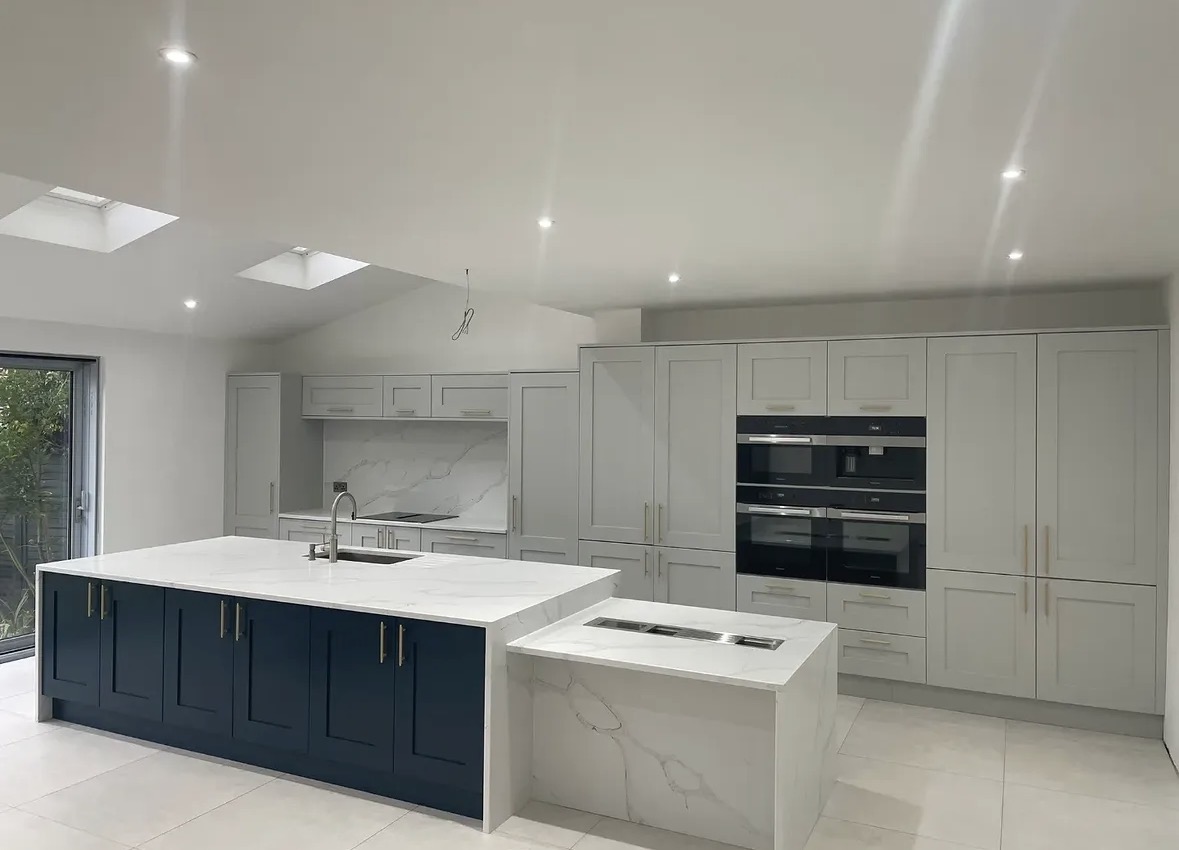
Bespoke Kitchens
Cabinetry built around how you actually cook, store and gather — not around standard carcass sizes.
Shaker Kitchens
A framed, recessed-panel door built to genuine cabinet proportions rather than a stock size dressed up to look the part.
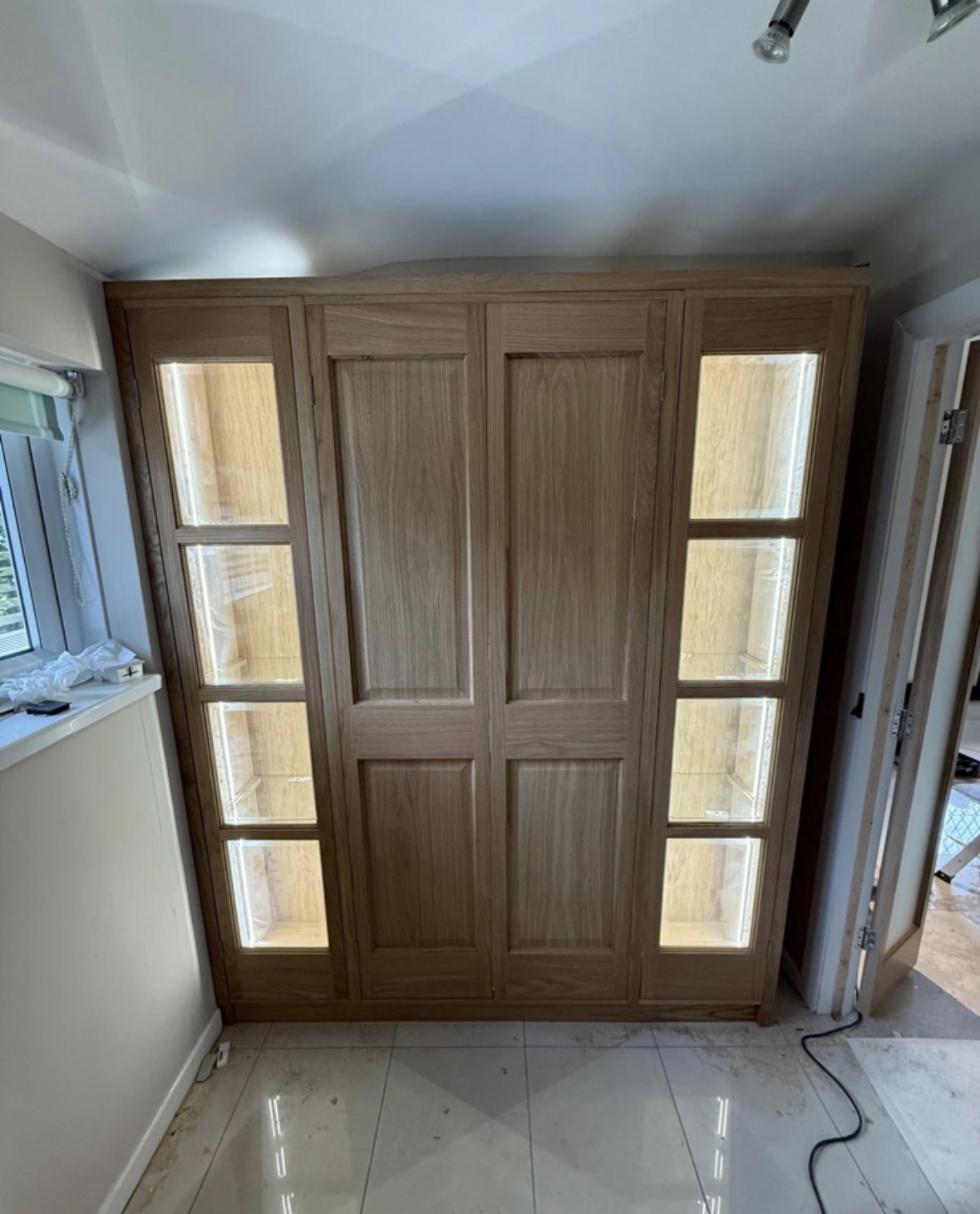
Timber Kitchens
Natural grain, stained or left bare, built into cabinetry that shows the timber rather than covering it in paint.
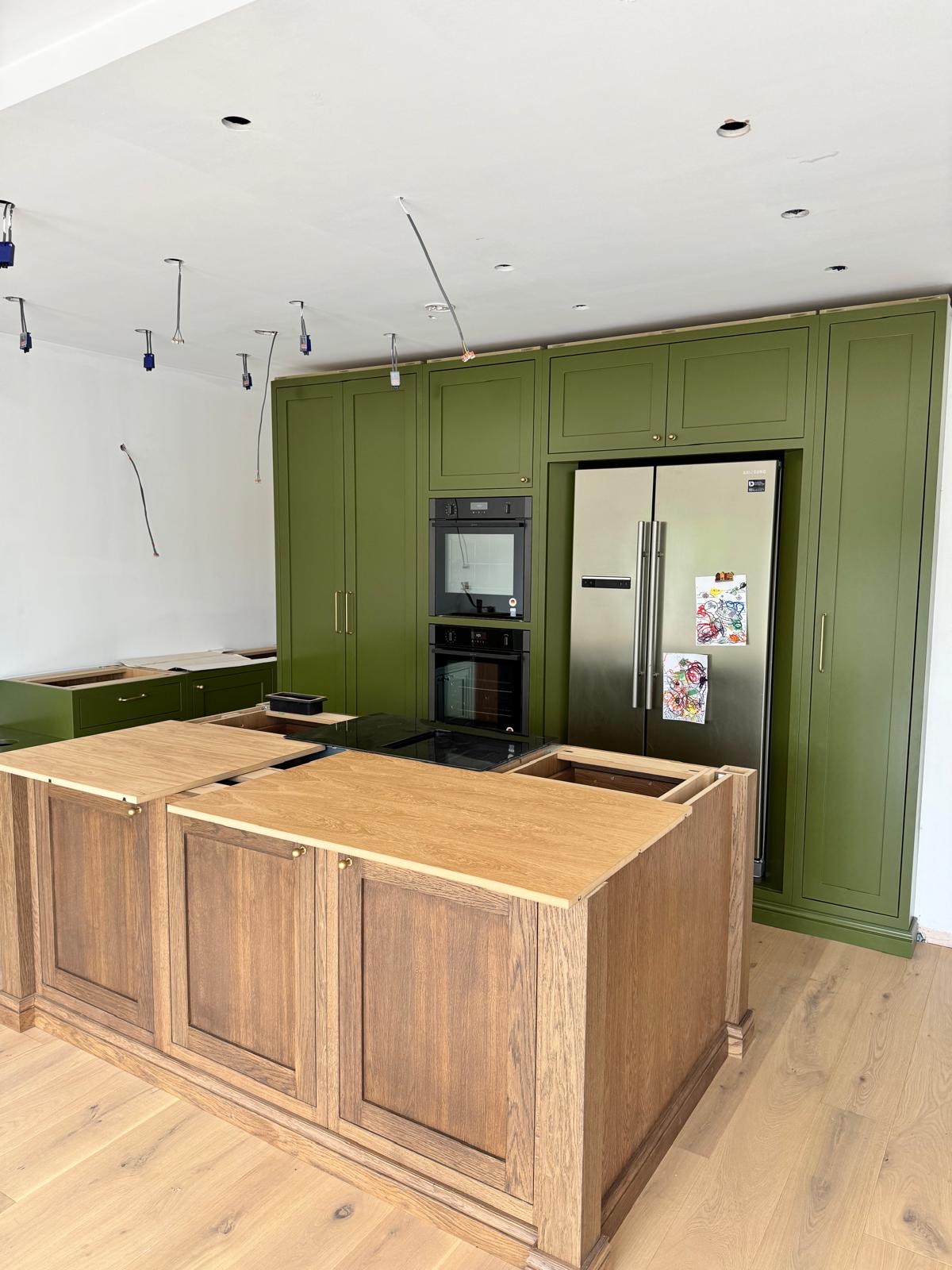
Kitchen Cabinetry
The cupboards, drawers and worktop runs that make up a kitchen, built to your walls rather than a modular system.
Kitchen Islands
A freestanding centrepiece built for the room it stands in, from proportion and seating through to storage and appliances.
Areas we work in
Everything is designed and built at our Derbyshire workshop and installed by our own team across the Midlands, including Solihull, Sutton Coldfield, Four Oaks, Lichfield, Birmingham, Burton upon Trent, Ashby-de-la-Zouch, Swadlincote, Derbyshire, Leicestershire.
Areas we coverSpeak to us about your project on +44 7418 627358 or send us the details.
Planning Something Bespoke?
Tell us about your space, what you're looking to create and where the project is located.