
Design & specification
Specifying bespoke furniture, room by room
Once a design for bespoke furniture or joinery is agreed, it is set down as a written specification: every dimension, material, finish and fitting the workshop will make and install.
Specification
A specification is the document that sits between a design and a workshop order. It records what a piece of furniture will actually be made from, how it will be finished, and how it will be built, so that everyone involved in the project is working from the same information.
At Chester Thomas the specification follows directly from the technical drawings prepared for a project. Where the drawings establish dimensions, layouts and how furniture meets walls, floors and services, the specification adds the material, finish and hardware detail needed to place a workshop order with confidence.
There is no standard specification. A media wall in one project and a media wall in another may look similar in a drawing but be specified very differently, depending on the room, the other finishes in the house, the client's preferences and the budget for that element of the project.
This page sets out what a specification typically records and how it is used through manufacture and installation. Materials and finishes themselves are covered in more detail on the materials and finishes for bespoke furniture page.
What specification is for
01
One reference document
The specification gives the client, the designer or architect involved, and the Chester Thomas workshop a single agreed reference for what is being made, avoiding assumptions or verbal agreements that are easy to lose track of over a long project.
02
Written per project
Every specification is written for the piece of furniture in front of it. Dimensions, materials, finishes and hardware are chosen for that room and that client, not pulled from a fixed catalogue of standard options.
03
Follows the drawings
Specification builds on the technical drawings already agreed for the project, adding the material and finish detail that drawings alone cannot show, such as timber species, paint finish or hardware type.
04
Covers the whole piece
A specification for a kitchen, wardrobe or media wall covers carcass materials, doors, worktops or surfaces, hardware, lighting and any glass, stone or metal detailing, so nothing is left to be decided during manufacture.
05
Supports coordination
Where furniture needs to coordinate with other trades, such as electricians for lighting circuits or decorators for wall colours, the specification gives those trades the detail they need to plan their own work around it.
06
Basis for the workshop order
Once agreed, the specification becomes the basis of the order placed with the Derbyshire workshop, so manufacture proceeds against a fixed and documented set of decisions rather than an evolving brief.
Dimensions and layout
Specification confirms the dimensions established in the drawings: overall size, internal layout, shelf and drawer positions, and how a piece meets the walls, ceiling and floor of the room it is fitted into.
Internal layouts matter as much as external dimensions. A wardrobe's mix of hanging, shelving and drawers, or a kitchen's arrangement of cabinets and appliance housings, is agreed and recorded so the workshop builds to a layout the client has actually seen and approved.
Materials and finishes
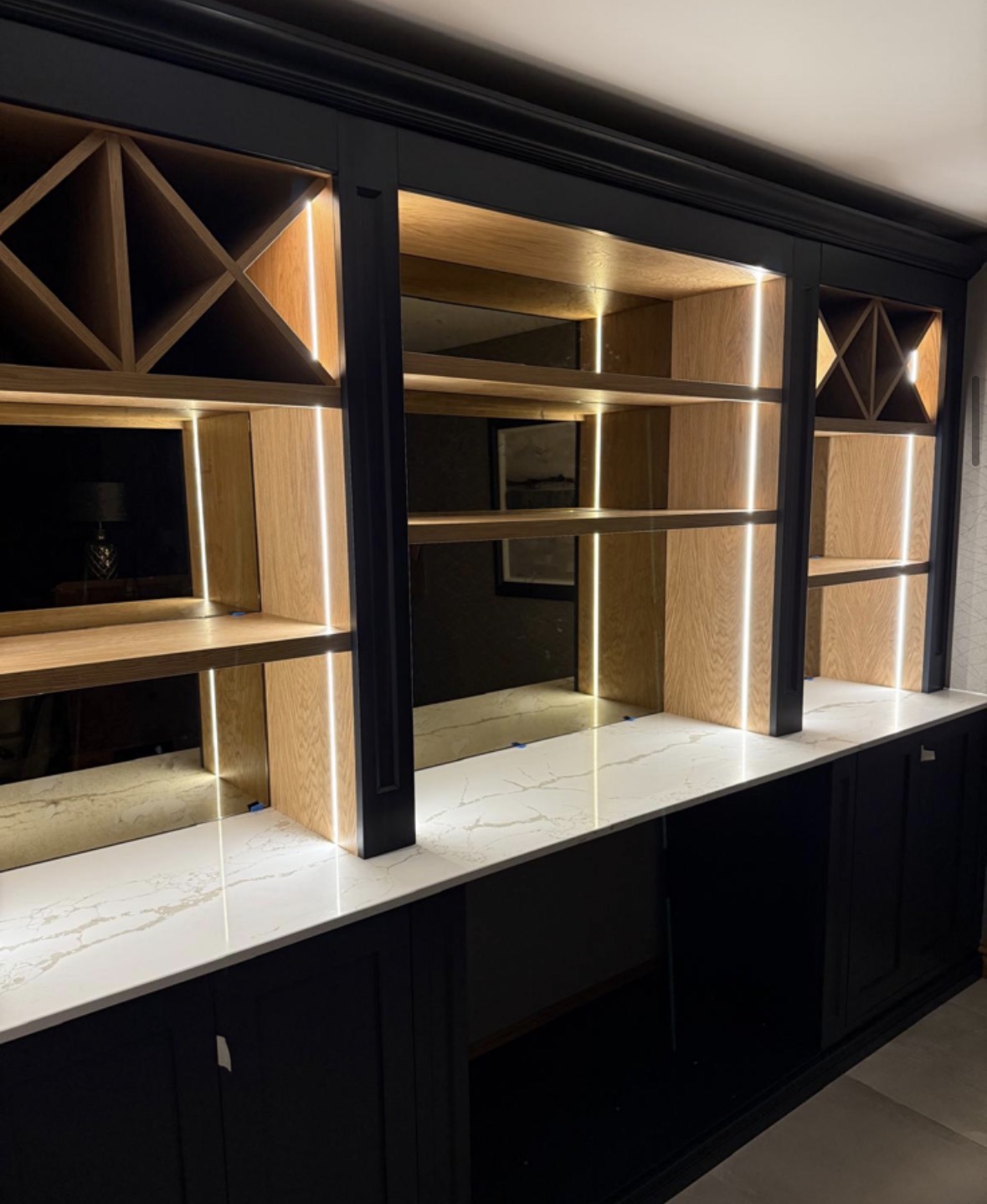
Materials are specified by category and, where relevant, by finish: painted, natural timber, stained timber or veneered surfaces for doors and panels, alongside any stone, marble or solid surface for worktops and other surfaces.
Finish covers not just the material but its treatment, such as a specific paint sheen or a particular grain direction on a timber veneer. These details affect how a piece looks and wears, so they are agreed and written down rather than left open.
Hardware and lighting
Hardware includes hinges, drawer runners, handles or handle-free opening systems, and any locking or soft-close mechanisms. The specification records the type of hardware used so it can be matched or serviced consistently in future.
Integrated lighting, where included, is specified for position, colour temperature and control, and coordinated with an electrician where the project requires new circuits or switching, since Chester Thomas does not carry out electrical work itself.
Glass, mirror, stone and metal detail
Where a project includes glass shelving, mirrored panels, stone or marble surfaces, or metal detailing such as trims and brackets, these are specified individually, including thickness, edge treatment and how each element is fixed.
These details are often what distinguishes one project from another. Two media walls or two home bars can share a layout but read very differently once glass, stone and metal choices are specified, which is why they are treated as part of the core specification rather than an afterthought.
Keeping the specification current
A specification can change as a project develops, particularly on longer or multi-room projects where decisions are made in stages. Any change is recorded so the workshop always works from the current, agreed version rather than an earlier draft.
This matters most where several rooms are specified together, since a change in one room's materials can have knock-on implications for consistency elsewhere in the house.
What a specification records
- Dimensions
- Overall size, internal layout and how the piece meets walls, floor and ceiling, taken from the agreed technical drawings for the project.
- Materials
- Carcass, door and panel materials, including timber species, board type or stone, agreed for that specific piece of furniture.
- Finishes
- Paint, stain, veneer or natural finish, including sheen and grain direction where relevant to how the piece will look and wear.
- Hardware
- Hinges, runners, handles and any locking or soft-close mechanisms, specified by type so they can be matched or serviced later.
- Lighting
- Position, colour temperature and control of any integrated lighting, coordinated with an electrician where new circuits are needed.
- Internal layouts
- The arrangement of shelving, drawers, hanging space or appliance housings agreed with the client for that piece.
- Door styles and drawers
- Door style, drawer configuration and opening mechanism, matched to the room's use and the client's preferences.
- Worktops, glass and stone
- Surface material, thickness and edge treatment for worktops, glass shelving, mirrored panels and any stone or metal detailing.
Send us the drawings, the rooms involved and where the project has reached, and we will tell you what we can design, make and fit.
Design, manufacture, installation
Specification sits inside the wider sequence described on the process page, following the technical drawings stage and preceding manufacture in the Derbyshire workshop.
Questions we are asked
Working together
- What is the difference between a drawing and a specification?
- A technical drawing shows dimensions, layout and how a piece of furniture sits within a room. A specification adds the material, finish and hardware detail a drawing cannot show on its own, such as timber species, paint finish, hardware type and lighting. Together they give the workshop everything needed to manufacture the piece as agreed. Specification is prepared after drawings are approved, using the dimensions already established.
- Is there a standard specification for a kitchen or wardrobe?
- No. Every specification is written for the individual project. A kitchen or wardrobe in one house may share a layout with one in another, but the materials, finishes and hardware are chosen for that room and that client, so the written specification will differ. This is deliberate: it keeps each project genuinely bespoke rather than assembled from a fixed set of options.
- Who is involved in agreeing the specification?
- Typically the client and, where one is involved in the project, an architect or interior designer, work through the specification with Chester Thomas once the design and drawings are settled. Where other trades are affected, such as an electrician for lighting circuits, their requirements are taken into account before the specification is finalised, so nothing conflicts once manufacture begins on the agreed detail.
Design & drawings
- Can the specification change once manufacture has started?
- Changes are far easier to make before manufacture begins, since the workshop orders materials and components against the agreed specification. Once manufacture is underway, changes may affect programme and cost depending on how far the work has progressed. Any change at any stage is recorded so the specification always reflects what is actually being built.
- Does the specification cover lighting?
- Where lighting is integrated into the furniture, the specification records position, colour temperature and control for it. Chester Thomas does not carry out electrical work, so where new circuits or switching are needed, this is coordinated with an electrician appointed for the project, and the lighting detail is agreed alongside the surrounding materials and finishes.
Materials & finishes
- How are hardware choices specified?
- Hardware such as hinges, drawer runners, handles and any soft-close or locking mechanisms is specified by type rather than left as a general assumption. This matters for how a piece feels in daily use and for future servicing, since knowing the exact hardware type used means it can be matched, repaired or replaced consistently later without guesswork over what was originally fitted.
- Are materials like stone and marble specified individually?
- Yes. Stone, marble and other surface materials used for worktops or feature surfaces are specified individually, covering the material, thickness and edge treatment agreed for that project. These choices have a significant effect on how a piece of furniture reads in a room, so they are agreed as part of the core specification rather than decided during manufacture in the workshop.
- What if I want to see finish samples before agreeing the specification?
- Reviewing samples of finishes, whether painted, stained, veneered or stone, before agreeing a specification is a normal part of the process at Chester Thomas. It gives a clearer sense of how a finish will look and wear than a drawing or description alone, and helps avoid costly changes once manufacture is underway in the workshop.
- Does specification cover door and drawer styles?
- Door style and drawer configuration are specified alongside the internal layout, since they affect both the appearance of a piece and how it is used day to day. This includes whether doors are handled or handle-free and how drawers are arranged within a run of cabinetry, agreed with the client before the piece goes into manufacture.
Manufacture & installation
- How does specification affect manufacture?
- The agreed specification becomes the basis of the order placed with the Derbyshire workshop. Manufacture proceeds against a fixed, documented set of decisions on dimensions, materials, finishes and hardware, which reduces the risk of misunderstandings during the build and keeps the finished piece consistent with what the client agreed at the outset of the project.
- Does the specification affect how furniture is installed?
- The specification affects installation, particularly for fixings, services and any coordination with other trades on site. Details such as how a piece meets the wall or floor, or where lighting cables need to run, are recorded in the specification so the installation team knows exactly what to expect on site before they arrive to fit the furniture.
Programme
- How long does it take to agree a specification?
- This depends on the scope of the project and how many decisions on materials and finishes are still open once drawings are approved. A single room with clear preferences can be specified relatively quickly, while a multi-room project with several material choices to coordinate takes longer. Specific timescales are best discussed for your project through the contact page.
Cost
- What does a specification mean for cost?
- Cost depends on the scope of the project, the number of rooms involved, dimensions, the materials and finishes chosen, hardware, the complexity of the design and the work involved in installation. The specification is what allows a firm cost to be established, since it fixes the decisions that materials and labour are priced against. Contact Chester Thomas through the contact page to discuss a project.
Chester Thomas
- Why does Chester Thomas insist on a written specification for every project?
- A written specification protects both the client and the workshop from misunderstandings over what was agreed. Because every project is different, relying on memory or verbal agreement over dimensions, materials and finishes creates unnecessary risk. Writing it down keeps design, manufacture and installation aligned throughout the project, from the first drawing to the final fit.
Related pages
Working with professionals
How Chester Thomas works alongside architects, designers and other trades on a project.
Technical drawings
The drawings stage that establishes dimensions and layout ahead of specification.
Materials & finishes
A closer look at the categories of material and finish used across projects.
Manufacturing
How a specification is carried into manufacture at the Derbyshire workshop.
Installation
How specified furniture is fitted on site by the people who made it.
Bespoke kitchens
A common example of a project where specification covers carcass, worktop and hardware detail.
Media walls
A project type where stone, glass and metal detail are frequently specified together.
Wine rooms & cellars
Furniture where material and lighting specification affect both appearance and storage conditions.
Our process
How specification fits within the wider design-to-installation sequence.
Contact
Send project details to begin discussing a specification for your project.
Talk to Chester Thomas on +44 7418 627358, email info@chesterthomas.com or send project details.
Planning Something Bespoke?
Tell us about your space, what you're looking to create and where the project is located.