
Materials & finishes
Floating cabinetry for bespoke furniture
Floating cabinetry is mounted to the wall rather than standing on the floor, giving a room visual clearance beneath the piece and a lighter, more considered presence.
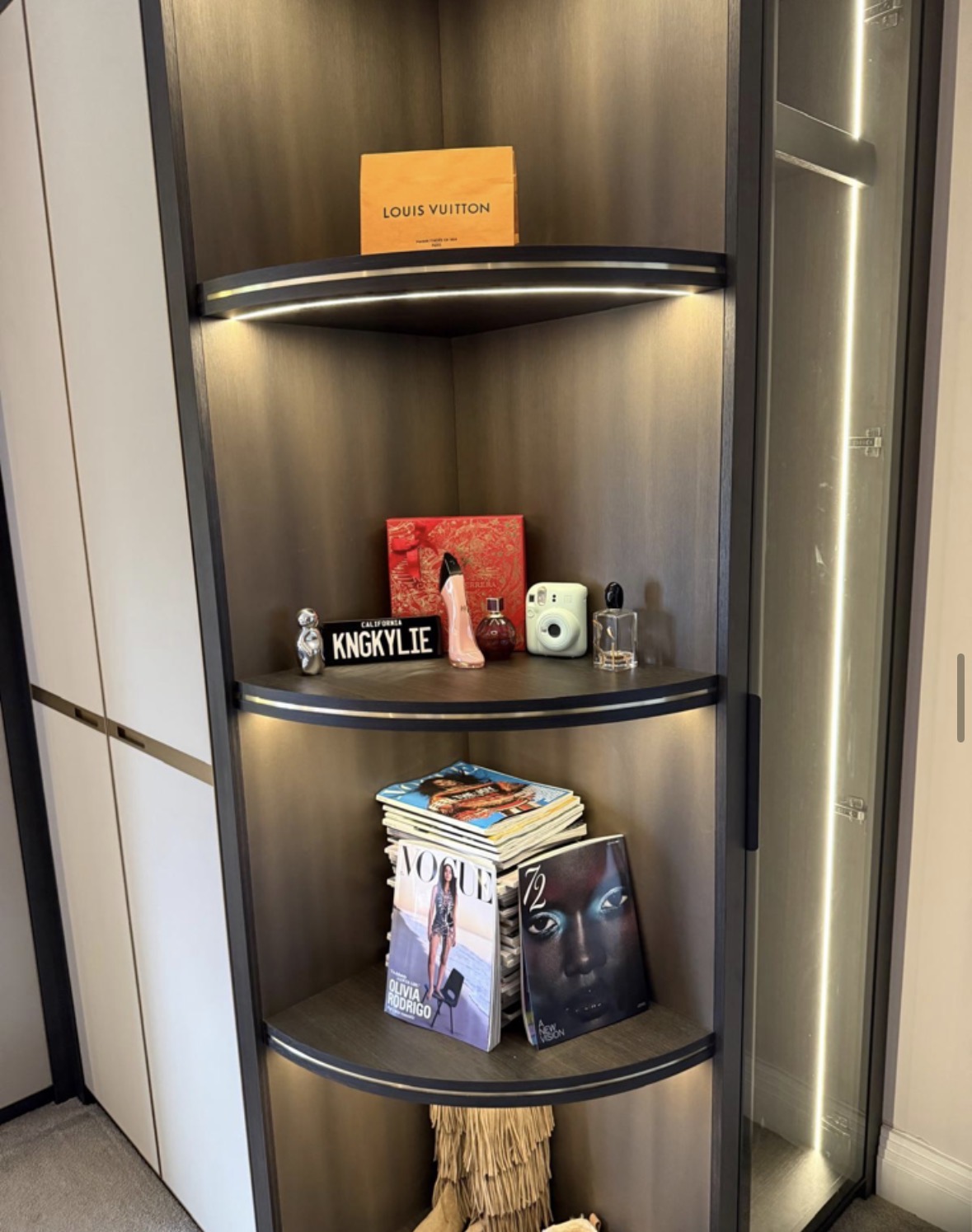
Floating cabinetry
Floating cabinetry describes any piece designed to be wall-mounted rather than floor-standing, so it appears to hover clear of the ground with a visible gap of floor beneath it. This is most familiar in a television unit, but the same approach applies to display shelving, bedroom storage, home-office cabinetry and standalone drawer units, wherever a lighter, more open feel is wanted in the room.
The effect depends on getting the proportion right. A run of floating cabinetry that sits too close to the floor loses much of its visual benefit, while one set too high can look disconnected from the furniture and seating around it. We work through this during design, considering sightlines from where the room is actually used, such as a sofa or a desk chair, rather than setting a height in isolation from how the space is lived in.
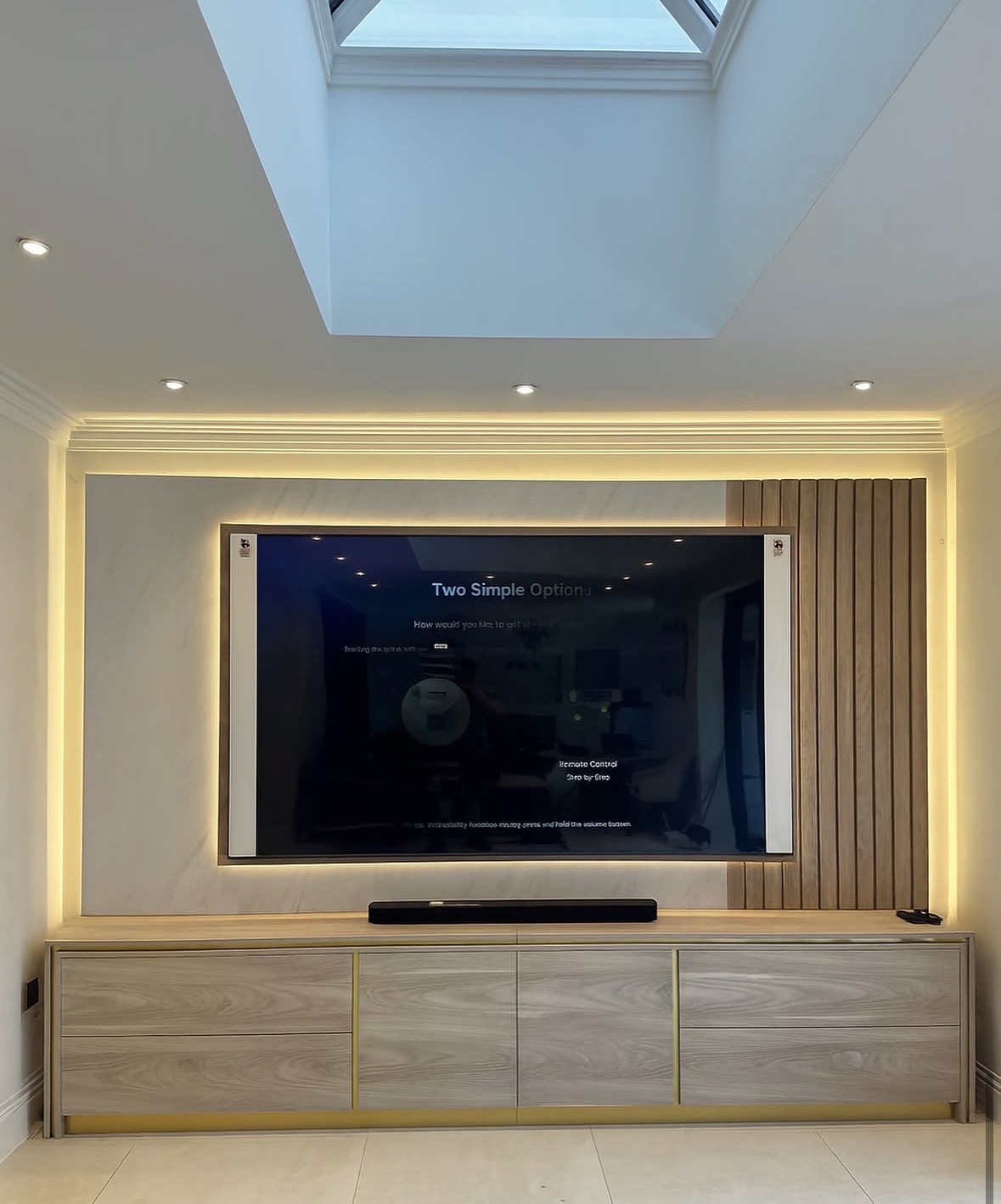
Floating pieces are also a natural fit for lighting. A strip concealed beneath the underside of a floating cabinet casts a soft wash of light down the wall and across the floor, reinforcing the sense that the piece is suspended rather than resting. This is one of the more effective uses of the integrated lighting described on integrated lighting for bespoke furniture, and one we specify regularly on floating media units and display shelving.
Because there is no visible base or plinth, floating cabinetry also tends to suit a handleless front, discussed on handleless cabinetry for bespoke furniture, since the combination reinforces the sense of a single, continuous suspended volume rather than a piece built up from separate visible parts. That said, floating construction and a handled front can also be combined where the wider room calls for it, and the two decisions are made separately rather than assumed to go together automatically.
Floating pieces are generally lighter in construction than an equivalent floor-standing unit, since they are not designed to bear weight through legs or a plinth, but this does not mean less is involved in specifying them. The internal carcass, the fixing points and the wall itself all need to be matched to what the piece is intended to carry, and this is resolved during design rather than left to be worked out on the day of installation.
Where floating cabinetry works well
01
Wall-mounted television units
A floating television unit keeps the wall beneath the screen clear, letting cabling and equipment sit tidily out of sight while the piece itself reads as a light, hovering form, covered in more detail on floating TV units.
02
Living-room display units
Floating display shelving and cabinets bring objects, books and glassware into view without the visual weight of a floor-standing unit beneath them.
03
Bedroom furniture
Floating bedside cabinets and drawer units keep a bedroom floor clearer, which is often valued in smaller rooms or where cleaning beneath furniture matters.
04
Home-office storage
A floating run of storage in a home office keeps the room feeling open, particularly where floor space is limited around a desk, discussed on home offices & studies.
05
Media walls
Full media wall schemes, described on media walls, frequently combine floating cabinetry with fixed elements, such as a media wall built around a fireplace, to balance visual lightness with the storage a household actually needs.
06
Landings and hallways
A slim floating console or shelf gives a landing or hallway useful surface or storage without narrowing the space the way a floor-standing piece would.
Fixing to the wall
Floating cabinetry is fixed using a method designed to suit the wall construction found on site, whether that is masonry, timber stud or another form of construction, which is confirmed during survey before the piece is designed. The fixing approach for a given wall and piece is worked out as part of that survey rather than assumed in advance, since wall construction varies considerably between properties and even between rooms in the same house.
Height and proportion
The height a floating piece is set at changes how it relates to the seating or desk it sits near, and is judged against actual sightlines in the room rather than a fixed rule. We test proposed heights in drawings and discuss them with the client before manufacture, since even a small change in height can noticeably alter how the piece reads once installed.
Weight and what the piece will hold
What a floating unit is intended to hold, whether a television, books, glassware or general storage, is confirmed early, since this affects the internal construction of the piece and the fixing approach used for the wall it will be mounted to. This is resolved during design rather than left until installation.
Lighting beneath the piece
A concealed LED strip beneath a floating unit reinforces its suspended appearance and is a common addition to floating television units and display cabinetry. Where lighting is wanted, it needs to be planned during design so the necessary rebate and cable route are built in, described further on integrated lighting for bespoke furniture.
Concealed cabling and services
Floating television units in particular need to accommodate power and signal cabling out of sight, and this is planned during design alongside the client's electrician where new supply or routing is needed. We coordinate on positioning and access, though the electrical work itself is carried out separately by a qualified electrician.
From our work
What floating cabinetry pairs well with
- Handleless fronts
- A continuous, handle-free front reinforces the sense of a single suspended volume, discussed further on handleless cabinetry for bespoke furniture.
- Concealed LED lighting
- A light strip beneath a floating unit casts a soft glow down the wall and floor, emphasising the visual clearance the piece creates.
- Book-matched stone surrounds
- Floating media cabinetry is frequently combined with a stone or marble television surround as part of a wider media wall scheme.
- Slatted and panelled backdrops
- A floating unit set against a slatted or panelled wall gains additional texture behind it, particularly where lighting is used to wash the wall as well.
Design, manufacture, installation
Wall construction is confirmed during survey and the fixing method is designed to suit it, with proportion, height and any lighting agreed in drawings before manufacture, following the sequence described on the process page.
Questions we are asked
About floating cabinetry
- What is floating cabinetry?
- Floating cabinetry is furniture mounted directly to the wall rather than standing on the floor, so it appears to hover with a visible gap of floor beneath it. It is used for television units, display shelving, bedroom furniture and home-office storage, giving a room a lighter, more open feel than floor-standing cabinetry.
Fixing & installation
- How is floating cabinetry fixed to the wall?
- The fixing method is designed to suit the wall construction found on site, whether masonry, timber stud or another form of construction, which we confirm during survey before the piece is designed. There is no single fixing specification used across every project, since wall construction varies from property to property.
- Is floating cabinetry strong enough to hold a television?
- Floating television units are designed with the intended weight and equipment in mind, and the fixing method is chosen to suit both the piece and the wall construction identified during survey. We confirm what the unit will hold early in design so the internal construction and fixing are specified correctly.
Design & specification
- How high should a floating unit be mounted?
- This depends on the room and how it is used, and is judged against sightlines from where people actually sit, such as a sofa or desk chair, rather than a fixed measurement. We test proposed heights in drawings and discuss them with the client before manufacture proceeds.
- Can lighting be added beneath a floating unit?
- A concealed LED strip beneath a floating cabinet is a common detail that reinforces its suspended appearance. This needs to be planned during design so the rebate and cable route are built in, and the strip's electrical connection is carried out by a qualified electrician.
Where it works
- Does floating cabinetry suit a bedroom?
- Floating bedside cabinets and drawer units are a common way to keep a bedroom floor clearer, which is often valued in smaller rooms or where the household prefers to clean beneath furniture easily. They can be specified alongside floor-standing wardrobes within the same fitted scheme, so the room does not need to be entirely wall-mounted to benefit from the lighter feel a floating piece gives.
Fixing & installation
- Can floating cabinetry hide cables for a television?
- Floating television units are typically designed to conceal power and signal cabling within the unit or the wall behind it, keeping the area beneath the screen tidy. This is planned during design, with the electrical work itself carried out by a qualified electrician.
Design & specification
- Does floating cabinetry work with a handleless front?
- Very well, since a continuous handle-free front reinforces the sense of a single suspended volume rather than a piece built from visibly separate parts. This is discussed in more detail on handleless cabinetry for bespoke furniture, though a handled front can be used where the wider room calls for it.
Fixing & installation
- Is floating cabinetry suitable for a stud wall?
- It can be, depending on the construction found during survey and what the piece is intended to hold. The fixing method is designed specifically to suit the wall construction identified on site, rather than assumed in advance, so this is confirmed as part of the design process.
Where it works
- Does floating cabinetry suit a home office?
- Floating storage keeps a home office feeling open, particularly where floor space around a desk is limited, and is discussed further on home offices & studies as part of a wider fitted office scheme. It also suits rooms with limited floor area, since there is no plinth or base taking up space along the skirting.
About floating cabinetry
- How is floating cabinetry different from a media wall?
- Floating cabinetry describes a wall-mounted piece with visual clearance beneath it, while a media wall, described on media walls, is a broader scheme that can combine floating cabinetry with fixed floor-standing elements, such as a unit built around a fireplace, within the same design.
Fixing & installation
- Can existing floating shelves be extended or matched?
- We design and manufacture new floating cabinetry as part of a full project, rather than extending or matching shelving fitted by another company, since matching construction, fixing and finish reliably depends on knowing exactly how the original piece was built.
Care & maintenance
- Does floating cabinetry need extra maintenance?
- Floating cabinetry is maintained in the same way as any fitted furniture, cleaned according to its finish. There is no additional structural maintenance required beyond periodically checking that fixings remain secure, in the same way any wall-mounted item should be checked over time.
Cost
- What does floating cabinetry cost?
- Cost depends on the size and construction of the piece, the fixing method suited to the wall found on site, the finish chosen and any lighting included, so we cannot give a general figure here. The most useful next step is to send project details through the contact page so a response can be given against the specifics involved.
Programme
- How long does a floating cabinetry project take?
- This depends on the scope of the piece and the wider project it forms part of, from a single floating television unit to a full media wall or bedroom scheme. We follow the design, drawing, manufacture and installation sequence described on the process page for any scale of project rather than quoting a general timeframe here.
Relevant bespoke services
Floating TV units
Wall-mounted television cabinetry designed for visual clearance.
Media walls
Full media schemes combining floating and fixed cabinetry.
Bespoke cabinetry
General cabinetry across the home, including wall-mounted pieces.
Home offices
Floating storage designed to keep an office feeling open.
Display cabinets
Floating display cabinetry for books, objects and glassware.
Related materials and styles
Handleless cabinetry
Clean, handle-free fronts across kitchens, media furniture, storage and offices, with integrated pulls and recessed handle rails.
Integrated lighting
LED shelf, display and wardrobe lighting designed into cabinetry from the outset, with connection carried out by a qualified electrician.
Marble media walls
Book-matched marble media walls, with television and fireplace surrounds set into stained oak joinery and lighting.
Contemporary bespoke furniture
A contemporary design language of clean lines, integrated hardware and dark cabinetry, for any home rather than any one type of property.
To discuss materials and finishes, call Chester Thomas on +44 7418 627358, email info@chesterthomas.com or start your project.
Planning Something Bespoke?
Tell us about your space, what you're looking to create and where the project is located.