
Fitted Wardrobes
Bespoke Mirrored Wardrobes
A mirrored wardrobe door does two jobs at once — it is a mirror for dressing, and a surface that reflects whatever light and space the room already has.
Bespoke Mirrored Wardrobes, designed around the room
Mirror is one of the more useful finishes available on a hinged wardrobe door, because it earns its place twice over: once as a genuine dressing mirror, and once as a way of returning light and a sense of space to a room. Neither benefit works well by accident, though, which is why we treat mirror as a specified finish with its own set of decisions rather than a simple substitution for a painted panel.
Full mirror doors give the largest reflected surface and the most obvious sense of extra space, and they suit a run where the wardrobe itself is the room's principal dressing point. Partial mirror — a panel set within a shaker or flat frame, rather than the whole door — reads as more furniture-like and works well where a fully mirrored wall would feel too stark for the rest of the room's finishes. Both are built from the same door proportions we would use for any hinged wardrobe, since mirror is a facing rather than a different construction method.
Reflected light is worth thinking about at the position stage, not just the finish stage. A mirrored door opposite a window returns daylight further into the room; one facing a wall does very little for the space beyond the dressing function itself. Where a run includes several doors, we sometimes recommend mirroring only the doors that face a useful light source or sightline, rather than the whole run by default.
Dressing use is the other half of the brief. A single full-length mirror set at a comfortable viewing distance is often more genuinely useful than several smaller ones spread across a run, and we discuss where you actually get dressed in the room — which is not always directly in front of the wardrobe — before deciding where the mirrored doors should sit.
Frame finishes matter more with a mirrored door than a painted one, since the edge of the mirror is far more visible against a frame than a painted panel is against its own surround. Slim brass, blackened steel or timber frames are all options, chosen to sit with the handles and hardware used elsewhere in the room.
We build hinged mirrored wardrobes rather than sliding mirror systems; the same considerations around door proportion, swing clearance and hinge specification that apply to any hinged wardrobe apply here too, since a mirrored door is generally a little heavier than an equivalent painted or veneered one and needs hardware specified accordingly.
Done with some restraint, a mirrored wardrobe stops being a purely functional dressing aid and starts doing genuine work for the room's proportions — which is really the point of specifying it in the first place.
What can be included
01
Full mirror door options
Doors faced entirely in mirror where maximum reflected light and dressing surface are wanted.
02
Partial mirror panels
A mirrored panel set within a shaker or flat frame for a more furniture-like appearance than a full mirror face.
03
Positioned for reflected light
Mirrored doors placed to face windows or useful sightlines, rather than mirrored by default across an entire run.
04
Dressing-height consideration
Mirror placement checked against where you actually get dressed in the room, not assumed to be directly at the wardrobe front.
05
Frame finish choices
Slim brass, blackened steel or timber frames around mirror panels, coordinated with handles and hardware used elsewhere.
06
Hinges specified for mirror weight
Hinge type and quantity chosen to suit the additional weight a mirrored door carries compared with a painted or veneered equivalent.
07
Integration with adjoining runs
Mirrored doors designed to sit alongside painted or veneered doors within the same run without an awkward change of rhythm.
From our work
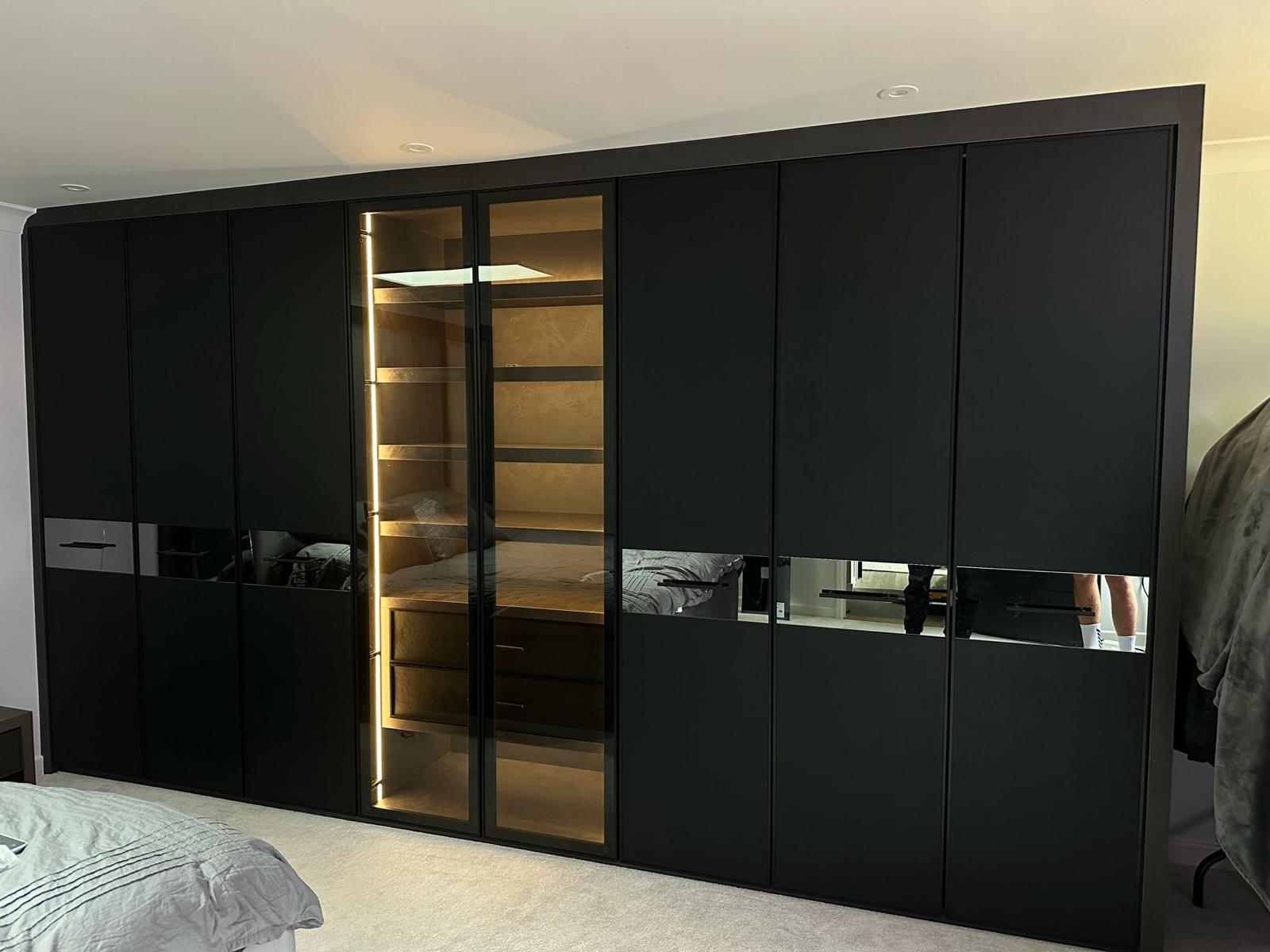
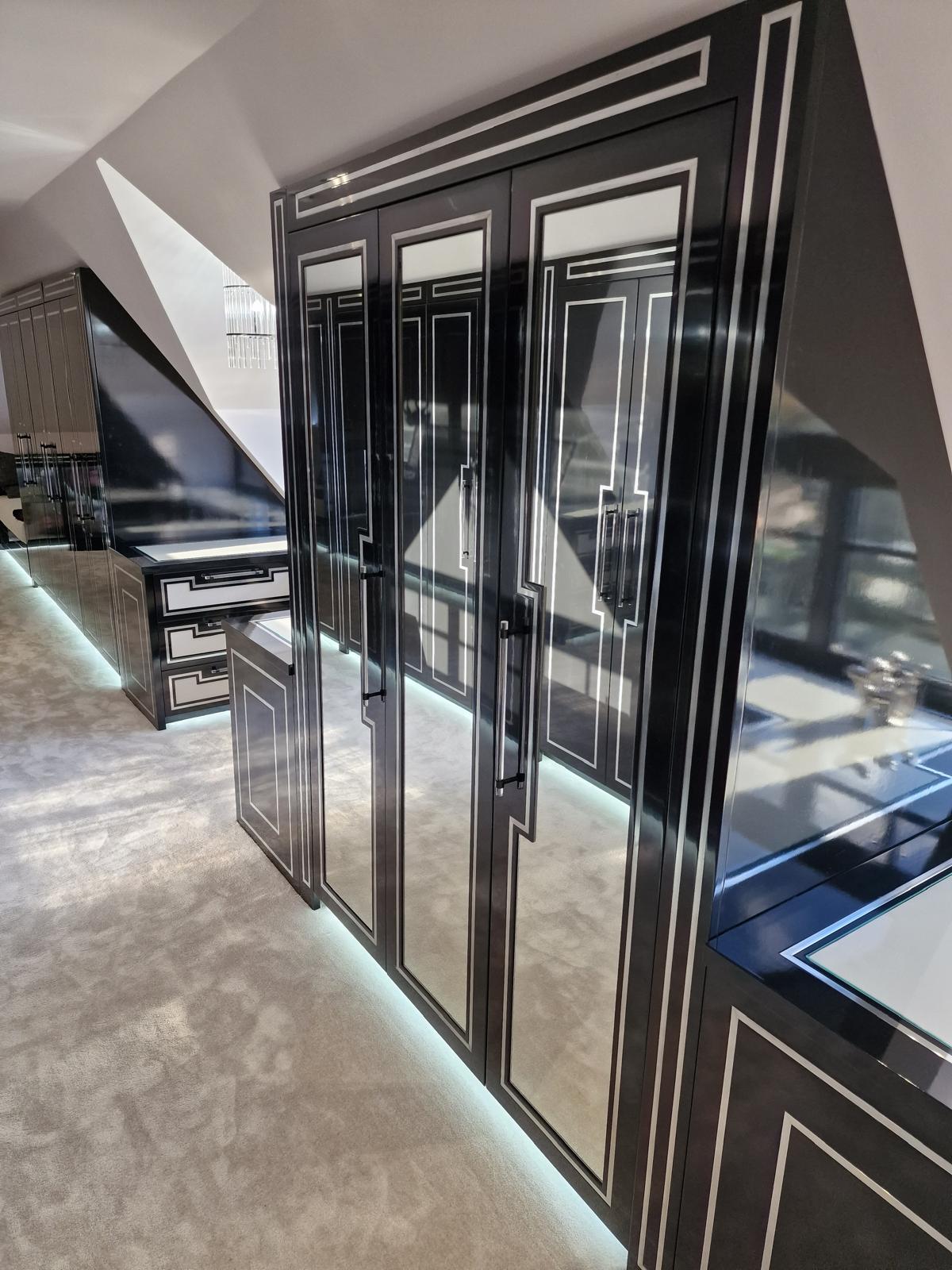
Every commission begins with a conversation about the room, how it is used and what needs to be stored or shown.
Built for the architecture you already have
- Doors and clearances
- Mirrored doors are checked for swing clearance in the same way as any hinged door, since they are generally a little heavier once glazed.
- Ceiling heights
- Door and mirror height are set against the room's true ceiling height so a full-length mirror reaches a genuinely useful height.
- Sockets and switches
- Wall fittings near the intended run are noted so the mirrored door position does not sit awkwardly across a switch or point.
- Window and light sources
- The position of windows and existing light fittings is considered so mirrored doors are placed where they return useful light to the room.
- Floor levels
- Floors are checked for level so a full-height mirror door hangs true rather than gapping or dragging at its base.
- Skirting and cornices
- Existing mouldings are scribed to at the base and top of the run, keeping the mirrored section framed cleanly within the rest of the wardrobe.
Materials & finishes
Specifications are developed with you during the design stage and sampled before anything is built. Not every option suits every commission, and we will say so where a material is the wrong choice for the room or the use.
Clear mirror glass
The standard mirror finish for full or partial doors, specified to the thickness suited to the door size.
Bronze and antiqued mirror glass
A warmer-toned alternative to clear mirror, chosen where a softer reflection suits the room.
Brushed brass framing
Used to edge mirrored panels where a warmer metal tone is wanted against the glass.
Blackened steel framing
A darker frame option suited to a more contemporary bedroom scheme.
Painted or veneered surrounding doors
Specified to sit alongside mirrored doors within the same run for a coordinated appearance.
Soft-close hinges rated for glazed doors
Selected for the additional weight a mirrored door carries compared with a solid panel.
Designed and built bespoke
We survey the room and discuss where mirror will genuinely be useful, both for dressing and for the light it can return to the space, before any door layout is drawn. The wardrobe is then designed with mirrored, partial-mirror or plain doors positioned accordingly, and manufactured in our Derbyshire workshop with hinges specified to the finished glass weight. You can read more about the stages a project goes through on the process page, and the same team that builds the wardrobe carries out the installation and final adjustment on site.
Read our full processBespoke Mirrored Wardrobes — your questions answered
Design
- Should every door in a run be mirrored?
- Not necessarily. We often mirror only the doors that face a window or a useful sightline, and finish the rest of the run in a painted or veneered panel, so the mirror does genuine work rather than being applied uniformly by default.
- What is the difference between full and partial mirror doors?
- A full mirror door is faced entirely in glass, giving the largest reflected surface; a partial mirror sets a smaller mirrored panel within a shaker or flat frame, which reads as more furniture-like and suits rooms where a fully mirrored wall would feel too stark.
- Where is the best position for a dressing mirror in a wardrobe run?
- It depends on where you actually get dressed, which is not always directly at the wardrobe. We discuss this during design so the mirrored door is positioned somewhere genuinely useful rather than simply centred on the run.
Practical questions
- Do mirrored doors make a small bedroom feel bigger?
- They can, particularly when positioned to reflect a window or an open part of the room, returning light and a sense of depth; a mirror facing a blank wall does far less for the space.
- Can mirrored and painted doors sit in the same run?
- Yes, this is a common approach — mirrored doors positioned where useful, with the rest of the run finished in a painted or veneered panel that coordinates with them.
Materials
- What frame options are there for a mirrored door?
- Slim brass, blackened steel or a timber surround are all available, chosen to suit the handles and hardware used elsewhere in the room rather than fixed to a single standard finish.
- Is bronze or antiqued mirror glass an option?
- Yes, a warmer-toned mirror is available as an alternative to clear glass, giving a softer reflection that some rooms suit better than a bright, clear mirror.
- Are mirrored doors heavier than painted ones?
- Generally yes, once the glass is fitted, which is why hinges are specified to the finished weight of the mirrored door rather than assumed to match a standard painted equivalent.
Installation
- Do mirrored wardrobe doors need different hinges?
- Often, since a glazed door carries more weight than a solid panel of the same size; hinge type and quantity are confirmed once the mirror specification is settled.
- Can you fit a mirrored door into an existing wardrobe run?
- This depends on the existing carcass and door construction; in many cases it is more straightforward, and gives a better result, to design the mirrored section as part of a new or reworked run.
- How long does a mirrored wardrobe take to fit?
- Timescales depend on the number of doors and the wider scope of the run; we set out a realistic programme once the design and mirror specification are agreed.
Practical questions
- Do you fit sliding mirror wardrobe systems?
- No, our mirrored wardrobes are built with hinged doors, designed and fitted to the same standard as our other bespoke wardrobe work. Position is agreed with you at design stage so the mirror is genuinely useful for dressing, rather than placed purely for symmetry.
- Can mirror be used just on part of a door?
- Yes, a mirrored panel can be set within a frame alongside a painted or timber section on the same door, giving a dressing surface without the door reading as a full sheet of glass.
Cost & quotations
- What does a bespoke mirrored wardrobe cost?
- Cost depends on dimensions, materials, finishes, hardware and how much of the run is mirrored, so we confirm a figure once we understand the room and your requirements; contact us via the contact page to discuss your project.
- Does mirror glass add significantly to the cost of a wardrobe?
- It affects cost alongside frame finish, door size and hinge specification, but figures vary enough between projects that we would rather quote after a design discussion than give a general estimate.
Chester Thomas
- Where are mirrored wardrobes manufactured?
- In our Derbyshire workshop, with the same team completing installation and final adjustment on site once the doors are fitted.
- What areas do you cover for bespoke mirrored wardrobes?
- We work across the Midlands, including Lichfield, Burton upon Trent and Four Oaks, alongside our home county of Derbyshire.
Related bespoke services
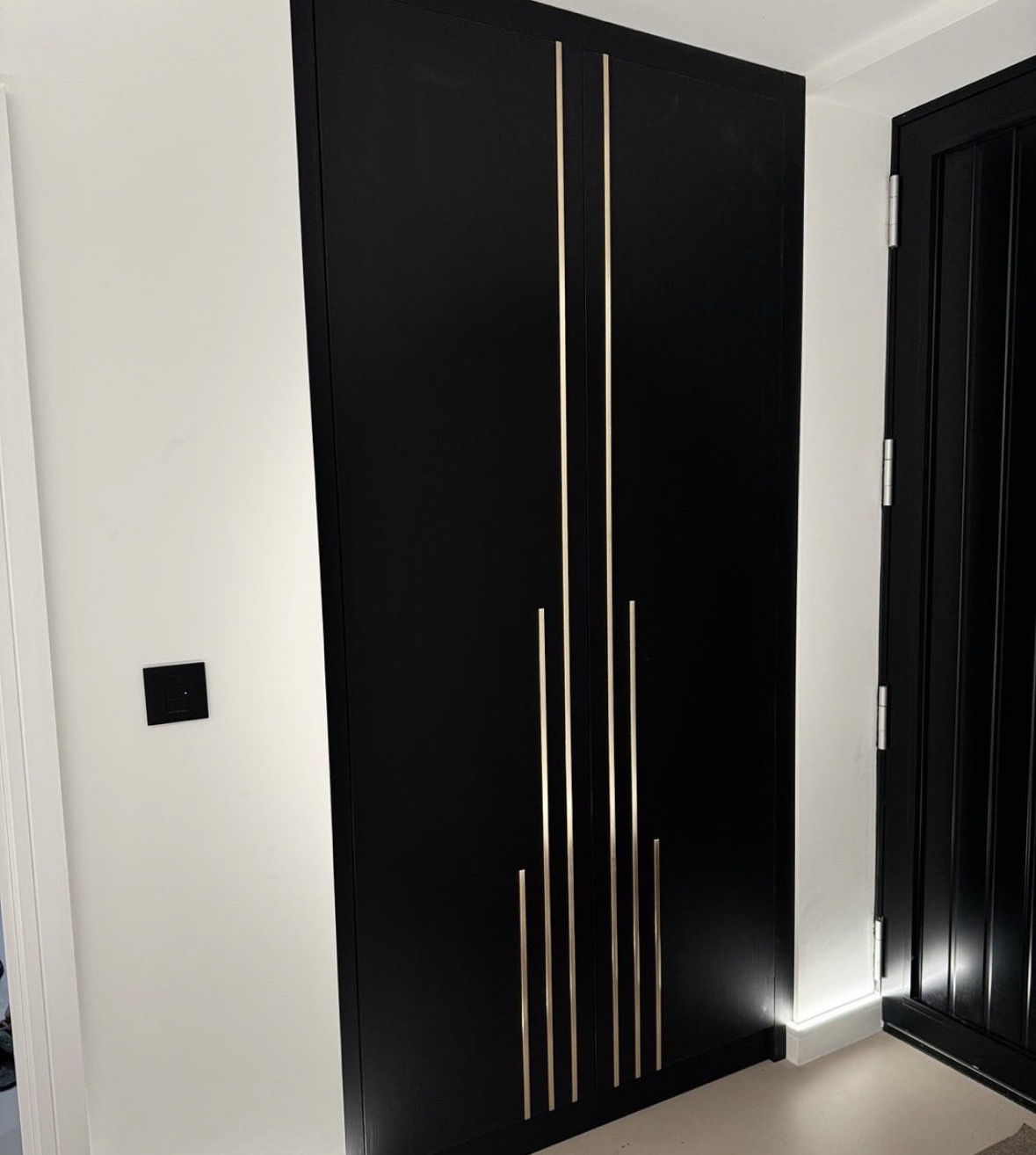
Fitted Wardrobes
Full-height wardrobes that follow the room — sloped ceilings, chimney breasts and all.
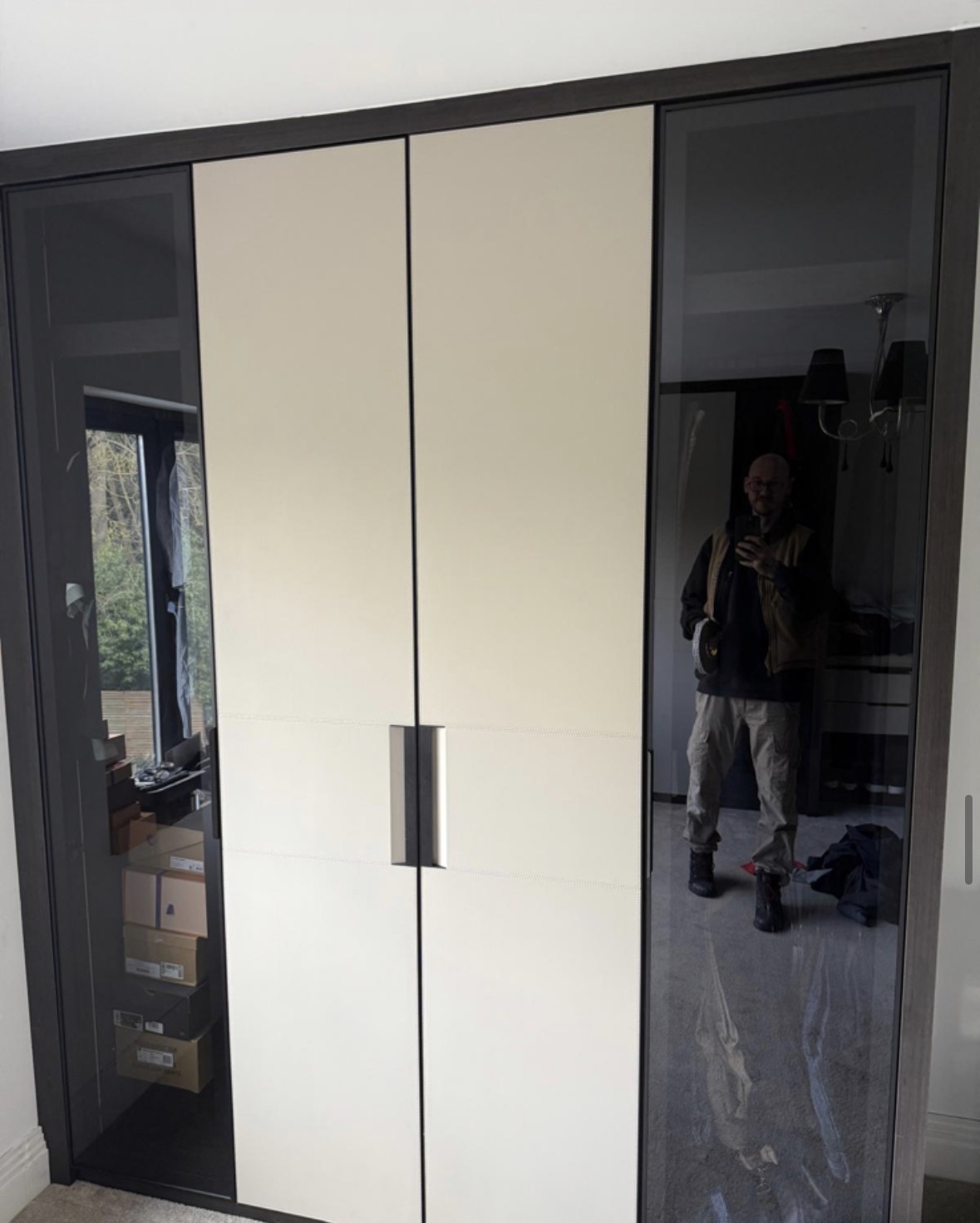
Bespoke Hinged Wardrobes
Traditional hinged wardrobes, built to the width and height of the room rather than a standard door size.
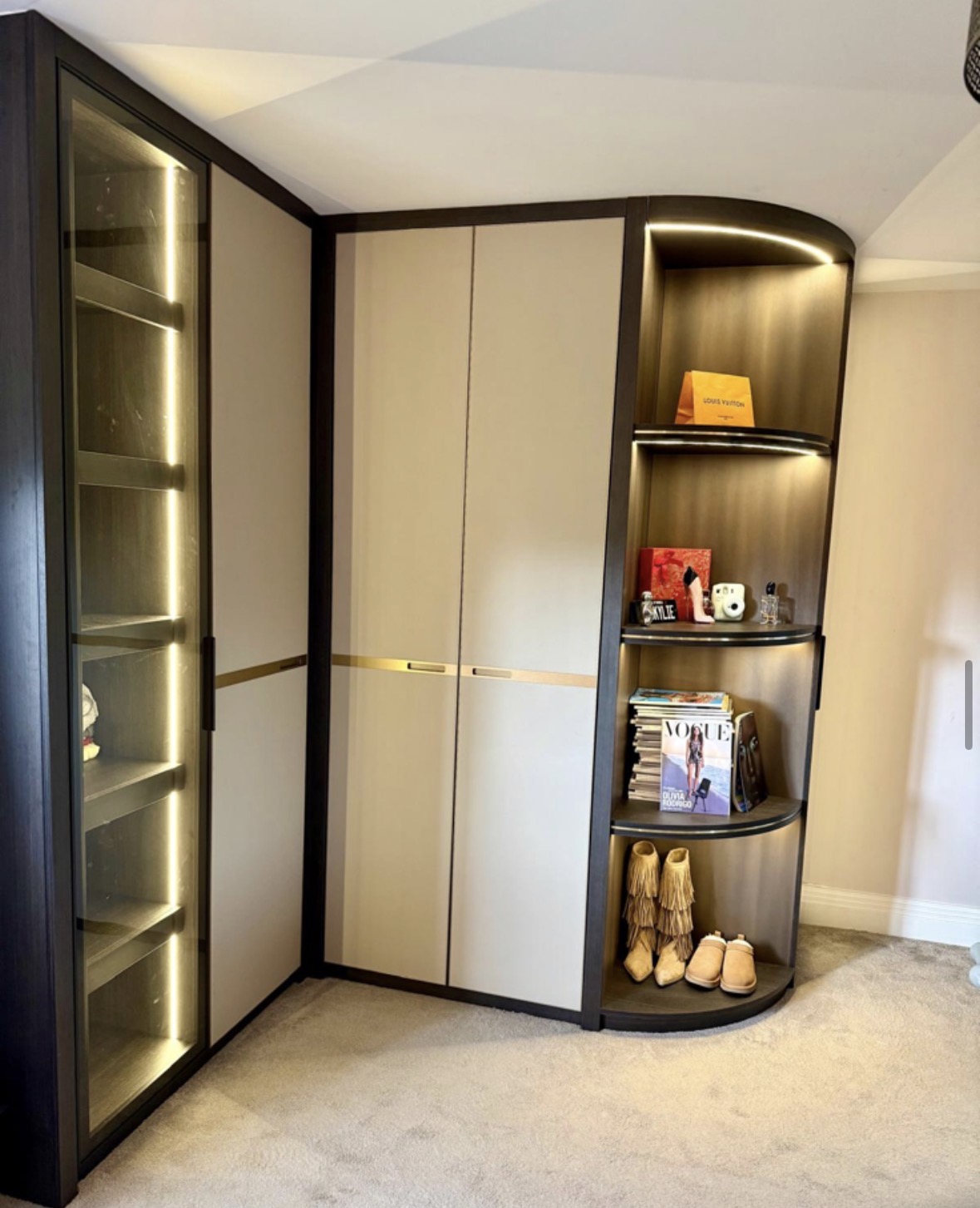
Bespoke Wardrobe Doors
Door styles, proportions and finishes worked out for the specific wardrobe run and room they belong to.
Bespoke Dressing Tables
A dressing table designed around your actual routine, from drawer layout to mirror position and lighting.
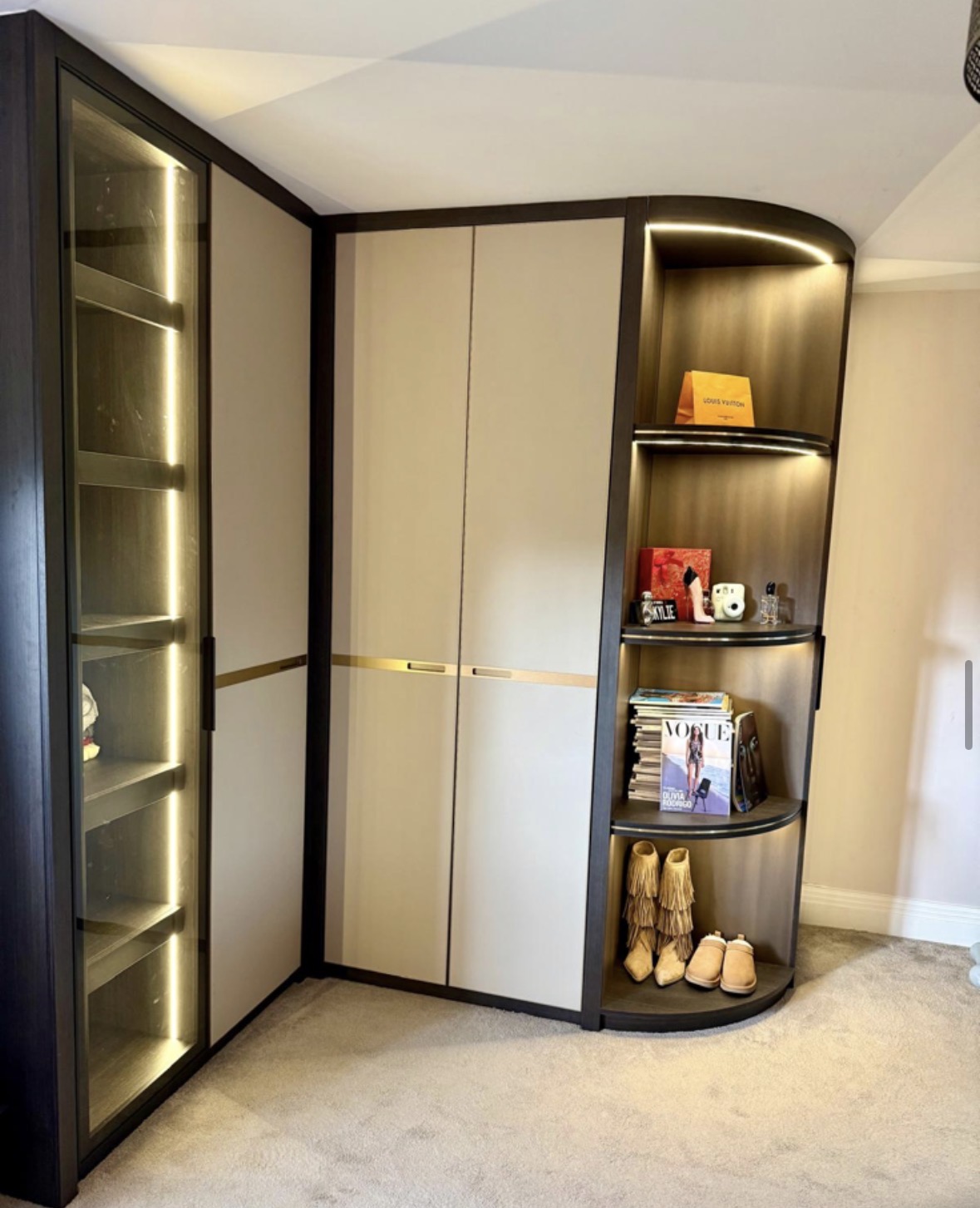
Bespoke Alcove Wardrobes
Wardrobes built to the exact, and often uneven, dimensions of the recess beside a chimney breast.
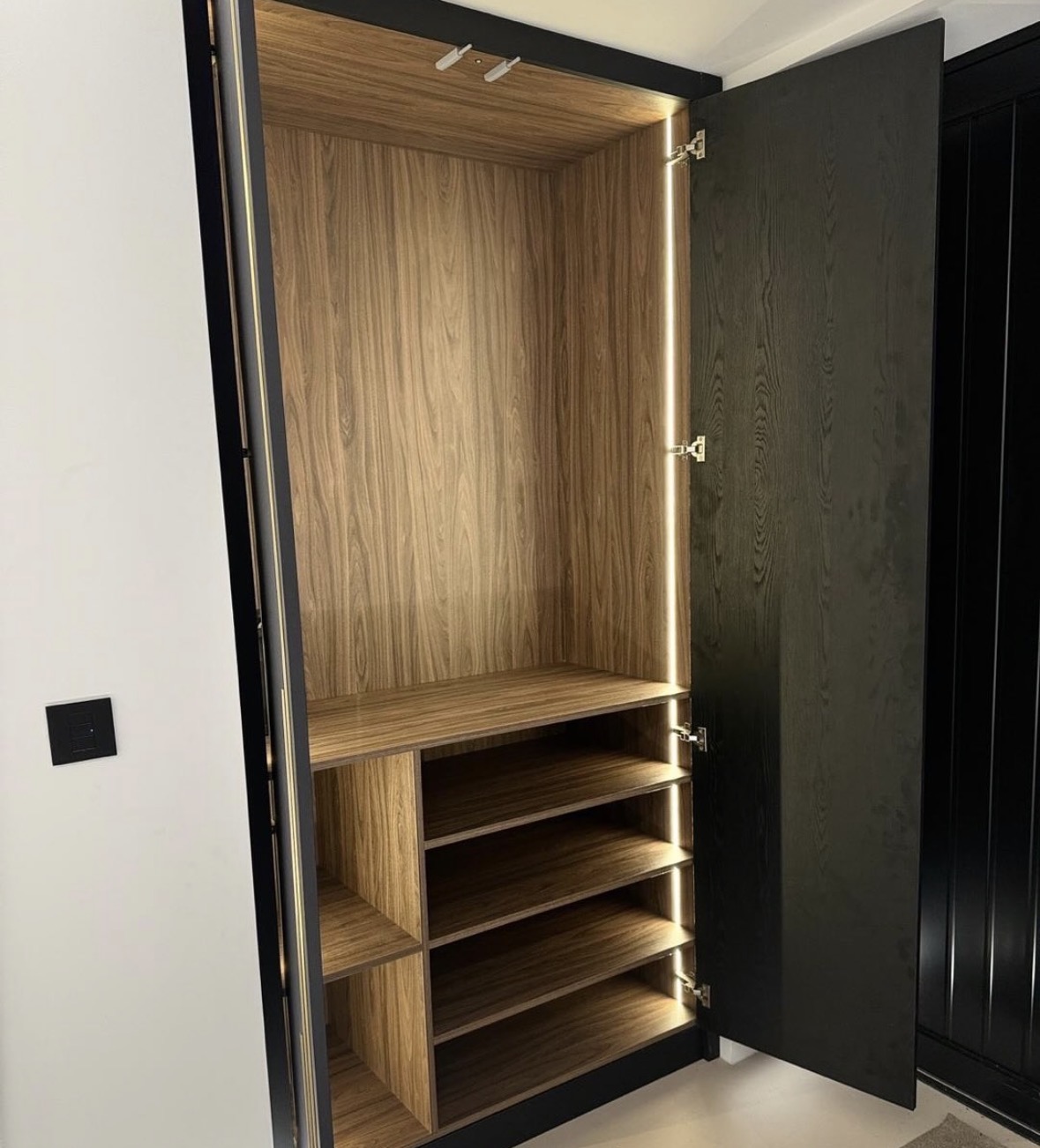
Bespoke Wardrobe Interiors
The inside of the wardrobe designed first, around what you actually own, before the doors are even discussed.
Areas we work in
Everything is designed and built at our Derbyshire workshop and installed by our own team across the Midlands, including Solihull, Sutton Coldfield, Four Oaks, Lichfield, Birmingham, Burton upon Trent, Ashby-de-la-Zouch, Swadlincote, Derbyshire, Leicestershire.
Areas we coverSpeak to us about your project on +44 7418 627358 or send us the details.
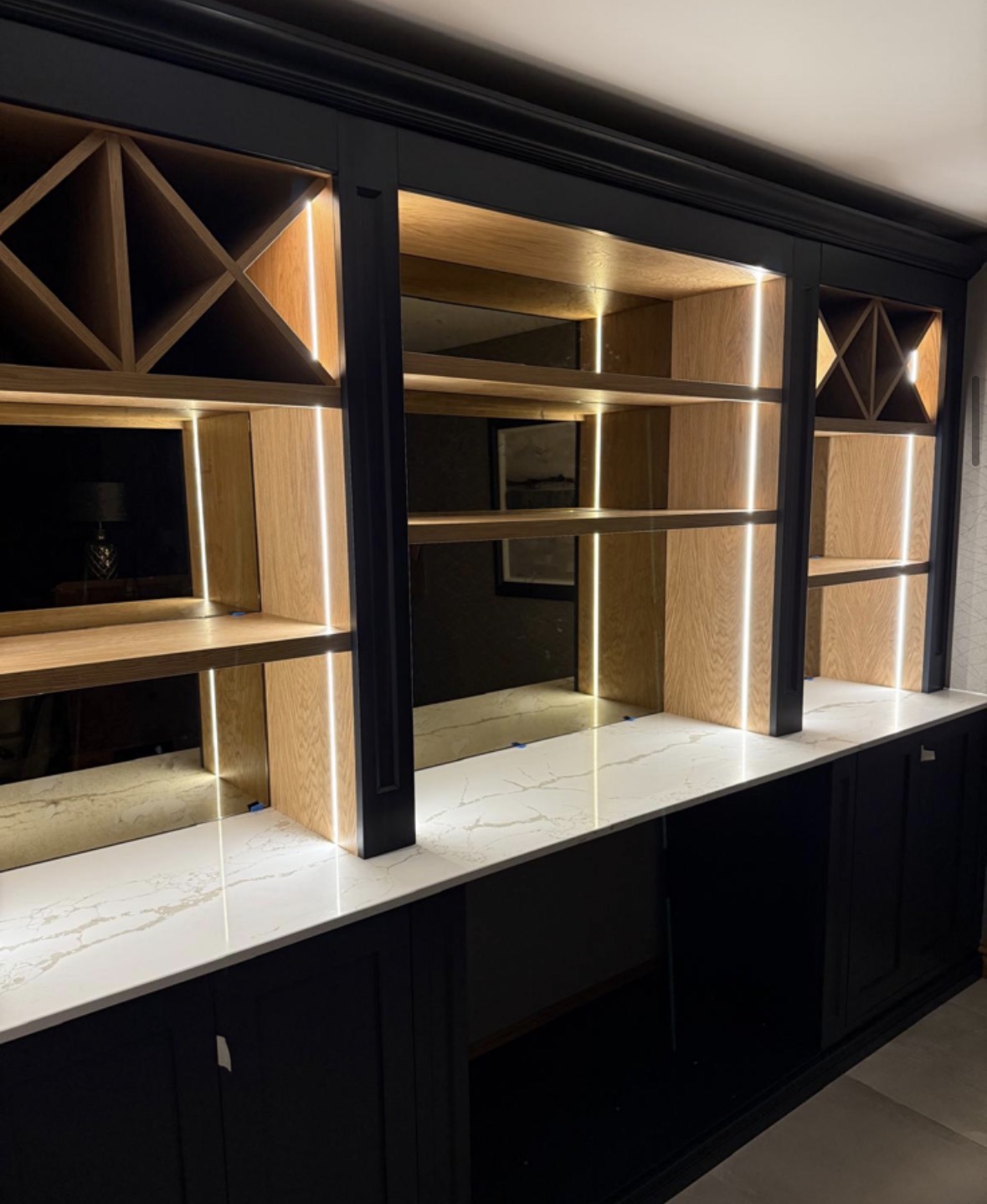
Planning Something Bespoke?
Tell us about your space, what you're looking to create and where the project is located.