
Wine Rooms & Cellars
Bespoke Wine Racking
Racking is the working heart of any wine storage. Built properly, it holds bottles securely, uses the room efficiently, and looks considered rather than purely functional.
Wine Racking, designed around the room
Racking sounds like the simplest part of a wine room until you start specifying it properly. Bottle sizes vary, orientation affects how corks and closures age, and the space available rarely divides neatly into a single standard module. We design racking around the bottles you actually keep and the room you actually have, rather than starting from a generic system and hoping it fits.
Orientation is the first decision. Bottles sealed with a natural cork are generally best stored on their side, keeping the cork in contact with the wine so it doesn't dry out; screwcap and some other closures are less fussy about this, which changes how a rack can be laid out. We ask what proportion of your collection falls into each category before settling on a single approach.
Capacity planning is more than counting bottles. We think about how the collection is likely to grow, whether certain wines need to be kept apart for maturation, and how much of the racking should be immediately accessible versus longer-term storage tucked into less convenient positions. A rack that only just fits today's collection tends to feel undersized within a couple of years.
Individual compartments — rather than open honeycomb racking — suit collectors who want each bottle to sit in its own space, protected from the bottles either side and easy to remove without disturbing neighbouring bottles. This costs more in joinery time than open racking, but it earns its keep in collections handled frequently.
Timber and metal both have a place, often in the same room. Timber racking brings warmth and is straightforward to finish to match other joinery in the room; metal racking, in steel or brass-finished sections, gives a more minimal, engineered look and can achieve slimmer profiles for a given capacity. We will talk through which suits your room and how you want it to feel.
Open racking, left without doors or cupboard fronts, treats the collection as something to be seen rather than concealed. This works well combined with lighting, discussed below, and suits rooms where the collection is genuinely part of the room's character rather than simply stored out of the way.
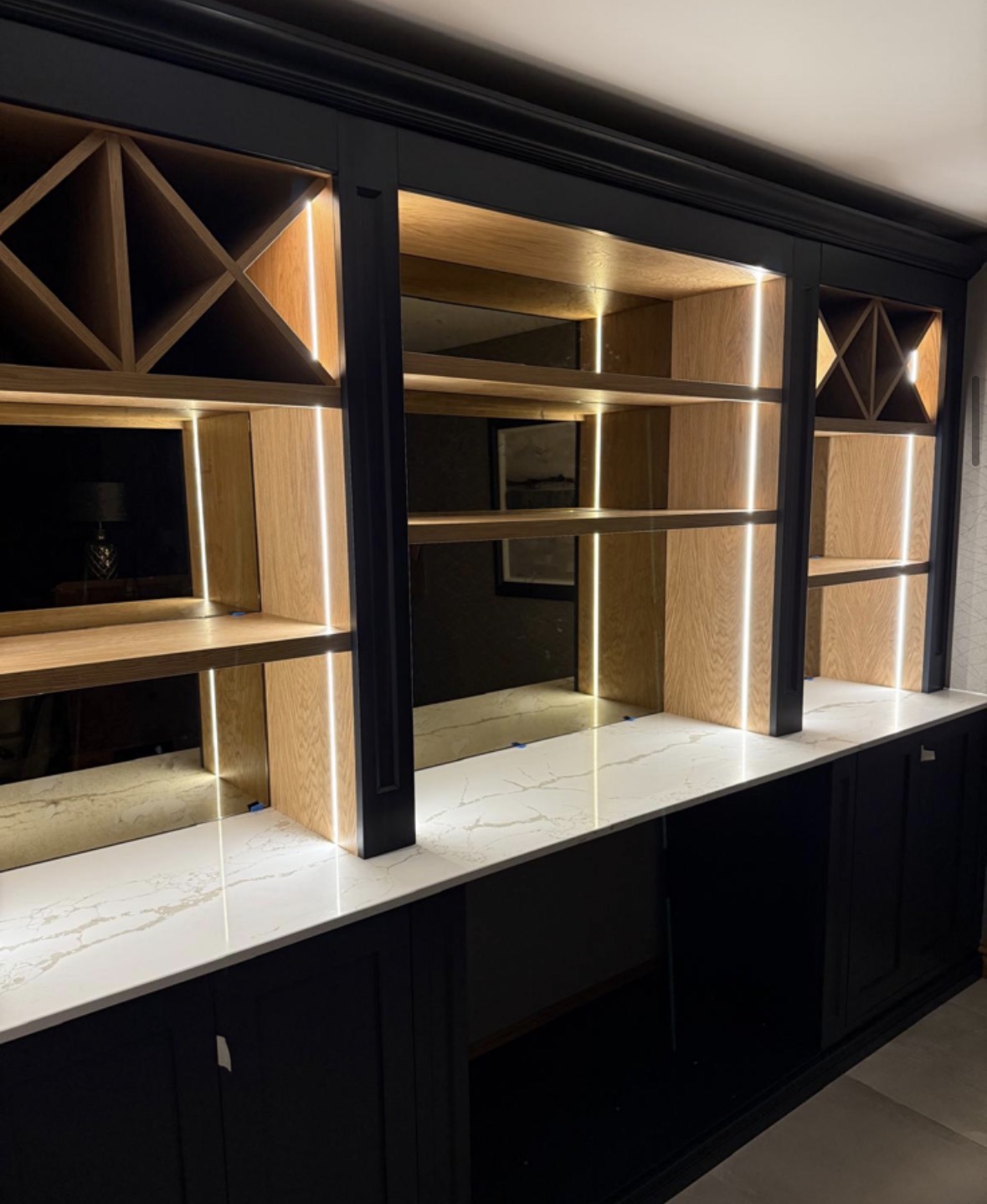
Lighting brings racking to life in a way that flat, unlit shelving cannot. Discreet LED strips along shelf edges or racking uprights pick out labels and bottle shapes without generating heat close to the bottles, and can be run on a low, warm setting that suits a room used mostly in the evening.
Wall-to-wall runs of racking are where careful setting-out earns its keep. We measure the room precisely and design racking to run the full width available, resolving corners, structural columns and any door or window openings so the finished run reads as one continuous piece rather than a series of separate units pushed together.
Presentation matters even in a working storage system. A well laid-out rack, with labels visible and bottles arranged with some logic, makes a collection easier to enjoy as well as easier to manage — which is really the whole point of building it properly in the first place.
What can be included
01
Orientation planned to closure type
Racking laid out for bottles stored on their side or upright, depending on cork or screwcap closures.
02
Capacity planned for growth
Layouts sized with room for a collection to grow, not just to fit what is currently owned.
03
Individual bottle compartments
Single-bottle joinery where bottles need to be handled individually without disturbing neighbours.
04
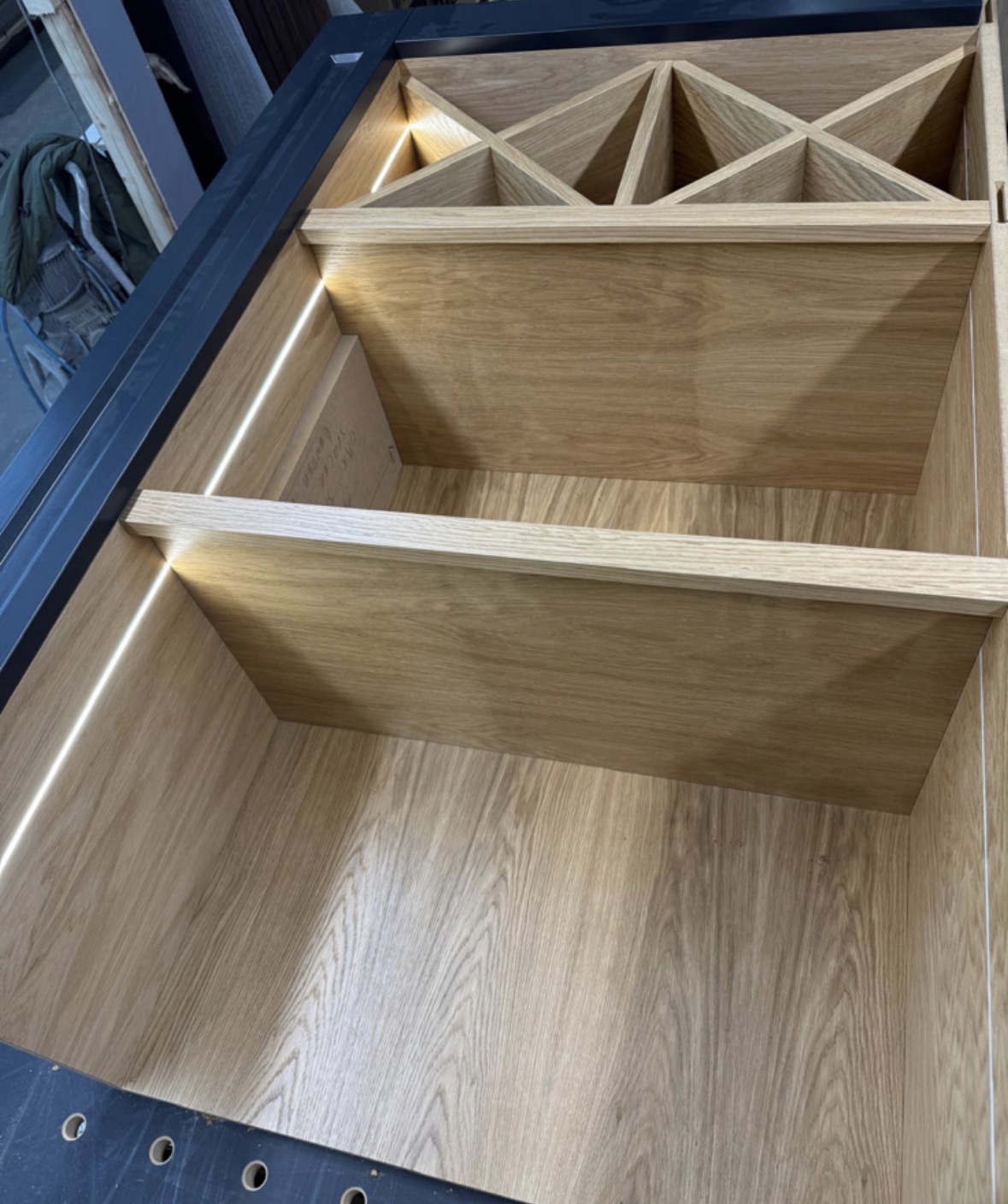
Open honeycomb or diamond racking
A more economical, higher-density option for larger volumes of similar bottle sizes.
05
Timber and metal construction
Racking in solid timber, metal sections, or a combination of the two to suit the room's character.
06
Wall-to-wall runs
Racking set out to use the full width of a wall, resolving corners and structural features neatly.
07
Integrated lighting
Discreet LED lighting along shelf edges or uprights to pick out labels without adding heat near the bottles.
08
Presentation-focused layout
Bottles arranged and labelled logically, making the collection easier to browse as well as store.
From our work
Every commission begins with a conversation about the room, how it is used and what needs to be stored or shown.
Built for the architecture you already have
- Floor loading
- For substantial racking runs, we check the floor's capacity to carry the combined weight of racking and a full complement of bottles.
- Wall build-up
- Fixing points and racking depth account for the wall's actual construction, particularly in older or converted rooms.
- Ceiling heights
- Racking height is set out to the room's genuine ceiling height so runs reach floor to ceiling where wanted, without an awkward gap.
- Existing cooling units
- Racking is positioned clear of any cooling equipment's airflow and access panels, agreed with the specialist who installs it.
- Doorways
- Access is measured before manufacture so racking sections can reach the finished room, particularly in cellars and understairs spaces.
- Lighting positions
- Integrated racking lighting is coordinated with the room's wider lighting and, where relevant, dimming control.
Materials & finishes
Specifications are developed with you during the design stage and sampled before anything is built. Not every option suits every commission, and we will say so where a material is the wrong choice for the room or the use.
Solid oak and walnut
For racking uprights and shelving, finished to match cabinetry elsewhere in the room.
Blackened and brushed steel
For a more minimal, engineered racking profile with slim sightlines.
Brass-finished metal detailing
For racking edges and trim where a warmer metal tone is wanted.
Individual bottle compartments
Joinery sized precisely to standard and larger bottle formats, agreed at design stage.
Honeycomb and diamond racking sections
A higher-density layout suited to larger, uniform-sized collections.
Integrated LED lighting
Warm, low-heat lighting fitted along racking edges and uprights.
Designed and built bespoke
We survey the room and discuss your collection's bottle sizes, closures and likely growth before drawing the racking layout. Manufacture takes place in our Derbyshire workshop in timber, metal or a combination of the two, with installation carried out by the same team who produced the drawings.
Read our full processWine Racking — your questions answered
Design
- How do you decide between individual compartments and open honeycomb racking?
- It depends on how the collection is handled. Individual compartments suit bottles that are removed and replaced frequently, protecting each one from its neighbours, while open honeycomb racking is a more economical option for larger, more static volumes of similar bottle sizes.
- Should bottles be stored on their side or upright?
- Bottles sealed with a natural cork generally store best on their side, keeping the cork moist. Screwcap and some other closures are less sensitive to this. We ask about your collection's mix of closures before settling on a layout.
- Can racking be designed to allow for future collection growth?
- We plan capacity with some allowance for growth wherever the room permits, since a rack sized only to today's collection tends to feel tight within a couple of years. This is one of the first things we ask about at design stage.
- Can racking be mixed with a small amount of closed storage?
- Yes, open racking can sit alongside cupboards or drawers for accessories, glassware or less frequently accessed bottles — see our wine room cabinetry page for how this is typically combined.
Materials
- Should racking be timber, metal, or both?
- Timber brings warmth and finishes easily to match other joinery in the room; metal gives a more minimal, engineered look with slimmer profiles for the same capacity. Many rooms use both, and we can talk through which suits your space.
- Does timber racking need any special treatment for a cellar environment?
- Where a room runs cooler or more humid than the rest of the house, we select and finish timber to suit those conditions, discussed once we understand the environment the specialist's cooling system will maintain.
- Can racking be finished to match existing joinery in the house?
- We can match timber tone and metal finishes to existing furniture or cabinetry, working from a sample or the piece itself, so racking reads as part of a considered scheme rather than a separate addition.
Installation
- Do you install climate control alongside the racking?
- No. Climate control and cooling equipment for wine storage are installed by specialists in that field. We build and install the racking and cabinetry, designing it to work around whatever cooling system is specified rather than supplying that system ourselves.
- Can racking be installed into an existing cellar with cooling already fitted?
- Yes, we survey around existing cooling equipment, positioning racking clear of airflow and any access panels the specialist needs for ongoing maintenance.
- How is racking fixed to the wall?
- Fixing depends on the wall's construction, which we check at survey stage. Solid masonry, stud partitions and older cellar walls all require slightly different approaches, agreed before manufacture rather than assumed.
Practical questions
- How much weight does a full run of wine racking carry?
- A full bottle of wine weighs a little over a kilogram, so a substantial floor-to-ceiling run can carry significant combined weight. We check floor loading capacity for larger installations as part of the survey.
- Is climate control needed for wine racking to work properly?
- Not always — it depends on your collection and how long bottles are kept. Many households do specify cooling equipment from a climate-control specialist, and we design racking to sit around that system where one is included, but racking itself does not provide temperature or humidity control.
- Can racking accommodate larger bottle formats like magnums?
- Yes, we design specific sections sized for magnums and other larger formats where a collection includes them, rather than assuming a single standard bottle size throughout the whole run.
Cost & quotations
- What does bespoke wine racking cost?
- Cost depends on capacity, material choice, individual compartments versus open racking, lighting and site conditions, so we do not quote a figure without understanding your collection and room. Get in touch through the contact page.
- Is metal racking more expensive than timber?
- It varies with the specification chosen for each — metal racking in a slim, engineered profile can cost differently to a comparable timber run, and we can talk through options once we understand your budget and preferences.
Chester Thomas
- What areas do you cover for bespoke wine racking?
- Bespoke wine racking is designed and built in our Derbyshire workshop, with installation covering Derbyshire, Staffordshire, Nottinghamshire, Leicestershire and the wider Midlands, sized to the bottle formats you actually keep.
- Do you build cabinetry as well as racking?
- We do — see our wine room cabinetry page for the counters, cupboards and glazed joinery we often build alongside racking as part of a single wine room scheme.
Related bespoke services
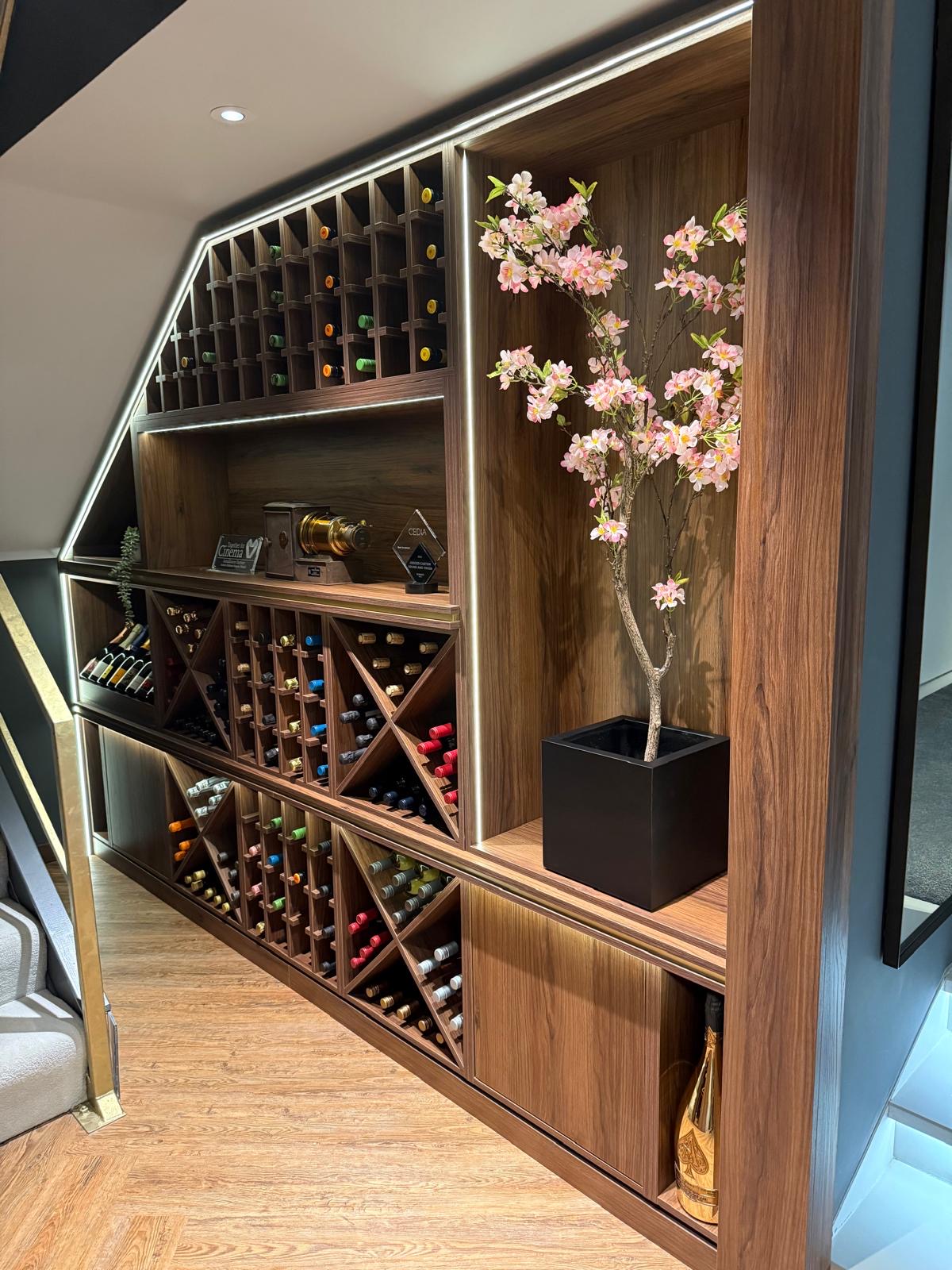
Wine Rooms & Cellars
Racking, glazing and climate coordination for a collection that is stored properly.
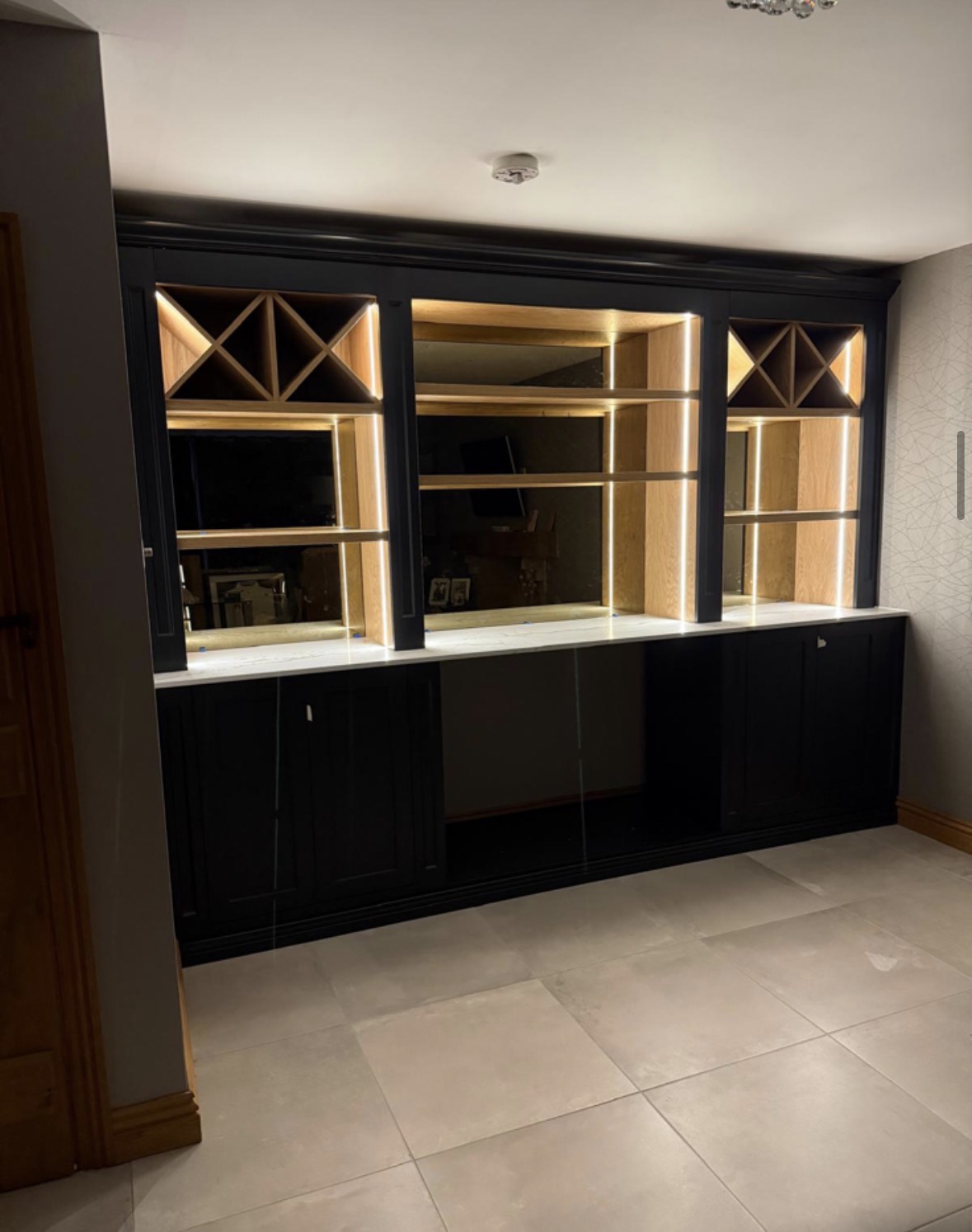
Wine Room Cabinetry
The joinery that turns a room of racking into a finished space — counters, cupboards and glazed display built around the bottles.
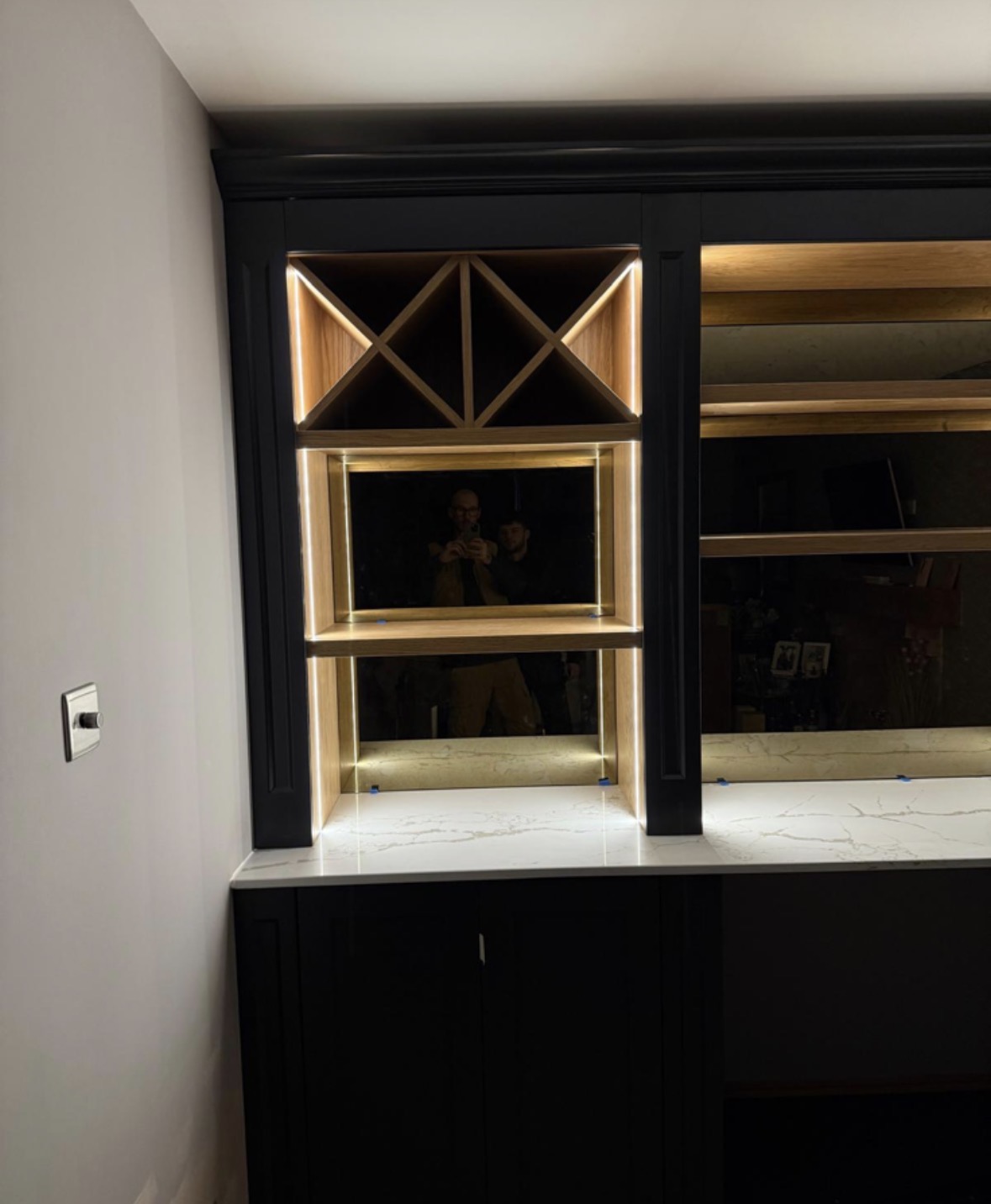
Cellar Racking
Floor-to-ceiling racking built for capacity, organised so a genuine collection stays easy to find and enjoy.
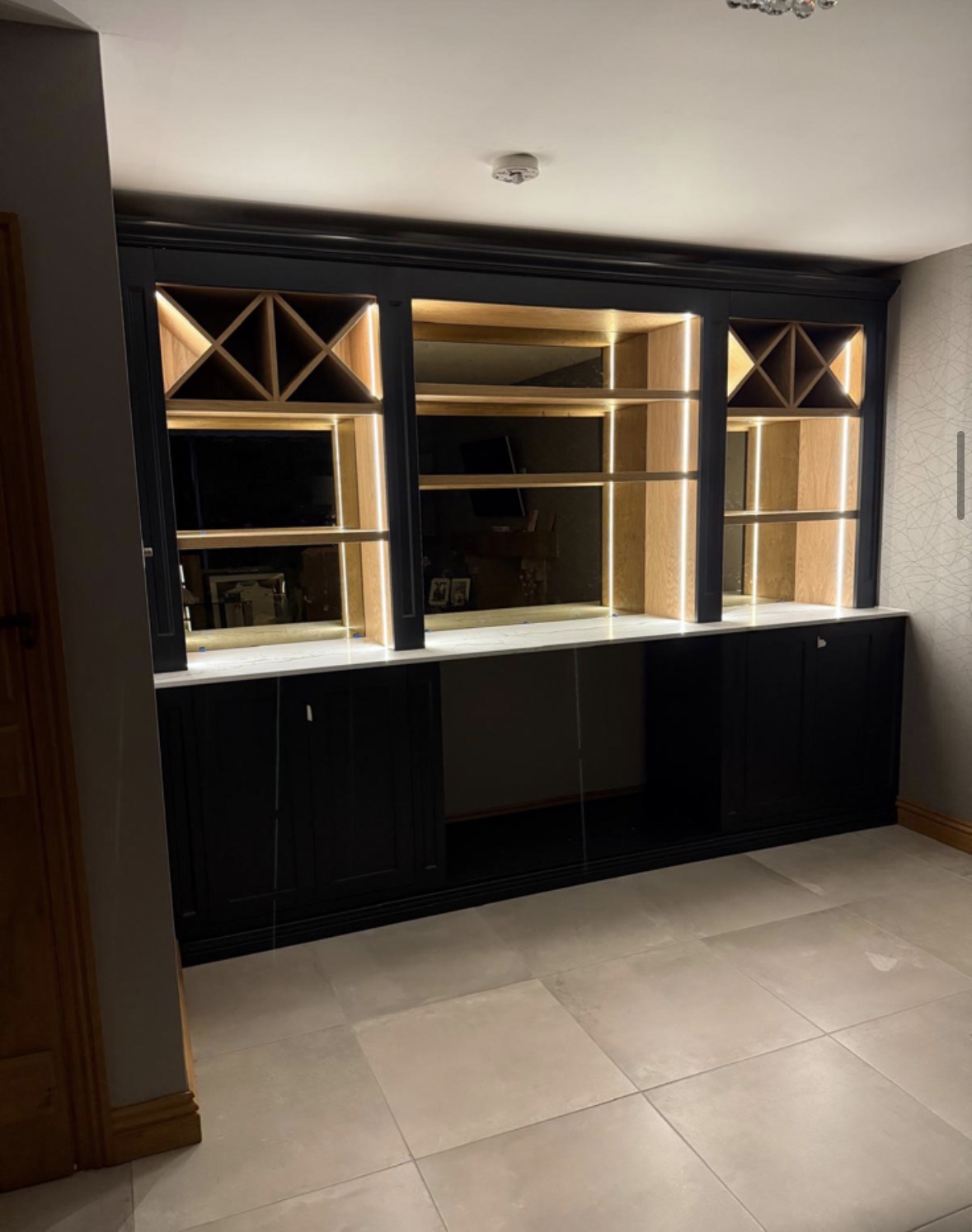
Wine Wall Storage
Wine storage built into a wall or unused recess, bringing a collection into a living space rather than tucking it away in a cellar.
Wine Storage
Racking and cabinetry sized to your actual bottle count, built into cellars, alcoves and under-stairs space.
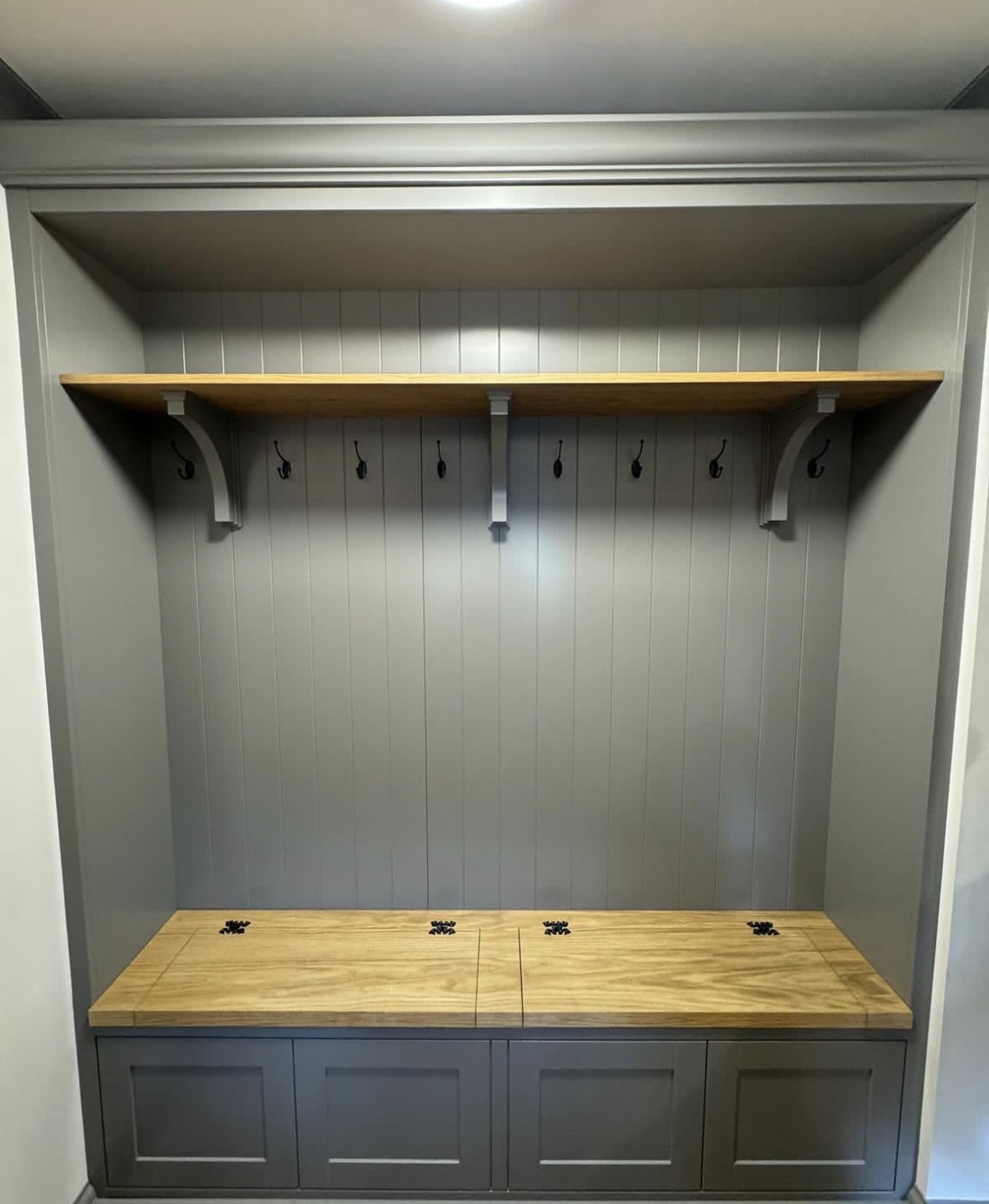
Bespoke Cabinetry
Alcoves, boot rooms, utilities, panelling and everything that does not fit a category.
Areas we work in
Everything is designed and built at our Derbyshire workshop and installed by our own team across the Midlands, including Solihull, Sutton Coldfield, Four Oaks, Lichfield, Birmingham, Burton upon Trent, Ashby-de-la-Zouch, Swadlincote, Derbyshire, Leicestershire.
Areas we coverSpeak to us about your project on +44 7418 627358 or send us the details.
Planning Something Bespoke?
Tell us about your space, what you're looking to create and where the project is located.