
Wine Rooms & Cellars
Bespoke Wine Storage
Wine storage works best when it is planned around numbers — how many bottles, what sizes, and how they are actually accessed — rather than fitted after the fact into whatever space is left over.
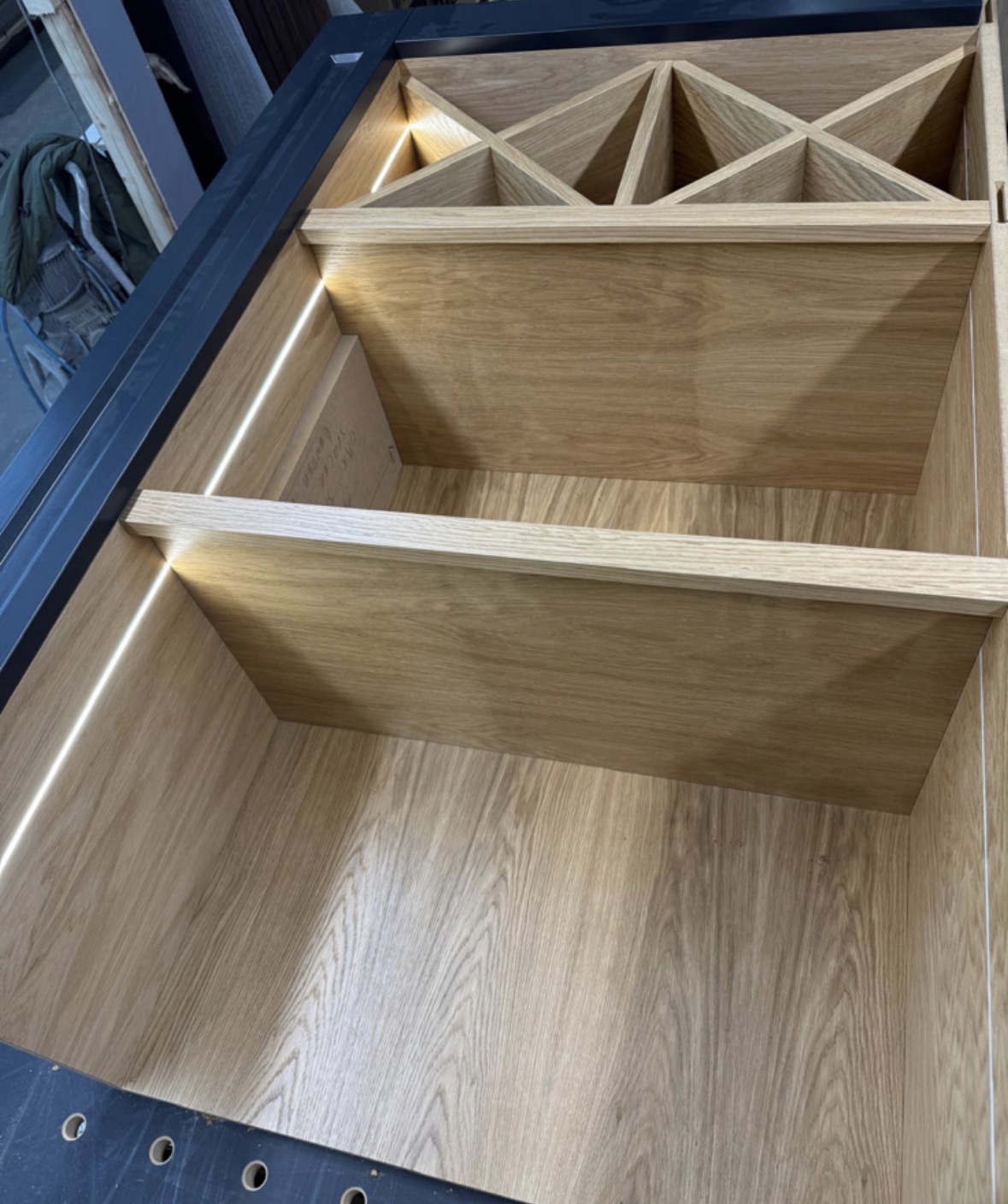
Wine Storage, designed around the room
Most wine storage problems come down to a mismatch between the racking bought and the collection actually owned. A generic rack assumes a standard bottle and rarely accounts for magnums, cases kept in their original form, or the handful of bottles you want to reach without disturbing the rest. We start by asking what you keep and how you use it, then build racking around those answers.
Racking style makes a real difference to how a collection is used day to day. Single-bottle racking, where each bottle sits in its own slot, makes it easy to see what you have and pull a specific bottle without moving anything else. Bin storage, where bottles are stacked several deep, holds more in the same footprint but means shifting a few bottles to get at ones stored behind. Most collections benefit from a mix of the two — single-bottle storage for wine in current rotation, bin storage for a larger reserve that is not touched often.
Magnums and other larger formats need their own consideration, since they will not fit standard single-bottle spacing. We build dedicated sections sized to whatever larger formats you keep, rather than forcing them into slots designed for a standard bottle and risking damage to labels or corks.
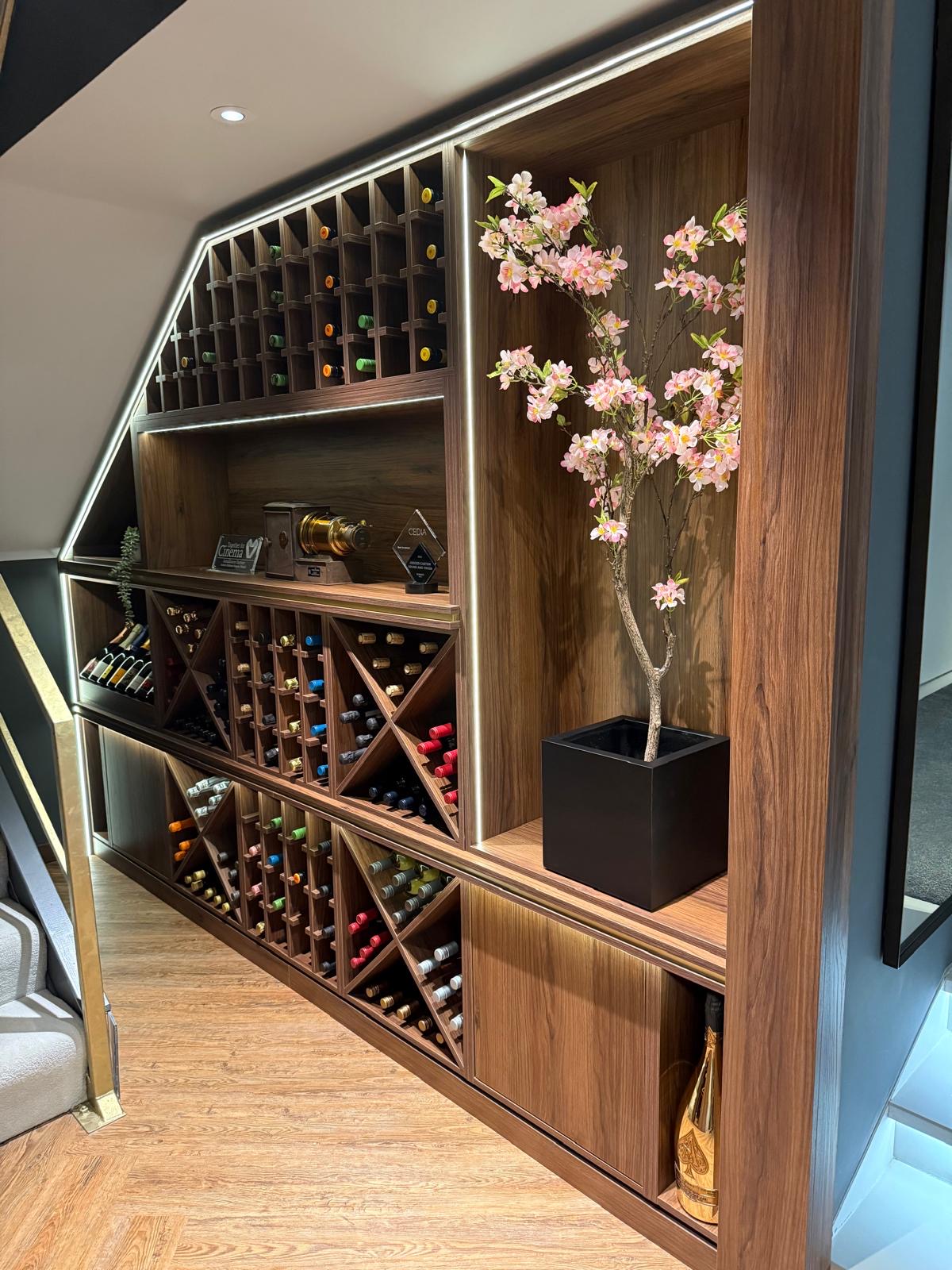
Space that would otherwise go to waste is often the best home for wine storage — under a staircase, within a redundant alcove, or along a cellar wall that currently holds nothing more than shelving. These spaces are frequently irregular, and building racking to the actual dimensions, rather than a modular system designed for a rectangular room, makes far better use of what is available.
Temperature and light matter to any wine collection, and we design cabinetry with that in mind — solid backs and doors where wine should be kept from light, ventilation where a room is naturally cool, and provision for cooling equipment where it is wanted. We build the joinery; where active cooling is required, we coordinate with specialist cooling engineers rather than presenting ourselves as refrigeration experts, so the mechanical side of the project is handled by people who do that for a living.
What can be included
01
Single-bottle racking
Individual slots for each bottle, making it easy to see and access a specific wine without disturbing others.
02
Bin storage
Deeper, stacked storage for larger reserves, holding more bottles in a smaller footprint.
03
Magnum and large-format sections
Dedicated racking sized to magnums and other formats larger than a standard bottle.
04
Under-stairs wine storage
Racking built to the exact stepped geometry beneath a staircase, making use of a space otherwise wasted.
05
Alcove and recess fitting
Storage scribed to an existing alcove or recess, whatever its width, height or depth.
06
Case and original-box storage
Space for bottles kept in their original wooden cases, where a collection is stored that way.
07
Display sections within storage
A small run of visible bottles within a larger, closed storage area, for wine you want to see as well as keep.
08
Cabinetry for cooling equipment
Joinery designed around a cooling unit's dimensions and ventilation needs, coordinated with a specialist cooling engineer.
09
Light-excluding doors and backs
Solid panels where bottles need to be kept from direct or ambient light.
10
Timber and metal racking systems
A choice of racking materials and profiles suited to the room's style, from traditional timber to slim metal pins.
Every commission begins with a conversation about the room, how it is used and what needs to be stored or shown.
Built for the architecture you already have
- Actual bottle count and mix
- Racking capacity and the split between single-bottle and bin storage are set by what you currently own and expect to add to.
- Room dimensions and geometry
- Storage is built to the true shape of the space, including sloped ceilings, stepped walls or an irregular alcove.
- Access and reach
- Frequently used bottles are positioned within easy reach, with less-accessed reserve storage placed higher or lower as appropriate.
- Ambient temperature and light
- The room's natural conditions inform whether solid or ventilated panels are used, and whether cooling equipment needs to be accommodated.
- Existing floor and ceiling structure
- Racking is fixed and supported according to the actual structure behind it, particularly in cellars with uneven walls.
Materials & finishes
Specifications are developed with you during the design stage and sampled before anything is built. Not every option suits every commission, and we will say so where a material is the wrong choice for the room or the use.
Solid oak and pine racking
Traditional timber racking, either left natural or finished to suit the room.
Blackened and brushed steel pins
A slimmer, more contemporary racking profile for single-bottle storage.
Painted and veneered cabinetry
For enclosed storage sections and any cabinetry surrounding a cooling unit.
Ventilated timber panelling
Slatted or louvred panels where airflow needs to reach stored bottles or equipment.
Solid, light-excluding doors
Closed timber doors for sections where bottles need protection from light.
Stone and slate flooring details
Where a cellar or wine room floor is being finished alongside the storage itself.
Designed and built bespoke
We survey the room, count and categorise your current collection, and agree racking density and layout before manufacture. Racking and cabinetry are built in our Derbyshire workshop and installed on site, with any cooling equipment coordinated through a specialist engineer rather than fitted by us directly.
Read our full processWine Storage — your questions answered
- How many bottles will fit in a given space?
- It depends entirely on the racking style chosen. Single-bottle racking holds fewer bottles per square metre than bin storage, which stacks bottles several deep. We calculate capacity against your actual space and collection during design, rather than quoting a generic figure.
- What is the difference between single-bottle and bin storage?
- Single-bottle racking gives each bottle its own slot, so you can see and reach a specific wine without moving others. Bin storage stacks bottles together in a deeper space, holding more per square metre but requiring you to move bottles to reach ones stored behind.
- Can you build storage for magnums and larger bottles?
- Yes, we build dedicated sections sized to magnums and other larger formats, since standard single-bottle spacing will not accommodate them without risking damage to labels or corks.
- Can wine storage be built under a staircase?
- Yes, under-stairs space is a common and effective location for wine storage, provided the stepped geometry is surveyed accurately so racking follows the actual shape rather than a straight assumption.
- Do you handle temperature control for wine storage?
- We build the cabinetry and racking, and design around a cooling unit's dimensions and ventilation needs where one is wanted, but we coordinate with specialist cooling engineers for the mechanical and refrigeration side rather than installing it ourselves.
- Is a wine cellar necessary, or can storage work in an ordinary room?
- A dedicated cellar is not essential. Many of our wine storage commissions are built into an alcove, under-stairs space or a spare room, with cabinetry designed to manage light and, where needed, coordinated with cooling equipment.
- Can existing wine racking be extended?
- Sometimes, if the original was built to a design that allows additional sections to be added. Where that is not practical, we can design new storage to sit alongside it in a matching style.
- What materials do you use for wine racking?
- Solid timber racking in oak or pine is common, along with slimmer blackened or brushed steel pins for a more contemporary look. The choice usually comes down to the style of the room rather than any difference in how well the wine is stored.
- Can you store wine in its original wooden cases?
- Yes, we can design storage sections sized to hold cases in their original form, useful where a collection includes bottles bought and stored by the case rather than individually.
- Do you build a mix of display and closed storage?
- Yes, many wine storage projects combine a small visible section for bottles you want to see with larger, enclosed storage for the bulk of the collection, kept away from light.
- How do you deal with an irregularly shaped cellar or alcove?
- We survey the space precisely, including any slopes, steps or unevenness, and build racking to that actual geometry rather than a modular system designed for a rectangular room.
- What is the difference between wine storage and a wine display cabinet?
- Wine storage is generally built around capacity and protecting bottles from light, often in a cellar, alcove or under-stairs space. A wine display cabinet is built to show bottles as part of a room's decoration — see our wine display cabinets page for that alternative.
- Should I consider a wine room instead of simple racking?
- A wine room is a larger, dedicated space, often glazed and climate-controlled, suited to bigger collections and households who want the room itself to be a feature. Our wine rooms & cellars page covers that scale of project.
- What areas do you cover for bespoke wine storage?
- We design, build and install from our workshop in Coton in the Elms, Swadlincote, covering Derbyshire, Staffordshire, Leicestershire, Nottinghamshire and the wider Midlands.
- How long does a wine storage project take?
- Design and racking layout typically take a few weeks, followed by manufacture and installation. We provide a written programme once the layout and capacity are agreed.
- What does bespoke wine storage cost?
- Costs depend on capacity, racking material, room geometry and whether cooling equipment is coordinated as part of the project, so we quote only after seeing the space. Get in touch through the contact page to discuss your collection.
- Can you work alongside a cooling specialist we have already appointed?
- Yes, we regularly coordinate with cooling engineers appointed by the client or recommended by us, sharing drawings so the cabinetry and equipment are designed to work together from the outset.
Related bespoke services
Wine Rooms & Cellars
Racking, glazing and climate coordination for a collection that is stored properly.
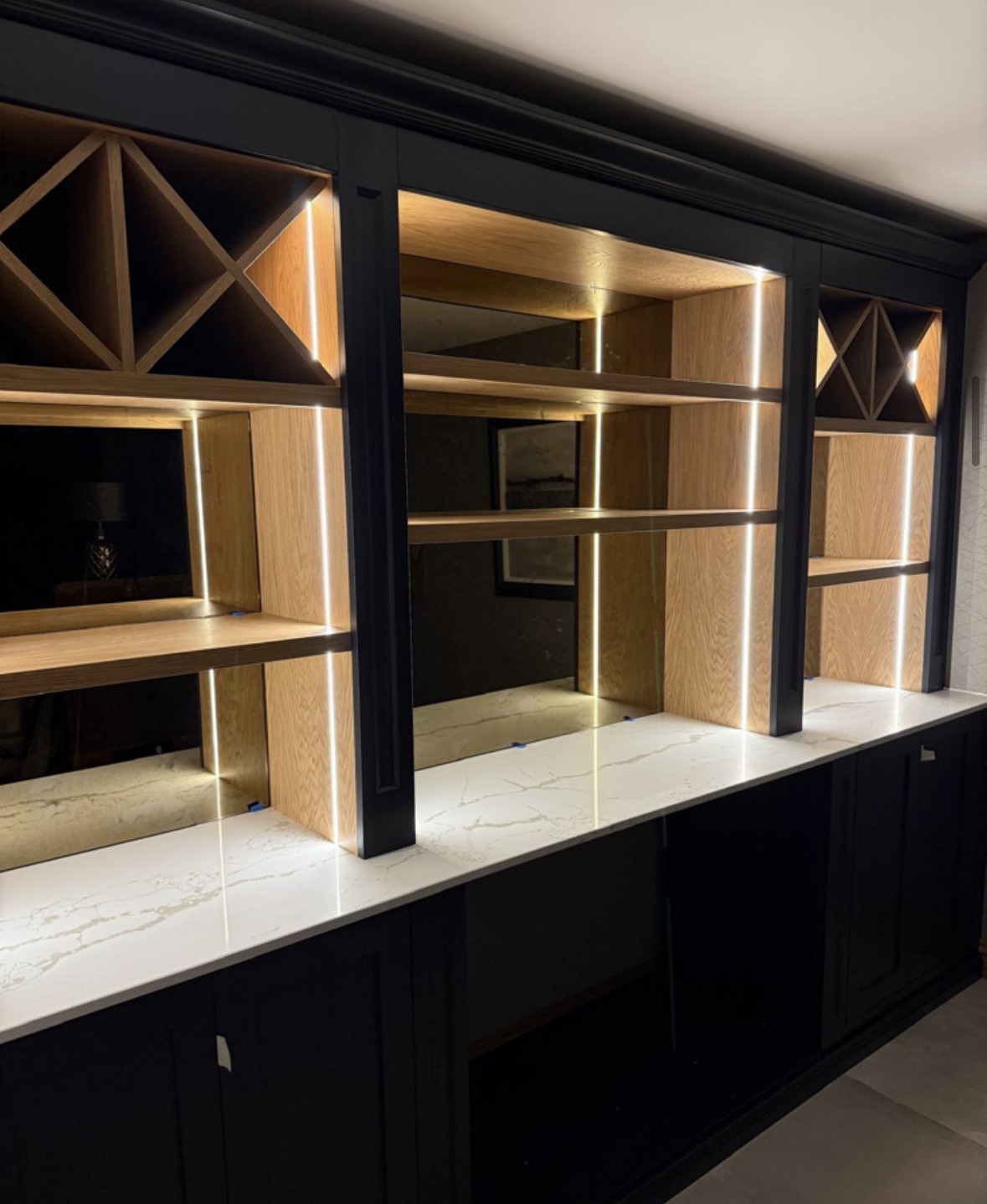
Wine Display Cabinets
Cabinetry built to show a collection off, with glazing, lighting and shelving designed around the bottles themselves.
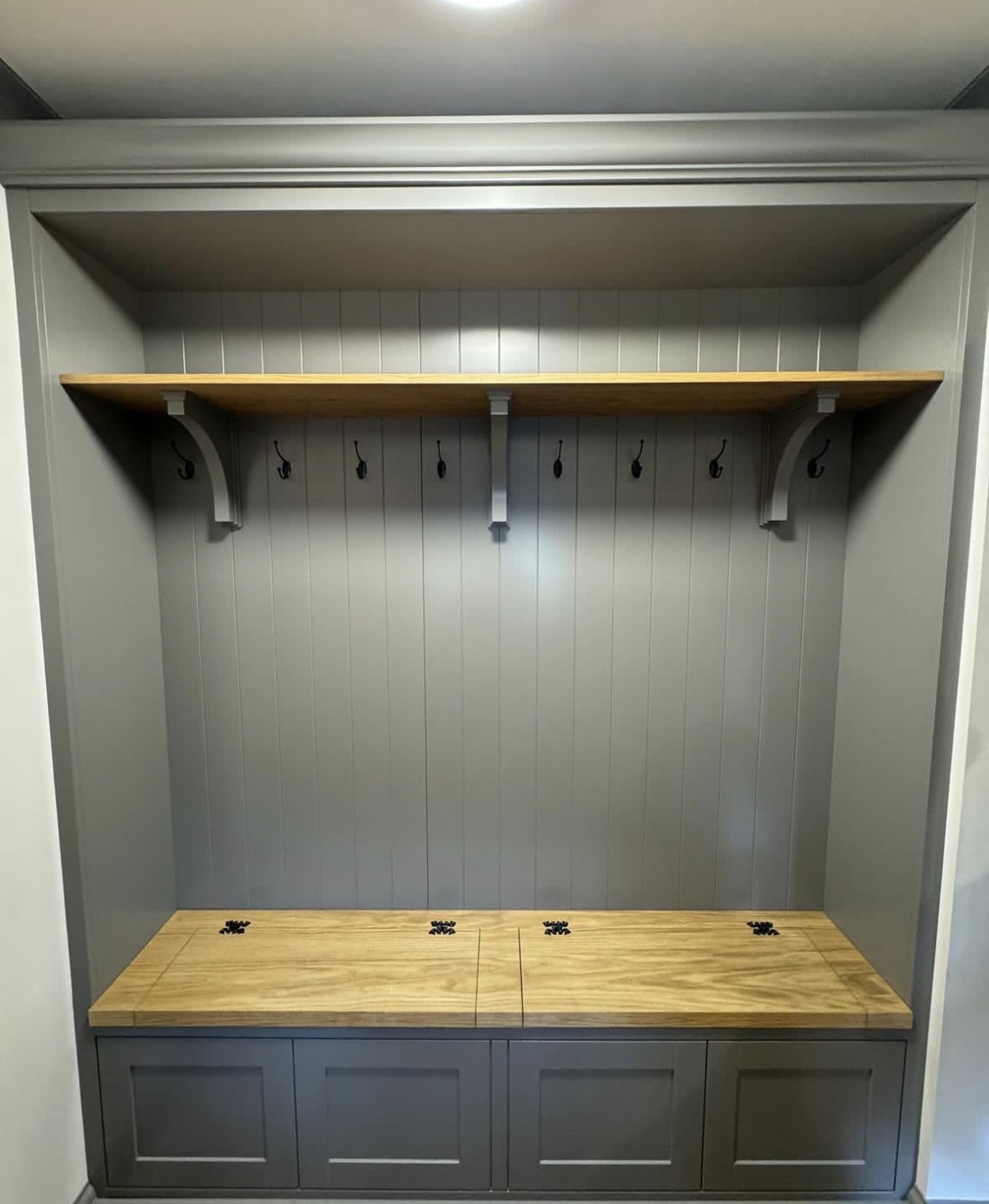
Bespoke Cabinetry
Alcoves, boot rooms, utilities, panelling and everything that does not fit a category.
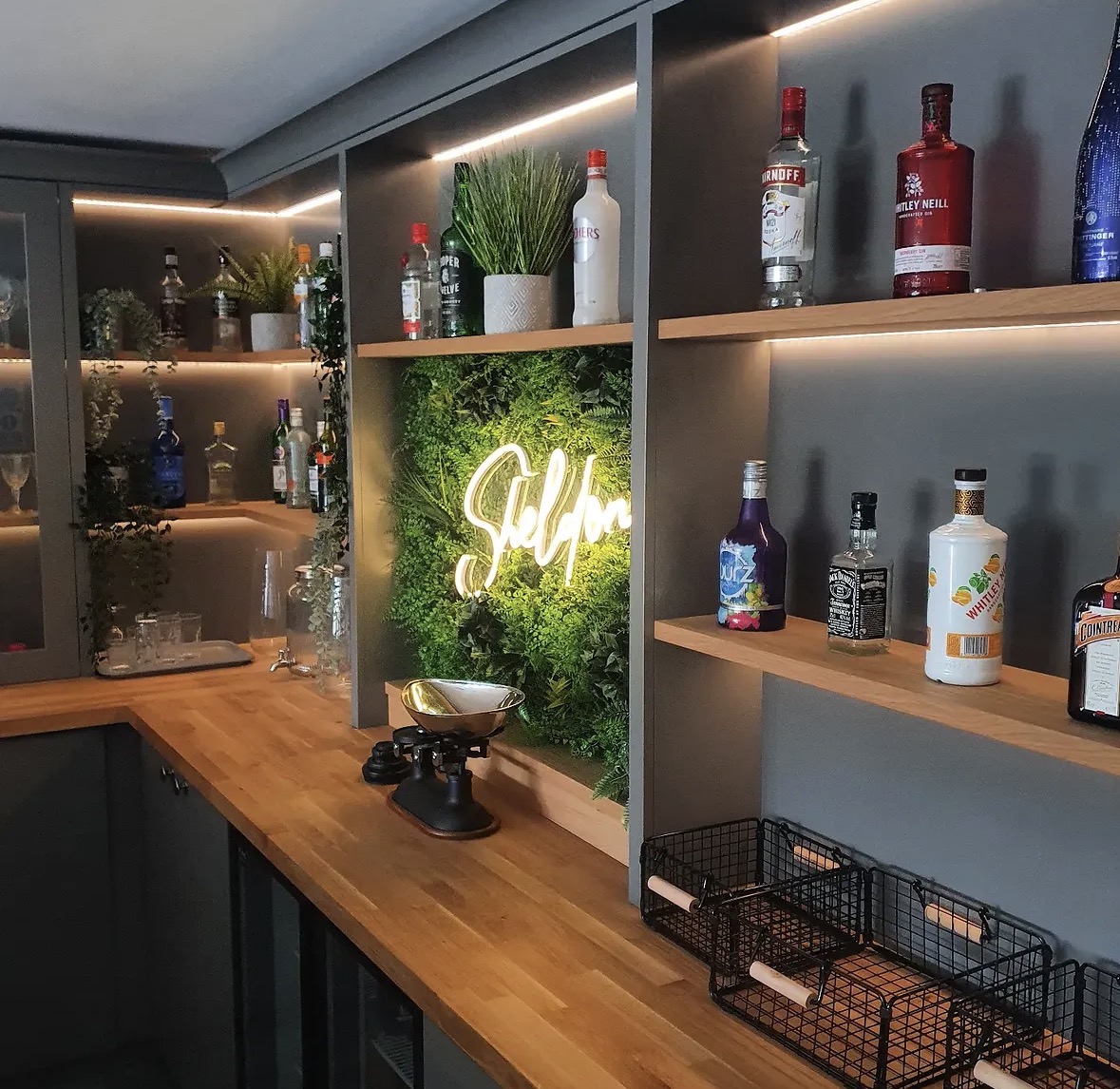
Home Bars
Bottle display, glassware, refrigeration and lighting in one properly detailed piece.
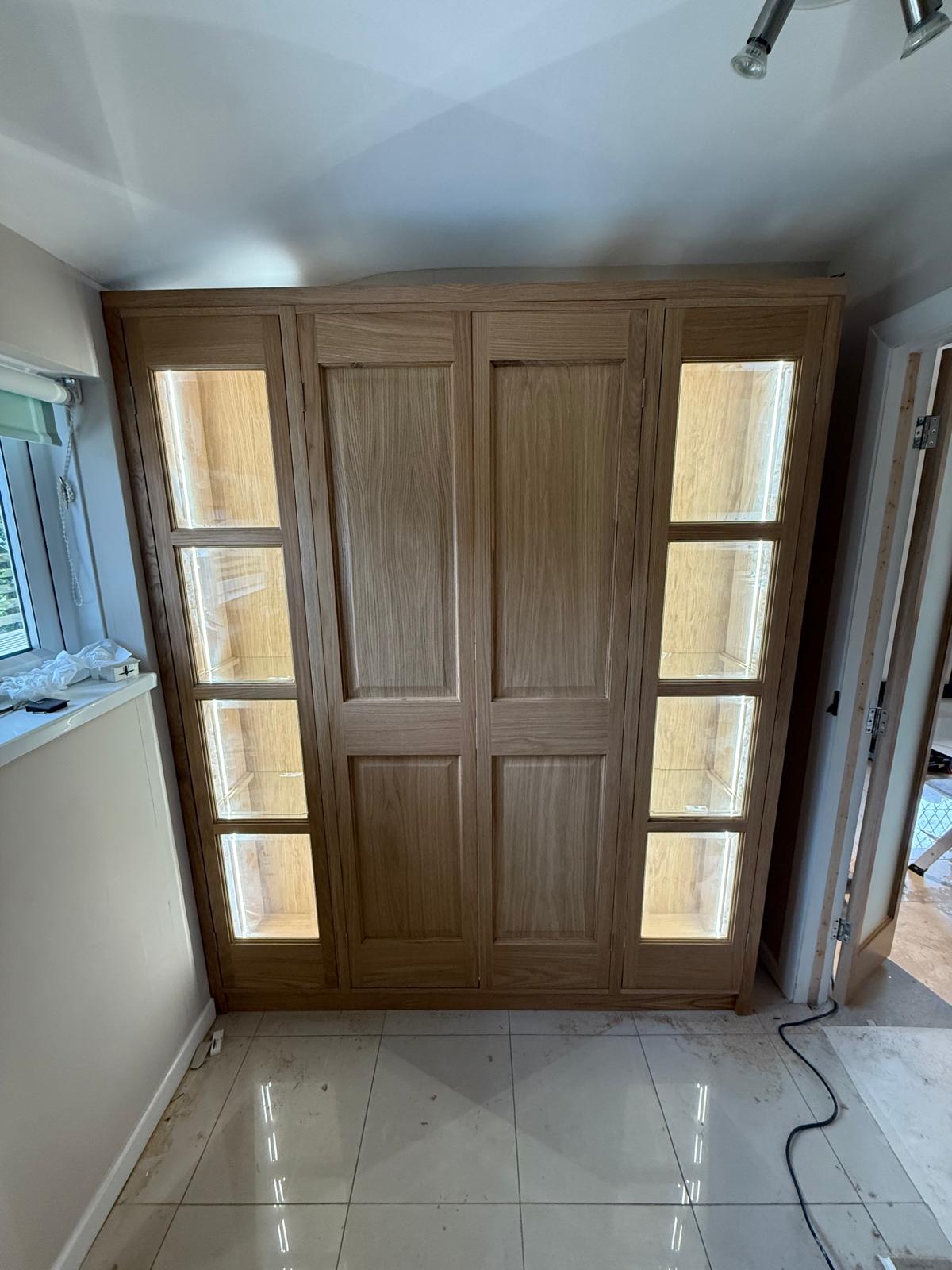
Display Cabinets
Glazed cabinetry sized and lit for what you actually want to display, not a generic showcase unit.
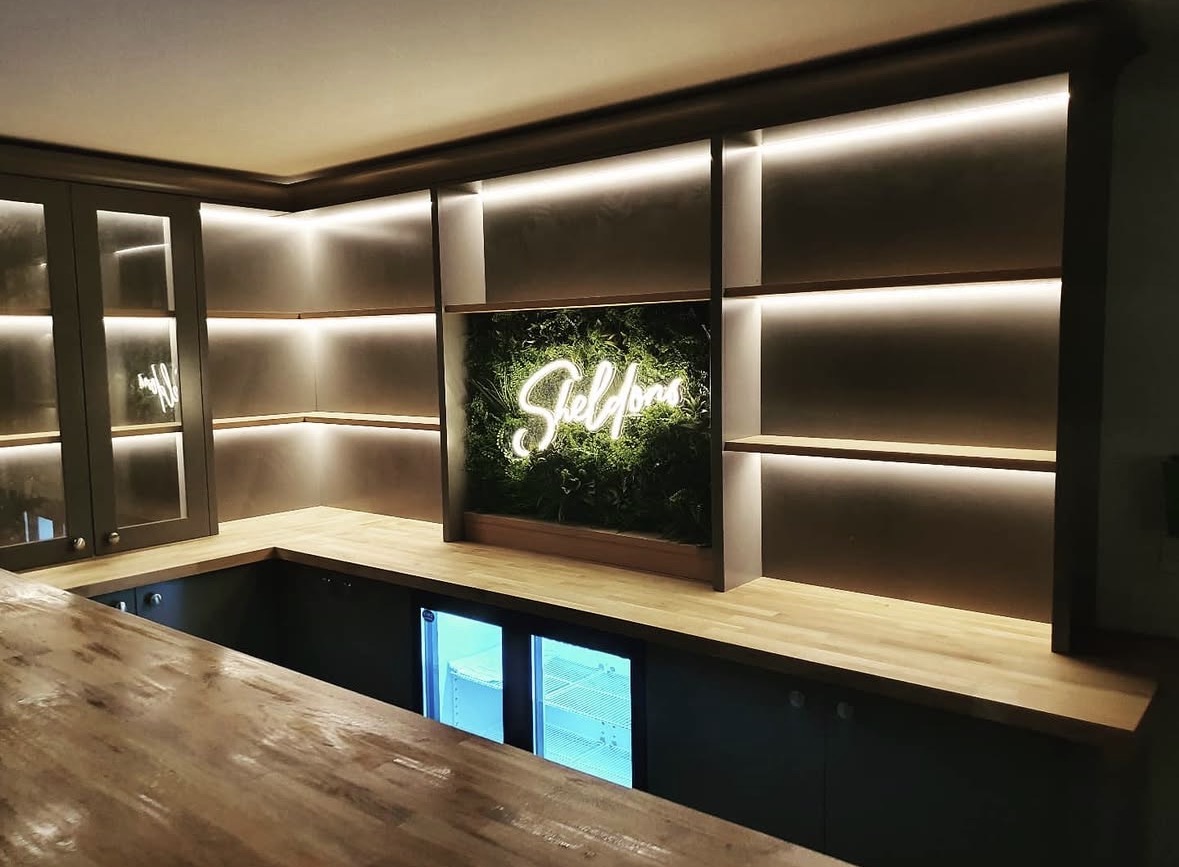
Drinks Cabinets
A dedicated drinks cabinet, built around your bottles, glassware and the way you actually pour.
Areas we work in
Everything is designed and built at our Derbyshire workshop and installed by our own team across the Midlands, including Solihull, Sutton Coldfield, Four Oaks, Lichfield, Birmingham, Burton upon Trent, Ashby-de-la-Zouch, Swadlincote, Derbyshire, Leicestershire.
Areas we coverSpeak to us about your project on +44 7418 627358 or send us the details.
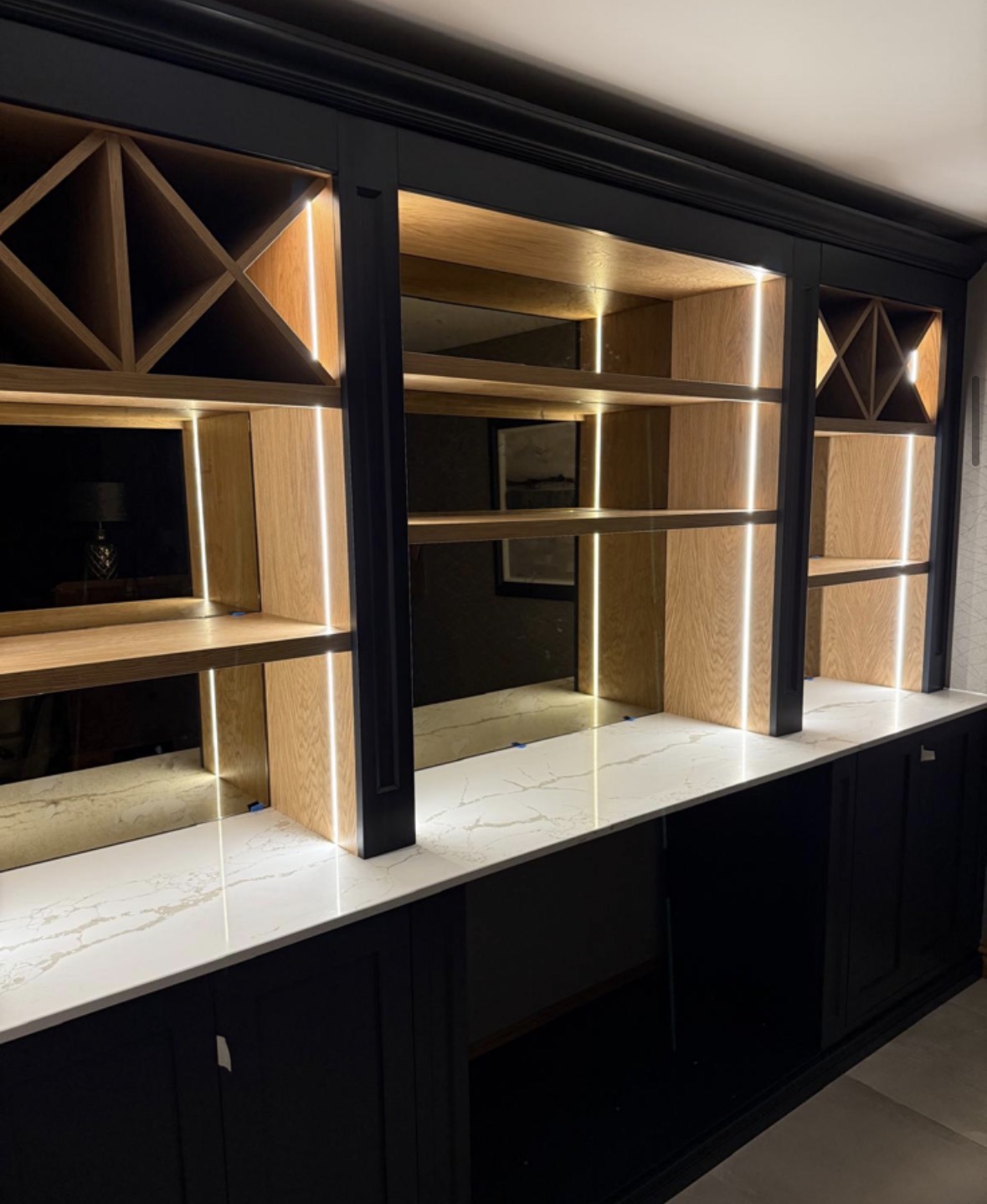
Planning Something Bespoke?
Tell us about your space, what you're looking to create and where the project is located.