
Bespoke Furniture
Bespoke Shoe Storage
Shoe storage fails, most often, because it is designed around a single idea of what a shoe is; a proper specification works out how you actually store boots, trainers and formal shoes separately, then builds around that.
Bespoke Shoe Storage, designed around the room
Shoes are not a single category of object, however often storage furniture treats them as one. A tall boot, a pair of trainers and a formal leather shoe each want a different amount of space, a different angle of support, and often a different level of visibility, and bespoke shoe storage starts from working out the actual mix you own rather than fitting everything onto identical flat shelves.
Angled shelving is the most efficient way to store a large number of shoes in a limited depth, since tilting the shelf slightly lets the toe of one pair sit above the heel of the next, increasing the number of shoes a given height of shelving can hold. It suits formal shoes and lower trainers well, though taller boots need either a deeper flat shelf or a dedicated compartment, since an angled shelf sized for low shoes will not accommodate them.
Drawers offer a different advantage: closed storage that keeps shoes free of dust and out of sight, which suits a room where you would rather the shoe collection did not read as part of the visual scheme. Drawers can also be lined or divided to keep pairs separated and prevent scuffing against one another, a detail worth specifying if you have shoes worth protecting that way.
The display-versus-concealed question is really a question about the room and the collection. In a walk-in wardrobe or dedicated dressing room, an open, well-lit run of shelving can become a genuine feature, similar in spirit to a glazed display cabinet elsewhere in the house. In a boot room or a hallway, concealed storage behind doors usually suits better, since coats, bags and daily clutter tend to accumulate around open shelving in a more heavily trafficked space.
Boots and outdoor footwear bring their own practical considerations, particularly in a hallway or boot room fitted alongside coat storage: a boot rack or angled shelf raised slightly off the floor keeps footwear away from standing water or mud brought in from outside, and a slatted or ventilated shelf base helps airflow where boots are stored wet.
Where shoe storage sits within a wider dressing room or walk-in wardrobe, we design it as part of the same run as hanging and drawer storage, rather than as an isolated unit, so proportions, finishes and lighting are consistent across the whole space. See our dressing rooms and walk-in wardrobe storage pages for how shoe storage fits into a larger scheme.
Whichever combination of angled shelving, drawers and open display suits your collection, the aim is the same: storage sized to what you actually own, arranged so the shoes you wear most are the easiest to reach.
What can be included
01
Angled shelving
Tilted shelves that increase the number of shoes a given shelf height can hold, suited to formal shoes and lower trainers.
02
Dedicated boot storage
Deeper, taller compartments or shelves specified separately from low-shoe shelving, sized to the boots actually being stored.
03
Lined and divided drawers
Closed drawer storage for shoes you would rather keep out of sight, with lining or dividers to prevent pairs scuffing against one another.
04
Open display shelving
Well-lit, open shelving for a shoe collection intended to be seen, suited to a walk-in wardrobe or dressing room.
05
Concealed storage behind doors
Shoe storage hidden behind hinged doors, suited to hallways and boot rooms where clutter tends to accumulate around open shelving.
06
Ventilated shelf bases
Slatted or ventilated shelving specified where wet or muddy boots need airflow to dry properly.
07
Integration with hanging and drawer runs
Shoe storage designed as part of a wider dressing room or wardrobe scheme, consistent in finish and proportion with the rest of the run.
From our work
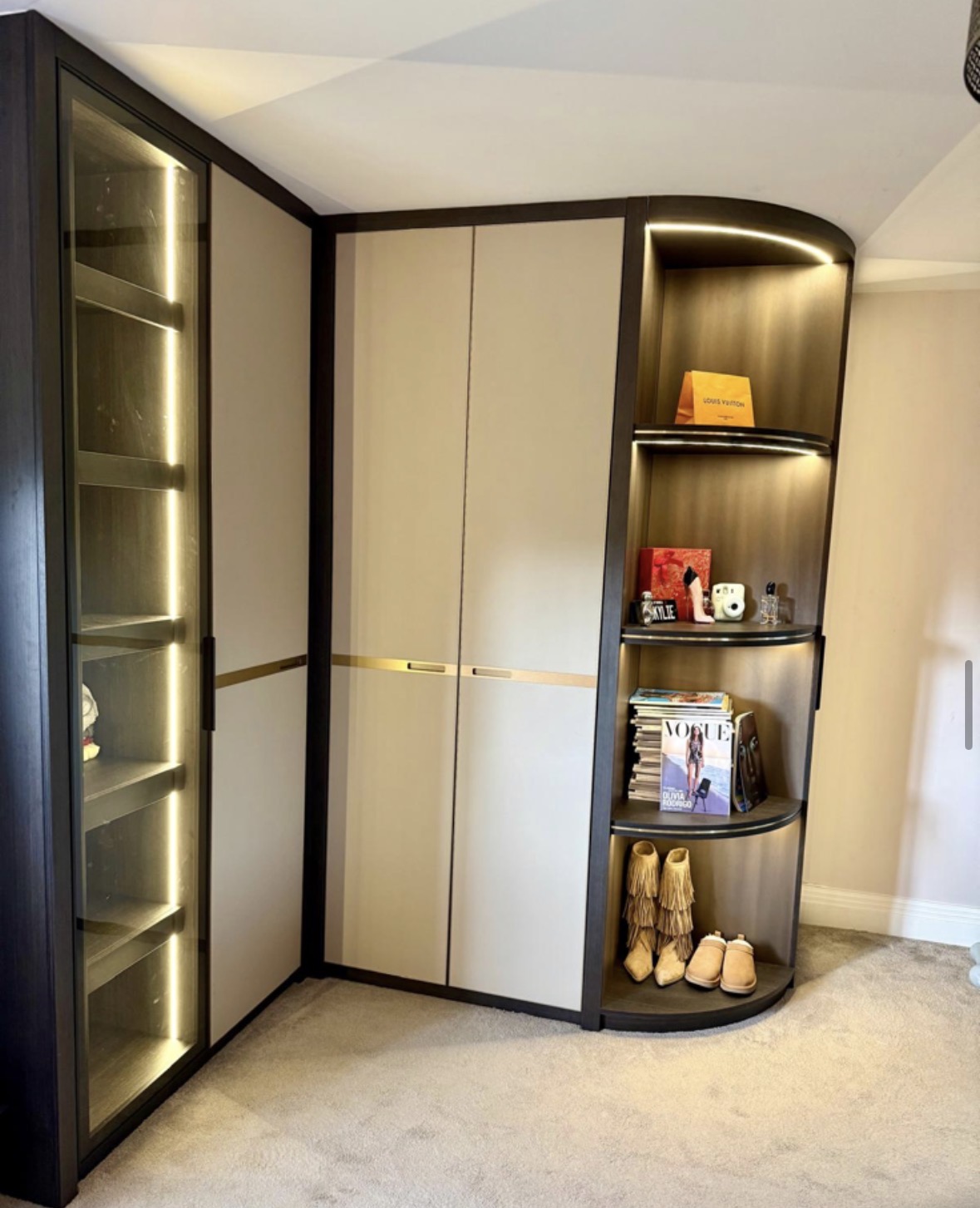
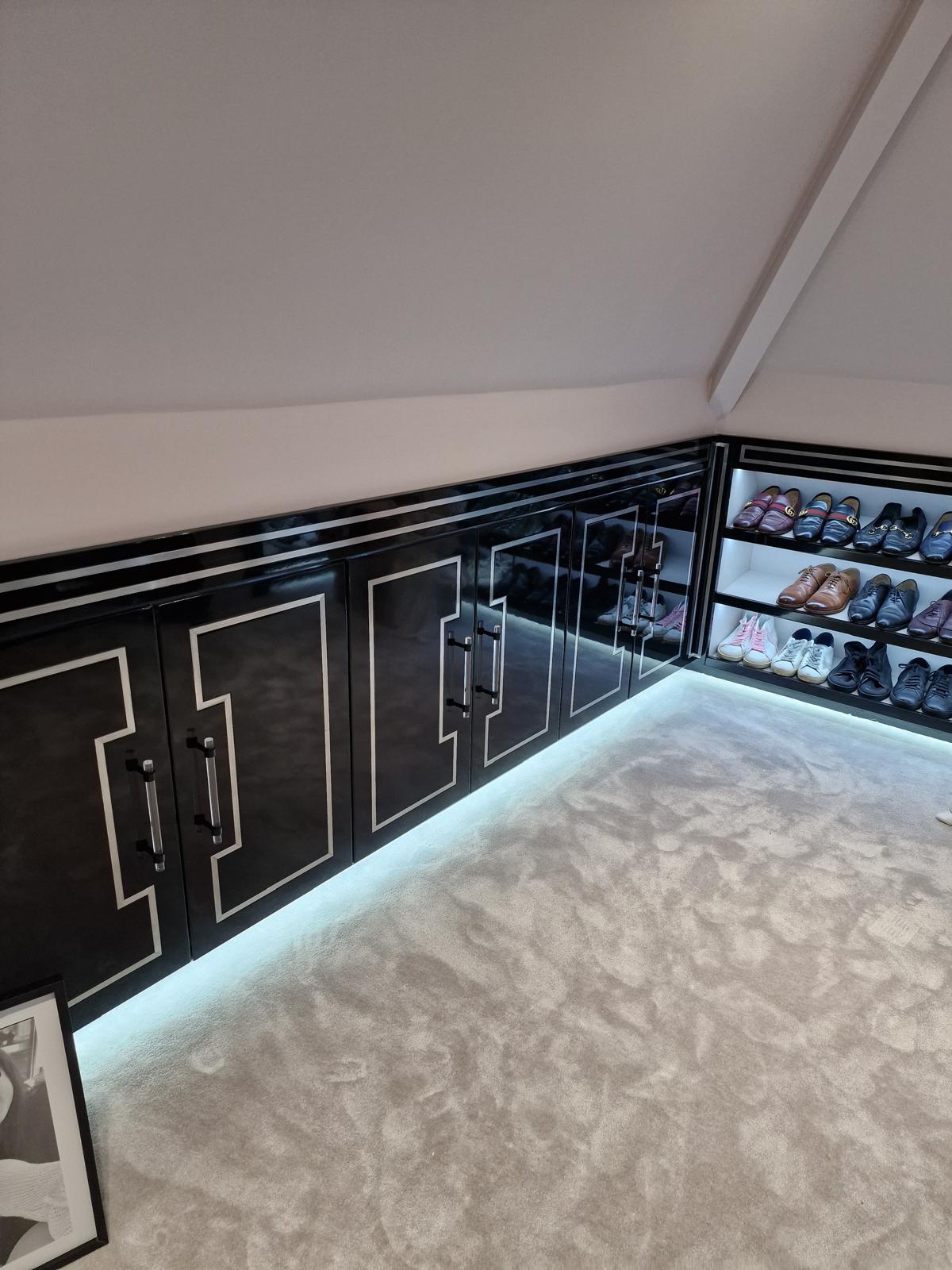
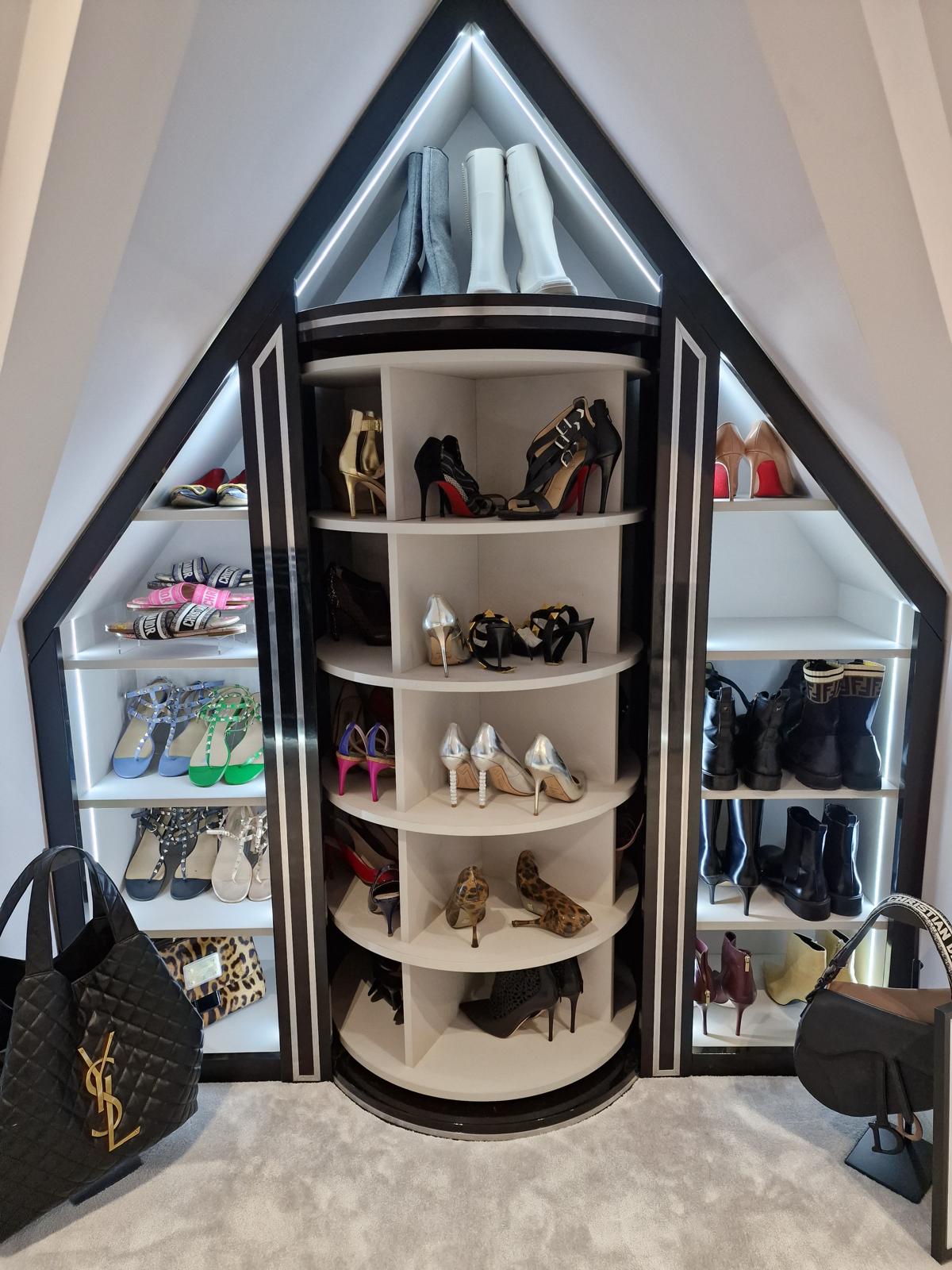
Every commission begins with a conversation about the room, how it is used and what needs to be stored or shown.
Built for the architecture you already have
- Ceiling heights
- The total height available for shoe storage sets how many shelf tiers, drawer banks or a combination of both can realistically be fitted.
- Doors and clearances
- Where shoe storage sits behind hinged doors, swing clearance is checked in the same way as any other wardrobe door in the room.
- Floor levels
- Boot storage in a hallway or boot room is set slightly above floor level where wet or muddy footwear needs to be kept clear of standing water.
- Sockets and switches
- Where lighting is specified for open display shelving, nearby power points are checked and cable routes agreed at design stage.
- Skirting and cornices
- Storage units are scribed to existing skirting so the base of the run sits flush rather than leaving a gap along the wall.
- Walk-in wardrobe layout
- Where shoe storage sits within a walk-in wardrobe, its position is set against the wider layout so circulation around the room is not restricted.
Materials & finishes
Specifications are developed with you during the design stage and sampled before anything is built. Not every option suits every commission, and we will say so where a material is the wrong choice for the room or the use.
Painted or veneered shelving
Finished to match the surrounding wardrobe or dressing room joinery.
Solid oak shelf edges
Used where a shelf edge is likely to see regular contact, for durability against a painted alternative.
Felt or suede-lined drawers
Specified for drawers intended to keep more delicate shoes protected from scuffing.
Ventilated slatted panels
Used in boot storage sections where airflow around wet footwear is a priority.
Integrated LED shelf lighting
Fitted to open display shelving where the shoe collection is intended to be seen clearly.
Soft-close drawer runners
Specified for drawer-based shoe storage given how frequently it tends to be opened.
Designed and built bespoke
We start by discussing the actual mix of footwear the storage needs to hold — boots, trainers, formal shoes and how many of each — since this decides the balance between angled shelving, drawers and dedicated compartments. The layout is then drawn and manufactured in our Derbyshire workshop as part of the wider wardrobe or dressing room scheme, with the design stages set out on the process page. Installation is carried out by the same team, fitting the shoe storage alongside the rest of the run so finishes and proportions match throughout.
Read our full processBespoke Shoe Storage — your questions answered
Design
- What is the advantage of angled shoe shelving?
- It lets the toe of one pair sit above the heel of the next, which fits more shoes into a given shelf height than flat shelving does, and suits formal shoes and lower trainers particularly well.
- Can boots and trainers be stored in the same unit?
- Yes, though they are usually given different shelf types within the same run, since boots need a taller or deeper space than angled shelving designed for low shoes can accommodate.
- Should shoe storage be open display or concealed behind doors?
- This depends on the room and the collection. A walk-in wardrobe or dressing room often suits an open, lit display, while a hallway or boot room, with more general clutter passing through, usually works better with storage concealed behind doors.
Practical questions
- How many pairs of shoes can bespoke storage hold?
- This depends entirely on the space available and the shelf or drawer configuration chosen; we work out a realistic capacity against your actual collection during design rather than quoting a general figure.
- Can shoe storage be added to an existing walk-in wardrobe?
- In many cases yes, depending on the space remaining once hanging and drawer storage are accounted for; we assess this during a survey of the room.
- Is there a way to keep wet boots from damaging the storage?
- A raised, ventilated or slatted shelf base helps keep boots clear of standing water and allows some airflow, which we specify for boot room or hallway storage where wet footwear is common.
Materials
- Can drawers be lined to protect more delicate shoes?
- Yes, felt or suede lining and dividers can be specified for drawers intended to hold shoes you want kept free of scuffing against one another.
- Is lighting available for open shoe shelving?
- Yes, integrated LED lighting can be fitted along open shelving to display a collection clearly, agreed alongside your electrician during the design stage. We keep the transformer and driver accessible for future maintenance, and colour temperature is agreed at design stage so it matches any existing lighting nearby.
Installation
- How is shoe storage fitted alongside a wardrobe or dressing room?
- It is designed and built as part of the same run, so finishes, proportions and lighting are consistent throughout, and installed by the same team fitting the rest of the wardrobe or dressing room.
- Can shoe storage be included in a hallway or boot room project?
- Yes, we design shoe storage into hallway and boot room projects with the same attention to boot height, ventilation and door clearance as we would within a bedroom dressing room.
- How long does bespoke shoe storage take to fit?
- This depends on the scale of the unit and whether it forms part of a larger wardrobe or dressing room installation; a programme is agreed once the design is confirmed.
Practical questions
- Can shoe storage be reconfigured later if my collection changes?
- Where adjustable shelving or drawer runners have been specified, some reconfiguration is possible, though a layout built around fixed compartments for very specific footwear is less flexible; we discuss this trade-off at design stage.
- Is shoe storage suitable for a small dressing room?
- Yes, though in a compact room we typically prioritise drawer or angled shelf storage over a large open display, to make efficient use of limited space; see dressing rooms for how this fits into a smaller room's overall layout.
Cost & quotations
- What does bespoke shoe storage cost?
- Cost depends on dimensions, materials, finishes, hardware, lighting and the mix of shelving, drawers and display sections specified, so we confirm a figure once we understand your collection and the room; contact us via the contact page to discuss.
- Is shoe storage quoted separately from a wardrobe or dressing room project?
- It is usually costed as part of the wider scheme it belongs to, since it shares materials, finish and installation time with the rest of the run, though we can discuss it as a standalone addition where appropriate.
Chester Thomas
- Where is bespoke shoe storage manufactured?
- In our Derbyshire workshop, alongside the wardrobe or dressing room it forms part of, then installed on site by the same team.
- What areas do you cover for bespoke shoe storage?
- We work across the Midlands, including Four Oaks, Lichfield and Solihull, alongside our home county of Derbyshire.
Related bespoke services
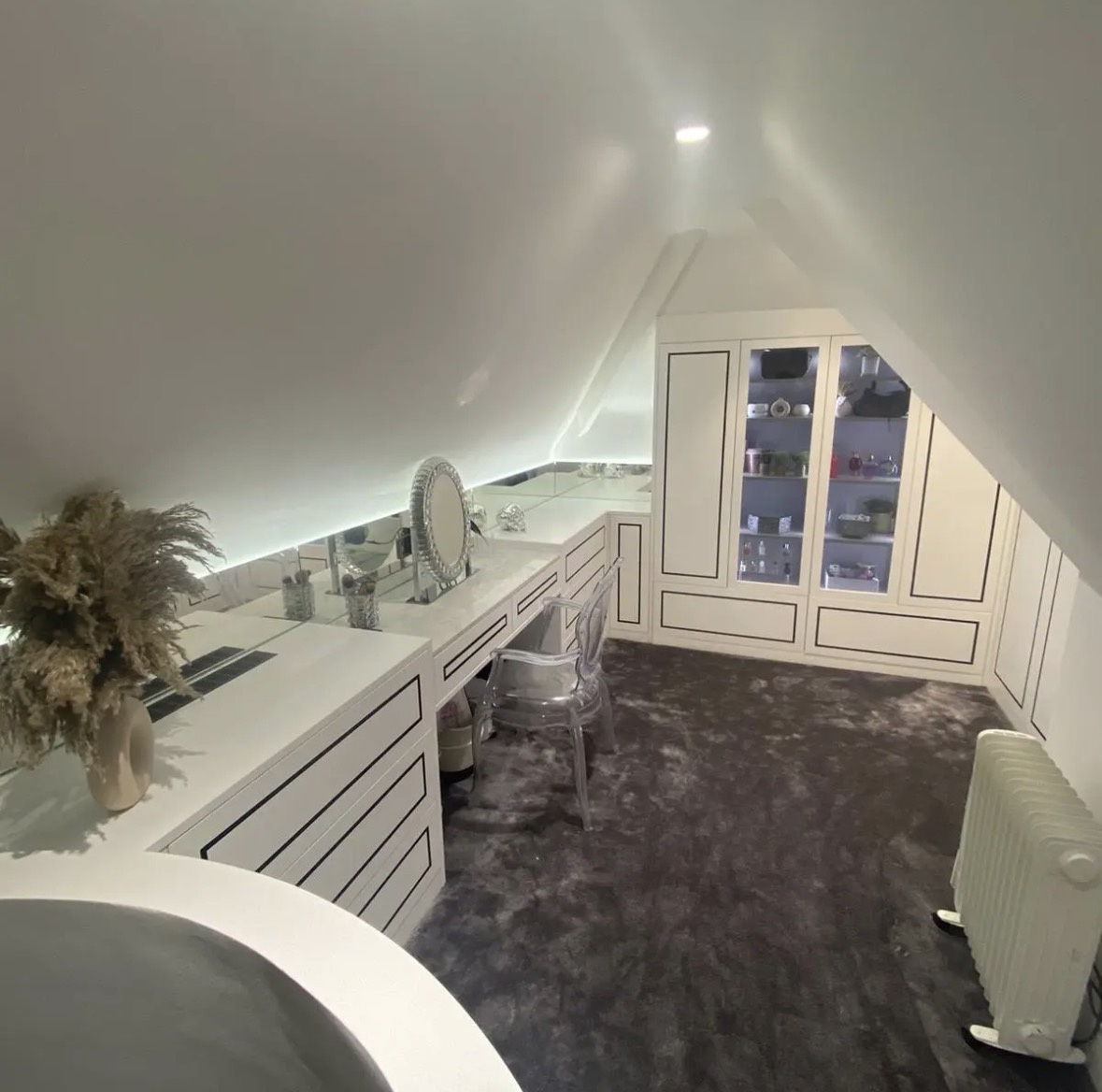
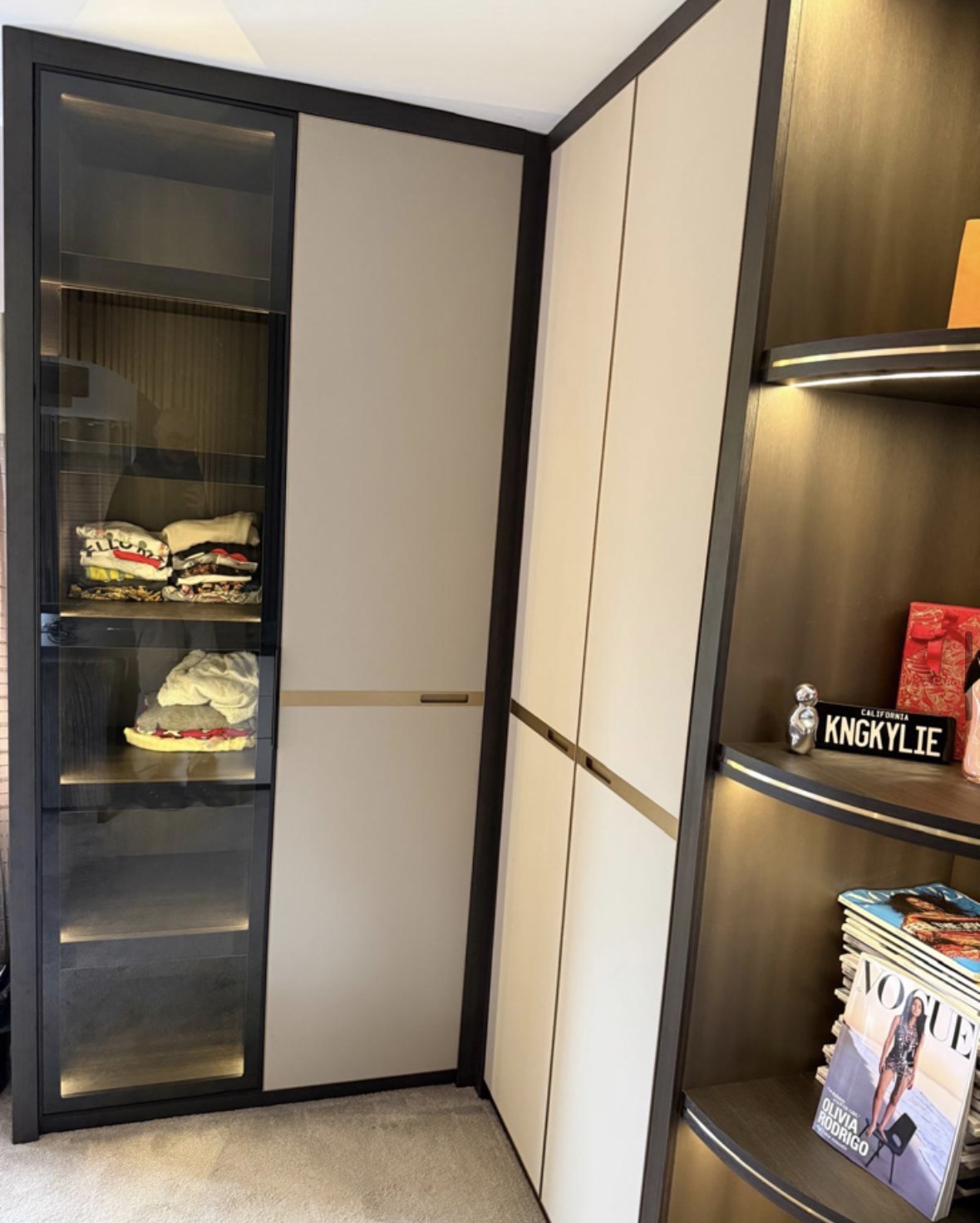
Dressing Rooms
A dedicated room for dressing, planned around circulation, mirrors and light rather than filled wall to wall with rails.
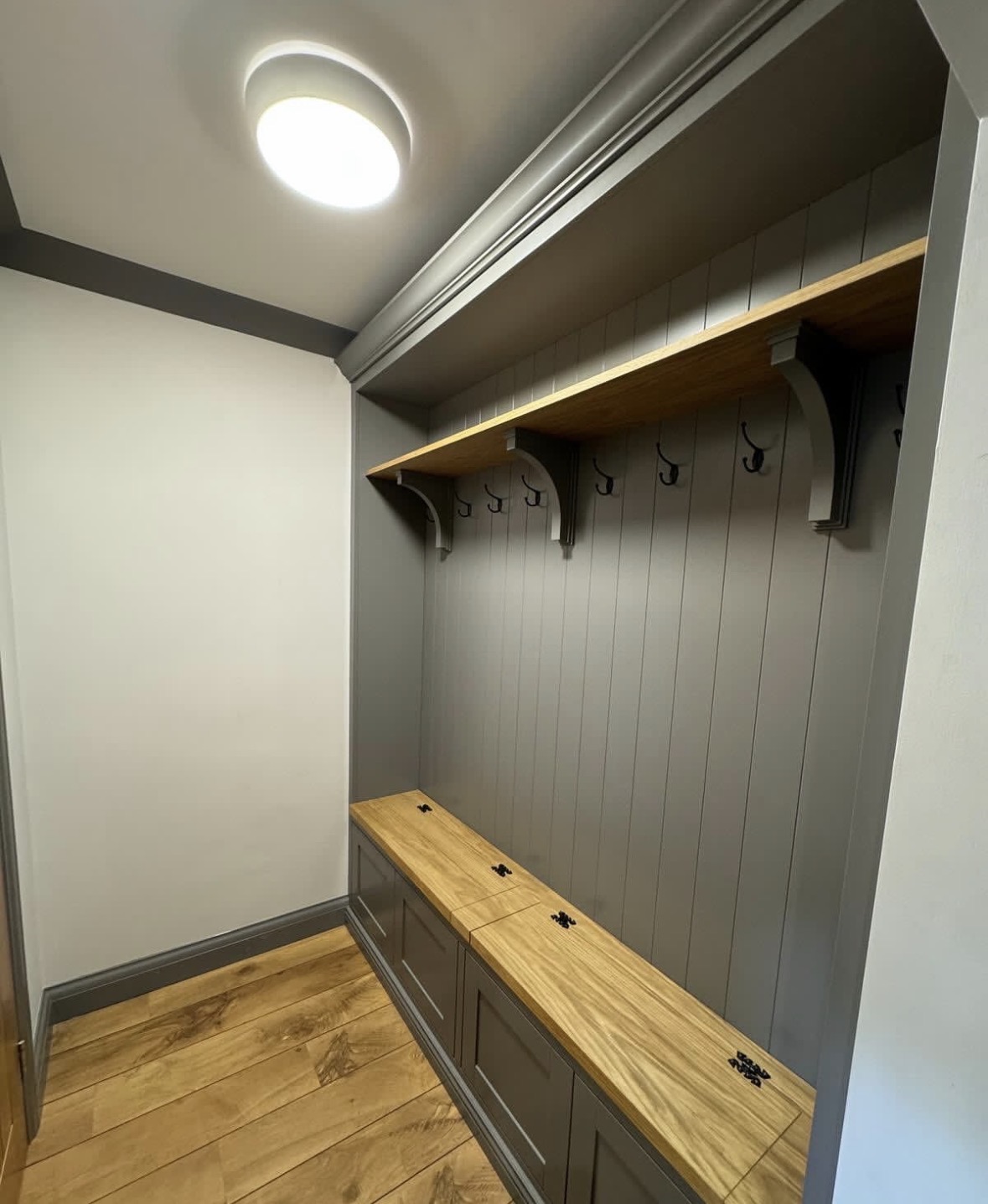
Walk-In Wardrobe Storage
The internal storage layout for a walk-in space, planned around how you move through it, not just what lines the walls.
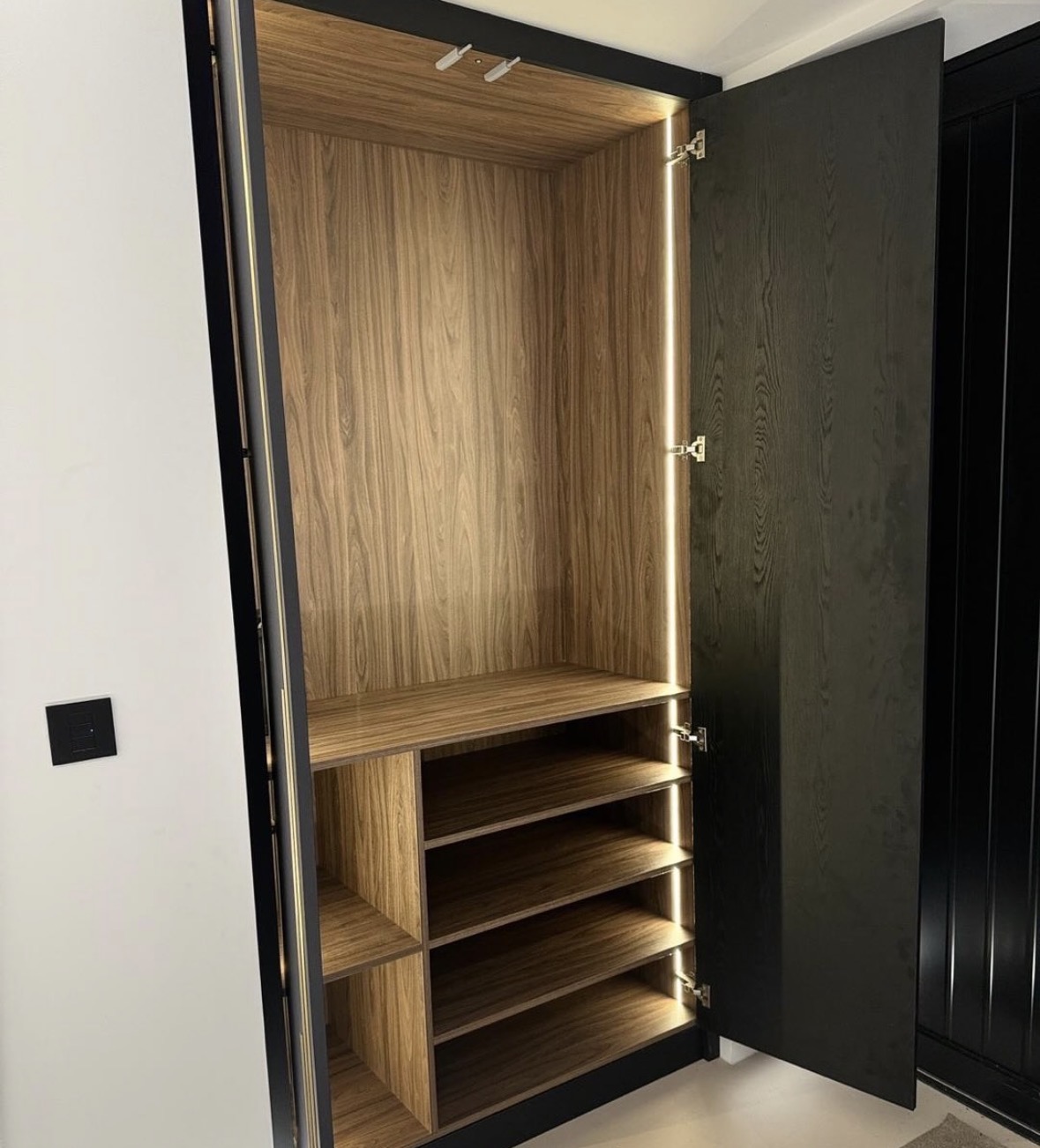
Boot Rooms
A proper landing point for coats, boots and dogs, built to take daily wear rather than hide from it.
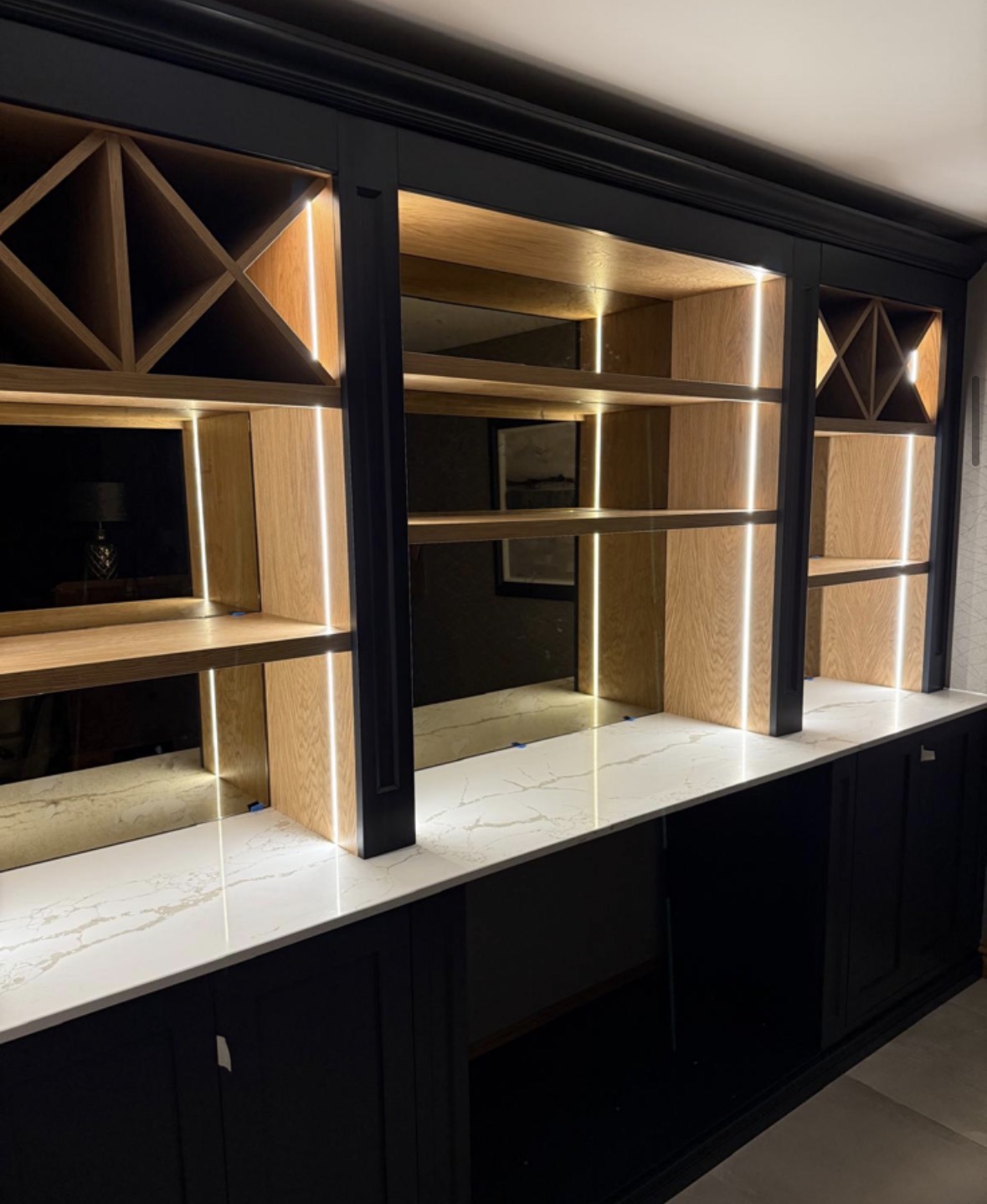
Bespoke Wardrobe Interiors
The inside of the wardrobe designed first, around what you actually own, before the doors are even discussed.
Bespoke Dressing Tables
A dressing table designed around your actual routine, from drawer layout to mirror position and lighting.
Bespoke Jewellery Storage
Shallow, lined drawers and compartments designed around the specific pieces you actually own.
Areas we work in
Everything is designed and built at our Derbyshire workshop and installed by our own team across the Midlands, including Solihull, Sutton Coldfield, Four Oaks, Lichfield, Birmingham, Burton upon Trent, Ashby-de-la-Zouch, Swadlincote, Derbyshire, Leicestershire.
Areas we coverSpeak to us about your project on +44 7418 627358 or send us the details.
Planning Something Bespoke?
Tell us about your space, what you're looking to create and where the project is located.