
Guides
Fitted vs freestanding furniture: which suits your room?
Fitted furniture is built into a room and generally makes fuller use of its space, while freestanding furniture can be moved, replaced or taken with you. Which suits a room depends on its shape, how long you expect to stay, and how much flexibility you want to keep.
Fitted vs freestanding
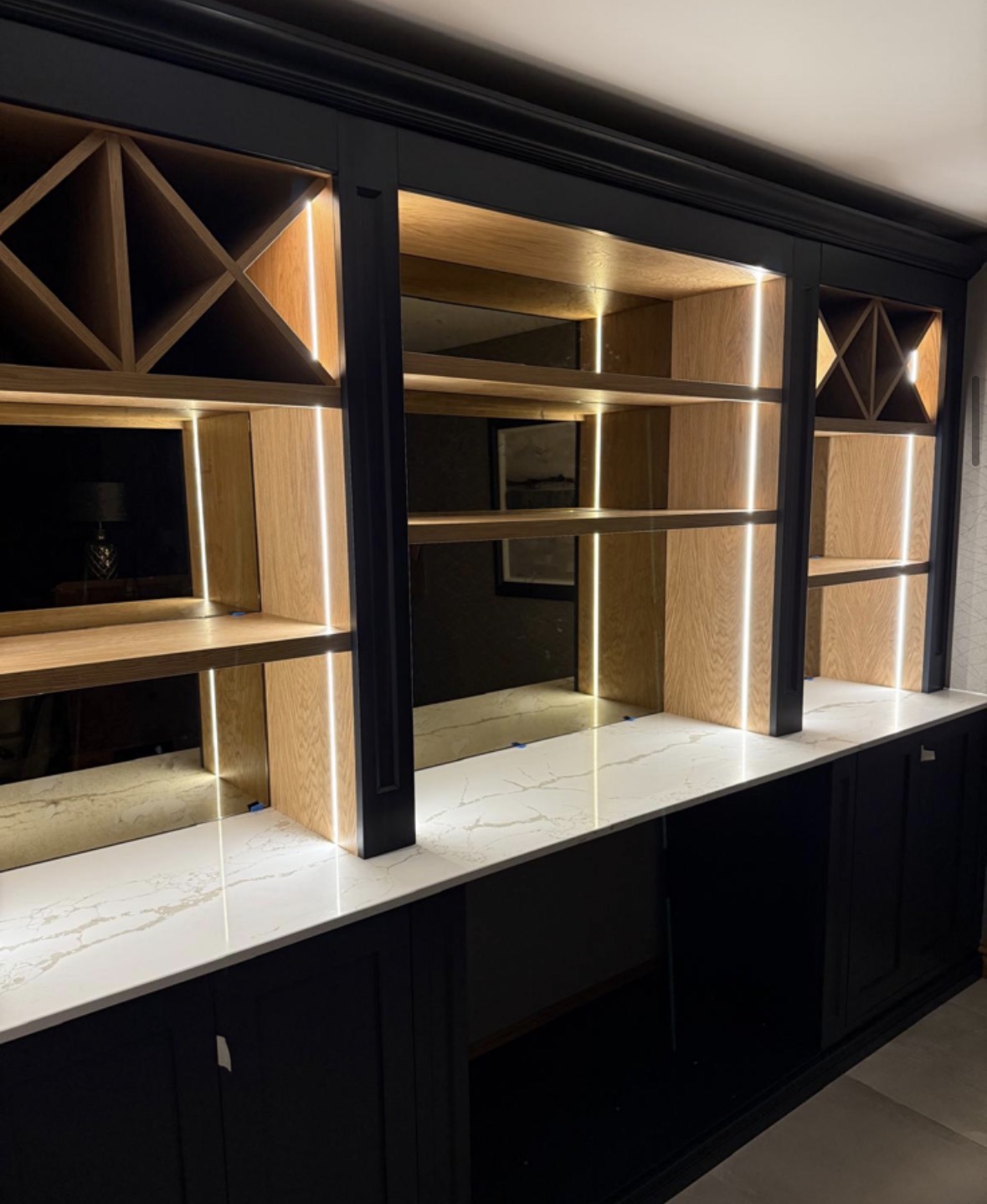
Fitted furniture, run into an alcove, built floor to ceiling along a wall or wrapped around a chimney breast, tends to use a room's available space more completely than an equivalent freestanding piece, since it can follow the exact proportions of the space rather than needing to sit comfortably within a rectangular footprint. This is particularly valuable in awkward rooms, where a standard freestanding wardrobe or bookcase would leave gaps at either side or fail to reach into a recess properly.
Freestanding furniture, in exchange, keeps a room genuinely flexible. It can be moved to redecorate, repositioned if the room is used differently in future, taken with you if you relocate, or replaced individually without affecting anything else in the space. This matters more in some rooms than others: a freestanding sideboard in a dining room carries little downside, while an awkward alcove given over to freestanding storage may waste space that fitted joinery would use properly.
Architectural integration is another genuine difference. Fitted furniture, particularly when detailed with matching skirting, cornicing or panelling, can be made to look as though it was part of the original building, giving a room a settled, considered feel. Freestanding furniture sits more visibly as an object within the room, which some rooms and some tastes prefer, particularly where furniture is expected to have its own presence rather than disappear into the architecture.
Storage capacity tends to favour fitted furniture, since a fitted piece can typically be taller, deeper into a recess, and better suited to genuinely awkward corners than a freestanding equivalent. But this is not universal: a well-designed freestanding piece in a generously sized room can hold just as much as a fitted one, and freestanding furniture has the advantage of being easier to reconfigure if storage needs change.
Neither approach is superior in every case. The right answer depends on the specific room, how long you plan to stay, and whether flexibility or maximum space efficiency matters more to you. A survey of the actual room, discussed through the contact page, is generally the fastest way to establish which approach a given space genuinely calls for.
Fitted vs freestanding furniture
| Consideration | Fitted | Freestanding |
|---|---|---|
| Space efficiency | Follows the room's exact proportions | Limited to a rectangular footprint |
| Mobility | Fixed in place once installed | Can be moved or repositioned |
| Architectural integration | Can be detailed to match the room | Sits as a visible object within it |
| Storage in awkward rooms | Handles alcoves and recesses well | May leave gaps or unused space |
| Future flexibility | Lower, since layout is fixed | Higher, easy to reconfigure |
| Visual continuity | Reads as part of the building | Reads as furniture within it |
| Installation | Requires site measurement and fixing | Can generally be placed without fixing |
| Relocating house | Cannot be taken with you | Can usually be taken with you |
Space efficiency
Fitted furniture wins clearly where a room has an irregular shape, a chimney breast, a sloped ceiling or an awkward recess, since it can be designed to follow that shape precisely rather than leaving gaps. In a regular rectangular room, the space efficiency gap between fitted and a well-chosen freestanding piece narrows considerably.
Mobility and future flexibility
Freestanding furniture can be repositioned as a room's use changes, replaced piece by piece rather than as a whole scheme, and moved with you if you relocate. Fitted furniture offers none of this, which is a genuine cost worth weighing against its space and integration benefits, particularly if you expect to move house within the next few years.
Architectural integration
A fitted piece, particularly one designed with matching skirting, cornicing or panelling that continues around it, can make a room feel more considered and less cluttered, since the furniture reads as part of the building rather than an addition to it. This is a genuine strength of fitted wardrobes and alcove cabinetry, though it is a matter of taste as much as function, and some interiors are better served by furniture with its own visible presence.
Storage and awkward rooms
Fitted furniture handles genuinely awkward spaces, low eaves, angled walls, boxed-in services, better than freestanding pieces almost by definition, since it can be designed around the specific obstruction rather than simply positioned near it. Where a room has no such complications, this advantage matters less.
When freestanding is the better choice
A room used flexibly, expected to change purpose, or in a property you may leave within a few years, is often better served by freestanding furniture, since it protects your ability to reconfigure or take pieces with you. Freestanding furniture can still be designed bespoke, discussed and drawn specifically for the room, without being fixed into it, as covered on furnishing a whole room as one design.
Which is right for your room?
01
Choose fitted when…
the room has an awkward alcove, chimney breast or sloped ceiling that a standard freestanding piece cannot use well.
02
Choose freestanding when…
you expect to move house, redecorate frequently, or want to reconfigure storage without replacing a whole scheme.
03
Choose fitted when…
architectural integration matters more than flexibility, and you want furniture that reads as part of the room.
04
Choose freestanding when…
the room is a regular shape and a well-designed standalone piece will use the space adequately without fitting.
How we work
Whether a room calls for fitted, freestanding or a mix of both is worked out during a survey and design conversation, before any manufacturing begins. The full sequence is set out on the process page.
Questions we are asked
General
- Is fitted furniture always the better option?
- No. Fitted furniture generally uses space more efficiently and integrates architecturally, but it removes flexibility and cannot be taken with you if you move house. Freestanding furniture suits rooms that may change use, or where mobility matters more than maximum storage.
Space
- Does freestanding furniture waste space compared to fitted?
- It can, particularly in an awkward alcove or recess where a freestanding piece cannot follow the exact shape of the space. In a regular rectangular room, however, a well-designed freestanding piece can use the available space almost as effectively as a fitted equivalent.
General
- Can freestanding furniture still be bespoke?
- Yes. A freestanding piece can be designed and made specifically for a client's room and taste through a genuinely bespoke process, without being fixed into the space, as covered on furnishing a whole room as one design. Being freestanding does not mean a piece is standard.
- Does fitted furniture add value to a property?
- Well-designed fitted furniture is often seen as a positive by future buyers, particularly in awkward rooms where it resolves a difficult space that would otherwise be hard to furnish well, such as a sloped attic ceiling or a shallow chimney breast alcove. It can also present a room as more finished and considered at viewing stage. That said, this varies by property, location and buyer preference, and is not something we can guarantee as a return on cost.
Fitting
- What happens to fitted furniture if I move house?
- Fitted furniture generally stays with the property, since it is fixed to walls, floor or alcove and designed for that specific room. If mobility matters to you, a freestanding or semi-fitted approach preserves the option to take furniture with you.
Installation
- Is freestanding furniture easier to install?
- Generally, it is simpler. Freestanding furniture can usually be placed in a room without fixing to the structure, so there is little dependence on the room's walls, floor or ceiling being true. Fitted furniture, by contrast, requires accurate site measurement and installation against the room's actual surfaces, which are rarely perfectly straight or square in an older property, and it benefits from a survey beforehand so the design accounts for those irregularities rather than fighting them on site.
Space
- Which is better for an awkward or irregular room?
- Fitted furniture tends to handle irregular rooms, sloped ceilings, boxed-in services or unusual alcoves, more effectively than freestanding furniture, since it can be designed to follow the specific shape of the space rather than simply positioned within it and left with gaps at the edges. A freestanding piece in the same room usually needs to sit within the largest regular footprint available, which often wastes usable space around it.
General
- Can a room combine both fitted and freestanding furniture?
- Many rooms benefit from exactly this mix, with fitted elements handling awkward corners, alcoves or maximising storage along one wall, and freestanding pieces retaining flexibility elsewhere in the room where the layout might change over time, as discussed on furnishing a whole room as one design. A dressing room, for example, might combine fitted wardrobes around a chimney breast with a freestanding ottoman or dressing table that can move if the room's use changes later.
- How long does fitted furniture typically last in a room?
- Well-made fitted furniture is designed to remain in place for the long term, since it is built into the room's structure rather than intended to be moved. Its lifespan depends on materials and use rather than being fixed to a specific figure.
Cost
- What does fitted furniture cost compared with freestanding?
- Cost depends on scale, materials and installation complexity rather than on whether a piece is fitted or freestanding, so there is no general rule that applies across projects. The clearest way to understand cost for your room is through the contact page.
Where to go next
Fitted wardrobes
Floor to ceiling storage built into a room.
Bespoke cabinetry
Fitted and freestanding cabinetry designed for a room.
Whole-room furniture
Combining fitted and freestanding elements in one scheme.
Home offices
Fitted or freestanding storage for a working space.
Made to measure joinery
Furniture designed to fit a room's exact dimensions.
Related guides
Bespoke vs fitted furniture
Fitted describes how furniture sits in a room. Bespoke describes how specifically it was designed. The two are not the same question.
Walk-in wardrobe vs fitted wardrobe
Whether a dedicated dressing room or a fitted run along a wall makes better use of your bedroom and storage needs.
Alcove units vs built-in bookcases
Whether closed alcove cabinetry or open built-in bookcases makes better use of the space beside your chimney breast.
Bespoke vs made to measure
Two terms often used loosely by suppliers. Here is what each should actually mean, and what to ask before you commit.
To talk a decision through, call Chester Thomas on +44 7418 627358, email info@chesterthomas.com or discuss your room.
Planning Something Bespoke?
Tell us about your space, what you're looking to create and where the project is located.