
Home Offices & Studies
Bespoke Home Office Storage
Home office storage is judged on what stays hidden as much as what's on display — filing, chargers, spare cabling and equipment given a proper home so the desk stays clear.
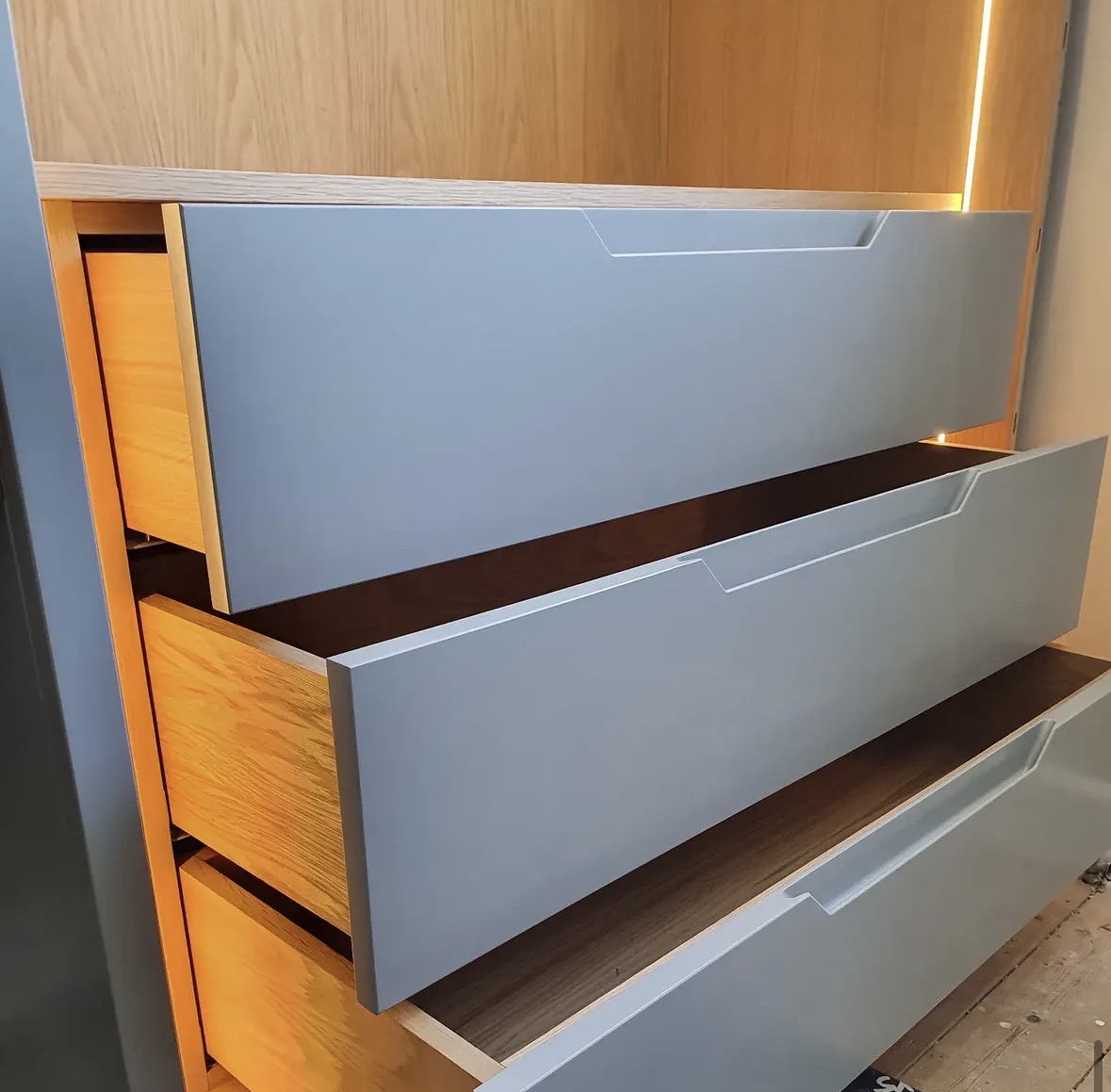
Home Office Storage, designed around the room
The furniture people see in a home office is usually the desk, but the storage around it does most of the work. Filing, spare paperwork, chargers, printer paper and the equipment you use once a month all need somewhere to live that isn't the desk drawer or the floor. We design storage that answers those needs specifically, rather than fitting a generic run of cupboards and hoping it copes.
That starts with an honest inventory of what needs storing — how many lever-arch files, whether a printer needs to sit permanently on show or be tucked away, where laptops and chargers land at the end of the day. Drawers are then sized to that inventory: deep drawers for files and equipment, shallow drawers for stationery and cables, and closed cupboards for anything you would rather not see when the door is open on a call.
Cable and equipment management runs through the whole design. Sockets and data points are routed inside the cabinetry so extension leads disappear, and ventilated housings keep routers and printers cool without leaving them on show. Lighting is specified separately for the desk and the storage runs, so a cupboard interior is properly lit when you're searching for a file, and the desk itself avoids glare from an overhead spotlight during a video call.
Working from home properly means the room needs to function for a full day without clutter building up, and that only happens if storage capacity is planned generously from the outset. A wall of well-organised storage also does more for acoustics than an equivalent stretch of bare wall, which makes the room quieter to work and to talk in.
What can be included
01
Deep filing drawers
Drawers sized to lever-arch files or suspended filing, built with full-extension runners for easy access.
02
Shallow stationery drawers
Internal dividers for pens, chargers, cables and everyday desk items, kept separate from filing.
03
Closed cupboard storage
Cupboards for paperwork and equipment you'd rather keep out of view during calls.
04
Printer and equipment housings
Ventilated, ideally pull-out housings sized to your printer, scanner or shredder.
05
Concealed cable and socket routing
Sockets and data points built into the cabinetry so leads and extension blocks disappear from view.
06
Charging drawers
A dedicated drawer or shelf with concealed sockets for charging laptops and devices out of sight.
07
Interior cupboard lighting
Lighting inside cupboards and drawers on opening, useful for locating files quickly.
08
Adjustable internal shelving
Shelves that can be repositioned as storage needs change over time.
09
Display and open sections
Open bays worked into the run where you want books or objects on show rather than hidden.
From our work
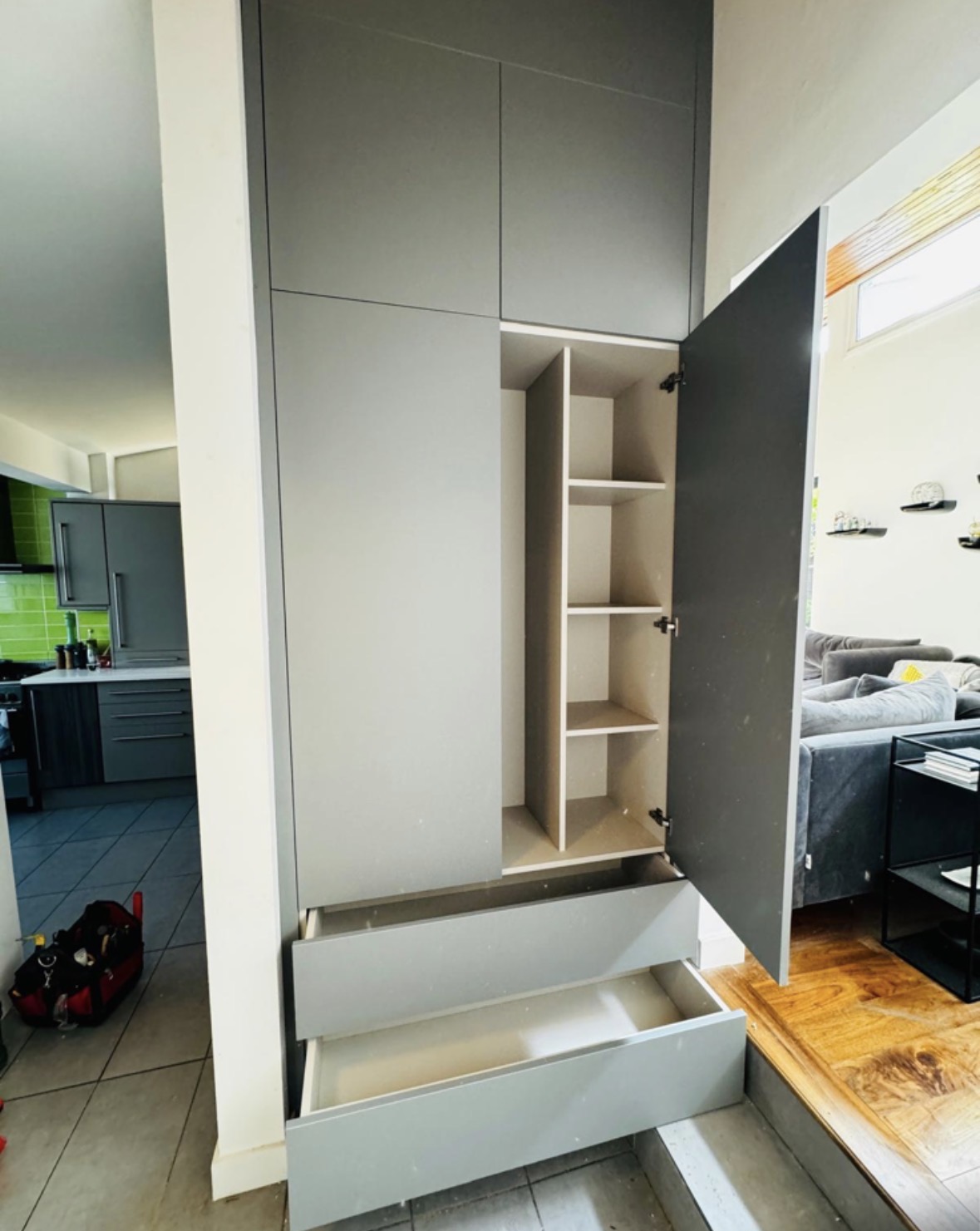
Every commission begins with a conversation about the room, how it is used and what needs to be stored or shown.
Built for the architecture you already have
- Window position and daylight
- Storage runs positioned so they don't block natural light onto the desk, keeping glare off screens too.
- Ceiling heights
- Cabinet heights and cornice details adjusted to the room, making full use of tall walls where available.
- Chimney breasts and alcoves
- Storage fitted into recesses either side of a chimney breast so it reads as part of the wall rather than an add-on.
- Sockets, data points and lighting circuits
- Existing points recorded during survey so new cabling can be routed through the carcass cleanly.
- Doors and radiators
- Cupboard depths and door swings checked against radiators and doorways so nothing gets blocked.
Materials & finishes
Specifications are developed with you during the design stage and sampled before anything is built. Not every option suits every commission, and we will say so where a material is the wrong choice for the room or the use.
Handleless painted fronts
Clean, flush cabinet fronts finished in a colour to match the room.
Solid oak interiors
Durable oak carcasses and drawer boxes inside painted or veneered exteriors.
Graphite and dark finishes
Tall storage units in graphite or charcoal tones for a more contemporary study.
Soft-close drawer runners
Full-extension, soft-close runners on filing and equipment drawers.
Warm LED lighting
Interior and shelf lighting specified for a warm, glare-free tone.
Concealed power modules
Recessed or pop-up sockets and USB points built into drawer and shelf interiors.
Veneered cabinetry
Oak, walnut or ash veneers for storage that needs to match existing furniture.
Designed and built bespoke
A survey establishes what needs storing, where sockets and data points currently sit, and how the room is used day to day. From that inventory we design storage capacity specifically for your filing and equipment, build the cabinetry in our Derbyshire workshop, finish it by hand, and install it with cabling and lighting fitted and tested on site.
Read our full processHome Office Storage — your questions answered
- How much filing storage should I plan for?
- This depends entirely on how much paper you keep, so we ask you to estimate the number of lever-arch files or box files currently in use, plus any expected growth, and size drawers or cupboards to that figure with some spare capacity.
- Can you build in monitor mounting to the storage run?
- Where storage sits behind or beside the desk, we can build in reinforced fixing points for a monitor arm as part of the same cabinetry, keeping cabling routed through the unit rather than trailing across the desk.
- How is cable routing handled in storage cabinetry?
- Sockets and data points are recessed into shelves or drawer backs, with internal routing so cables run inside the carcass rather than across the outside. Extension leads and chargers can sit in a dedicated drawer with a cable pass-through.
- Can you house a printer inside a cupboard?
- Yes, we build ventilated printer housings, usually on a pull-out shelf so the printer can be accessed and loaded with paper without being lifted out, with a gap or vent worked into the door for airflow.
- What's the best way to store paperwork I rarely need?
- Deep, less accessible cupboards or higher shelves suit archive paperwork you access infrequently, while frequently used filing is better placed in an easy-reach drawer near the desk. We plan the layout around frequency of use, not just volume.
- Can lighting be built into the storage units?
- Yes, interior cupboard and shelf lighting can be specified to come on with the door, which is useful for locating files, and is kept on a separate circuit from the desk task lighting so each area can be controlled independently.
- I'm converting a spare bedroom — how do you plan the storage?
- We survey the room's window, chimney breast, radiator and door positions, then design storage that fits the available wall space without narrowing walkways or blocking a radiator, sized specifically to what you need to store.
- Will the storage match my existing bedroom or landing joinery?
- Yes, where a study storage run sits close to existing fitted furniture, we match timber species, paint colour and hardware so the two feel like one scheme rather than two separate installations.
- Can drawers be divided for cables and chargers?
- Yes, internal dividers or trays can be fitted to shallow drawers specifically for cables, chargers and small stationery items, keeping them separate from filing and easy to find.
- Do you build storage for shared home offices?
- Yes, where two people share a room we can design separate filing and equipment zones for each person, plus shared storage for printers or supplies, so the room stays organised for both.
- Can storage be designed to look good behind me on video calls?
- Yes, if the storage run is likely to appear on camera, we consider door finishes, any open display sections and lighting together, so the backdrop looks considered rather than accidental.
- How do you handle storage in a low-ceilinged loft or landing office?
- Cabinet heights and door styles are adjusted to the available headroom, and we survey the sloped or restricted areas closely so storage fits without wasted or unusable space.
- Can you add a shredder housing?
- Yes, a shredder can be given its own ventilated pull-out housing similar to a printer, positioned near the desk so paper can be disposed of without leaving the room.
- How long does home office storage take to install?
- Survey and design come first, followed by workshop manufacture and then a fitting visit. Exact timescales depend on the scope of the storage, and we agree a schedule with you once the design is finalised.
- What areas do you cover for home office storage?
- We design, build and install from our workshop in Coton in the Elms, Swadlincote, serving Derbyshire, Staffordshire, Leicestershire, Nottinghamshire and the West Midlands.
Related bespoke services
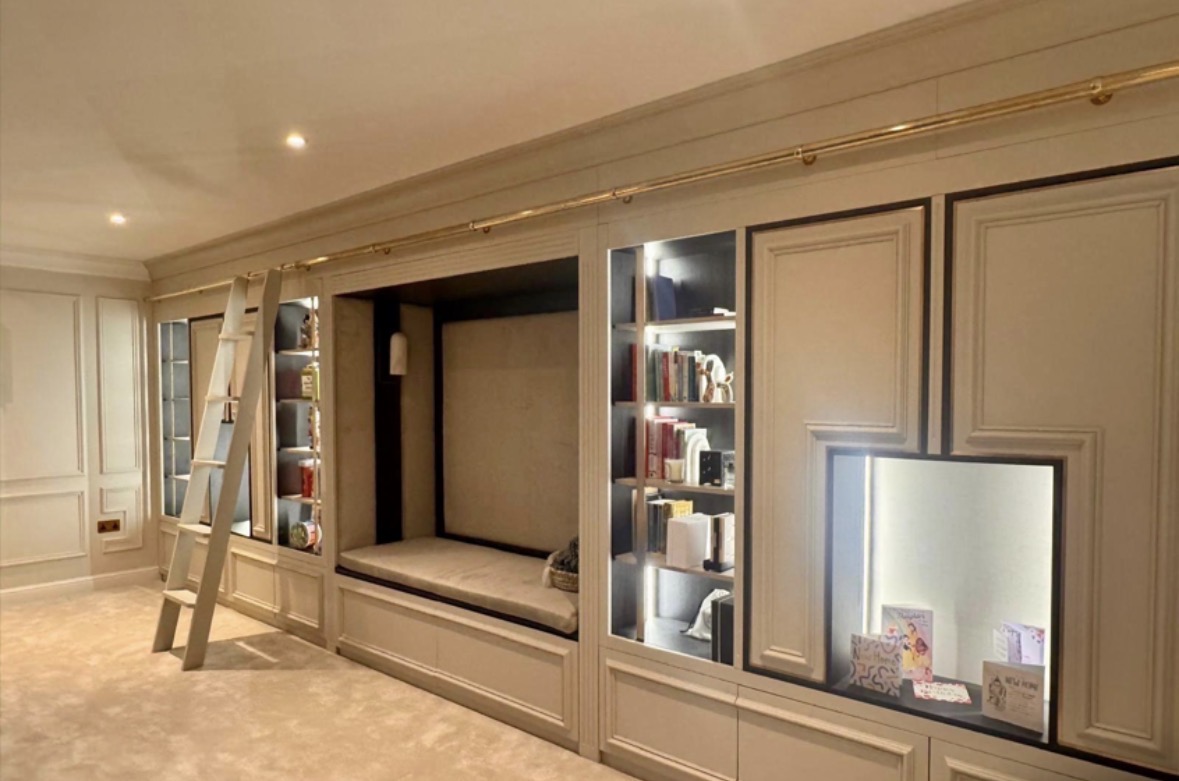
Home Offices & Studies
Desks, shelving and storage planned around real working days and real paperwork.
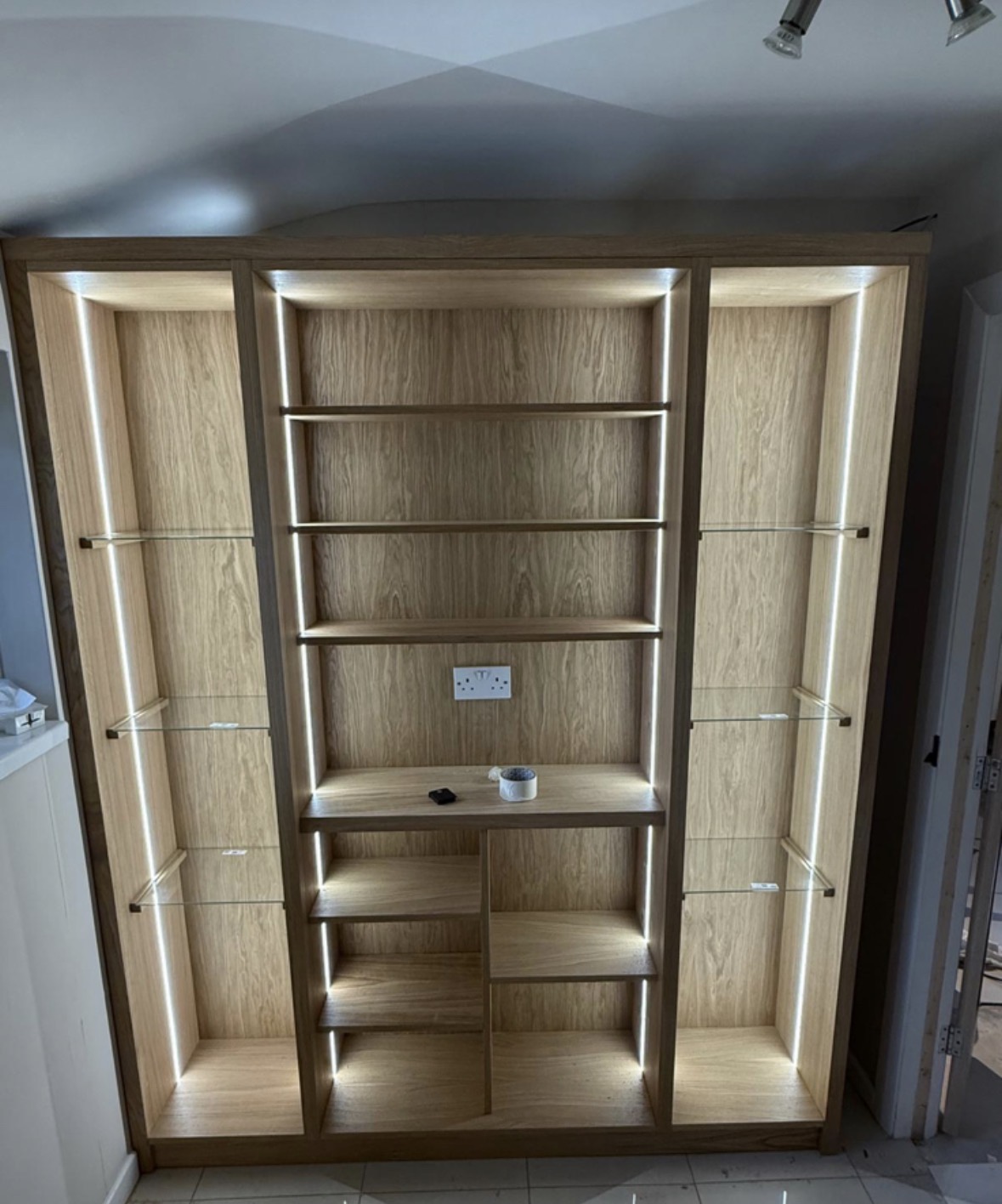
Study Furniture
Fitted desks, shelving and panelling designed as one composition, not a collection of furniture.
Bespoke Cabinetry
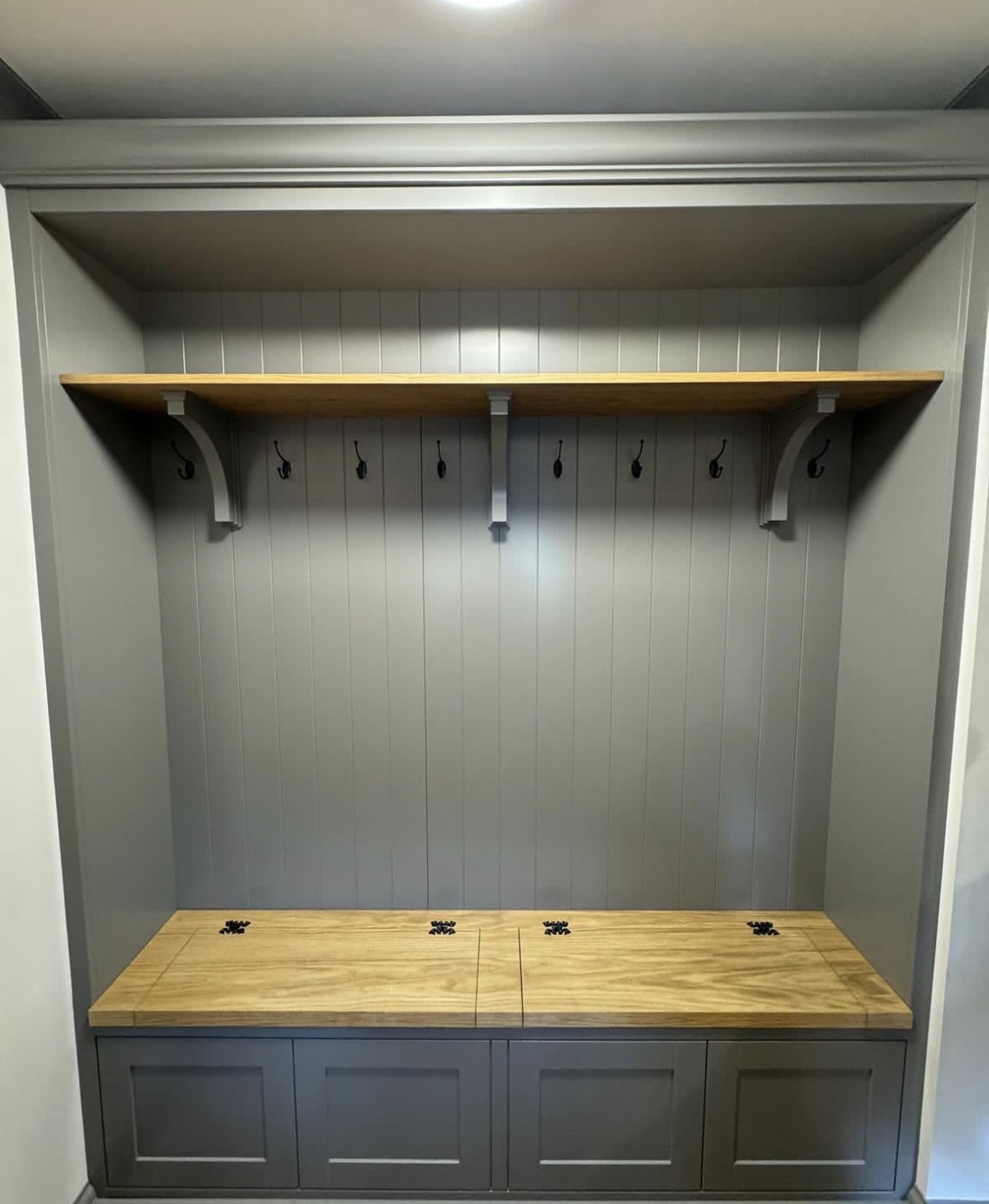
Alcoves, boot rooms, utilities, panelling and everything that does not fit a category.
Bookshelves
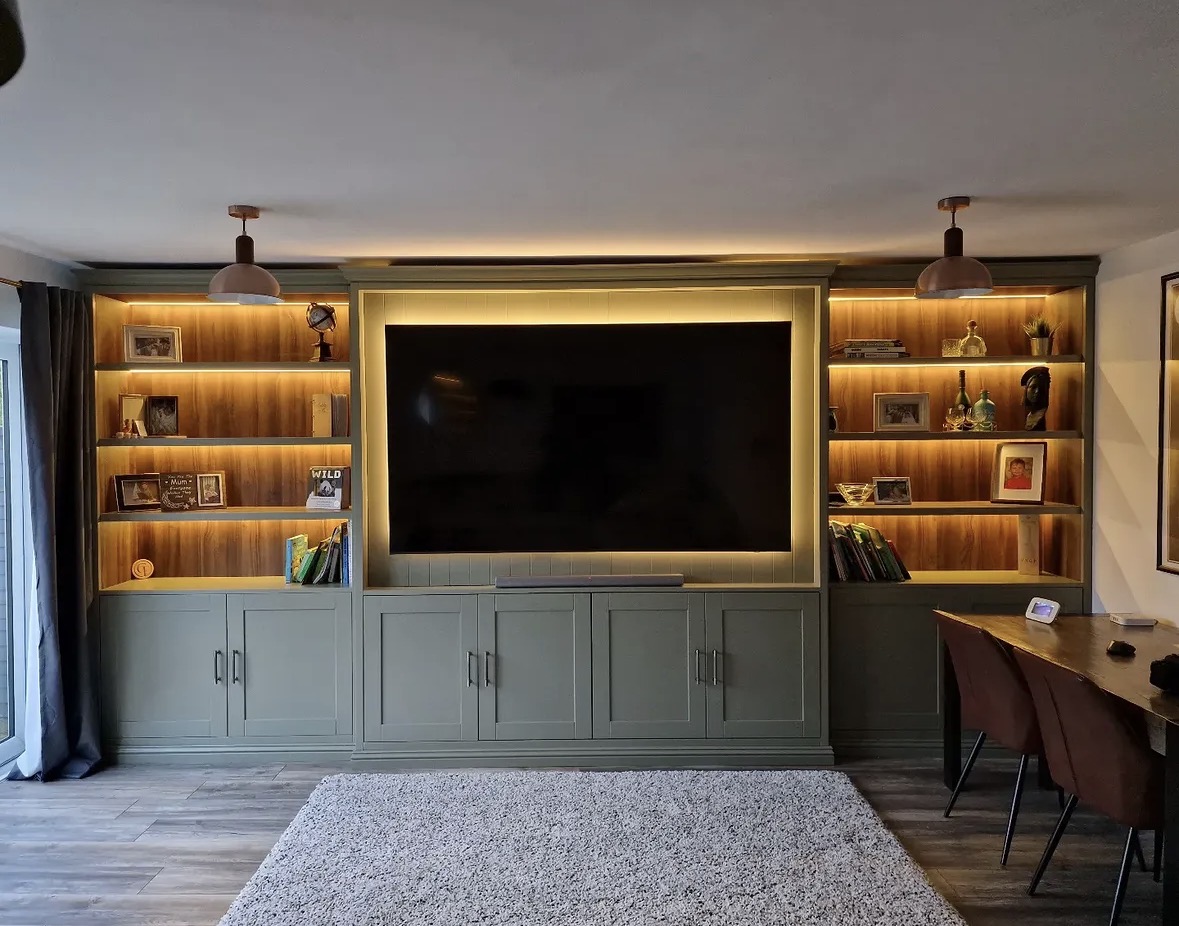
Shelving built to the height of your books and the shape of your wall, not a fixed run of standard-width units.
Under-Stairs Storage
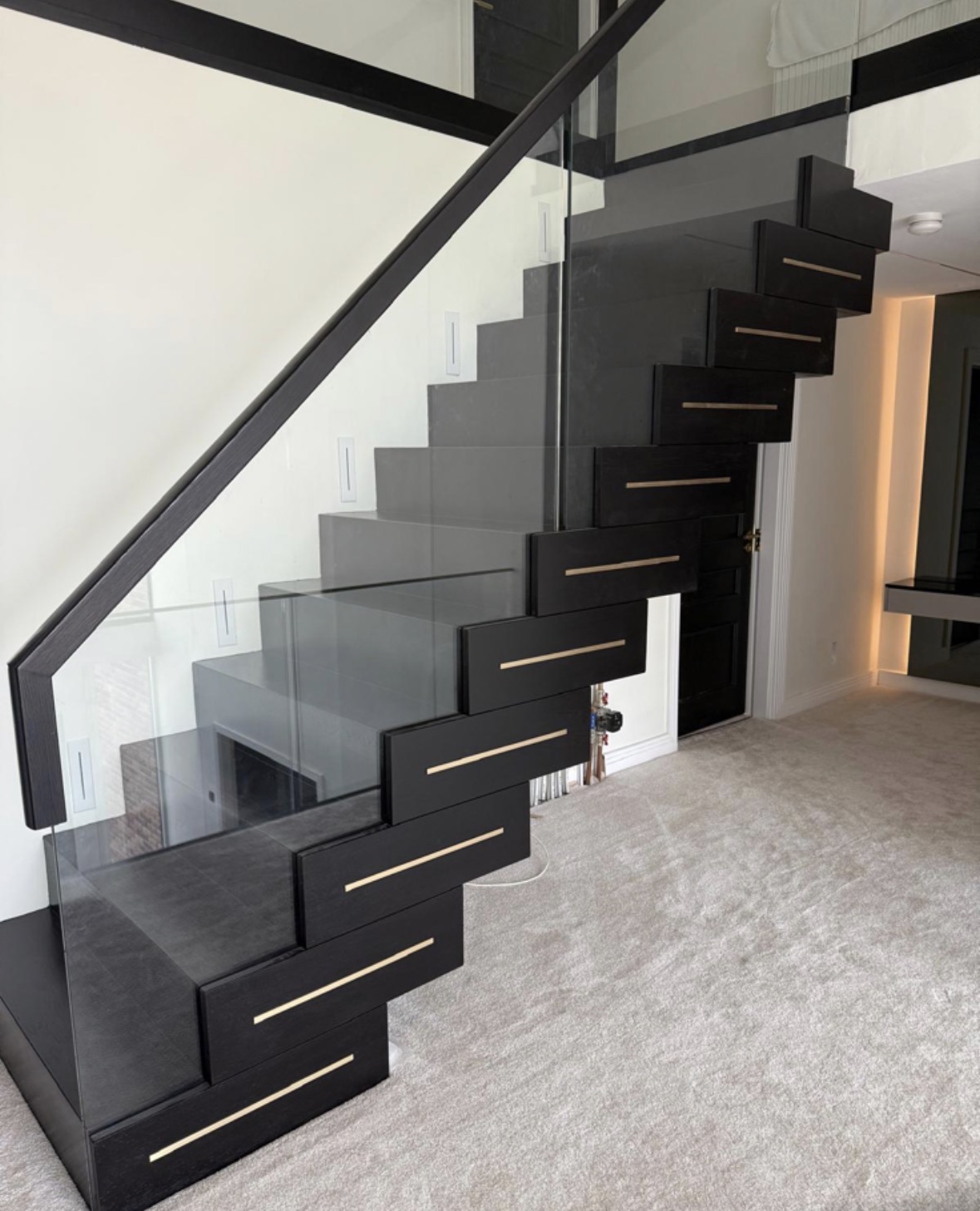
The awkward triangle beside a staircase, fitted with cabinetry that follows the rake rather than boxing it off.
Areas we work in
Everything is designed and built at our Derbyshire workshop and installed by our own team across the Midlands, including Solihull, Sutton Coldfield, Four Oaks, Lichfield, Birmingham, Burton upon Trent, Ashby-de-la-Zouch, Swadlincote, Derbyshire, Leicestershire.
Areas we coverSpeak to us about your project on +44 7418 627358 or send us the details.
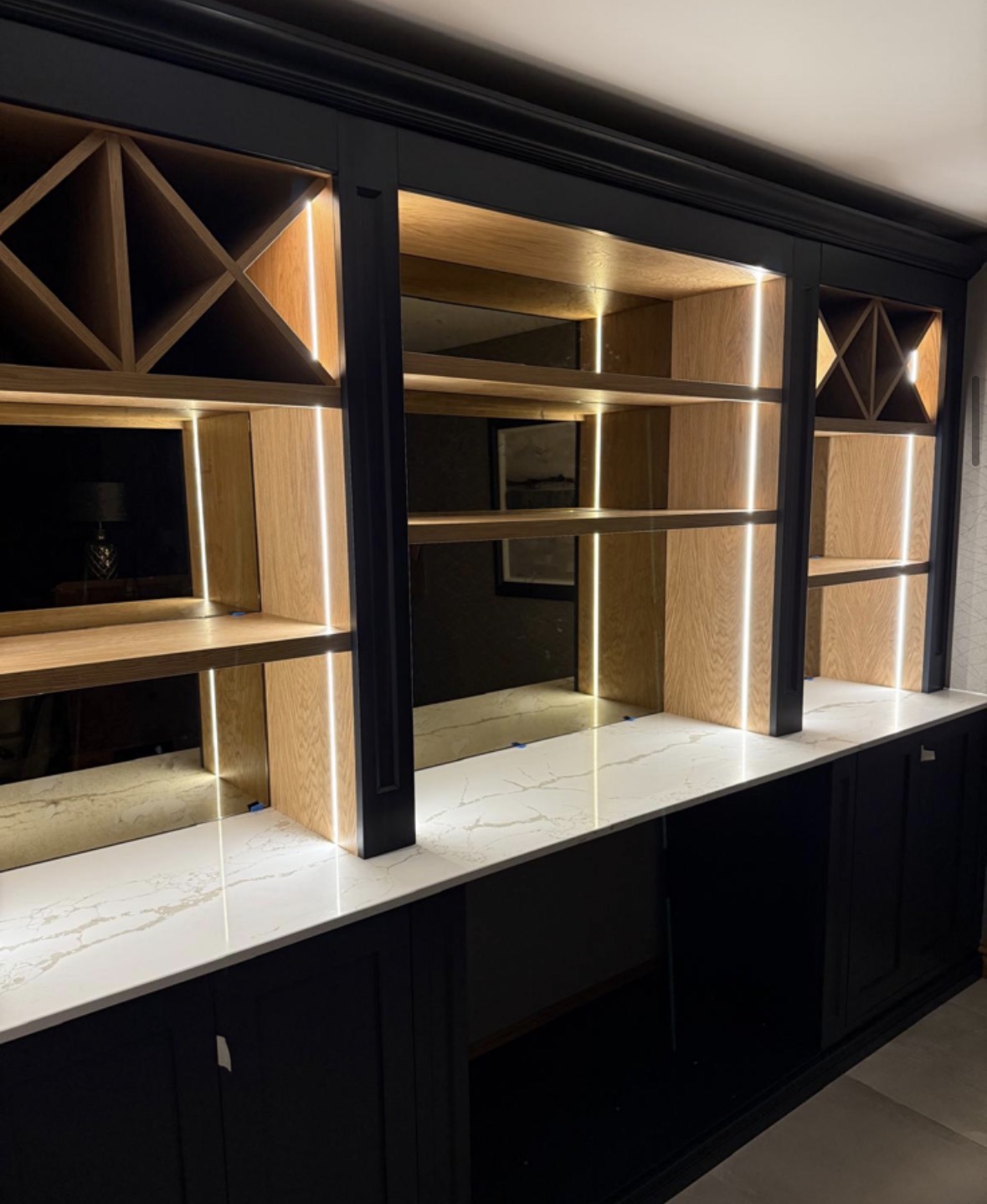
Planning Something Bespoke?
Tell us about your space, what you're looking to create and where the project is located.