
Walk-In Wardrobes
Bespoke Dressing Room Islands
An island only earns its place at the centre of a dressing room if the space around it still works as well as it did before it arrived.
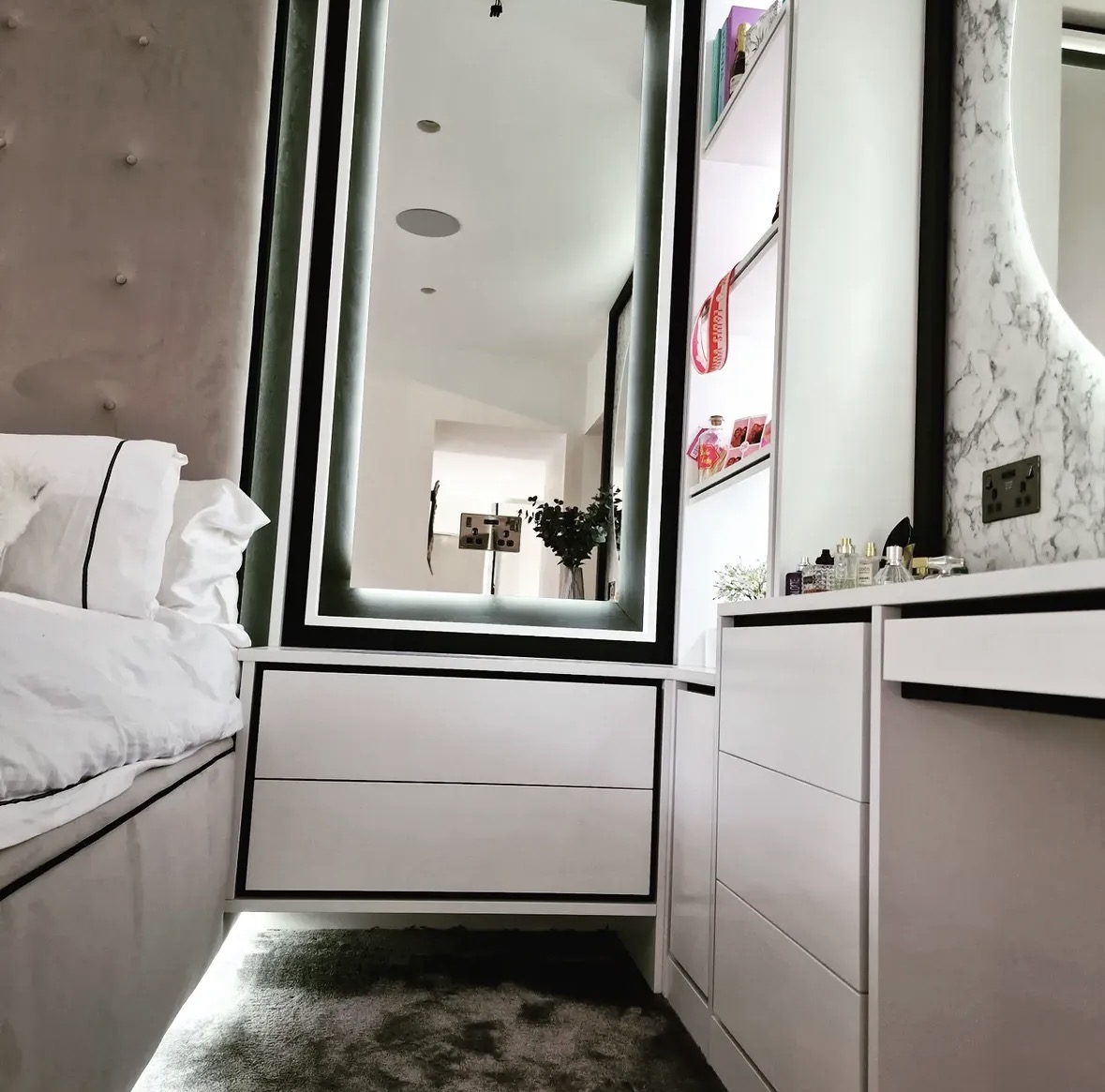
Dressing Room Islands, designed around the room
A dressing room island is one of the more satisfying pieces to design, largely because it has no wall to hide any part of itself against — every face, every drawer front and every top surface is on show, and the piece has to be sized precisely enough that it adds storage without narrowing the room's circulation to the point of discomfort. It is worth treating as a genuine design decision rather than an assumed feature of any sufficiently large dressing room.
The most common use of an island is drawer storage for exactly the items that do not suit hanging or open shelving — folded knitwear, underwear, jewellery, watches and other accessories that benefit from a shallow, lined drawer rather than a shelf. Drawer depths and widths are set against what will actually go in them, with felt, suede or fitted inserts specified for jewellery and watches where that level of care is wanted.
A glass top is a frequent addition, whether as a display surface for watches or jewellery, a practical place to lay out an outfit while dressing, or simply a material contrast to the drawer fronts below. Where seating is planned alongside the island — a stool or bench tucked beneath an overhang, or simply positioned nearby — clearance for sitting down and standing up again is checked against the room's actual dimensions, not assumed to fit.
Circulation is the constraint that decides everything else about an island's size. We measure the clear space that will remain on every side once the island is in place, checking it against the room's other storage — hanging runs, glazed cabinets, a mirror — so that moving around the room while dressed, or getting a garment off a rail, is never compromised by the island's footprint.
Proportion matters as much as function here: an island that is too small looks like an afterthought, and one that is too large dominates a room meant to be moved through comfortably, so height, depth and length are worked out specifically for the room in question rather than to a standard size.
What can be included
01
Shallow lined drawers for jewellery and watches
Drawer interiors fitted with felt, suede or divided inserts sized to jewellery, watches and other small accessories.
02
Deeper drawers for folded clothing
Larger drawer sections built for knitwear, underwear and other folded items that do not suit hanging or open shelving.
03
Glass or stone island tops
A durable, often reflective surface for laying out an outfit, displaying accessories, or simply as a material contrast to the drawers below.
04
Seating clearance planning
Space for a stool or bench, whether built into the island or positioned nearby, checked against the room's actual dimensions for comfortable use.
05
Circulation-checked footprint
Island length, width and position calculated against the clear space needed on every side for comfortable movement around the room.
06
Mirrored or glazed end panels
Island ends finished in mirror or glass where the piece is viewed from more than one direction within the room.
07
Integrated lighting
Downlighting or edge lighting built into the island where it improves visibility of drawer contents or the surface itself.
08
Soft-close drawer mechanisms
Specified throughout, given how frequently an island's drawers tend to be used compared with less-visited wardrobe storage.
09
Coordinated finish with surrounding storage
Materials and hardware matched to the wardrobe or cabinetry already in the room, so the island reads as part of one scheme.
Every commission begins with a conversation about the room, how it is used and what needs to be stored or shown.
Built for the architecture you already have
- Clear circulation space
- The gap remaining on every side of the island is measured against the room's other storage before any size is finalised, since this is what decides comfortable everyday use.
- What will actually be stored in it
- Drawer depths and inserts are set against real items — jewellery, watches, folded clothing — rather than a generic drawer arrangement.
- Seating, if included
- Where a stool or bench is planned, seated and standing clearance is checked specifically, since an island positioned too close can make sitting down awkward.
- Sightlines from the room's entrance
- The island's position and finish are considered from the doorway, since it is usually the first piece of furniture seen on entering the room.
- Surrounding storage and mirrors
- The island's height and footprint are set with reference to nearby hanging runs, glazed cabinets and mirrors, so nothing obstructs access to any of them.
Materials & finishes
Specifications are developed with you during the design stage and sampled before anything is built. Not every option suits every commission, and we will say so where a material is the wrong choice for the room or the use.
Glass island tops
Toughened glass specified for durability, often paired with a contrasting drawer front material below.
Natural stone tops
Used where a heavier, more permanent surface is wanted, particularly alongside painted or veneered drawer fronts.
Lined jewellery drawer inserts
Felt or suede lining, divided to suit the specific pieces being stored.
Painted and veneered drawer fronts
Finished to match or complement the wardrobe or cabinetry elsewhere in the room.
Brushed brass and blackened steel hardware
Selected to run consistently with handles and trims used on surrounding storage.
Integrated LED lighting
Fitted beneath the top edge or within drawer interiors where visibility is a priority.
Soft-close drawer runners
Specified for smooth, controlled operation given the frequency with which island drawers tend to be opened.
Designed and built bespoke
We measure the dressing room as a whole before sizing the island itself, checking the clear space it will leave against every other piece of storage in the room, since circulation is what ultimately limits how large it can sensibly be. Drawer layout is then set against what will actually be stored — jewellery, watches, folded clothing — with inserts specified accordingly, and the top material chosen to suit the room's finishes. The island is manufactured in our Derbyshire workshop and installed as a freestanding or, where preferred, lightly fixed piece, positioned to match the drawing agreed during design.
Read our full processDressing Room Islands — your questions answered
- How much space do I need for a dressing room island?
- Enough clear room to walk comfortably on every side once the island is in place, checked against the wardrobe and cabinetry already planned for the room; we measure this specifically rather than fitting an island to a rule of thumb.
- What is usually stored in an island's drawers?
- Jewellery, watches, folded knitwear, underwear and other accessories that suit a shallow, lined drawer better than a shelf or hanging rail. We ask what will actually be stored during the design conversation, since that shapes drawer depth and shelf spacing far more usefully than a standard layout would.
- Can drawers be lined specifically for jewellery and watches?
- Yes, felt or suede lining and divided inserts are commonly specified for these drawers, sized to the actual pieces being stored where that level of detail is wanted.
- Is a glass top standard on a dressing room island?
- Not standard, but a frequent choice — it provides a durable surface for laying out an outfit or displaying accessories, and works as a material contrast to painted or veneered drawer fronts below.
- Can seating be built into the island?
- It can be positioned nearby or partly built beneath an overhang; either way, we check seated and standing clearance against the room's actual dimensions before finalising the layout.
- Will the island make the room feel smaller?
- Only if it is sized without checking circulation first, which is why footprint is measured against the clear space needed around it rather than fitted to the largest size the room could technically accept.
- Can the island be fixed to the floor or is it freestanding?
- It can be either, depending on preference and the room's layout; a lightly fixed installation is common where the room's proportions call for the island to remain in an exact position.
- What finishes work well for a dressing room island?
- Whatever matches the rest of the room's storage — painted or veneered fronts with a glass or stone top are common, coordinated with the wardrobe or cabinetry finishes already chosen.
- Can lighting be built into the island?
- Yes, downlighting or edge lighting can be specified to illuminate the top surface or drawer interiors, agreed alongside your electrician during design. We keep the transformer and driver accessible for future maintenance, and colour temperature is agreed at design stage so it matches any existing lighting nearby.
- Do all dressing rooms need an island?
- No, it depends on the room's size and how you intend to use it; a smaller walk-in wardrobe is usually better served by our walk-in wardrobe storage approach without a central piece.
- How is an island different from a normal chest of drawers?
- It is finished on every visible side rather than one, since it stands away from the wall, and its size and position are set specifically against the room's circulation rather than pushed against a wall like conventional furniture.
- Can the island match wardrobes elsewhere in the room?
- Yes, materials, finishes and hardware are coordinated with any surrounding hanging runs, glazed cabinets or cabinetry so the whole room reads as one scheme.
- How long does it take to design and build an island?
- Timescales depend on the complexity of the drawer inserts, the top material and finish; a programme is agreed once the design is confirmed.
- What does a bespoke dressing room island cost?
- Costs vary with dimensions, materials, hardware and drawer specification, so we provide a quotation once we have discussed the room and your requirements.
- Is an island suitable for a smaller dressing room?
- It depends on the space remaining once other storage is accounted for; in a compact room, a slimmer console or additional drawer storage within the wardrobe run itself may suit better.
- Can the island be viewed from more than one side?
- Yes, and where it will be, we finish the ends in a matching material, or mirror or glass, so it looks considered from every angle rather than only from the front.
- How do I get an island designed for my dressing room?
- Contact us via the contact page with the room's dimensions or to arrange a measured survey, ideally alongside any wider walk-in wardrobe or dressing room design. From there we arrange a measured survey in person, which is the point at which an accurate design and specification can be produced.
Related bespoke services
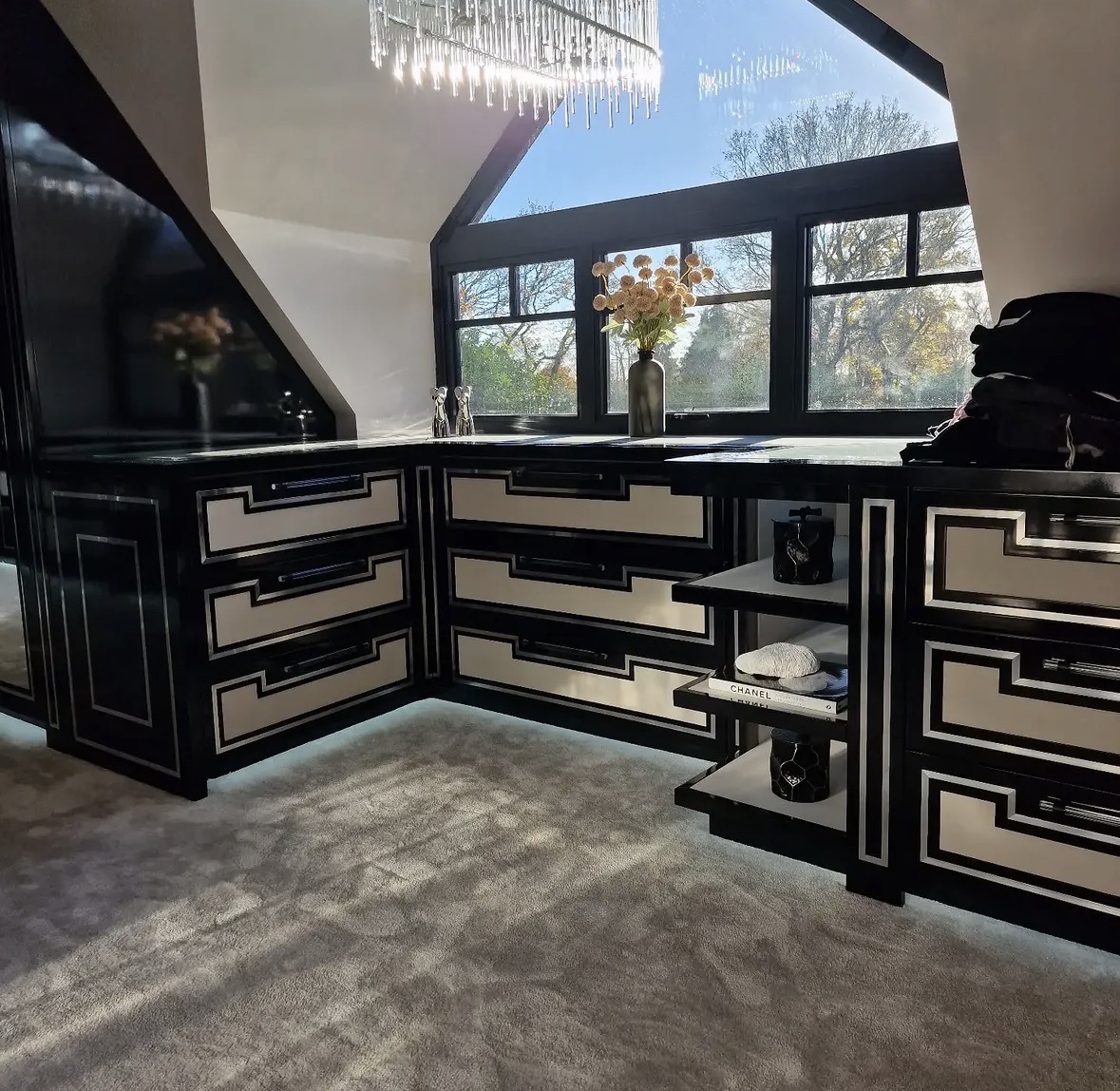
Walk-In Wardrobes
Open hanging, glazed fronts, island drawers and lighting that makes getting dressed straightforward.
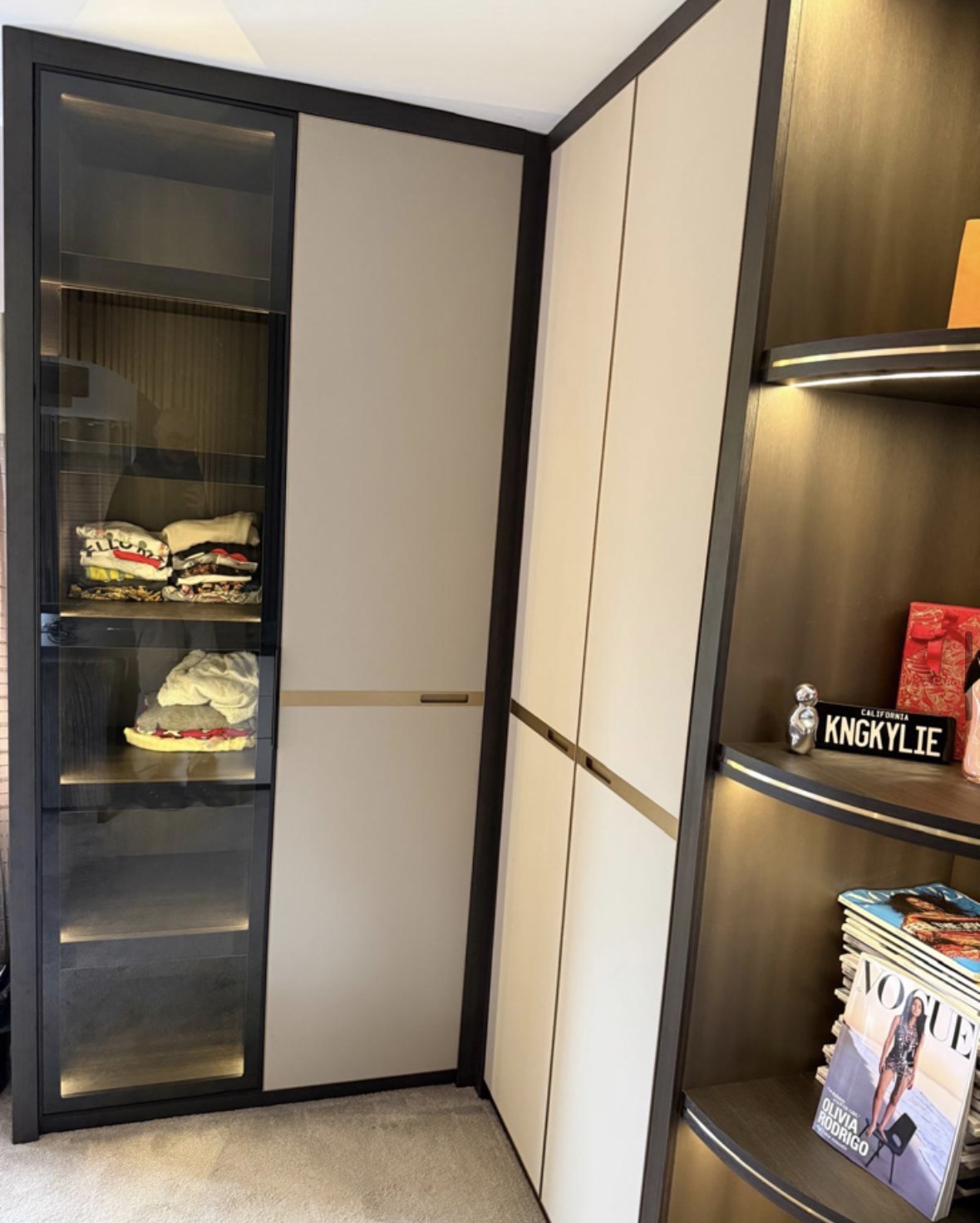
Walk-In Wardrobe Storage
The internal storage layout for a walk-in space, planned around how you move through it, not just what lines the walls.
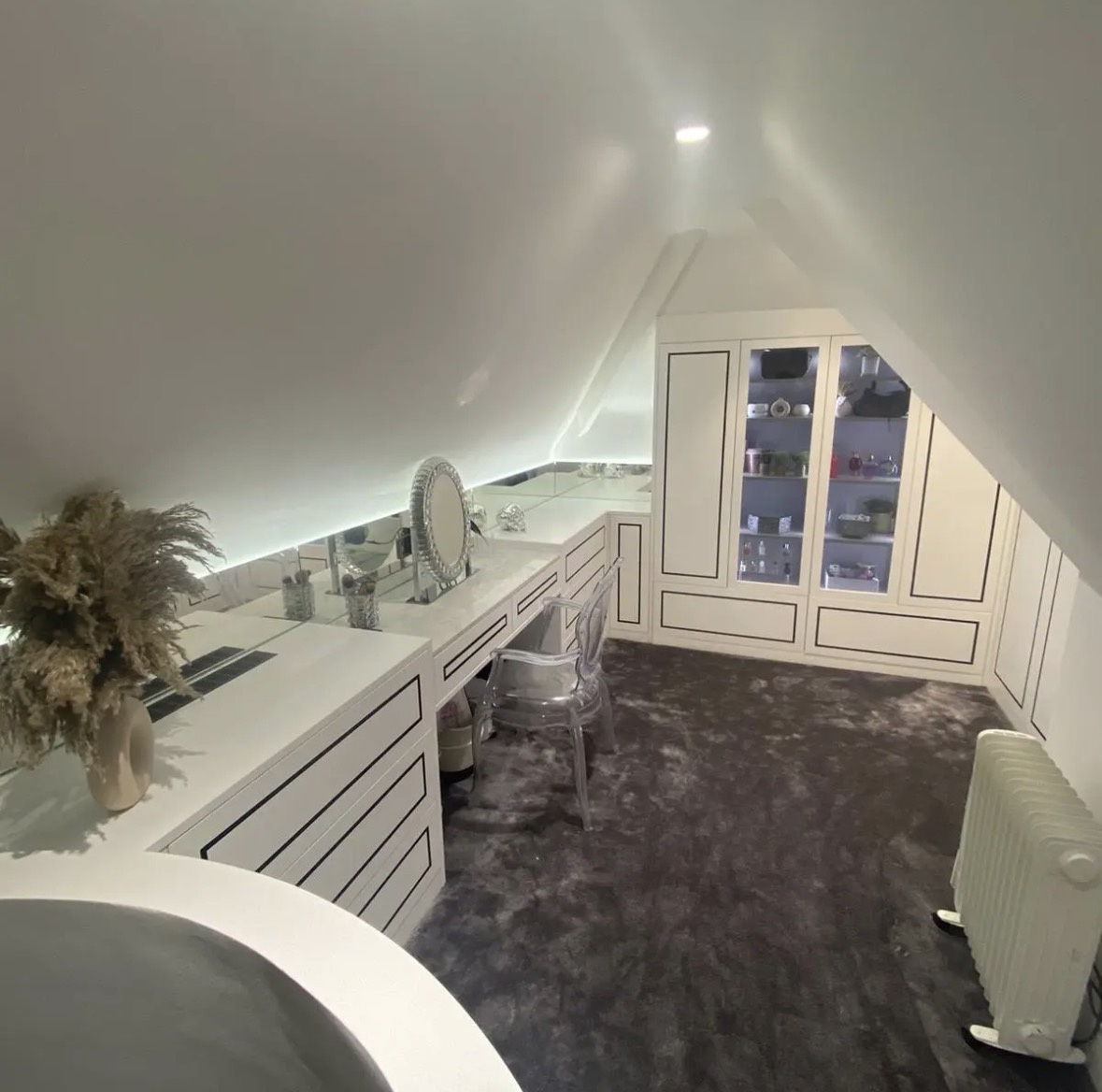
Dressing Rooms
A dedicated room for dressing, planned around circulation, mirrors and light rather than filled wall to wall with rails.
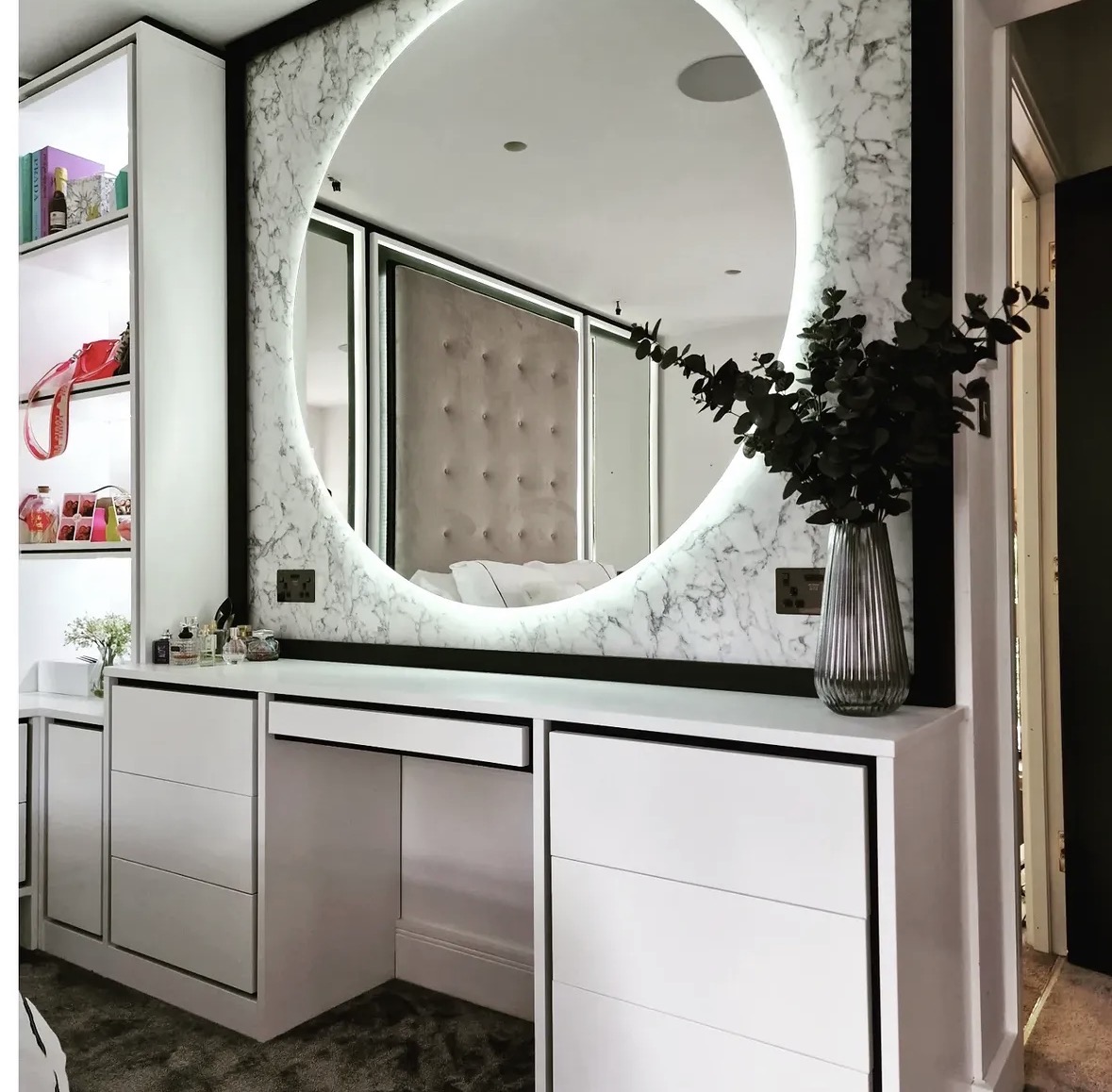
Vanity & Dressing Tables
A dressing table sized to the wall it stands against, with mirror, lighting and drawers designed as one piece.
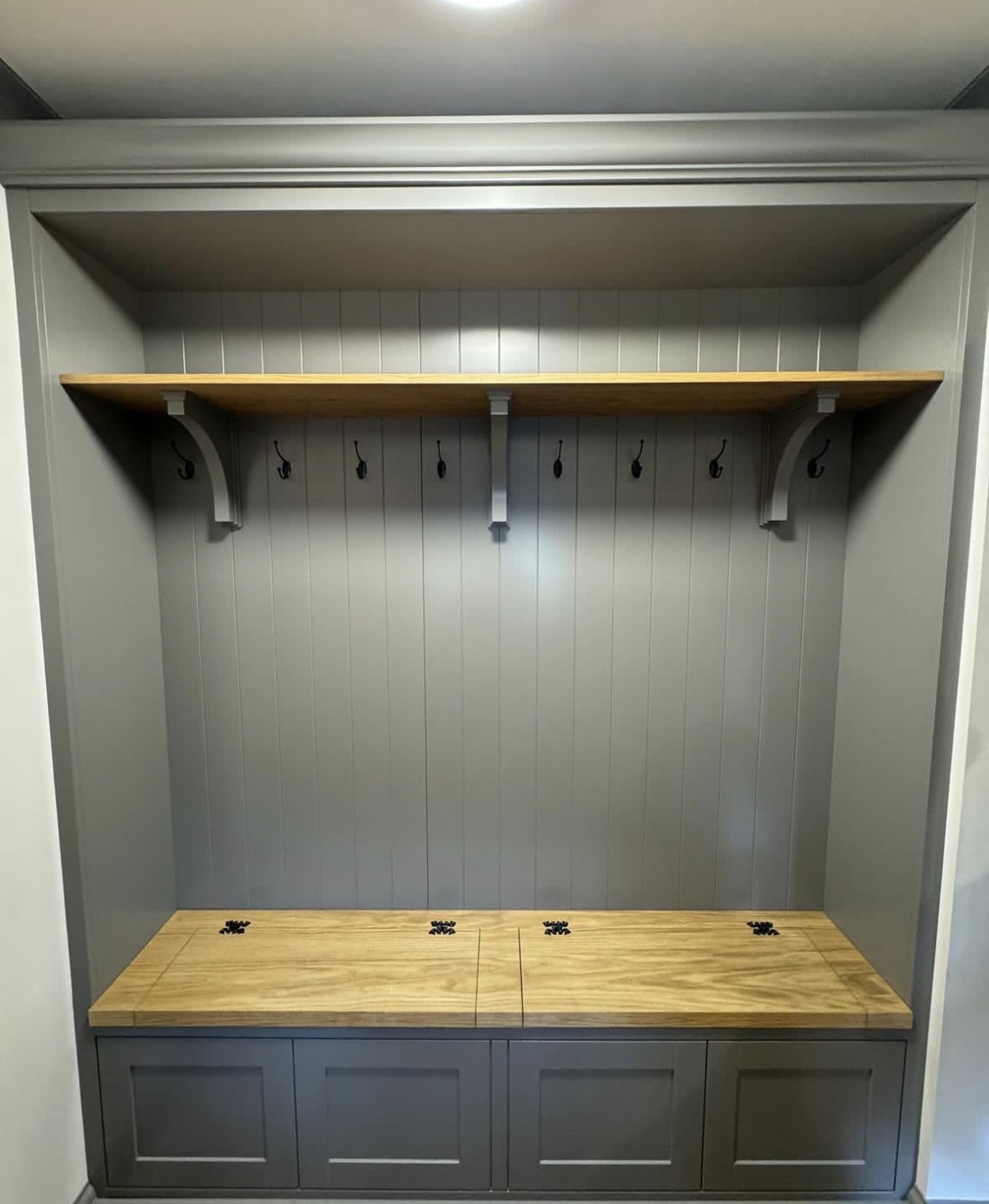
Bespoke Cabinetry
Alcoves, boot rooms, utilities, panelling and everything that does not fit a category.
Areas we work in
Everything is designed and built at our Derbyshire workshop and installed by our own team across the Midlands, including Solihull, Sutton Coldfield, Four Oaks, Lichfield, Birmingham, Burton upon Trent, Ashby-de-la-Zouch, Swadlincote, Derbyshire, Leicestershire.
Areas we coverSpeak to us about your project on +44 7418 627358 or send us the details.
Planning Something Bespoke?
Tell us about your space, what you're looking to create and where the project is located.